
When comparing Philips and Panasonic dimmable LED bulbs for energy savings, the answer does not lie in a simple brand victory. Instead, real-world efficiency depends on how you calculate luminous efficacy, verify dimmer compatibility, and manage your dimming habits. Both brands offer highly efficient options, but their actual performance in your home is governed by electrical matching and local usage patterns. Selecting the right bulb requires looking beyond the marketing claims on the packaging and analyzing the technical specifications that dictate how these bulbs interact with your home’s electrical system.
Understanding Energy Efficiency in Dimmable LEDs
To compare the energy efficiency of Philips and Panasonic dimmable LED bulbs, you must look beyond the nominal wattage printed on the front of the box. The most accurate metric for comparing efficiency is luminous efficacy, which measures how much light a bulb produces for every watt of electricity it consumes. This is expressed as lumens per watt (lm/W). You can calculate this by dividing the total lumen output by the rated wattage of the bulb, both of which are found on the product specifications label. A higher lm/W ratio means the bulb converts electricity into light more efficiently, resulting in lower utility bills for the same level of brightness. For example, a bulb that produces 806 lumens while drawing 8 watts has an efficacy of approximately 100.75 lm/W, whereas a bulb drawing 9 watts for the same light output has an efficacy of only 89.56 lm/W.
In Singapore, the National Environment Agency (NEA) regulates energy labeling for lamps through the Mandatory Energy Labelling Scheme (MELS). When shopping, you will see energy labels displaying a tick rating system. While these ticks provide a quick visual guide—with more ticks indicating better energy efficiency—it is still wise to check the exact lm/W calculation. Two bulbs with the same tick rating can still have slight differences in efficacy that accumulate over years of daily use. Furthermore, ensure that any bulb you purchase carries the local Safety Mark, which certifies that the product has been tested and approved for safe use under local electrical standards.
Products mentioned in this guide
Prices are valid at publication and may change. Please refer to the product page for the latest price.
When dealing with dimmable LEDs, efficiency becomes more dynamic. Dimming a bulb reduces its power consumption, but the relationship between light output and power draw is not perfectly linear. The internal driver of a dimmable LED requires a baseline amount of energy to operate its electronic components, even when dimmed to its lowest setting. Therefore, a bulb dimmed to 10% of its maximum brightness might still draw 20% or more of its rated wattage. Understanding this efficiency curve helps you manage your expectations regarding energy savings at lower light levels. Additionally, operating LEDs at lower temperatures—which naturally occurs when they are dimmed—helps maintain their efficiency over time, as heat is a primary factor that degrades LED performance.
Dimmer Compatibility: The Hidden Factor in Performance
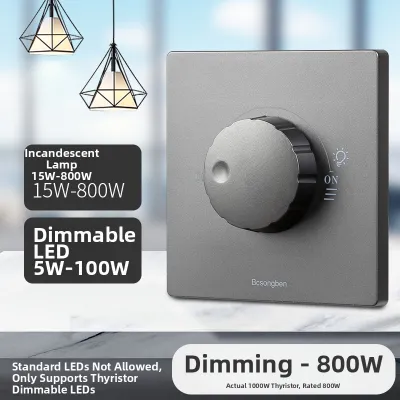
Achieving optimal energy savings and performance from your dimmable LED bulbs requires a compatible dimmer switch. Traditional dimming systems designed for older incandescent bulbs typically use leading-edge (triac) technology. These older switches often have high minimum load requirements, sometimes requiring at least 40W to 60W of total load to operate smoothly. Because modern LED bulbs draw very little power—often between 5W and 15W—a single LED bulb may fail to meet this minimum threshold, leading to persistent flickering, audible buzzing, or premature driver failure.

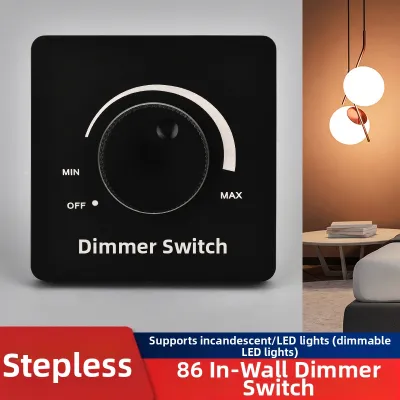
To avoid these issues, trailing-edge (electronic) dimmers are generally recommended for LED lighting. Trailing-edge dimmers offer a lower minimum load capacity and a smoother dimming curve, which matches the electronic nature of LED drivers. Before purchasing your bulbs, you must identify the type of dimmer switch installed in your wall and verify its minimum and maximum wattage limits. Overloading a dimmer with too many bulbs, or underloading it with a single low-wattage LED, will compromise both efficiency and safety.
Both Philips and Panasonic publish comprehensive dimmer compatibility lists for their respective LED product lines. These documents detail which specific dimmer models from major electrical manufacturers have been tested and verified to work with each bulb model. It is highly recommended to locate these lists on the manufacturers’ official websites and cross-reference the exact model numbers of your bulbs and switches before making a purchase. Ignoring these compatibility guidelines can lead to electrical instability, which not only ruins the dimming experience but can also drastically shorten the lifespan of your bulbs.
For any fixed wiring work, such as replacing an old dimmer switch or installing new light fixtures, safety must be your primary concern. Always isolate the electrical power at your home’s main distribution board (DB box) before touching any wiring. If you are uncomfortable working with electrical circuits, or if your installation involves complex multi-gang switches or working at height on high ceilings, you should engage a licensed electrical worker (LEW) in Singapore to perform the installation safely and in compliance with local regulations.
Comparing Value for Money: Beyond the Initial Price
Evaluating the true value of Philips and Panasonic dimmable LED bulbs requires looking past the initial retail price in S$. A comprehensive cost analysis must factor in the rated lifespan of the bulbs and their long-term operating costs. To compare these options objectively, you can calculate the cost per 1,000 hours of use. Divide the purchase price of the bulb by its rated lifespan in hours, then multiply the result by 1,000. This calculation reveals whether a slightly more expensive bulb with a longer lifespan actually offers better long-term value than a cheaper, shorter-lived alternative.
Warranty terms are another critical component of the value equation. Both brands offer product warranties, but the specific terms, duration, and claim processes can vary. It is essential to understand what conditions might void your warranty coverage. For instance, operating a dimmable LED bulb on an incompatible dimmer switch, or installing it in a tightly enclosed fixture that traps heat, can lead to rapid driver degradation and void the manufacturer’s warranty. Always retain your physical receipt or digital proof of purchase, as local distributors in Singapore will require this documentation to process any warranty claims.
You should also consider the physical placement of your light fixtures when calculating value. In many Singaporean homes, particularly those with double-volume ceilings, loft designs, or high-mounted track lighting, replacing a burnt-out bulb is not a simple task. It often requires specialized ladders, scaffolding, or significant physical effort. In these scenarios, prioritizing a bulb with a longer rated lifespan and proven reliability reduces the frequency of difficult replacements, saving you from potential safety hazards or the cost of hiring professional assistance just to change a bulb.
How to Choose: Decision Framework for Your Home
Selecting the right brand for your home depends on your existing electrical infrastructure and specific spatial requirements. If your home is already equipped with a specific model of dimmer switch, your first step should be checking the official compatibility databases. Choose Philips if your existing dimmer is explicitly verified on their compatibility list, or if you prefer specialized lighting effects such as their warm-glow technology, which gradually lowers the color temperature as you dim the light to create a cozier atmosphere.
On the other hand, choose Panasonic if your light fixtures have strict physical clearance limits. LED bulbs can vary slightly in physical dimensions, and Panasonic offers compact designs that fit easily into shallow downlight cans or tight decorative fixtures. Additionally, you may prefer Panasonic if their localized warranty support channels and distributor network in Singapore align better with your purchasing preferences.
Before finalizing your decision, perform a thorough check of your current lighting setup. If you are upgrading older fixtures, ensure that the voltage (typically 230V in Singapore) and base types (such as E27 screw or B22 bayonet) match perfectly. Avoid mixing different brands or models of LED bulbs on the same dimmer circuit, as differences in driver design will cause uneven dimming, mismatched color temperatures, and electrical instability.
Frequently Asked Questions (FAQ)
Do dimmable LED bulbs actually save more energy when dimmed?
Yes, dimming a dimmable LED bulb does reduce its energy consumption, but the savings are not directly proportional to the reduction in perceived brightness. When you dim an LED bulb to 50% of its perceived light output, the actual power savings might only be around 30% to 40%. This discrepancy occurs because the human eye perceives brightness logarithmically rather than linearly, and the bulb’s internal driver requires a constant baseline of electricity to remain operational. Despite this, dimming remains an effective way to lower your overall household energy consumption while extending the lifespan of the bulb’s components.
Can I use a non-dimmable Philips or Panasonic LED on a dimmer switch?
No, you must never use a non-dimmable LED bulb on a dimmer circuit. Non-dimmable LED drivers are designed to receive a constant, uninterrupted flow of voltage and cannot handle the chopped or pulsed voltage delivered by a dimmer switch. Attempting to dim a non-dimmable bulb will result in severe flickering, loud buzzing, rapid overheating, and eventual permanent damage to both the bulb’s internal circuitry and the dimmer switch itself. If you have a dimmer switch installed, always ensure you purchase bulbs explicitly labeled as dimmable, or have a qualified professional replace the dimmer switch with a standard on-off switch.

Community discussion
Share your experience or ask a question. Comments are reviewed before publication.