
Whether Philips or Panasonic offers better energy efficiency in T5 LED tube lights depends entirely on the specific model series, as both brands produce multiple tiers of lighting products. Without comparing the exact specification sheets of the models available to you, it is impossible to declare a universal winner. This guide will equip you with the framework to read product labels, compare luminous efficacy, and calculate long-term cost-effectiveness so you can select the most efficient option for your specific fixtures.
To make an informed decision, you must look beyond brand reputation and focus on verifiable technical specifications. Both manufacturers design products tailored for different market segments, ranging from budget-friendly residential tubes to high-performance commercial options. By understanding how to analyze these specifications, you can identify which specific tube will minimize your electricity bills while delivering the precise amount of light your space requires.
Understanding T5 LED Tube Light Energy Efficiency
Evaluating the energy efficiency of a T5 LED tube light requires looking at how effectively the device converts electrical energy into visible light. The primary metric for this comparison is luminous efficacy, which is measured in lumens per watt (lm/W). Lumens represent the total amount of visible light emitted by the source, while watts measure the electrical power consumed to produce that light. A higher lm/W rating indicates a more efficient tube light that delivers more brightness while drawing less power from your electrical grid.
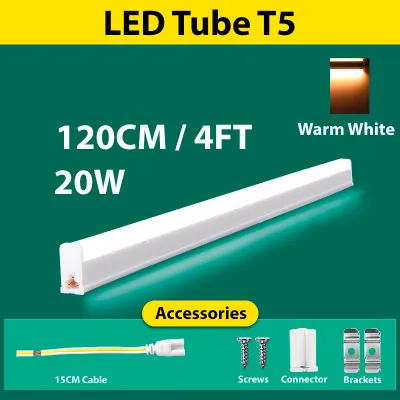
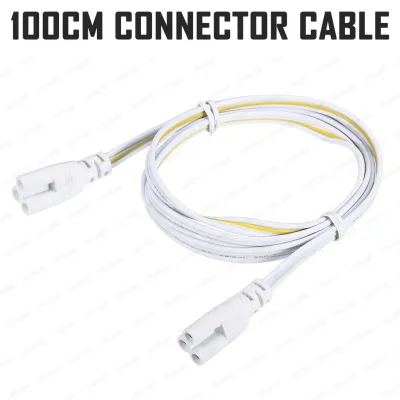
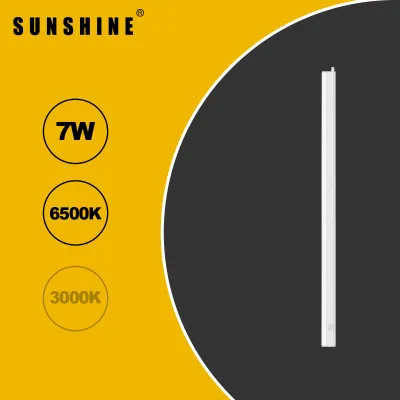
Products mentioned in this guide
![[2pcs bundle] Philips T5 LED Batten tube for Cove Light/ Cabinet Lighting/Long tube light/ 2pin hole](https://img.lazcdn.com/g/p/2be230f94c21aa9682e6a8192e6f588e.jpg_400x400q80.jpg_.webp)

![LED PRO LED LIGHT Led T5 Led Tube/ Led Tube Tri-Tone Daylight/Cool White/Warm White [300mm/600mm/900mm/1200mm]](https://img.lazcdn.com/g/p/88326b36ba15a5b70e2b9bb596605a3d.jpg_400x400q80.jpg_.webp)
![[Buy 2 Free 1] BWL LED LIGHT LED Tube T5 LED Tube TRI-TONE/3000K/4000K/6000K](https://img.lazcdn.com/g/p/2718f00f73afda62d0ec0525659e883f.jpg_400x400q80.jpg_.webp)
Prices are valid at publication and may change. Please refer to the product page for the latest price.
Many consumers mistakenly rely on wattage as a direct indicator of brightness, assuming a higher wattage always results in a brighter room. In the era of LED technology, wattage only tells you how much electricity the tube consumes. For instance, an older or less efficient T5 LED tube might require 16 watts to produce 1,600 lumens of light, resulting in an efficacy of 100 lm/W. Conversely, a highly efficient modern tube might produce the same 1,600 lumens using only 10 watts, achieving an efficacy of 160 lm/W. Choosing the lower-wattage option with higher efficacy directly reduces your energy consumption without sacrificing light output.
Beyond the basic lumen-to-watt ratio, you should also evaluate the power factor of the T5 LED tube. The power factor, expressed as a decimal between 0.0 and 1.0, measures how effectively the tube’s internal driver converts the incoming alternating current (AC) into the direct current (DC) needed by the LEDs. A power factor closer to 1.0 (such as 0.9 or higher) means the driver wastes very little power as heat or reactive energy. High-quality drivers also contribute to superior thermal management, preventing heat buildup that can degrade the LED chips and permanently lower their efficiency over time.
Philips vs Panasonic: Key Specifications to Compare
When comparing Philips and Panasonic T5 LED tubes, your first step should be locating the technical specification sheet or the product packaging details. Manufacturers typically print the luminous efficacy, total lumen output, and wattage clearly on the box or list them in official online retail catalogs. If a product listing on an online marketplace or retailer site lacks these specific numbers, you should cross-reference the exact model number on the manufacturer’s official website to verify the data before purchasing.

Another critical specification to compare is the rated lifespan of the tube, often designated by metrics like L70 or B50. The L70 metric indicates the number of operating hours after which the LED tube’s light output is expected to degrade to 70% of its original brightness. For example, a tube rated for 50,000 hours at L70 will maintain acceptable brightness levels far longer than one rated for 25,000 hours. Comparing these lifespans helps you understand the long-term maintenance cycles and whether a slightly more expensive, highly efficient tube will outlast a cheaper alternative.
You must also consider how secondary performance factors influence your perception of brightness and spatial usability. The Color Rendering Index (CRI) measures how accurately the light source reveals the true colors of objects compared to natural light. While a higher CRI (such as Ra 80 or Ra 90) provides excellent visual clarity, it is a conditional preference that can sometimes require slightly more energy to achieve the same lumen output as a tube with a lower CRI. Additionally, the beam angle of the T5 tube determines how the light is distributed; a narrower beam angle concentrates light downward for task lighting, which can make a space feel brighter without requiring a higher-wattage tube.
Evaluating Long-Term Cost-Effectiveness
To determine which brand or specific model offers the best financial value, you can calculate the total cost of ownership over the product’s expected lifespan. This calculation requires three main pieces of information: the wattage of the T5 LED tube, your estimated daily usage hours, and your local electricity tariff. By converting these figures into an annual operating cost, you can easily compare the long-term savings of different models against their initial purchase prices.
To estimate the annual energy cost of a single T5 LED tube, you can use a straightforward mathematical formula. First, multiply the tube’s wattage by the number of hours you plan to run it each day, and then multiply that result by 365 days to find the annual watt-hours. Divide this number by 1,000 to convert it into kilowatt-hours (kWh). Finally, multiply the annual kWh by your current local electricity tariff in S$ per kWh. For example, if you run a 14-watt tube for 8 hours a day at a tariff of S$0.32 per kWh, the annual operating cost would be approximately S$13.08.
Comparing this operating cost against a less efficient 20-watt tube under the same conditions reveals a clear financial difference. The 20-watt tube would consume more electricity, resulting in an annual operating cost of approximately S$18.69. While a difference of S$5.61 per year for a single tube might seem minor, the savings multiply significantly if you are replacing multiple fixtures across an entire home or commercial office space. Factoring in the initial purchase price of the Philips or Panasonic tube allows you to calculate the exact payback period for the more efficient model.
Installation and Compatibility Checks
Before purchasing any T5 LED tube, you must verify its electrical and physical compatibility with your existing light fixtures to ensure safe and efficient operation. T5 tubes typically feature a G5 bi-pin base, which has a 5mm spacing between the pins, but you must also confirm the physical length of the tube matches your fixture. Standard T5 lengths vary, and installing an incorrect size can damage the pins or prevent the tube from securing properly in the socket.
You must also identify the wiring configuration of your current fixture to choose the correct type of T5 LED tube. Some tubes are designed as plug-and-play options that work directly with existing high-frequency (HF) electronic ballasts. Other models require a ballast bypass, where the fixture is rewired to supply mains voltage (typically 220V to 240V) directly to the tube’s sockets. Operating a direct-wire tube in a fixture with an active ballast, or vice versa, can cause immediate product failure, electrical short circuits, or safety hazards.
Safety must always be your top priority when handling electrical installations. Before attempting to inspect, remove, or install any light tube, isolate the power at your home’s main distribution board or circuit breaker, rather than relying solely on the wall switch. If your installation requires working at heights, ensure you use a stable, secure ladder and have assistance if necessary. For any ballast bypass procedures, complex commercial setups, or if you are unsure about your fixture’s wiring, always stop and consult a licensed electrical worker or qualified professional to perform the installation safely.
Making Your Final Decision
Choosing between Philips and Panasonic T5 LED tubes ultimately comes down to a systematic comparison of the specific models available at your local retailers or online marketplaces. Begin by checking the physical dimensions, voltage compatibility, and base type of your existing fixtures. Once you have established these baseline requirements, you can compare the verified luminous efficacy (lm/W) and rated lifespan of the competing models to identify which option delivers the best long-term energy savings.
You should choose a Philips T5 LED tube if the specific model you are looking at offers a higher verified lm/W rating for your required brightness level, or if they provide a wider selection of direct-wire options that match your fixture’s wiring setup. Philips often provides comprehensive technical documentation that makes it easier to verify compatibility with specific electronic ballasts. This transparency is highly beneficial if you prefer a plug-and-play installation without rewiring your existing fixtures.
Conversely, you should choose a Panasonic T5 LED tube if their product line offers superior rated lifespan metrics or better out-of-the-box compatibility with your existing ballast systems at a competitive price point. Panasonic products are known for reliable build quality and stable thermal performance, which can be advantageous in enclosed fixtures where heat buildup is a concern. Always verify the product packaging for local safety certifications, such as the Safety Mark, to ensure the tube complies with local electrical safety standards.
Frequently Asked Questions (FAQ)
Does a higher wattage T5 LED tube always mean it is brighter?
No, a higher wattage does not guarantee a brighter light output. Wattage only measures the amount of electrical power the tube consumes, while lumens measure the actual brightness emitted. A highly efficient T5 LED tube with a lower wattage can produce the same or even greater light output than a less efficient model with a higher wattage. Always compare the lumen output and the luminous efficacy (lm/W) on the product packaging to determine the true brightness and efficiency of the tube.
Can I mix Philips and Panasonic T5 LED tubes in the same fixture?
It is highly recommended to avoid mixing different brands of T5 LED tubes within a single multi-tube fixture. Even if the tubes share the same nominal wattage and color temperature, differences in internal driver designs, ballast compatibility, and luminous efficacy can lead to uneven brightness and visual inconsistency. Additionally, mixing brands can cause uneven electrical loads across the fixture, potentially shortening the lifespan of the tubes or causing premature ballast failure. For uniform performance and safety, always install identical models from the same manufacturer.
Community discussion
Share your experience or ask a question. Comments are reviewed before publication.