
Selecting the right motion detector for an outdoor led street light is not about finding a single superior technology, but rather about matching the sensor’s physical detection method to your specific property layout, local climate, and security objectives. Passive Infrared (PIR) sensors excel in standard, unobstructed residential zones where you want to avoid detecting off-property movement. Microwave sensors are better suited for expansive, complex, or partially obstructed areas that require wide-angle, long-range coverage. Dual-technology (dual-tech) sensors, which combine both methods, are the premier choice for high-security perimeters where false alarms cannot be tolerated. By understanding how these technologies interact with the outdoor environment, you can optimize both the security of your property and the operational lifespan of your lighting fixtures.
How PIR, Microwave, and Dual-Tech Sensors Actually Work
To make an informed decision, it is essential to understand the physical mechanisms that drive each sensor type. Passive Infrared (PIR) sensors operate by detecting changes in infrared radiation—essentially heat signatures—within their field of view. Every object with a temperature above absolute zero emits some level of infrared energy. The PIR sensor contains a pyroelectric material that generates an electrical signal when exposed to sudden shifts in thermal energy, such as a human or vehicle moving across its detection zones. A specialized Fresnel lens sits in front of the sensor, dividing the coverage area into multiple active and inactive sectors. When a warm object moves from one sector to another, the sensor registers a change in heat and triggers the led street light. Because PIR is entirely passive, it does not emit any energy into the environment.
Microwave sensors, by contrast, are active detection devices. They continuously emit high-frequency electromagnetic radio waves—typically at frequencies around 5.8 GHz or 24 GHz—and measure the time it takes for those waves to bounce back to the receiver. This process relies on the Doppler effect. When an object moves within the detection zone, it alters the frequency of the reflected waves. The sensor detects this frequency shift and triggers the light. Because radio waves can pass through thin, non-metallic barriers, microwave sensors do not require a direct line of sight. They can detect movement through glass, plastic, drywall, and thin wooden fences, making them incredibly sensitive and versatile.
Products mentioned in this guide
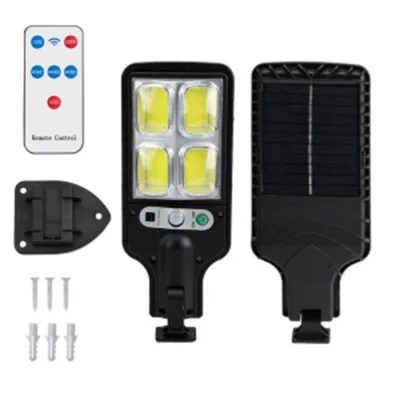
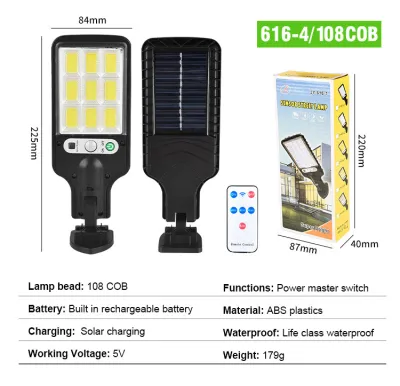
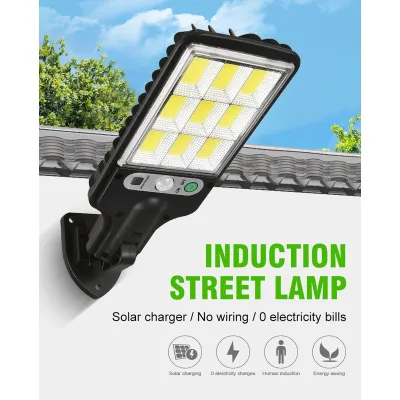
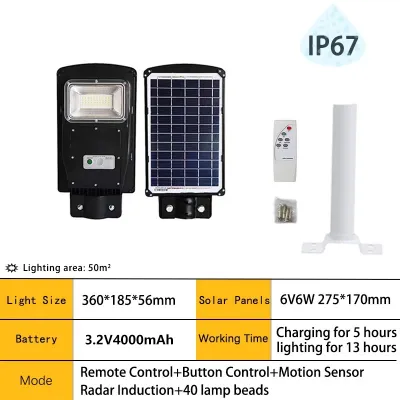
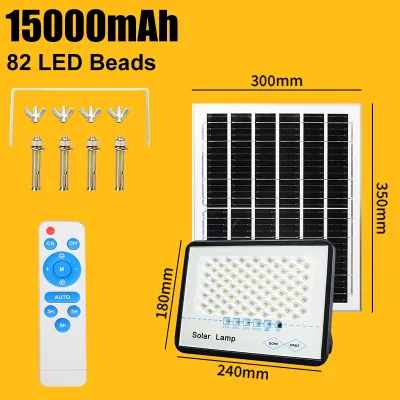
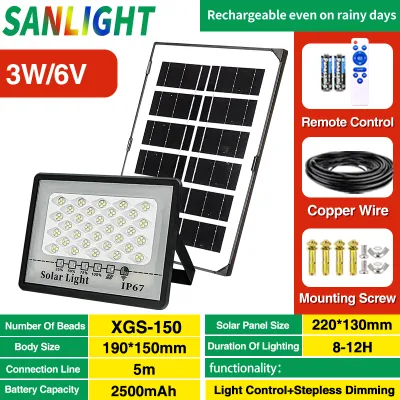
Prices are valid at publication and may change. Please refer to the product page for the latest price.
Dual-technology sensors combine both PIR and microwave components into a single housing to maximize accuracy. To activate the led street light, a dual-tech sensor typically employs an “AND” logic gate configuration. This means that both the PIR sensor must detect a rapid change in thermal energy and the microwave sensor must detect a physical frequency shift at the same time, or within a very tight sequential window. If only one sensor registers an event—such as a warm gust of wind triggering the PIR or a swaying tree branch triggering the microwave—the light remains off. This dual-verification process virtually eliminates false triggers, though it requires more complex internal circuitry and calibration.
Key Performance Differences in Outdoor Environments
Detection Range and Coverage Patterns
The physical differences between these technologies directly dictate how far and wide they can monitor. PIR sensors generally offer a directional, cone-shaped detection field. Their effective range is typically limited to 10 to 15 meters, and they are highly directional. PIR sensors are most sensitive to tangential movement—objects crossing the detection zones from side to side—rather than radial movement, where an object walks directly toward the sensor. If a person walks straight toward a PIR-equipped led street light, they may not trigger it until they are very close to the pole.

Microwave sensors offer much broader, often spherical or elliptical coverage patterns that can extend up to 20 or 30 meters in a 360-degree radius. Unlike PIR, microwave sensors are exceptionally sensitive to radial movement, meaning they will detect an approaching target almost immediately. However, this expansive coverage requires careful management. The mounting height and angle of the led street light play a critical role in defining the active detection zone. When mounted on a high pole (typically 4 to 6 meters), a microwave sensor’s signal can spread over a massive footprint, potentially reaching into neighboring properties or public roads if the sensitivity is not properly calibrated.
False Triggers and Environmental Interference
Managing false triggers is the single greatest challenge in outdoor security lighting. PIR sensors are highly susceptible to environmental temperature fluctuations. In tropical climates like Singapore, where daytime temperatures often hover close to human body temperature (around 30°C to 34°C), the thermal contrast between a human body and the surrounding air is minimal. This low contrast can cause PIR sensors to experience “blind spots” during hot afternoons or warm evenings. Conversely, sudden thermal shifts—such as hot air currents rising from sun-baked asphalt, warm wind gusts, or small animals passing close to the lens—can easily cause false activations.
Microwave sensors do not suffer from thermal contrast issues, making them highly reliable in hot climates. However, their extreme sensitivity introduces a different set of challenges. Because microwave signals can penetrate non-metallic materials, they are prone to triggering from movement outside the intended security zone. Wind-blown tree branches, heavy tropical downpours, flying debris, or even traffic moving behind a wooden perimeter fence can cause a microwave sensor to cycle the light continuously. Dual-tech sensors solve these issues by filtering out single-variable interferences. A heavy rainstorm will reflect microwave signals but will not present a moving heat signature, meaning the dual-tech system will correctly identify the rain as non-threatening and keep the light off.
Power Consumption and LED Lifespan Impact
The operational efficiency of your led street light is closely tied to how its sensor manages power and activation cycles. PIR sensors are incredibly energy-efficient in standby mode. Because they are passive devices, they draw only a fraction of a watt (often less than 0.1W) to keep the pyroelectric circuit active. This makes them ideal for solar-powered led street light systems where conserving battery power during the night is paramount.
Microwave sensors, because they must continuously generate and emit high-frequency radio signals, have a higher standby power draw, typically ranging from 0.5W to 1.5W. While this may seem negligible for a single fixture, it can accumulate across a large property with multiple street lights. Furthermore, the frequency of false triggers has a direct, negative impact on the lifespan of the LED driver. LED chips themselves are highly durable, but the electronic drivers that power them are sensitive to thermal stress caused by constant power cycling. A sensor that suffers from frequent false triggers will cause the light to switch on and off repeatedly throughout the night. This rapid cycling degrades the driver’s internal capacitors and components, leading to premature fixture failure and higher maintenance costs.
Decision Framework: Which Sensor Fits Your Property?
Choose PIR If…
A PIR sensor is the most practical and cost-effective choice for standard residential driveways, front gates, and narrow walkways. If your property layout allows for a clear, unobstructed line of sight between the sensor and the target detection area, PIR will perform reliably. It is particularly useful when you want to establish a strict, localized detection boundary. For example, if your driveway runs parallel to a busy public sidewalk, a PIR sensor can be angled downward to monitor only your vehicle parking area, ignoring the foot traffic and passing cars just a few meters away. This localized focus prevents unnecessary light pollution and keeps your energy bills low.
Choose Microwave If…
You should opt for a microwave sensor if you need to monitor large, open spaces, commercial yards, or areas with complex layouts. Because microwave signals can penetrate non-metallic obstructions, they are ideal for blind corners, alleyways, or properties with dense landscaping where a direct line of sight is impossible to maintain. If you want your led street light to activate pre-emptively—such as turning on while a vehicle is still behind a wooden gate or around the bend of a long driveway—microwave technology is unmatched. It is also the preferred choice for high-pole installations where the distance between the sensor and the ground exceeds the reliable range of standard PIR detectors.
Choose Dual-Tech If…
Dual-tech sensors are highly recommended for high-security perimeters, commercial facilities, and residential properties situated near busy roads or heavy foliage. If false alarms are not just an annoyance but a security risk—such as when the led street light is integrated with an outdoor security camera or an alarm monitoring system—dual-tech is the only viable option. It is also exceptionally well-suited for the challenging tropical climate of Singapore, where the combination of high ambient heat (which limits PIR) and frequent heavy rain (which triggers microwave) can render single-technology sensors unreliable. While dual-tech fixtures carry a higher initial purchase price, the reduction in false triggers saves energy, protects the LED driver from premature wear, and ensures that every activation represents a genuine security event. Before purchasing, always verify that your chosen led street light fixture is compatible with dual-tech control modules, as some standard drivers may not support the complex wiring required for dual-sensor integration.
Installation Safety and Wiring Boundaries
Installing or upgrading a motion-activated led street light involves working with high-voltage electrical systems and often working at heights, both of which carry significant safety risks. Before undertaking any physical installation or maintenance, you must isolate the electrical circuit by turning off the main power at your property’s consumer unit (circuit breaker). Never rely solely on a wall switch to isolate the power, as neutral wires can still carry current.
In Singapore, strict regulatory boundaries govern electrical work. Any installation involving fixed electrical wiring, connection to the main distribution board, or the integration of sensors into commercial street lighting circuits must be performed by a licensed electrical worker (LEW) certified by the Energy Market Authority (EMA). Attempting to wire these systems yourself not only poses an immediate risk of electrocution or electrical fire but can also void your property insurance and violate local building codes. Furthermore, because street lights are typically mounted on high poles or walls, working at height requires specialized safety equipment, such as stable scaffolding or certified ladders, to prevent fall injuries.
Before purchasing any hardware, always inspect the product’s specification label. Do not assume a fixture is suitable for outdoor use simply because it is categorized as a street light. Verify that the unit has an appropriate Ingress Protection (IP) rating—IP65 is the minimum standard for general outdoor use, while IP66 or IP67 is recommended for areas exposed to heavy, direct rainfall. Additionally, check the input voltage limits (which must match Singapore’s standard 230V AC, 50Hz supply), the maximum wattage limits of the sensor switch, and ensure the product carries recognized safety certifications, such as the Enterprise Singapore Safety Mark, to guarantee compliance with local electrical safety standards.
Frequently Asked Questions (FAQ)
Can I add a microwave sensor to an existing PIR LED street light?
Retrofitting an existing PIR led street light with an external microwave sensor depends entirely on the fixture’s internal wiring and driver compatibility. Many modern integrated LED street lights have built-in PIR sensors that are hardwired directly into the LED driver’s control circuit. Attempting to bypass or splice a new microwave sensor into this closed system without a manufacturer-approved wiring diagram can cause electrical faults, damage the driver, or void the product’s warranty. If you wish to upgrade, it is generally safer and more reliable to replace the entire control module if the manufacturer offers modular upgrades, or consult a licensed electrician to install an inline external sensor that controls the power supply to the entire fixture.
Do motion sensor LED street lights work during the day?
Most motion-activated led street light fixtures are designed to remain inactive during daylight hours to conserve energy. This is achieved through an integrated photocell, also known as a dusk-to-dawn sensor, which measures ambient light levels. The photocell acts as a master switch: during the day, when ambient light is high, the photocell keeps the circuit open, preventing the motion sensor (whether PIR, microwave, or dual-tech) from triggering the light. The motion sensor will only become active once the photocell detects that ambient light has fallen below a pre-set threshold (usually measured in lux). If you require the light to operate during the day for testing or specific security needs, you must select a fixture that features a manual daylight override mode or an adjustable lux setting on the sensor control panel.

Community discussion
Share your experience or ask a question. Comments are reviewed before publication.