
Selecting the right solar security light for your home involves more than just picking a bright fixture. The core of its reliability lies in the motion sensor technology it uses to trigger the light. For homeowners, choosing between Passive Infrared (PIR) and microwave sensors is a critical decision that directly impacts how often the light activates when needed—and how often it triggers falsely. Neither technology is universally superior; the most reliable choice depends entirely on your property’s layout, local environmental conditions, and where you plan to mount the fixture.
PIR sensors operate by detecting changes in heat signatures, making them highly directional and excellent for targeted areas. Microwave sensors, on the other hand, emit active electromagnetic signals that can read movement even through solid, non-metallic obstacles. Understanding these fundamental differences allows you to match the sensor type to your specific outdoor space, whether you are lighting a narrow common corridor, a private landed driveway, or a high-rise balcony.
How PIR and Microwave Motion Sensors Work
To make an informed choice, it helps to understand the physics behind how these two sensor types detect motion. Passive Infrared (PIR) sensors are passive devices, meaning they do not emit any energy of their own. Instead, they monitor the surrounding environment for infrared radiation, which is emitted naturally by any warm body, including humans, animals, and vehicles. The sensor’s lens, typically a segmented plastic Fresnel lens, focuses this infrared energy onto a pyroelectric chip. When a warm object moves across the sensor’s field of view, it creates a rapid change in the infrared energy levels detected by the chip, triggering the light. Because PIR relies on detecting temperature differences between an object and the background environment, its effectiveness is closely tied to direct line-of-sight visibility.
Products mentioned in this guide
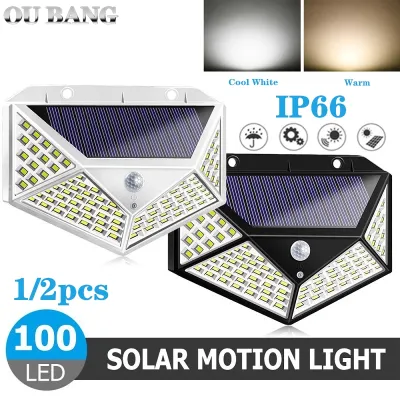
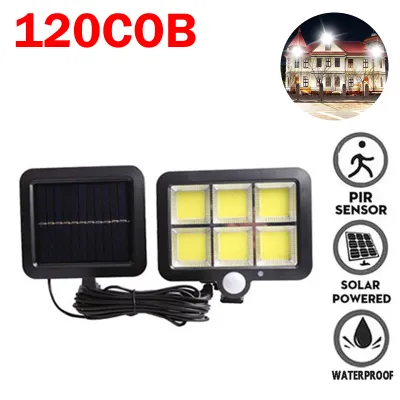
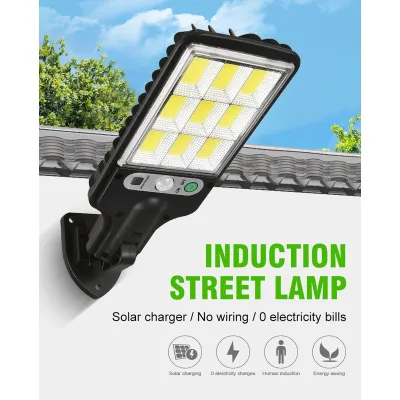
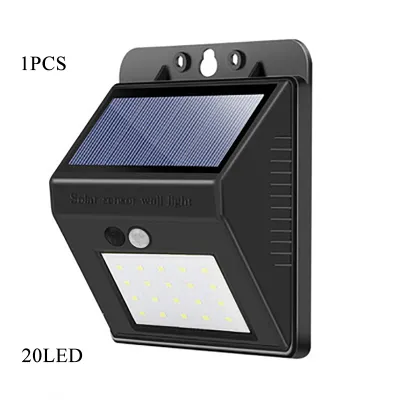
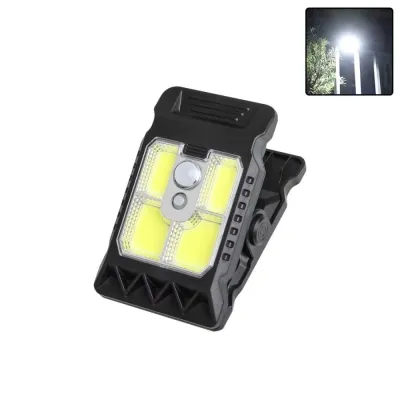
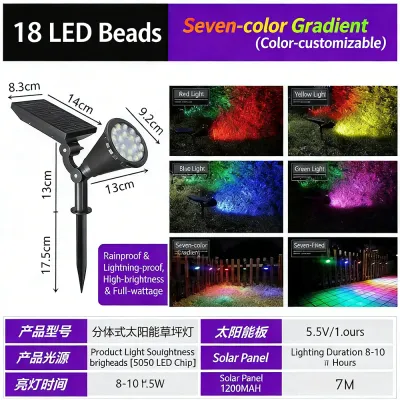
Prices are valid at publication and may change. Please refer to the product page for the latest price.
In contrast, microwave sensors are active devices that continuously emit high-frequency electromagnetic waves, similar to radar. These waves bounce off surrounding objects and return to a receiver inside the sensor module. When an object moves within the detection zone, it alters the frequency of the reflected waves—a phenomenon known as the Doppler effect. The sensor detects this frequency shift and immediately triggers the light. Because microwave signals can pass through thin, non-metallic materials like glass, plastic, plasterboard, and wood, these sensors do not require a direct line of sight to function.
While both sensor types are widely integrated into modern solar security lights, they demand completely different placement strategies. A PIR sensor must be positioned where its lens has an unobstructed view of the target path, as any physical barrier will block the heat signature. A microwave sensor can be hidden inside a decorative cover or mounted behind a thin barrier, but its wide, penetrating signal requires careful positioning to avoid detecting movement in adjacent rooms or neighboring properties.
Comparing Detection Accuracy and False Triggers
When evaluating outdoor security lights, detection accuracy and the rate of false triggers are the most critical performance metrics. In typical residential settings, the physical layout of your property and the surrounding environment will dictate how each sensor behaves.

PIR sensors generally offer a defined, cone-shaped detection zone that is highly directional. This narrow field of view is advantageous when you want to monitor a specific path, such as a front gate or a narrow walkway, without detecting movement from the sides. Microwave sensors, by comparison, provide a much wider, often omnidirectional detection field. They can scan a broad area, making them highly effective for large, open yards or driveways where coverage from multiple angles is required. However, this expansive range means they are more likely to pick up movement outside your intended security zone.
Our tropical climate presents unique challenges for motion sensors. During heavy monsoon downpours, rapid temperature drops and sheets of falling water can confuse PIR sensors. Because PIR relies on detecting temperature differentials, a sudden gust of cool wind or heavy rain can create rapid thermal fluctuations on nearby surfaces, leading to false triggers. Additionally, swaying tropical foliage, warm air currents from air conditioning condensers, or small animals like stray cats and birds can easily activate a PIR sensor if they cross its direct line of sight.
Microwave sensors are largely unaffected by weather conditions, wind, or ambient temperature changes, making them highly stable in heavy rain. However, their sensitivity to any physical movement means that swaying tree branches, blowing debris, or even water flowing through plastic downpipes can trigger them. Because they cannot differentiate between a human and a moving plant, a microwave sensor placed near dense foliage may trigger continuously on windy nights.
The ability of microwave signals to penetrate non-metallic obstacles is both a strength and a potential source of frustration. If you mount a microwave-equipped solar light near a shared boundary wall, a thin wooden fence, or a glass window, the sensor may detect your neighbor’s movements or indoor activity, causing the light to turn on unnecessarily. For homes with close neighbors, such as semi-detached houses, terraced homes, or apartment flats, this penetration capability often leads to persistent false triggers. PIR sensors, which cannot penetrate glass or solid walls, remain completely unaffected by activity occurring behind physical barriers, making them far easier to isolate within tight property boundaries.
Power Consumption and Solar Battery Efficiency
Because solar security lights rely entirely on stored solar energy, the power consumption of the sensor technology directly impacts the overall reliability of your lighting system, especially during consecutive cloudy days.
PIR sensors are exceptionally energy-efficient. Because they are passive components that only listen for incoming infrared radiation, their baseline standby power draw is minimal. This low energy requirement makes PIR sensors ideal for solar lights with smaller battery capacities or setups installed in partially shaded areas where daily solar charging is limited. The sensor sips power while waiting for an activation, preserving the bulk of the battery’s charge to power the LED light when motion is actually detected.
Microwave sensors require a higher continuous baseline current because they must actively generate and emit electromagnetic pulses. Even when no motion is detected, the transmitter and receiver modules are constantly drawing power from the solar battery. While modern low-power microwave modules have improved efficiency, their standby power draw remains higher than that of a standard PIR sensor.
Furthermore, the frequency of false triggers plays a massive role in battery depletion. If a microwave sensor is constantly triggered by wind-blown leaves or movement behind a fence, the high-power LED light will turn on repeatedly throughout the night. This continuous cycling can rapidly drain the solar battery, leaving the light dead or dim when actual security monitoring is needed in the early morning hours. When purchasing a solar security light, it is essential to verify the manufacturer’s specifications for standby power consumption and ensure that the integrated battery capacity and solar panel wattage are sufficient to support the active sensor type.
Decision Framework: Which Sensor Fits Your Property?
To choose the right sensor technology for your home, evaluate your specific outdoor layout and security goals against these practical guidelines.
Choose PIR if:
- You want to monitor a highly targeted zone, such as a front door, a narrow balcony, or a specific garden path.
- Your property is close to busy public walkways, shared corridors, or neighboring driveways where you want to avoid constant false activations.
- The light will be mounted near glass windows or doors, and you do not want indoor movement triggering the outdoor light.
- Your mounting location receives limited direct sunlight, making battery conservation and low standby power draw a top priority.
Choose Microwave if:
- You need to secure a large, open outdoor area, such as a wide driveway, a spacious backyard, or a side passage with blind corners.
- You want the sensor to be completely hidden inside a decorative, weather-sealed light fixture to maintain a clean architectural aesthetic.
- The light must operate reliably in areas exposed to heavy wind, rain, or rapid temperature shifts without being affected by weather-induced thermal changes.
- You require long-range detection that can capture movement before an intruder enters your immediate line of sight.
Verify first if:
- Your intended mounting location is near busy roads, dense tropical foliage, or shared boundary walls. Regardless of the sensor type you choose, these environments will require careful calibration of the sensor's sensitivity settings to prevent constant, unwanted activations. Always check if the solar light model allows you to adjust the detection range and angle before finalizing your purchase.
Installation and Placement Checklist
Proper installation is key to maximizing the performance of your solar security light and ensuring long-term electrical safety.
For PIR sensors, mount the fixture at the manufacturer’s recommended height—typically between 2 and 2.5 meters—and angle the sensor lens slightly downward toward the primary walking path. Avoid pointing PIR sensors directly at heat sources, such as air conditioning compressors, outdoor kitchens, or reflective surfaces like swimming pools, which can cause thermal confusion. For microwave sensors, height is less critical due to their broad coverage, but they should be mounted securely to prevent the fixture itself from vibrating in high winds, which the sensor could interpret as motion.
Once installed, perform a walk test during twilight or night to calibrate the detection zone. Many solar security lights feature adjustable dials or digital settings for sensitivity (SENS) and illumination time delay (TIME). Gradually adjust the sensitivity downward if you experience false triggers from passing traffic or swaying plants. Set the timer to a reasonable duration—such as 15 to 30 seconds—to ensure the light provides adequate visibility without unnecessarily draining the solar battery.
Always follow the manufacturer’s installation manual for mounting and securing the fixture. Ensure the solar panel is positioned to receive unobstructed, direct daylight for several hours each day; avoid placing it under deep roof eaves or dense tree canopies. When installing or replacing outdoor fixtures, verify the voltage compatibility, base interface, wattage limits, and electrical certifications to ensure safe operation in wet or damp environments. If you are integrating a solar security light with existing fixed outdoor wiring, or if the installation requires working at height or in damp outdoor environments, ensure the power source is fully isolated before starting. When in doubt, or if local building regulations require it, consult a qualified professional electrician to complete the installation safely.
Frequently Asked Questions (FAQ)
Can I adjust the sensitivity of a solar light sensor to stop false triggers?
Yes, many outdoor solar security lights come equipped with physical dials, switches, or remote controls that allow you to adjust the sensor’s sensitivity and detection range. If your light is triggering too frequently due to wind, small animals, or distant traffic, you can lower the sensitivity setting to restrict the detection zone. Always refer to your product’s manual for the exact adjustment procedure, and test the changes at night by walking through the target area to ensure the light still activates when needed.
Do microwave sensors work through glass windows or doors?
Yes, microwave sensor signals can easily penetrate glass, plastic, wood, and other thin, non-metallic materials. While this allows the sensor to be hidden inside a fixture, it also means that indoor movement near a window or glass door can trigger an outdoor light mounted on the other side. If you plan to install a security light directly outside a window or glass entryway, a PIR sensor is generally a more reliable choice to prevent these indoor-to-outdoor false triggers.
Why does my solar security light stay on all night or not turn on at all?
If your solar light stays on continuously, the sensor may be experiencing constant false triggers from a nearby heat source, moving foliage, or a vibrating mount. Alternatively, the light may be set to a continuous-on mode rather than motion-activation mode. If the light fails to turn on, check for physical obstructions shading the solar panel, clean any dirt or grime off the sensor lens, and verify that the battery is receiving adequate daily sunlight to hold a charge. If these steps do not resolve the issue, reset the unit according to the manufacturer’s instructions.
Community discussion
Share your experience or ask a question. Comments are reviewed before publication.