
Choosing the right motion detection technology for a solar outdoor light determines whether your property remains reliably illuminated or left in the dark when you need security most. Neither Passive Infrared (PIR) nor microwave sensors can be declared a universal winner. The optimal choice depends entirely on your specific installation environment, physical barriers, and the power constraints of your solar setup. Selecting the wrong sensor type often leads to either a dead battery from constant false triggers or a light that fails to activate when an intruder approaches.
Passive Infrared (PIR) sensors operate on a thermal detection principle. They do not emit any energy themselves; instead, they passively monitor the surrounding environment for changes in infrared radiation. When a warm object, such as a human body or a vehicle engine, moves across the sensor’s field of view, it creates a rapid temperature differential against the static background. The sensor detects this thermal shift and triggers the solar outdoor light to illuminate. Because they rely on heat signatures, PIR sensors require a direct, unobstructed line of sight to function effectively.
Microwave sensors, also known as radar sensors, operate on an active detection principle. They continuously emit high-frequency electromagnetic waves into the surrounding area and analyze the reflected waves that bounce back to the receiver. When any object moves within the detection zone, it alters the frequency of the reflected waves—a phenomenon known as the Doppler effect. The sensor detects this shift and immediately triggers the light. Unlike PIR, microwave technology does not rely on temperature differences and can penetrate various non-metallic materials, allowing the sensor to detect motion through obstacles.
Products mentioned in this guide
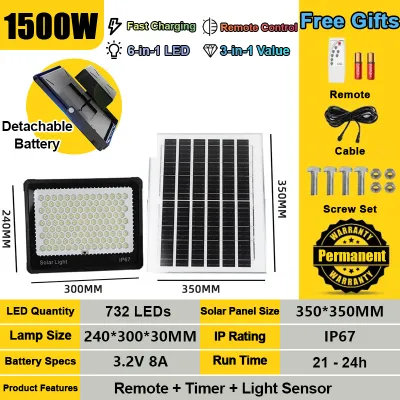
Prices are valid at publication and may change. Please refer to the product page for the latest price.
Key Comparison Dimensions for Solar Outdoor Lights
To select the most reliable solar outdoor light for your property, you must evaluate how these two technologies perform across several critical operational dimensions. The differences in how they detect motion directly impact their coverage area, susceptibility to false alarms, energy efficiency, and physical placement options.
Detection Range and Coverage Angle
PIR sensors typically project a defined, cone-shaped detection zone that extends outward from the fixture. This coverage is highly directional, meaning the sensor is most sensitive to movement crossing laterally across its field of view rather than directly toward it. The detection angle of a standard PIR sensor usually ranges from 120 degrees to 180 degrees, though some specialized multi-sensor designs can cover wider areas. Because the detection zone is physically shaped by a segmented Fresnel lens, the range is limited to a specific distance, beyond which thermal changes cannot be reliably distinguished from background noise.
Microwave sensors offer a much broader and often omnidirectional coverage pattern. Because electromagnetic waves expand outward in all directions from the transmitter, a single microwave sensor can achieve up to 360 degrees of detection coverage. This active projection allows the sensor to detect motion at significantly greater distances than standard PIR models. However, this expansive range means the sensor detects movement both near and far, making it highly sensitive to any physical displacement within its active bubble.
When shopping for a solar outdoor light, always check the manufacturer’s specification sheet or product label for the exact detection angle and maximum range. These values are highly dependent on the specific model’s lens design, sensor frequency, and internal calibration. Do not assume a generic range for either technology, as a poorly calibrated microwave sensor might overreach, while a low-quality PIR lens might leave significant blind spots around your property.
Environmental Interference and False Triggers
Environmental factors play a massive role in how reliably your solar outdoor light triggers. PIR sensors are highly sensitive to sudden temperature fluctuations and intense thermal sources. Direct sunlight hitting the sensor lens, warm air currents from air conditioning condensers, or sudden gusts of wind can mimic the heat signature of a moving object, causing the light to turn on unnecessarily. Conversely, during periods of extreme ambient heat, the temperature of the surrounding air may closely match human body temperature, which can significantly reduce the sensor’s sensitivity and delay its triggering response.
Microwave sensors are immune to temperature changes, but they are highly susceptible to mechanical movement. Because they detect any physical displacement, microwave sensors can be easily triggered by wind-blown tree branches, heavy tropical downpours, blowing debris, or even small animals. Furthermore, because microwave signals can penetrate thin barriers, a sensor installed near a perimeter wall might detect passing traffic or pedestrians on the public sidewalk outside your property, leading to continuous, unwanted activations.
These frequent false triggers are more than just an annoyance; they rapidly deplete the stored energy in your solar outdoor light’s battery. If a light turns on repeatedly throughout the night due to wind or passing cars, the battery will likely drain completely long before dawn. Matching the sensor technology to your local environment and ensuring the fixture has adjustable sensitivity settings is crucial to maintaining a reliable security perimeter.
Power Consumption and Battery Impact
Power management is the single most critical factor for any solar outdoor light, as the system must rely entirely on the energy harvested by its solar panel during the day. PIR sensors are exceptionally energy-efficient because they operate passively. They do not consume power to project a signal; they merely wait for infrared radiation to enter the lens. This ultra-low idle current draw makes PIR sensors the ideal choice for compact solar fixtures with smaller battery capacities and modest solar panels, ensuring the light can remain operational even after several consecutive cloudy days.
Microwave sensors require a continuous supply of electrical power to actively emit high-frequency electromagnetic waves. While modern radar chips are designed to be as efficient as possible, their continuous active draw is still significantly higher than the passive monitoring of a PIR sensor. This constant power consumption means that microwave-equipped solar lights require a more robust power subsystem to avoid premature battery failure.
Before purchasing a microwave-equipped solar outdoor light, verify the capacity of the internal battery and the wattage of the accompanying solar panel. A high-capacity lithium-ion or lithium iron phosphate (LiFePO4) battery, paired with a high-efficiency monocrystalline solar panel, is essential to sustain the active power draw of a microwave sensor. If the solar panel is too small or the battery capacity is insufficient, the light may fail to operate reliably during extended periods of overcast weather.
Installation Flexibility and Obstacle Penetration
The physical layout of your installation site will largely dictate which sensor technology is viable. PIR sensors demand a strict, unobstructed line of sight between the sensor lens and the target detection area. If you mount a PIR light behind a glass panel, a plastic decorative screen, or dense foliage, the infrared heat signatures will be blocked, rendering the sensor completely blind. This limitation restricts where you can mount the fixture and requires careful planning to ensure no physical obstacles block the detection path.
Microwave sensors offer unparalleled installation flexibility because their high-frequency waves can easily penetrate non-metallic materials. You can install a microwave sensor completely inside a sealed plastic or glass light fixture, protecting the electronics from harsh weather while maintaining full detection capabilities. The sensor can even detect motion through thin wooden partitions, plasterboard walls, or glass windows, allowing for highly concealed installations.
However, this ability to see through obstacles requires careful placement to avoid unintended detection zones. If a microwave solar outdoor light is mounted too close to a shared wall or a window overlooking a busy common corridor, it will continuously trigger from activity inside the adjacent room or on the other side of the wall. Proper positioning and angle adjustments are necessary to confine the active microwave field strictly to your intended security zone.
Matching the Sensor to Your Installation Environment
To simplify your decision, you can evaluate your specific outdoor layout and security needs against a practical selection framework. Choosing the right technology involves balancing the physical characteristics of your property with the power limitations of your solar outdoor light.

You should choose a PIR sensor if your installation site is an open area with a clear, direct line of sight to the path you want to monitor, such as a driveway, a straight garden path, or an open backyard. PIR is also the best choice if your property has significant moving foliage, nearby public walkways, or heavy wind exposure, as it will ignore these non-thermal movements. Additionally, if you are installing a compact light with a small solar panel and limited battery capacity, the passive nature of PIR will ensure maximum energy conservation.
You should choose a microwave sensor if you require a highly concealed installation where the sensor must be hidden inside a protective, weatherproof light housing. Microwave technology is also ideal for wide, complex spaces where you need expansive, 360-degree coverage, or in areas where you want the light to trigger before a person physically rounds a corner or steps into direct view. This option is highly effective for covered car porches or sheltered entryways, provided the fixture is backed by a robust solar panel and battery system.
You must verify the sensor’s adjustable settings first if your mounting location is near busy public roads, heavy tree canopies, or areas prone to extreme heat. In these challenging environments, a sensor without adjustable sensitivity or time-delay controls will likely suffer from constant false triggers or poor detection. Look for fixtures that allow you to fine-tune the detection range, sensitivity, and illumination duration to match the specific dynamics of your property.
What to Verify Before Buying a Solar Security Light
Before finalizing your purchase of a solar outdoor light, you must verify several technical specifications on the manufacturer’s spec sheet to ensure long-term reliability and performance in your local climate.
First, check the Ingress Protection (IP) rating and the certified operating temperature range. For outdoor installations exposed to heavy tropical downpours and intense humidity, look for a minimum rating of IP65, which ensures the housing is completely dust-tight and protected against water jets. The operating temperature range must be rated to withstand sustained tropical heat without degrading the sensitive electronic components or causing the battery to overheat.
Second, verify the solar panel wattage and the battery capacity, typically measured in milliampere-hours (mAh). For microwave sensor models, ensure the solar panel uses high-efficiency monocrystalline silicon cells, which harvest more energy in low-light conditions compared to polycrystalline panels. The battery capacity should be large enough to power the light through multiple nights of frequent triggers, providing a safety buffer for consecutive rainy days when solar charging is minimal.
Finally, confirm the mounting hardware requirements and the manufacturer’s recommended installation height. When installing fixed wiring or mounting fixtures at height, always isolate the power source, follow the manufacturer’s installation instructions, or consult a qualified professional to ensure electrical safety. Additionally, verify the voltage compatibility, base interface, wattage limits, and electrical certifications of the light to prevent safety hazards in damp outdoor environments.
Frequently Asked Questions (FAQ)
Can microwave sensors detect motion through walls or glass?
Yes, microwave sensors can easily penetrate glass, plastic, wood, and thin non-metallic walls because high-frequency electromagnetic waves pass through these materials with minimal attenuation. While this allows for flexible and concealed mounting, it can also lead to frequent false triggers if the sensor is positioned near a window, a shared wall, or a thin fence. To prevent the light from turning on due to activity inside your home or on a neighbor’s property, you must carefully adjust the sensor’s sensitivity settings or position the fixture so its active field does not overlap with private or high-traffic indoor areas.
Do PIR sensors struggle in hot weather?
PIR sensors can experience reduced sensitivity and shorter detection ranges during extremely hot weather. Because PIR technology relies on detecting the temperature difference between a moving object and the surrounding background, its effectiveness decreases when the ambient air temperature approaches human body temperature (approximately 37 degrees Celsius). In tropical climates or during peak afternoon heat, the thermal contrast is minimal, making it harder for the sensor to distinguish a person from the warm background. To mitigate this, choose a PIR sensor with high-quality Fresnel lenses or adjustable sensitivity to maintain reliable triggering throughout the year.
Community discussion
Share your experience or ask a question. Comments are reviewed before publication.