
The “better” motion sensor for your outdoor lighting depends entirely on your property’s layout, surrounding environment, and specific security needs. There is no universal winner: Passive Infrared (PIR) sensors excel in targeted, line-of-sight areas where you want to avoid triggering lights through walls, while Microwave (Radar) sensors offer broader coverage and can detect movement through non-metallic obstacles. By evaluating your local weather conditions, blind spots, and installation constraints, you can choose the detection technology that reliably secures your home without causing constant false alarms.
Selecting the wrong motion sensor can lead to ongoing frustration, resulting in either a dark driveway when you arrive home or a light that blinks continuously throughout the night, disturbing your household and neighbors. Outdoor security lights are only as effective as the sensors driving them. Understanding the core differences between these two dominant technologies ensures your outdoor lighting system operates efficiently, conserves energy, and provides robust security exactly when and where you need it.
How PIR and Microwave Technologies Actually Work
To make an informed decision, it is essential to understand the fundamental operating principles of both technologies, as they react very differently to outdoor conditions. Passive Infrared (PIR) sensors are passive devices, meaning they do not emit any energy of their own. Instead, they detect changes in infrared radiation—essentially heat signatures—within their direct line of sight. The sensor’s lens is divided into multiple zones; when a warm body, such as a person, animal, or vehicle engine, moves across these zones, the sensor detects a rapid change in thermal energy and triggers the light. Because PIR relies on heat detection, it requires an unobstructed line of sight and cannot see through solid objects like glass, wood, or masonry.
Products mentioned in this guide
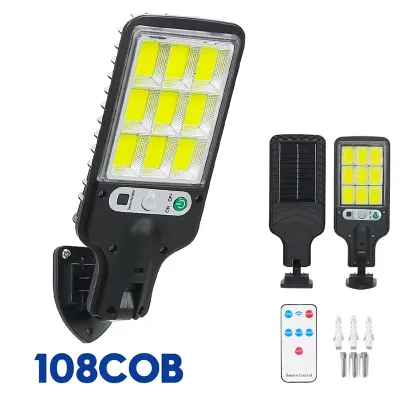
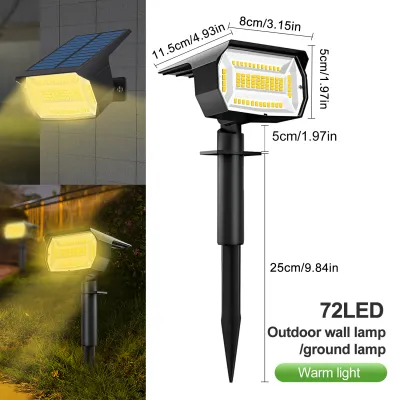
Prices are valid at publication and may change. Please refer to the product page for the latest price.
In contrast, microwave sensors are active devices that continuously emit high-frequency radio waves (microwaves) and measure the reflection off moving objects, utilizing the Doppler radar principle. When an object moves within the detection zone, the frequency of the reflected wave changes, which immediately triggers the light. Because radio waves can penetrate non-metallic materials, microwave sensors do not require a direct line of sight. They can easily detect motion through wood, drywall, plastic, glass, and thin exterior walls. This makes them highly sensitive to any physical movement, regardless of whether the moving object emits heat.
Weather and Environmental Triggers to Watch Out For
Environmental conditions play a massive role in how reliably your outdoor lighting operates. In hot, tropical climates, such as in Singapore, where ambient temperatures regularly hover near human body temperature, PIR sensors can experience a noticeable drop in sensitivity. Because the temperature difference between a human body and the surrounding air is minimal, the thermal contrast is low, making it harder for the sensor to distinguish a person from the background environment. Additionally, direct sunlight hitting a PIR sensor lens can cause rapid temperature spikes, leading to false triggers.

Microwave sensors are completely unaffected by ambient temperature fluctuations, making them highly stable in both extreme heat and freezing cold. However, their high sensitivity to physical movement makes them vulnerable to other environmental triggers. Wind-blown foliage, swaying tree branches, falling leaves, and heavy rain can reflect the emitted radio waves, causing the sensor to trigger the light repeatedly during storms. While PIR sensors generally ignore wind and rain because they lack a thermal signature, a sudden blast of hot air from an air conditioning condenser unit can occasionally trigger a PIR sensor if it is positioned too close.
Animal activity also affects each sensor differently. PIR sensors can be triggered by stray animals or large birds if they pass close to the lens, though many modern fixtures include pet-immunity settings that ignore heat signatures below a certain physical size. Microwave sensors, on the other hand, detect any physical movement. This means small animals, birds, or even large insects flying directly in front of the sensor can trigger the light. Adjusting the sensitivity settings on a microwave sensor is often necessary to filter out these minor movements, requiring careful calibration during setup.
Matching the Right Sensor to Your Property Layout
The physical layout of your outdoor space is one of the most critical factors when choosing between these two technologies. For narrow pathways, front porches, and balconies, PIR sensors are highly effective. Because PIR requires a direct line of sight and has a controlled detection zone, you can easily angle the sensor downward to cover only your specific walkway. This prevents the light from turning on every time a car drives past on the street or a neighbor walks along the public sidewalk. It also ensures the light does not trigger when family members move around inside the house near windows.
For wide driveways, open yards, and expansive outdoor areas, microwave sensors offer broader coverage. Their long detection range and wide, bubble-like coverage pattern make them ideal for securing large spaces with a single fixture. Because they do not rely on a direct line of sight, a microwave sensor can be mounted high up on a wall or even hidden inside a decorative plastic light fixture, maintaining a clean architectural aesthetic while still providing comprehensive security coverage.
If your property has hidden approaches, blind spots, or L-shaped pathways, microwave sensors provide a distinct advantage. A strategically placed microwave sensor can detect an approaching person through a thin wooden fence, a plastic partition, or around a corner before they actually step into the open. This early detection illuminates the area ahead of the visitor, deterring potential intruders before they reach your doors or windows. A PIR sensor, by comparison, would remain completely blind until the person stepped directly into its field of view.
Installation Checks to Prevent False Alarms
Proper installation and positioning are vital to maximize sensor accuracy and minimize annoying false alarms. When mounting your outdoor lighting, always refer to the manufacturer’s specified mounting height, which is typically between 2 and 2.5 meters. For PIR sensors, position the unit so that the expected path of movement cuts across the detection zones laterally rather than directly toward the sensor. PIR technology is far more sensitive to tangential movement (across the field of view) than radial movement (directly toward the lens).
When positioning your fixtures, take active steps to avoid known interference sources. For PIR sensors, keep the lens pointed away from heat sources such as boiler flues, air conditioning exhaust vents, dryer vents, and highly reflective surfaces like swimming pools or large glass doors, which can reflect sunlight and cause thermal false alarms. For microwave sensors, avoid mounting the fixture near vibrating structures, moving machinery, or heavy foliage that sways in the wind. Ensure there are no large metal objects directly in front of a microwave sensor, as metal completely blocks and reflects radio waves, leading to erratic behavior or dead zones.
Because outdoor lighting involves working with fixed electrical wiring, damp environments, and working at heights, safety must be your top priority. Always isolate the power supply at the main consumer unit before attempting any installation, wiring, or maintenance. Verify that the light fixture has an appropriate Ingress Protection (IP) rating for its location; use at least IP44 for sheltered outdoor areas and IP65 or higher for fully exposed locations. Check the voltage compatibility, wattage limits, and dimming methods of your fixture before connecting it to your home’s electrical system. If you are uncomfortable working with electrical wiring, always hire a qualified licensed electrician to complete the installation safely.
Decision Framework: Which Sensor Should You Buy?
To make your final purchasing decision, evaluate your property against this straightforward decision framework:
Choose a PIR sensor if:
- You need strict, localized detection for a front porch, narrow side alley, or balcony.
- You want to prevent the sensor from detecting movement through exterior walls, glass windows, or lightweight fences.
- Your outdoor area has significant moving foliage, wind, or nearby street traffic that would cause constant false alarms on a highly sensitive system.
- You prefer a cost-effective, widely available solution that is simple to position and adjust.
Choose a Microwave sensor if:
- You need to cover a large, open area like a wide driveway, parking bay, or expansive backyard.
- You want to detect motion around corners, behind thin wooden fences, or through non-metallic obstacles.
- You live in a hot climate where high ambient temperatures regularly reduce the sensitivity of standard PIR sensors.
- You want a sensor that can be completely hidden inside a plastic or glass light fixture for a clean, minimalist aesthetic.
Consider a Dual-Technology (Dual-Tech) sensor if:
- You require high security with minimal false alarms in complex environments.
- Dual-tech sensors combine both PIR and microwave technologies in a single unit. The light will only turn on when both sensors detect motion simultaneously—the PIR detects a change in heat, and the microwave detects physical movement. This is highly effective for challenging areas where wind, heat, and moving objects coexist.
Frequently Asked Questions (FAQ)
Can microwave sensors detect motion through glass or metal?
Microwave sensors can easily penetrate standard glass, plastic, wood, and drywall, which allows them to detect motion even when concealed inside a fixture or behind a thin barrier. However, they cannot penetrate metal. Metal surfaces reflect microwave radio waves, acting as a shield. If you install a microwave sensor behind a metal sheet or inside a metal enclosure, it will not function. Additionally, thick double-glazed glass or low-emissivity (Low-E) glass can sometimes reflect or severely weaken the signal, requiring a direct line of sight for reliable operation.
Do motion sensor security lights consume a lot of electricity?
No, motion sensor security lights are highly energy-efficient. Both PIR and microwave sensors consume a negligible amount of standby power (typically under 1 watt) to keep the detection circuitry active. The overall electricity consumption of your security lighting depends almost entirely on the light source itself and how often it is triggered. Replacing old halogen bulbs with energy-efficient LED fixtures significantly reduces power consumption, ensuring that even frequent triggers do not lead to high electricity bills.
Community discussion
Share your experience or ask a question. Comments are reviewed before publication.