
Quick Answer: Which Sensor Should You Choose?
Choosing the right outdoor security setup involves balancing detection accuracy with energy efficiency. When selecting a solar panel light for your home, the technology powering its motion detector is just as critical as the brightness of its LEDs. Passive Infrared (PIR) and microwave sensors represent two fundamentally different approaches to motion detection, and neither technology is universally superior. The ideal choice depends on your property’s specific layout, local environmental factors, and security priorities.
PIR sensors excel at targeted, line-of-sight monitoring, offering a highly reliable solution with minimal false alarms triggered by wind, rain, or swaying foliage. This makes them excellent for properties with close neighbors or dense landscaping. Conversely, microwave sensors use active radar waves to provide wide-angle, high-sensitivity coverage. They are capable of detecting movement behind non-metallic barriers before an intruder even enters your direct line of sight, making them perfect for large, open yards or blind corners.
How PIR and Microwave Sensors Detect Movement
To make an informed decision for your outdoor lighting, it is essential to understand the physics behind how these two systems track motion. PIR, or Passive Infrared, is a passive technology, meaning it does not emit any energy of its own. Instead, it continuously monitors the surrounding environment for changes in infrared radiation—essentially heat signatures. Every warm-blooded creature, including humans and animals, radiates heat. When a person walks across the PIR sensor’s field of view, their body heat crosses multiple detection zones focused by the fixture’s curved Fresnel lens. This sudden change in thermal energy triggers the light. Because the sensor only reacts to moving heat sources, stationary hot objects or cold moving objects (like dry leaves blown by the wind) generally do not trigger the system.
Products mentioned in this guide
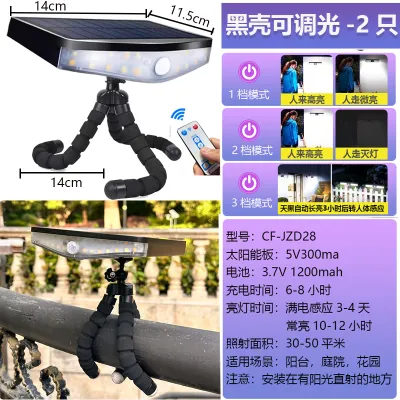
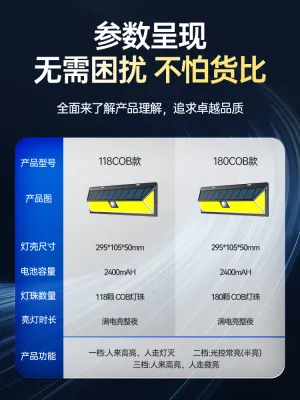
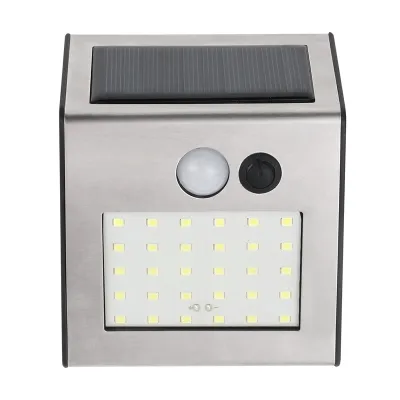
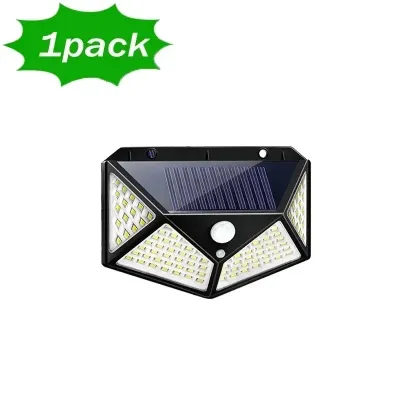
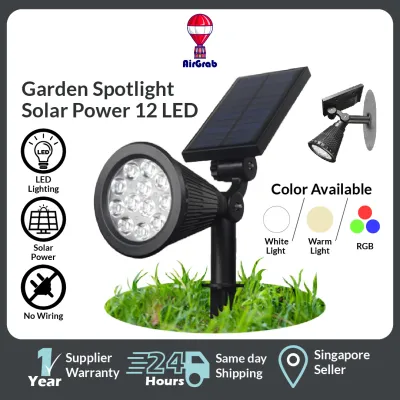
Prices are valid at publication and may change. Please refer to the product page for the latest price.

Microwave sensors, on the other hand, are active detection systems. They operate by continuously emitting high-frequency electromagnetic waves, similar to radar, into the surrounding space. These waves bounce off nearby surfaces and return to the sensor’s receiver. The sensor analyzes the frequency of the reflected waves. When an object moves within the coverage zone, it alters the frequency of the returning waves—a phenomenon known as the Doppler effect. The sensor detects this shift and triggers the light. Because microwave sensors rely on physical mass and motion rather than heat, they can detect any moving object, regardless of its temperature. This includes cold objects, plastic containers, and even movement occurring on the other side of thin, non-metallic barriers.
Core Comparison Dimensions for Home Security
Evaluating these technologies requires looking at how they perform under the real-world constraints of outdoor home security, especially when paired with solar power systems.
Detection Range and Angle
PIR sensors typically project a series of narrow, fan-shaped detection beams. For the sensor to trigger, a moving target must cross from one beam to another, which is why they are most sensitive to motion that travels across their field of view rather than directly toward them. Their coverage angle is usually limited to a cone of 90 to 120 degrees, extending up to 10 or 12 meters under optimal conditions. This structured detection pattern is ideal for focusing on specific pathways or entry gates without picking up irrelevant movement from adjacent areas.
Microwave sensors offer much broader and more uniform coverage. Because electromagnetic waves spread out evenly from the transmitter, they can easily achieve a 180-degree or even a full 360-degree hemispherical detection pattern. They are highly effective at detecting motion moving directly toward the sensor, and their range can often extend up to 15 meters or more. This expansive reach makes them excellent for covering large, open spaces, though it requires careful positioning to avoid scanning beyond your property boundaries.
Sensitivity to False Triggers
The high sensitivity of microwave technology is a double-edged sword in residential settings. Because they detect any physical movement, microwave sensors are prone to nuisance triggering from swaying tree branches, wind-blown debris, heavy tropical downpours, or even water flowing through plastic gutters. In areas with high wind or dense vegetation, a microwave-equipped light may remain illuminated almost continuously, draining its battery prematurely.
PIR sensors are far more stable in environments with dense foliage or active weather. Since a swaying branch or falling rain does not possess a significant heat signature, the PIR sensor ignores these movements. This makes PIR the preferred choice if you live in an area with lush landscaping, near busy sidewalks, or where wind-blown plants are common, as it ensures the light only activates when a person or large animal is actually present.
Obstacle Penetration
PIR technology requires an unobstructed, direct line of sight between the sensor and the target. The infrared radiation emitted by a human body cannot pass through solid glass, acrylic diffusers, thick foliage, or building materials. If a person walks behind a wooden fence or a large decorative pillar, a PIR-equipped solar panel light will not detect them until they step out into the open.
Microwave signals easily penetrate non-metallic materials, including glass, plastic, wood, and drywall. This unique property allows manufacturers to completely conceal the microwave sensor inside the light’s housing, protecting it from the elements and creating a more streamlined aesthetic. However, this also means the sensor can detect movement inside your home through a window, or on a neighbor’s property through a shared wooden fence, potentially leading to constant, unwanted activations.
Power Consumption and Solar Efficiency
For a standalone solar panel light, managing the stored battery power is a daily challenge, particularly during periods of overcast weather or heavy monsoonal cloud cover in tropical regions like Singapore. PIR sensors are exceptionally energy-efficient. Because they are passive devices, they consume a negligible amount of electricity while waiting in standby mode—often measured in microamps. This low idle draw preserves the battery’s charge, ensuring the light has ample power to illuminate at full brightness when triggered.
Microwave sensors require a constant supply of electricity to generate and broadcast electromagnetic waves. Even in standby mode, their power consumption is significantly higher than that of PIR sensors. If a microwave solar panel light is installed in an active area, the combination of continuous wave emission and frequent light triggers can rapidly deplete the battery, leaving the fixture dark during the later hours of the night unless it is paired with a very large solar panel and battery capacity, or utilizes smart power-saving dimming modes.
Decision Framework: Match the Sensor to Your Environment
Selecting the correct sensor type involves assessing your property’s physical layout, landscaping, and specific security goals.
Choose PIR if:
- Targeted Monitoring: You need to monitor a specific pathway, front entrance, or driveway lane without detecting movement from neighboring properties or public sidewalks.
- Dense Vegetation: Your yard has heavy foliage, hanging plants, or trees that sway in the wind, which would otherwise trigger active radar sensors.
- Energy Conservation: Your installation site receives limited direct sunlight, or you are using a compact solar panel light with a smaller battery capacity that requires strict power conservation to last through the night.
- Wildlife Areas: You want to minimize light pollution and false alarms caused by birds, stray cats, or urban wildlife moving through the garden.
Choose Microwave if:
- Wide-Area Coverage: You need to secure a large, open backyard, a wide driveway, or a complex layout with blind corners where an approach could come from multiple angles.
- Proactive Lighting: You want the light to turn on proactively—for example, illuminating a dark pathway before you actually round the corner of your house.
- Aesthetic Integration: You prefer a sleek, minimalist fixture design where the sensor is completely hidden inside a protective, weatherproof diffuser rather than exposed via a plastic dome.
- Extreme Weather Resistance: You require consistent detection performance during heavy rain, wind, or high-temperature conditions that might otherwise degrade PIR thermal sensitivity.
Verify First if:
- Shared Boundaries: You are installing near thin shared wooden fences, thin exterior walls, or lightweight metal structures, as microwave sensors can reflect unpredictably or detect motion on the other side of the barrier.
- Adjustable Settings: Check if the solar panel light features an adjustable sensitivity dial or a dual-detection system that allows you to fine-tune the microwave range. If you cannot adjust the sensitivity, a PIR sensor is almost always the safer, more reliable choice for tight residential spaces.
- Product Certifications: Ensure the fixture complies with local electrical standards and carries appropriate certifications for outdoor use, confirming its safety and build quality.
Installation and Placement Guidelines for Solar Security Lights
Proper installation is crucial to ensure both the sensor and the solar charging system operate at peak efficiency.
Solar Panel Placement
To keep your solar panel light functioning night after night, the solar panel must receive maximum exposure to direct sunlight. In Singapore, which sits near the equator, panels should ideally be mounted horizontally or tilted slightly to capture the sun’s path. Ensure that no shadows are cast on the panel by roof eaves, gutters, overhanging tree branches, or even the light fixture’s own mounting bracket. Even partial shading on a single solar cell can drastically reduce the entire panel’s charging efficiency, leading to premature battery depletion.
Sensor Height and Angle
For optimal performance, PIR sensors should be mounted at the height recommended by the manufacturer, which is typically between 2 and 3 meters above the ground. Mounting the light too high will create a blind spot directly underneath the fixture and reduce the sensor’s sensitivity to ground-level heat signatures. Angle the sensor slightly downward to focus the detection cone on the physical path where intruders or guests are most likely to walk. Microwave sensors are less sensitive to mounting angles due to their broad, spherical signal pattern, but maintaining a consistent height of 2.5 meters helps ensure uniform coverage across the target area.
Microwave Interference
When positioning a microwave-equipped solar panel light, avoid mounting it directly onto large metal surfaces, near aluminum gutters, or adjacent to heavy reinforced concrete walls. Metal surfaces act as mirrors for electromagnetic waves, reflecting the signals back into the sensor and causing erratic behavior, constant false triggers, or complete blind spots. Ensure there is a clear, non-metallic path in front of the sensor’s broadcast field to allow the radar waves to propagate and return naturally.
Safety and Professional Boundaries
Always prioritize safety during installation. If you are mounting fixtures at significant heights, ensure you use a stable, secure ladder and have assistance if necessary. For standard solar panel lights that operate on low-voltage DC power from an integrated battery, installation is generally a safe, DIY-friendly task. However, if you are installing a hybrid solar system that connects to your home’s fixed AC wiring (such as a system that switches to grid power when the solar battery is low), you must isolate the power at the main circuit breaker before touching any wires.
Any work involving fixed electrical wiring, damp or wet outdoor environments, or complex structural mounting should be referred to a qualified professional. Ensure that any outdoor light fixture you install carries an appropriate Ingress Protection (IP) rating. For the humid, rain-prone climate of Singapore, a minimum rating of IP65 is highly recommended to protect the internal electronics, battery, and sensor circuitry from moisture, dust, and heavy downpours. Always verify that the electrical specifications, voltage compatibility, and mounting hardware match your home’s infrastructure before beginning the installation.
Frequently Asked Questions (FAQ)
Can I adjust the sensitivity of a microwave solar light?
Yes, many premium microwave solar security lights feature adjustable sensitivity controls. These can be in the form of physical dials on the housing or settings on a remote control. Adjusting these settings allows you to reduce the detection range, preventing the active radar waves from penetrating nearby walls or reaching into public streets. Additionally, many models offer smart power-management modes, such as keeping the light at a dim ambient level (e.g., 10% brightness) and only ramping up to 100% brightness when significant motion is detected, which helps conserve the battery of your solar panel light.
Will extreme heat affect PIR solar security lights?
Yes, extreme ambient heat can temporarily reduce the effectiveness of a PIR sensor. Because PIR technology relies on detecting the temperature difference between a human body (typically around 37°C) and the surrounding air, its accuracy can decline when ambient outdoor temperatures approach or exceed 35°C. In tropical climates like Singapore, where daytime temperatures are consistently warm, the thermal contrast is lower, which may slightly decrease the sensor’s maximum detection range. Microwave sensors are completely unaffected by ambient temperature changes, making them highly consistent in hot climates.
Do microwave sensors work through glass windows?
Yes, microwave radar signals can easily penetrate standard glass windows. While this allows a microwave sensor to detect movement outside even if mounted indoors, this configuration is generally not recommended for dedicated outdoor security lights. Mounting a solar panel light behind glass prevents the solar panel from receiving direct UV rays, which severely restricts charging efficiency. Furthermore, having the light activate indoors when someone walks past outside can be highly disruptive, and the glass itself can cause reflections that reduce the sensor’s overall accuracy.
Community discussion
Share your experience or ask a question. Comments are reviewed before publication.