
Quick Answer: Which Sensor Technology Fits Your Needs?
Choosing the right motion sensor spotlight for your outdoor space depends on your specific environment, mounting location, and local climate. Neither Passive Infrared (PIR) nor microwave technology is universally superior; instead, each excels under different physical conditions.
PIR sensors are highly reliable for standard, line-of-sight security applications where you want to minimize false alarms. They detect changes in heat signatures, making them ideal for monitoring specific entryways, driveways, or pathways without triggering lights due to wind, rain, or passing street traffic outside your property boundary.
Microwave sensors are active radar systems that excel at covering large, open areas or detecting motion through light obstructions like glass, foliage, and thin non-metallic walls. However, their high sensitivity and ability to penetrate solid objects make them prone to false triggers in tight residential spaces or near shared property lines. Your choice should balance the need for comprehensive detection coverage against the risk of nuisance activations.
Products mentioned in this guide
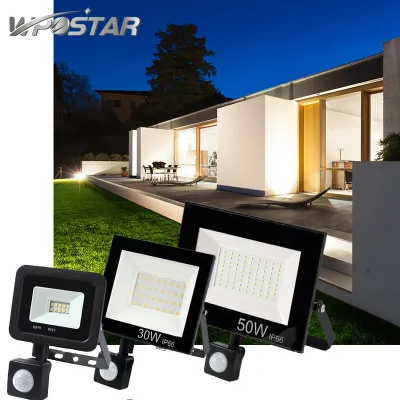
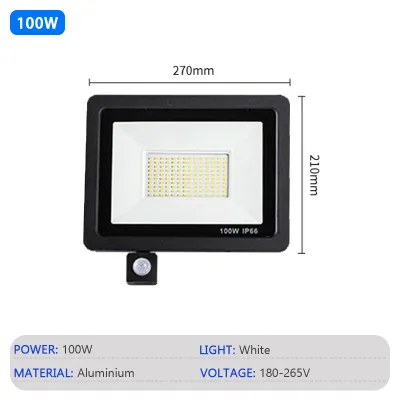
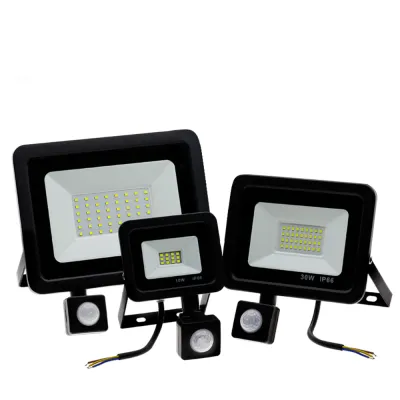
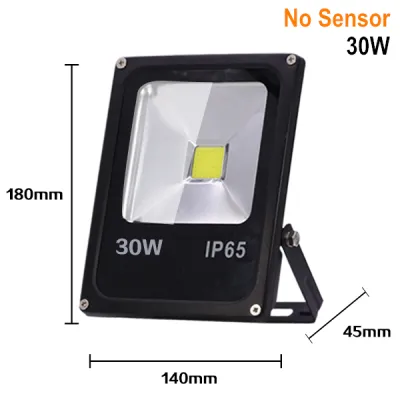
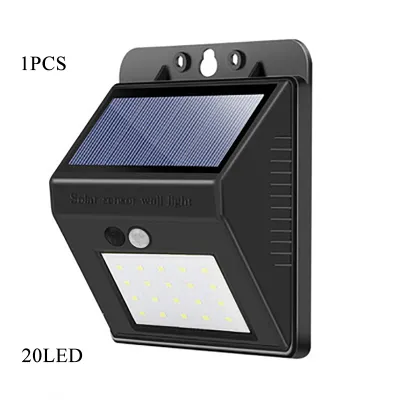
Prices are valid at publication and may change. Please refer to the product page for the latest price.
How PIR and Microwave Sensors Actually Detect Motion
To make an informed decision, it is essential to understand the physical mechanisms that drive these two distinct technologies. Their detection methods dictate how they interact with the surrounding environment, weather elements, and physical obstacles.

Passive Infrared (PIR) Sensors
PIR sensors are entirely passive systems, meaning they do not emit any energy or signals into the environment. Instead, they monitor the ambient infrared radiation—essentially heat—within their field of view. The sensor’s lens is divided into multiple optical zones, which channel infrared energy onto a pyroelectric chip.
When a warm object, such as a human body, a large animal, or a car engine, moves from one detection zone to another, the sensor registers a rapid change in thermal energy. This thermal contrast between the moving object and the background environment triggers the spotlight. Because PIR sensors rely on optical line-of-sight, any solid barrier will block their detection capabilities. A glass window, a wooden fence, or dense foliage will completely hide motion from a PIR sensor.
Microwave Sensors
Microwave sensors are active detection systems that continuously emit low-power, high-frequency electromagnetic waves (typically around 5.8 GHz) and measure the reflection off surrounding objects. This technology operates on the Doppler effect, similar to speed radar systems used by traffic police.
The sensor transmits waves into the environment and analyzes the frequency of the returning signal. When an object moves within the detection zone, it alters the frequency of the reflected waves. The sensor detects this shift and activates the spotlight. Because radio waves can pass through non-metallic materials, microwave sensors do not require a direct line of sight. They can detect movement through glass, plastic, drywall, and thin wooden structures, and their performance is entirely unaffected by ambient air temperature.
Key Performance Differences in Outdoor Environments
Evaluating how these technologies perform in real-world outdoor settings is crucial for selecting a reliable security light. The differences in range, sensitivity, environmental resistance, and power draw will dictate which sensor is best suited for your specific installation site.
Detection Range, Angles, and Obstructions
PIR sensors typically offer a detection range of 8 to 12 meters, with coverage angles ranging from 90 to 180 degrees. Because of their segmented lens design, PIR sensors are most sensitive to lateral movement—objects walking across the sensor’s field of view. If a person walks directly toward a PIR spotlight, the sensor may experience a delayed trigger because the target is not crossing between different thermal zones quickly enough.
Microwave sensors provide a much larger and more uniform detection envelope, often reaching distances of 15 to 20 meters or more. They are highly sensitive to radial movement, meaning they will instantly detect an object moving directly toward or away from the sensor. This makes them exceptionally reliable for long driveways or deep backyards.
However, the ability of microwave signals to penetrate obstructions is a double-edged sword. While it allows you to install the sensor completely hidden inside a weatherproof plastic light fixture to maintain a clean architectural aesthetic, it also means the sensor can detect movement outside your intended security zone. A microwave sensor mounted on an exterior wall may trigger the light when someone walks inside the adjacent room, or when a neighbor moves in their own yard behind a shared fence.
False Triggers: Weather, Animals, and Foliage
Nuisance activations are a major pain point for outdoor lighting systems, causing unnecessary power consumption and disturbing household members or neighbors. PIR sensors are vulnerable to false triggers caused by sudden thermal fluctuations. A blast of hot air from an outdoor air conditioning compressor, rapid sunlight transitions on a partly cloudy day, or a warm asphalt driveway cooling down after sunset can occasionally fool a PIR sensor. Additionally, stray animals passing close to the lens will trigger the light unless the sensor features built-in pet immunity masking.
Microwave sensors are completely immune to air temperature changes and direct sunlight, but they are highly sensitive to physical movement of any kind. This sensitivity makes them prone to false triggers from wind-blown elements. Swaying tree branches, rustling shrubs, blowing debris, and heavy rain can easily set off a microwave sensor. If you install a microwave spotlight near a garden bed or an overhanging tree canopy, the light may cycle on and off continuously during windy nights. To prevent this, you must carefully adjust the sensor’s sensitivity settings during installation.
Power Consumption and Standby Requirements
The operational differences between passive and active technologies have significant implications for energy efficiency and power source compatibility. PIR sensors require very little power to operate. Because they only listen for incoming infrared radiation without emitting any signals, their standby power consumption is negligible, often measuring in milliwatts. This exceptionally low power draw makes PIR the industry standard for solar-powered spotlights and battery-operated security lights, where conserving stored energy is critical for overnight performance.
Microwave sensors must continuously power an active transmitter to emit electromagnetic waves, resulting in a constant standby power draw. While this draw is still relatively low in the context of household electricity bills (typically between 0.5 and 1.5 watts), it is often too high for compact solar panels or standard battery packs to sustain over long periods. As a result, microwave motion sensors are almost exclusively used in mains-powered (hardwired) outdoor spotlights where a stable, continuous electrical connection is available.
Adapting to Singapore's Climate and Property Layouts
Applying these technical differences to Singapore’s unique tropical climate and residential architecture helps identify the most practical choice for local homes.
The Impact of Tropical Heat and Humidity
Singapore experiences high ambient temperatures year-round, with daytime temperatures frequently hovering between 30°C and 34°C, and night temperatures remaining warm. Because human skin temperature is typically around 33°C, the thermal contrast between a person and the surrounding environment is minimal, especially during warm evenings. This lack of contrast can significantly reduce the sensitivity and effective detection range of PIR sensors, as the sensor struggles to distinguish human body heat from the warm background air.
Conversely, Singapore’s intense monsoon seasons bring heavy, driving rain and strong winds. During a torrential downpour, the physical movement of large volumes of falling water and wind-whipped foliage can easily trigger highly sensitive microwave sensors, leading to frequent false alarms. While PIR sensors are generally unaffected by falling rain, sudden temperature drops associated with storm fronts can occasionally trigger them.
Local Housing Contexts and Layouts
The layout of your property is a deciding factor when choosing between these two technologies:
- Landed Properties: Landed homes in Singapore often feature narrow side alleys, perimeter walls, and close proximity to neighboring houses. If you install a highly sensitive microwave spotlight along a narrow side path, the radar signals may penetrate boundary walls or wooden fences. This can cause the light to turn on every time your neighbor walks in their own garden or a car passes on the adjacent public road. For these confined boundary areas, a PIR sensor with a restricted, well-aimed detection cone is far more appropriate.
- HDB Corridors and Condominium Walkways: In high-density housing estates, public walkways and shared corridors experience frequent foot traffic. A microwave sensor mounted near an entryway might detect movement through a closed front door or window, turning on the outdoor light unnecessarily when residents move inside their own flat. In these scenarios, the strict, line-of-sight detection of a PIR sensor ensures the light only activates when someone is physically standing in the corridor or approaching the threshold.
Decision Framework: Which Sensor Should You Choose?
To help you select the correct motion sensor spotlight, use this structured decision framework based on your specific installation conditions.
Choose PIR if:
- Strict Boundary Control is Required: You want to restrict detection strictly to your own property line and avoid triggering the light from neighbors or street traffic.
- Solar or Battery Power is Used: You are installing a standalone spotlight without access to mains electricity, making low standby power consumption critical.
- High-Traffic Shared Spaces: The light is situated near shared HDB corridors, public sidewalks, or common condo pathways where you only want triggers from direct line-of-sight approaches.
- Foliage and Wind are Present: The mounting area is surrounded by trees, shrubs, or hanging plants that move frequently in the breeze.
Choose Microwave if:
- High Ambient Heat is a Factor: You are mounting the light in an unshaded, hot outdoor area where thermal contrast is poor, and you need reliable detection regardless of temperature.
- Indirect or Hidden Installation is Preferred: You want to hide the sensor inside a clean, aesthetically pleasing, weatherproof light fixture, or you need to detect motion around physical corners or behind glass panels.
- Wide, Open Areas Need Coverage: You are illuminating a large driveway, a spacious backyard, or an open commercial lot where a broad detection range and high sensitivity to head-on movement are required.
Verify First if:
- Reflective Surfaces are Nearby: If you choose a microwave sensor, check for large metal sheets, heavy concrete walls, or highly reflective surfaces, as these can bounce radar waves and cause erratic detection patterns.
- Shared Walls Exist: Ensure the microwave sensor's sensitivity can be adjusted downward to prevent it from penetrating shared partition walls and causing nuisance triggers for your neighbors.
Installation Safety and Electrical Verification
Before purchasing or installing any outdoor motion sensor spotlight, several critical safety and technical specifications must be verified to ensure long-term reliability and compliance with local standards.
Ingress Protection (IP) Rating
Outdoor fixtures in Singapore must withstand heavy tropical downpours and high humidity. Ensure the spotlight has a minimum rating of IP65 (dust-tight and protected against water jets) or IP66 for highly exposed locations. Never use indoor-rated or low-IP fixtures in outdoor environments.
Voltage and Compatibility
Verify that the light is rated for Singapore’s standard electrical grid of 230V AC at 50Hz. Check the manufacturer’s specified wattage limits and dimming compatibility if you plan to integrate the spotlight with smart home dimmers or existing automated systems.
Electrical Safety Boundaries
Working with fixed electrical wiring, installing fixtures at heights, or mounting lights in damp outdoor zones carries significant risk of electrical shock, short circuits, or water ingress. Always isolate the power supply at the main circuit breaker before attempting any work.
Professional Installation
If the installation involves connecting to fixed wiring, running new cables, or mounting heavy fixtures on high exterior walls, you must engage a Licensed Electrical Worker (LEW) in Singapore. Always follow the manufacturer’s step-by-step installation instructions and check the physical product labels for safety certifications before proceeding.
Community discussion
Share your experience or ask a question. Comments are reviewed before publication.