
Choosing between Passive Infrared (PIR) and microwave (radar) sensors for a outdoor solar wall light is not about finding a universally superior technology. Instead, it is a matter of matching the sensor’s physical detection method to your specific property layout, mounting height, and tolerance for false alarms. Neither technology is a perfect fit for every scenario, as each handles environmental factors and physical obstacles in fundamentally different ways.
PIR sensors excel in open, direct-line-of-sight areas where you want to prevent the light from triggering through walls, fences, or neighboring windows. Microwave sensors are highly sensitive and can detect motion around corners or through thin, non-metallic barriers, making them ideal for complex architectural layouts but more prone to false alarms from wind-blown foliage or heavy rain. Understanding these operational differences is the first step toward securing your property without creating a nuisance for yourself or your neighbors.
How PIR and Microwave Sensors Detect Motion
Passive Infrared (PIR) technology operates by monitoring changes in infrared heat signatures within its designated field of view. As a passive system, a PIR sensor does not emit any energy of its own; instead, it acts as a receiver that detects blackbody radiation emitted by warm objects. The sensor’s face is covered by a multi-segmented plastic dome known as a Fresnel lens, which focuses incoming infrared light onto a pyroelectric sensor chip. When a warm body, such as a human, a large animal, or a vehicle engine, moves across these focused segments, the sensor registers a rapid fluctuation in thermal energy and triggers the solar wall light.
Products mentioned in this guide
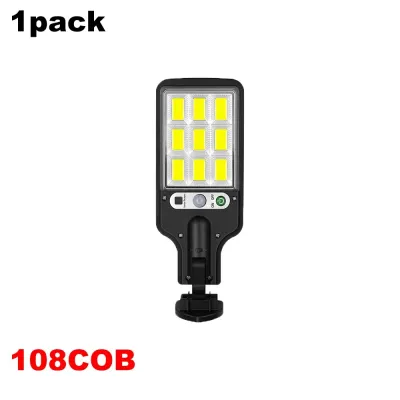
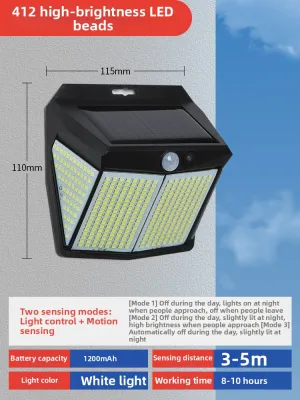
Prices are valid at publication and may change. Please refer to the product page for the latest price.
Because PIR sensors rely entirely on detecting heat differentials, they require an unobstructed line of sight to function. Infrared radiation at these wavelengths cannot penetrate solid, non-porous materials. If a person walks behind a glass partition, a thin wooden trellis, or a dense hedge, the PIR sensor will not detect them because the thermal signature is physically blocked. This strict limitation makes PIR highly directional and predictable, ensuring that the sensor only monitors the exact physical space to which it is pointed.
Microwave sensors, by contrast, are active detection systems that continuously emit high-frequency electromagnetic radio waves, typically at a frequency of 5.8 GHz. The sensor then measures the reflected waves that bounce back to its receiver, utilizing a principle known as the Doppler effect. If an object moves within the detection zone, it alters the frequency of the reflected waves. The sensor instantly calculates this change in frequency and activates the light.
Unlike infrared radiation, high-frequency microwave signals can easily penetrate non-metallic materials, including glass, plastic, drywall, and thin wooden panels. This allows a microwave sensor to maintain a wide, often 360-degree detection radius that can see through minor physical barriers. When integrated into a solar wall light, this means the sensor does not need a clear line of sight to trigger, allowing the light to detect motion even before a person steps around a corner or through an entryway.
For outdoor solar security lights, these technological differences dictate where you can position your light and how it will interact with your property boundaries. A PIR-equipped light must be mounted with a clear, direct view of the target path, whereas a microwave-equipped light can be tucked away or mounted behind decorative screens while still providing reliable coverage. However, because solar lights rely entirely on stored battery power, these operational differences also directly affect how long your light will stay illuminated throughout the night.
Comparing Detection Performance in Real-World Conditions
Detection Range and Obstacle Penetration
Microwave sensors offer impressive coverage, often reaching detection distances of 15 meters or more in a broad, spherical pattern. This penetration capability is highly beneficial for complex layouts, such as a driveway with large concrete pillars or a backyard with a wooden fence. However, this strength can quickly become a liability in densely populated residential areas, such as Singapore’s HDB estates or closely packed terraced houses. A microwave sensor mounted on an exterior wall might detect neighbors walking in their own yards or pedestrians on a public pathway behind a fence, causing frequent, unnecessary activations.

In contrast, PIR sensors offer a highly controlled, directional detection zone, typically ranging from 110 to 180 degrees with a reach of 5 to 12 meters. Because PIR cannot penetrate solid barriers, its coverage is strictly limited to your physical property boundaries. If you map your property boundaries and find that your light needs to monitor a narrow corridor without spilling over into a neighbor’s balcony or a public walkway, PIR is the more predictable and neighbor-friendly choice. Always check the manufacturer’s specification sheet for the exact detection angles and distance ratings of the specific solar wall light model you are considering.
False Alarm Triggers: Weather, Pets, and Foliage
Singapore’s tropical climate presents unique challenges for outdoor motion sensors. High humidity, sudden heavy downpours during the monsoon season, and dense tropical foliage are major sources of false alarms. Microwave sensors are incredibly sensitive to any physical movement, meaning that heavy raindrops falling close to the sensor or wind-blown palm fronds can easily trigger the light. If your solar wall light is mounted near overhanging trees or in an open area exposed to intense tropical storms, a microwave sensor may cycle on and off repeatedly throughout the night, draining the battery.
PIR sensors are generally immune to wind and rain because these environmental factors do not possess a moving heat signature. However, PIR sensors face a different challenge in Singapore’s hot climate. When the ambient outdoor temperature rises close to human body temperature (around 30°C to 34°C), the thermal contrast between a walking person and the surrounding environment decreases. This can temporarily reduce the PIR sensor’s detection sensitivity. Furthermore, PIR sensors can be fooled by sudden drafts of hot air from air conditioning condenser units, passing vehicles with hot engines, or small animals like stray cats and birds moving close to the lens. Understanding these environmental hazards near your intended mounting spot is crucial for selecting the right technology.
Power Consumption and Solar Battery Efficiency
Because solar wall lights rely on a limited reservoir of energy stored in their internal batteries, power efficiency is a critical consideration. Microwave sensors are active devices that must continuously generate and emit electromagnetic waves to monitor the area. This constant active state draws a continuous, albeit small, amount of standby power from the battery. PIR sensors, being passive, consume virtually no power while waiting for motion, as they only absorb ambient infrared light.
During Singapore’s prolonged cloudy or monsoon seasons, when daily solar charging is limited, this difference in standby power draw becomes highly significant. A microwave-equipped solar wall light with an undersized battery may struggle to stay operational through consecutive rainy days, as the constant sensor emission and frequent false alarms deplete the stored energy. When evaluating product labels, always verify the solar panel wattage (measured in watts, W) and the battery capacity (measured in milliampere-hours, mAh or watt-hours, Wh). A robust solar wall light should pair its sensor type with an appropriately sized battery and solar panel to ensure the light can sustain its standby requirements and provide reliable illumination overnight.
Decision Framework: Matching the Sensor to Your Property
To simplify your selection process, use this structured decision framework based on your specific residential layout and performance priorities.
Choose PIR if:
- You are mounting the light in a clear, unobstructed entryway, balcony, or straight walkway.
- You want to strictly avoid detecting movement from neighboring properties, public corridors, or street traffic.
- You prioritize maximum solar battery conservation and want the light to remain operational even after several days of heavy cloud cover.
- The mounting area is clear of major heat sources like air conditioning exhaust units.
Choose Microwave if:
- Your property layout is complex, requiring motion detection around corners, behind structural pillars, or through thin glass patio doors.
- You need a wide, 360-degree detection zone to cover a large, open driveway or backyard.
- The light can be mounted in a sheltered area where wind-blown foliage and heavy rain will not cause continuous false alarms.
- You can tolerate occasional environmental triggers in exchange for comprehensive, non-line-of-sight security coverage.
Verify first if:
- Your intended mounting surface or surrounding structures are made of metal. Metal surfaces block and reflect microwave signals, which can render a microwave sensor completely ineffective or cause highly erratic behavior.
- Local housing regulations or estate guidelines restrict light spill. For instance, if you live in an HDB flat or a private condominium, frequent nighttime light activations can disturb neighbors. In such settings, a highly directional PIR sensor is almost always preferred to comply with community standards and avoid neighbor disputes.
Installation Tips to Minimize False Alarms
Once you have selected the appropriate solar wall light, proper installation is key to minimizing false alarms and maximizing efficiency. For PIR sensors, angle the sensor slightly downward toward the ground rather than pointing it straight out toward the horizon. This limits its distance reach and prevents it from detecting distant passing cars or pedestrians on the street. Ensure the PIR lens is kept clean of dust, spiderwebs, and moisture, as physical obstructions on the plastic Fresnel lens can severely degrade its thermal detection capabilities. Additionally, position the light away from direct thermal drafts, such as air conditioning condensers or outdoor cooking areas.
For microwave sensors, look for models that feature adjustable sensitivity dials or range settings. Lowering the sensitivity allows you to shrink the detection field, ensuring the radio waves do not penetrate exterior walls or wooden fences to detect movement in public zones. Avoid mounting microwave sensors directly opposite thin glass panels or lightweight wooden doors if those barriers face high-traffic public walkways.
Regardless of the sensor type, always prioritize safety during installation. Ensure the solar wall light is securely mounted to withstand strong winds and heavy tropical downpours. If you are installing a light at height, use a stable ladder and take appropriate safety precautions. While most solar wall lights are low-voltage, self-contained units that only require simple screw-mounting, some advanced models may feature hybrid designs that allow hardwiring into your home’s electrical system for backup power. If your installation involves connecting to fixed electrical wiring, always isolate the power supply at the main circuit breaker before starting work, follow the manufacturer’s detailed wiring instructions, and consult a qualified, licensed electrician to ensure compliance with local electrical safety standards.
Frequently Asked Questions (FAQ)
Can I adjust the sensitivity of a solar wall light sensor?
Yes, but this feature depends heavily on the specific model and sensor technology. Many advanced microwave sensors include adjustable sensitivity dials or digital settings that let you reduce the detection radius to prevent the signal from penetrating unwanted areas. PIR sensors, on the other hand, often have a fixed detection range determined by the physical design of their curved plastic Fresnel lens. However, some high-end PIR models allow you to physically mask portions of the lens with adhesive strips to block detection from specific directions. Always check the manufacturer’s product manual for specific adjustment capabilities before purchasing.
Do microwave sensors work through metal walls or fences?
No, microwave signals cannot penetrate metal. When high-frequency electromagnetic waves encounter a metallic barrier—such as a steel gate, aluminum siding, or a metal fence—they are reflected back or scattered rather than passing through. If you mount a microwave solar wall light directly on a metal surface, or if its primary detection path is blocked by a solid metal structure, the sensor’s performance will be severely compromised. In these scenarios, a PIR sensor mounted with a clear, unobstructed line of sight is a far more reliable option.
Why does my solar security light turn on during heavy rain?
If you own a microwave-equipped solar security light, heavy rain can trigger false alarms because the active sensor detects the physical movement of dense water droplets falling through its high-frequency signal field. The sensor interprets this rapid, widespread movement as a physical object. To resolve this, try angling the sensor downward to reduce its exposure to the open sky, lowering the sensitivity setting on the device, or shielding the sensor with a small protective hood. If weather-related false alarms persist despite adjustments, replacing the unit with a PIR solar wall light—which is unaffected by falling rain due to its reliance on heat signatures—is often the most effective solution.
Community discussion
Share your experience or ask a question. Comments are reviewed before publication.