
Selecting the right motion sensor for a solar security light is not about finding a single, universally superior technology. Instead, the ideal choice depends on your specific installation environment, the power constraints of the solar fixture, and the level of detection accuracy your property requires. While one sensor might excel at conserving battery life in a sunny driveway, another might be better suited for a shaded pathway or a high-traffic perimeter. This guide compares passive infrared (PIR), microwave, and radar (mmWave) motion sensors, evaluating how they function, how they impact solar power reserves, and how to choose the best option for your outdoor security needs.
How PIR, Microwave, and Radar Sensors Actually Work
Passive Infrared (PIR) sensors are the most common technology found in outdoor lighting. They operate passively, meaning they do not emit any energy of their own. Instead, they monitor the ambient infrared radiation—essentially heat signatures—within their field of view. The sensor’s lens is divided into multiple zones. When a warm object, such as a human, a large animal, or a recently driven vehicle, moves across these zones, the sensor detects a rapid change in infrared energy and triggers the solar light. Because they rely on physical movement across distinct thermal zones, stationary objects or objects moving directly toward the sensor are less likely to trigger it.
Microwave sensors are active detection systems. They continuously emit high-frequency electromagnetic waves into the surrounding area and analyze the waves that bounce back. When an object moves within the detection zone, it alters the frequency of the reflected waves—a phenomenon known as the Doppler shift. The sensor detects this frequency change and activates the light. Because microwave waves can pass through non-metallic materials like glass, plastic, wood, and thin masonry, these sensors can detect motion through obstacles, making them highly sensitive but also prone to detecting activity outside the intended area.
Products mentioned in this guide
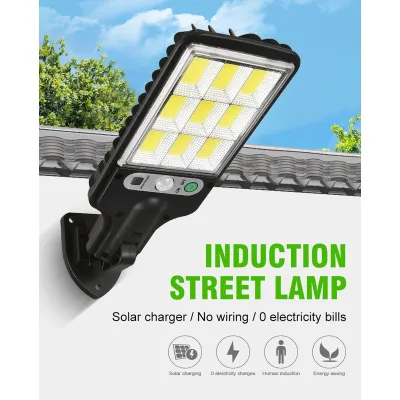
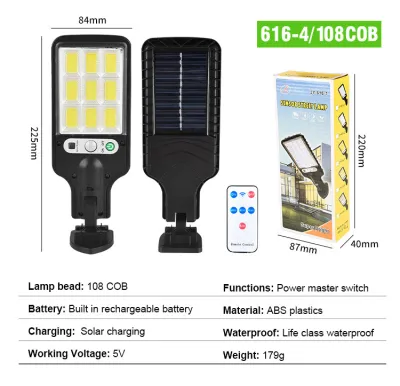
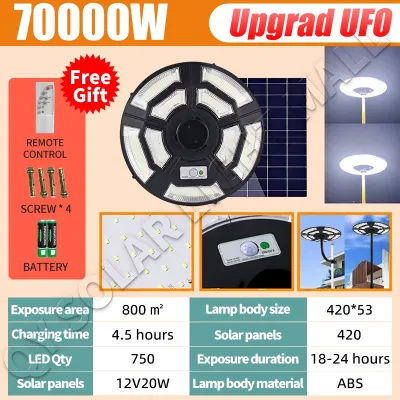
Prices are valid at publication and may change. Please refer to the product page for the latest price.
Radar sensors, specifically millimeter-wave (mmWave) radar, represent an advanced class of active sensors. Operating at much higher frequencies than standard microwave sensors, radar units emit short-wavelength radio signals and measure the time of flight, phase shift, and frequency of the returned signals. This allows the sensor to calculate not just the presence of motion, but the exact distance, velocity, and direction of the moving object. This high-resolution spatial mapping enables radar sensors to distinguish between a human walking toward a door and wind-blown foliage swaying in place, offering a level of precision that standard microwave sensors cannot match.
Key Performance Factors for Solar Security Lights
Power consumption is a critical consideration for any solar light. Because solar-powered fixtures rely entirely on stored battery energy, the standby power draw of the sensor directly impacts how long the light can operate, especially during consecutive rainy or overcast days. PIR sensors are exceptionally energy-efficient because they operate passively, drawing only a tiny fraction of a milliamp while waiting for motion. This minimal power requirement makes PIR the standard choice for compact solar lights with smaller battery capacities.

In contrast, microwave and radar sensors are active devices that must continuously generate and emit electromagnetic signals. This active transmission requires a constant, higher standby current. If a solar light is equipped with an active sensor, it requires a larger solar panel and a higher-capacity battery to prevent the system from draining overnight, particularly in regions with seasonal sunlight variations. Some advanced fixtures mitigate this by using hybrid modes, where a PIR sensor acts as a low-power wake-up trigger for a more precise active sensor.
Detection range and field of view also vary significantly among these technologies. PIR sensors typically offer a directional, fan-shaped detection area, often extending up to 12 meters at an angle of 110 to 180 degrees. Their range is physically limited by the strength of the thermal radiation reaching the lens. Microwave and radar sensors, however, provide much wider, volumetric coverage. They can often detect motion in a full 360-degree pattern and at much greater distances, sometimes exceeding 15 to 20 meters. This makes active sensors highly effective for large, open spaces, though their sensitivity must be carefully managed to avoid over-coverage.
False trigger susceptibility is the final performance pillar. PIR sensors are generally immune to non-thermal movements, meaning wind-blown leaves, falling rain, or moving shadows will not trigger them. However, they can be fooled by sudden drafts of hot air or direct sunlight reflecting off shiny surfaces. Microwave sensors, due to their high sensitivity and ability to penetrate materials, are highly susceptible to false triggers from moving tree branches, small pests, or even traffic on the other side of a thin wall. Radar sensors use digital signal processing to filter out repetitive movements like swaying branches, making them more resilient than standard microwave sensors, though they still require precise calibration to avoid unwanted activations.
Matching the Sensor to Your Outdoor Environment
Local weather conditions and ambient temperatures play a major role in sensor performance. In tropical climates like Singapore, where daytime temperatures frequently hover near human body temperature, PIR sensors can experience a drop in sensitivity. When the ambient air temperature is close to 37 degrees Celsius, the thermal contrast between a human body and the background is minimal, making it harder for the PIR sensor to distinguish an intruder. Active microwave and radar sensors are unaffected by ambient temperature changes, making them highly reliable in extreme heat. However, heavy tropical downpours or dense fog can scatter active radio waves, occasionally leading to temporary range reduction or false triggers.
Penetration risks are a unique environmental challenge for active sensors. Because microwave signals easily pass through wood, glass, and drywall, installing a microwave-equipped solar light on a shared boundary fence or near a window can cause persistent issues. The light may turn on every time a neighbor walks in their adjoining garden or when someone moves inside a nearby room. PIR sensors do not suffer from this issue, as they require a direct, unobstructed line of sight to detect thermal changes. Radar sensors can also experience penetration issues, though their advanced settings often allow users to define strict distance thresholds to ignore motion beyond a certain boundary.
Mounting height and angle must be tailored to the sensor type to ensure optimal performance. PIR sensors are highly sensitive to lateral movement, meaning they work best when mounted at a height of 2 to 2.5 meters, angled so that visitors walk across the detection field rather than directly toward the lens. Microwave and radar sensors are less sensitive to the angle of approach, making them more flexible for high-altitude mounting or placement in awkward corners. However, because active sensors are highly sensitive to physical movement, the solar light fixture must be mounted to a completely rigid surface; any wobble or vibration caused by strong winds can trigger the active sensor, causing the light to cycle on and off repeatedly.
Decision Guide: Which Sensor Fits Your Property?
To choose the right sensor for your property, evaluate your specific security goals, layout, and solar exposure. Choose a PIR sensor if your primary goal is standard residential security for a driveway, patio, or entryway. PIR is the ideal choice if you want to maximize your solar light’s battery life, avoid false alarms from neighboring properties, and ensure the light only activates when a person or vehicle physically enters the immediate area. It is highly reliable for straightforward, line-of-sight applications where energy conservation is a priority.
Choose a microwave sensor if you need to secure a large, open perimeter where a single light must cover a wide, volumetric area. Microwave technology is also suitable if you want to install the solar light inside a protective, weatherproof enclosure, as the signals can easily pass through plastic covers. This option is best for properties with clear boundaries where penetration through fences or walls will not cause nuisance triggers for neighbors.
Choose a radar sensor if you require highly precise, zone-specific detection in a complex outdoor environment. Radar is ideal if you want to filter out background noise, such as swaying trees or passing pets, while maintaining high sensitivity to human movement. This technology is excellent for modern smart-home integrations where you want to monitor the exact direction and speed of an approaching object, provided you select a high-quality fixture with customizable software settings.
Before making a final decision, verify if your installation site features unique structural obstacles, highly reflective metal surfaces, or extreme microclimates. Metal surfaces can reflect microwave and radar signals unpredictably, creating dead zones or causing continuous false triggers. If your property has extensive metal siding, chain-link fencing, or metal roofing, a PIR sensor is generally the safer and more predictable choice.
What to Verify Before Buying a Solar Security Light
When purchasing a solar security light, the sensor is only as good as the hardware supporting it. First, verify the battery and solar panel capacity. Active sensors like microwave and radar require robust power systems. Ensure the solar panel is rated high enough to recharge the battery fully during the day, and check that the battery capacity (measured in milliampere-hours) can sustain the sensor’s standby draw throughout the night, especially during periods of low sunlight.
Next, look for adjustability features. High-quality solar lights allow you to customize the sensor’s sensitivity, detection range, and illumination time-delay. Being able to dial down the sensitivity of a microwave sensor or adjust the detection angle of a PIR sensor is crucial for adapting the fixture to your specific property layout and preventing battery drain from false triggers.
Finally, confirm the weatherproofing and durability of the entire fixture. Outdoor security lights must withstand rain, dust, and humidity. Check the Ingress Protection (IP) rating of both the light housing and the sensor dome; a rating of IP65 or higher is recommended for reliable outdoor performance. If your installation involves mounting the light at a significant height or integrating it with any fixed electrical wiring, always isolate the power source before starting and consult a qualified professional to ensure a safe and secure installation.
Frequently Asked Questions (FAQ)
Will a PIR sensor fail to detect intruders on very hot days?
PIR sensors do not completely fail on hot days, but their detection range and sensitivity can decrease. Because PIR technology relies on detecting the temperature difference between a moving human body and the surrounding environment, a high ambient temperature reduces this thermal contrast. To maintain reliable detection in hot climates, you can adjust the sensor’s sensitivity setting to high, ensure the lens is clean and free of dust, or adjust the mounting angle so that targets cross the detection path laterally rather than walking straight toward the lens.
Can I adjust a microwave sensor to stop detecting motion through my fence?
You cannot programmatically stop microwave signals from penetrating non-metallic barriers like wooden fences or glass, as this is a physical characteristic of the electromagnetic waves. However, you can reduce the sensor’s overall sensitivity or range setting to limit how far the signal travels. If false triggers persist, the most effective solutions are physically repositioning the solar light further away from the barrier, angling the fixture downward to direct the signal toward the ground, or replacing the unit with a PIR or radar-based solar light that does not penetrate solid objects.
Community discussion
Share your experience or ask a question. Comments are reviewed before publication.