
A pristine diffuser typically fills your home with fragrance for several weeks to a few months, but its exact lifespan depends heavily on the bottle’s liquid volume, the number of reeds you insert, and the unique climate of your living space. In a tropical environment like Singapore, factors such as ambient humidity, air conditioning, and constant airflow play a massive role in how quickly the diffuser oil evaporates. By understanding the mechanics of capillary action and managing your diffuser setup strategically, you can enjoy a consistent scent throw while maximizing the value of every bottle.
Setting Realistic Lifespan Expectations for Pristine Diffusers
To establish a reliable baseline for your pristine diffuser, check the manufacturer’s packaging, product label, or official product listing. These resources specify the exact liquid volume—typically ranging from smaller 50ml vessels to larger 180ml options—alongside estimated duration guidelines. These estimates serve as a controlled baseline, assuming average temperatures and standard reed usage.
The physical relationship between oil volume and the number of reeds is the primary driver of baseline longevity. A larger volume of oil naturally takes longer to deplete, but this timeline shrinks as you introduce more reeds. Each reed acts as a channel, drawing the fragrance upward via capillary action to evaporate into the air. If you pack a small bottle with the maximum number of reeds, the increased surface area will accelerate evaporation, causing the oil to drain far faster than the baseline estimate.
Products mentioned in this guide

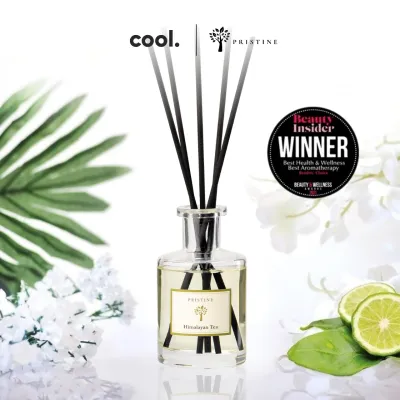
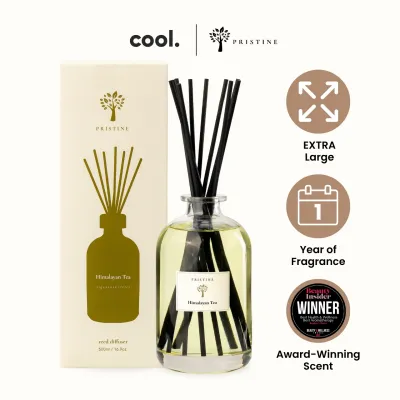


Prices are valid at publication and may change. Please refer to the product page for the latest price.
It is vital to recognize that these manufacturer guidelines are starting points rather than guaranteed timelines. In Singapore, the daily reality of high ambient humidity contrasted with dry, air-conditioned indoor spaces creates highly variable evaporation rates. Your personal scent preferences, such as how strongly you want the fragrance to perform and how many reeds you choose to use, will ultimately dictate how long the liquid lasts in your specific home.
Key Factors That Influence Scent Longevity
Air movement and temperature are highly influential external forces acting on your pristine diffuser. Singapore’s tropical heat naturally accelerates evaporation if the bottle is kept in a non-air-conditioned room. Conversely, air conditioning lowers the temperature but strips moisture from the air, creating a dry environment that pulls oil out of the reeds more rapidly. Ceiling fans compound this effect by constantly sweeping away the saturated air boundary layer around the reeds, prompting continuous evaporation.

How you manage the physical reeds themselves directly dictates the daily depletion rate of the fragrance oil. When you first insert the reeds, they absorb a significant volume of liquid to become fully saturated, which causes an initial, noticeable drop in the bottle’s oil level. Flipping the reeds introduces dry, oil-soaked ends directly to the open air, causing an immediate burst of intense fragrance but also accelerating the overall consumption of the oil. The more frequently you flip them, and the more reeds you keep in the bottle, the faster the liquid level will fall.
The physical placement of the diffuser within a room can dramatically alter its lifespan due to microclimates. Placing a vessel near open windows, balcony doors, or hallway drafts exposes the reeds to constant, turbulent air currents that strip the oil away faster than gentle, ambient air currents. Similarly, high-humidity zones like bathrooms present a unique challenge; the high moisture content in the air can slow down the evaporation of the water-soluble elements in some diffusers, but it can also cause the reeds to absorb water vapor from the air, clogging the porous channels and preventing the fragrance oil from traveling upward efficiently. Direct sunlight is another major culprit, as solar heat warms the glass bottle and the oil inside, driving up the evaporation rate while potentially damaging the delicate fragrance compounds.
Practical Maintenance Tips to Extend the Fragrance
Maximizing the lifespan of your pristine diffuser requires a mindful approach to reed management. Instead of flipping the reeds daily, flip them only when the scent throw begins to fade, typically every one to two weeks. Always perform this action over a sink or paper towels to prevent concentrated oil droplets from dripping onto wooden tables or delicate finishes, where they can cause permanent staining or chemical damage.
If you are placing your diffuser in a smaller room, such as a study or powder room, you do not need to use the entire bundle of reeds. Start with just two or three reeds and observe the scent strength over twenty-four hours. Reducing the number of reeds limits the active surface area, which significantly slows down the evaporation rate and extends the life of the oil while keeping the fragrance at a comfortable level.
Dust and airborne debris are silent enemies of diffuser longevity, especially in urban environments. Over time, dust settles on the exposed portions of the reeds and inside the neck of the bottle, clogging the microscopic pores that allow the oil to travel upward. Gently wiping the neck of the bottle during your regular cleaning routine and replacing dusty or stiff reeds ensures that the oil evaporates cleanly and efficiently, preventing premature flipping.
Strategic relocation is a simple, zero-cost way to preserve your diffuser oil. Position the vessel in a shaded, cooler part of the room away from direct sunlight, air conditioning vents, and high-velocity fan paths. An ideal spot is on a shelf or side table that experiences gentle, natural air circulation, allowing the fragrance to disperse softly throughout the room rather than being aggressively blown away.
Clear Signs Your Reed Diffuser Needs a Refill or Replacement
Recognizing when your pristine diffuser has reached the end of its functional life prevents you from keeping an ineffective bottle on display. The most obvious indicator is a fading scent throw that fails to improve even after you flip the reeds. When the active fragrance compounds have fully evaporated, the remaining liquid may still look like oil, but it will lack the volatile elements required to disperse scent molecules into the air.
Clogged or discolored reeds are another clear visual signal that your setup requires attention. Over weeks of exposure to air and dust, the reeds lose their natural porous capillary structure, often turning dark, stiff, or slightly sticky. Once these microscopic channels are blocked, the reeds can no longer draw liquid upward, rendering the diffuser inactive even if there is still oil left in the bottle.
As the diffuser nears the end of its cycle, you will often notice a change in the physical state of the remaining liquid. The oil level may drop below the bottom of the reeds, or the remaining liquid may transform into a thick, dark, and highly viscous residue. This residue consists of heavy base elements that do not evaporate easily; once the liquid reaches this state, it can no longer climb the reeds, indicating that it is time to clean the vessel and introduce a fresh refill and new reeds.
Frequently Asked Questions (FAQ)
Can I reuse the same reeds when refilling with a new fragrance?
Reusing old reeds with a new fragrance oil is highly discouraged because the porous channels within the reeds are already saturated with the previous scent’s chemical compounds. Introducing a new fragrance to these old reeds will result in cross-contamination, blending the two scents together and altering the intended fragrance profile of your new oil. Furthermore, older reeds are likely already partially clogged with dust and oxidized oil residues, which will severely restrict their ability to draw up the fresh liquid. To ensure optimal scent purity and efficient capillary action, always use a fresh set of reeds whenever you refill or change your diffuser fragrance.
Does the size of the room change how fast the oil evaporates?
The physical size of a room does not directly dictate the evaporation rate of the diffuser oil, as evaporation is driven by surface area, reed count, ambient temperature, and localized airflow. However, room size has a major indirect impact on how you manage your diffuser setup. In a very large living area, a small diffuser with only a few reeds may fail to provide a noticeable scent throw, prompting you to add more reeds or place multiple diffusers around the space to achieve the desired fragrance level. This increase in the number of active reeds directly accelerates the overall consumption of your oil, meaning you will go through refills much faster in larger spaces.
Is it safe to leave a reed diffuser in direct sunlight or high heat?
Leaving a reed diffuser in direct sunlight or near high heat sources is inadvisable for performance and safety reasons. Direct solar exposure heats the glass bottle and the oil inside, accelerating evaporation and causing your diffuser to run dry far quicker than expected. Additionally, intense heat and ultraviolet light can degrade the delicate essential oils and fragrance compounds, altering the scent profile. From a safety perspective, high heat can cause the liquid to expand, and placing a glass vessel filled with oil near active heat sources increases the risk of accidental spills or damage.

Community discussion
Share your experience or ask a question. Comments are reviewed before publication.