
Quick Answer: Is Prolink GU10 the Most Energy-Efficient Choice?
Prolink GU10 bulbs are not the absolute most energy-efficient options on the market when measured purely by peak luminous efficacy (lumens per watt), but they represent a highly practical and cost-effective choice for standard residential use. For homeowners in Singapore planning multi-bulb installations—such as extensive track lighting or recessed downlight arrays—Prolink offers a competitive balance of solid baseline energy savings and low upfront costs.
Premium-tier lighting brands often edge out Prolink in terms of maximum luminous efficacy, advanced thermal management, and color rendering. These high-end alternatives utilize premium LED chips and superior heat-sink designs to extract more light from every watt of electricity. However, these performance gains come with a significantly higher initial price tag.
Ultimately, your decision should depend on your household priorities. If your goal is to minimize your upfront renovation or replacement budget while securing reliable, modern LED energy savings, Prolink is an excellent fit. Conversely, if you want to maximize long-term energy efficiency, require precise color accuracy, or plan to light high-use commercial spaces, investing in premium-tier brands may justify the higher initial expenditure.
Products mentioned in this guide
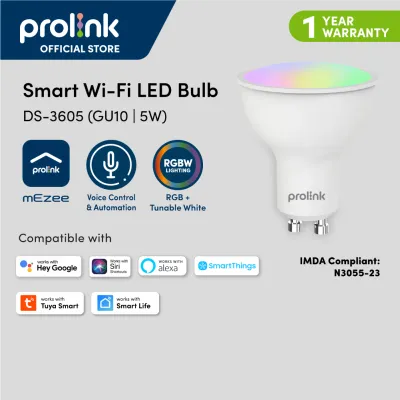
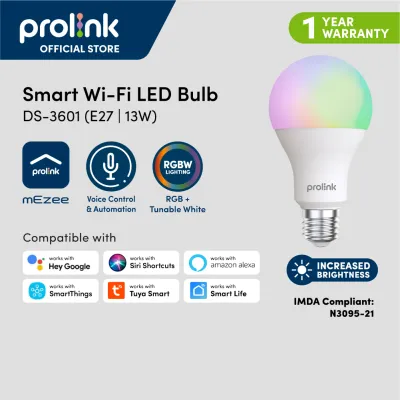
Prices are valid at publication and may change. Please refer to the product page for the latest price.
Key Metrics for Comparing GU10 Energy Efficiency
To make an informed decision, you must look beyond the brand name and understand the technical specifications printed on the packaging. Comparing LED bulbs based solely on wattage is a common mistake; instead, you should evaluate several key performance indicators to determine true efficiency.

Luminous Efficacy (Lumens per Watt) Luminous efficacy is the ultimate measure of how efficiently a bulb converts electrical energy into visible light. Calculated by dividing the total light output (measured in lumens) by the power consumed (measured in watts), this metric is expressed as lumens per watt (lm/W). For example, a GU10 bulb that produces 400 lumens while consuming 5 watts has an efficacy of 80 lm/W. A more efficient bulb might produce the same 400 lumens using only 4 watts, resulting in an efficacy of 100 lm/W. When shopping for GU10 bulbs, always look for a higher lm/W ratio, as it indicates less wasted electricity and lower monthly utility bills.
Actual Wattage vs. Equivalent Wattage Packaging often displays two different wattage figures: the actual wattage and the halogen equivalent wattage. The actual wattage (typically ranging from 4W to 6W for LED GU10s) represents the real rate of electricity consumption that will appear on your power bill. The equivalent wattage (usually 50W for GU10 spotlights) is simply a marketing reference to help consumers transition from legacy, power-hungry halogen bulbs. When calculating energy savings or checking circuit capacity, always use the actual wattage rather than the equivalent rating.
Beam Angle and Usable Light The physical distribution of light plays a major role in perceived efficiency. GU10 bulbs are directional spotlights, meaning they concentrate light into a specific beam rather than scattering it in all directions. A narrow beam angle (such as 24 or 36 degrees) focuses the light intensely on a specific spot, making the area appear exceptionally bright even with a lower-lumen bulb. A wider beam angle (such as 60 or 120 degrees) spreads the light over a larger area, which is better for general ambient illumination but reduces the concentrated brightness. Understanding this distinction prevents you from over-specifying high-wattage bulbs when a focused, lower-wattage bulb would serve the space more efficiently.
Energy Labels and Certifications Before purchasing any electrical product in Singapore, it is vital to check for official energy labels and safety certifications. Look for local energy efficiency ratings, which provide an easy-to-read visual guide to the product’s performance. Additionally, ensure the bulbs carry recognized safety marks, such as the Singapore Safety Mark, which verifies that the electrical design has been tested and approved for safe domestic use. Finally, pay attention to the manufacturer’s rated lifespan, typically stated in hours (e.g., 15,000 to 25,000 hours). A bulb that maintains its efficiency over a longer lifespan reduces the frequency of replacements, contributing to overall long-term resource savings.
Prolink GU10 vs. Competing Brands: Feature and Efficiency Breakdown
To understand where Prolink stands in the broader market, we must compare its typical product profile against the characteristics of premium-tier alternatives. This comparison highlights how different manufacturing standards and component choices affect real-world performance.
Prolink GU10: Value and Baseline Efficiency
Prolink has established a strong reputation in Singapore for delivering reliable consumer electronics and smart home solutions at highly accessible price points. Their GU10 LED offerings, including their smart color-changing models, are designed to bring modern lighting convenience to everyday households without the premium markup.
In terms of performance, Prolink GU10 bulbs typically operate within an efficacy range of 70 to 85 lumens per watt. While this is standard for value-oriented LED bulbs, it represents a massive upgrade over traditional halogen bulbs, which hover around a mere 10 to 15 lm/W. Prolink bulbs are particularly well-suited for multi-bulb installations, such as track lights in living rooms or recessed downlights in corridors, where purchasing a dozen or more premium bulbs would otherwise strain your renovation budget. They offer a stable, flicker-free light output and a reliable lifespan that easily covers several years of typical domestic use, making them a highly practical baseline choice.
Premium Alternatives: High Efficacy and Advanced Features
On the other end of the spectrum, premium lighting brands focus heavily on engineering the absolute limits of LED technology. These manufacturers invest in higher-grade light-emitting diode chips, such as Chip-on-Board (COB) arrays, and advanced internal drivers that minimize electrical resistance and power loss.
As a result of these premium components, high-tier GU10 bulbs can achieve efficiencies of 90 to 110+ lumens per watt. Beyond raw efficacy, premium brands often feature superior Color Rendering Index (CRI) ratings of 90 or higher, which ensures that colors in your home appear vibrant, natural, and true to life. They also utilize advanced thermal management systems, such as ceramic or heavy-duty aluminum heat sinks, which draw damaging heat away from the sensitive LED chips. This superior cooling capability not only preserves the bulb’s light output over time but also extends its operational lifespan, sometimes up to 25,000 or even 50,000 hours.
Comparison Matrix: What to Check on the Box
The table below outlines the general differences you can expect to find when comparing value-tier bulbs like Prolink against premium-tier alternatives. Because specific models and product lines are updated frequently, you should always verify the exact specifications printed on the physical product packaging before completing your purchase.
| Dimension | Prolink (Typical Value Tier) | Premium Brands (High-Efficacy Tier) |
|---|---|---|
| Upfront Cost (per bulb) | S$5.00 – S$12.00 | S$15.00 – S$30.00 |
| Typical Luminous Efficacy | 70 – 85 lm/W | 90 – 110+ lm/W |
| Color Rendering Index (CRI) | Standard (CRI 80+) | High (CRI 90+) |
| Average Rated Lifespan | 15,000 hours | 25,000 to 50,000 hours |
| Primary Thermal Material | Thermoplastic / Composite | Aluminum / Ceramic |
| Best Suited For | Budget-conscious projects, secondary areas | High-use rooms, task lighting, art displays |
Real-World Value: Energy Savings vs. Upfront Cost
Deciding between Prolink and a premium brand requires analyzing the total cost of ownership. While a premium bulb uses less power to produce the same amount of light, you must determine whether those energy savings will eventually offset the higher initial purchase price.
The Break-Even Point To find the break-even point, you can calculate the annual operating cost of each bulb based on your local electricity rates. Let us look at a practical, illustrative calculation using a typical Singapore residential electricity tariff of S$0.32 per kilowatt-hour (kWh).
Suppose you are comparing a 5W Prolink GU10 bulb costing S$8.00 with a premium 4W GU10 bulb costing S$18.00, both of which deliver an identical light output of 400 lumens.
- The Prolink bulb consumes 5 watts. If operated for 6 hours a day, it consumes 30 watt-hours daily, or 10.95 kWh annually. At S$0.32 per kWh, the annual electricity cost is approximately S$3.50.
- The premium bulb consumes 4 watts. Under the same conditions, it consumes 24 watt-hours daily, or 8.76 kWh annually. The annual electricity cost is approximately S$2.80.
- This results in an annual savings of S$0.70 per bulb when choosing the premium option.
- However, the upfront price difference between the two bulbs is S$10.00 (S$18.00 minus S$8.00). Dividing this S$10.00 difference by the S$0.70 annual savings reveals a payback period of over 14 years. In this scenario, the value-tier Prolink bulb is clearly the more financially logical choice, as the energy savings of the premium bulb do not accumulate fast enough to cover its high initial cost within a realistic timeframe.
Usage Scenarios The financial equation shifts dramatically depending on where and how the bulbs are used. In high-use areas of your home—such as a kitchen counter where task lights remain on for ten hours a day, a home office, or a retail store display—the energy savings accumulate much faster, shortening the payback period of premium bulbs to a few years.
Conversely, in low-use areas like guest bathrooms, bomb shelters, balconies, or hallway accent lighting where bulbs might only run for an hour or two each day, the upfront savings of Prolink bulbs are highly advantageous. In these spaces, paying a premium for a highly efficient bulb makes little financial sense, as the bulb may never be switched on long enough to return your investment.
Heat Output and Cooling Costs Another subtle factor to consider in Singapore’s tropical climate is the relationship between bulb efficiency and indoor heat generation. While LEDs are far cooler than halogens, they still release a small portion of their consumed energy as heat. Highly efficient premium bulbs convert more electricity into light and less into waste heat. In a home with dozens of recessed downlights running simultaneously, lower-efficiency bulbs can collectively add to the indoor thermal load, forcing your air conditioning system to work slightly harder to maintain a cool temperature. While this secondary cooling cost is minimal on a per-bulb basis, it represents an additional long-term benefit of maximizing lighting efficiency across large-scale installations.
Installation and Compatibility Checks
Maximizing the efficiency and lifespan of your GU10 bulbs requires careful attention to installation and environmental conditions. Neglecting these checks can lead to premature bulb failure, safety hazards, or degraded efficiency, regardless of the brand you choose.
Dimmer Compatibility If you plan to install your GU10 bulbs on a dimmable circuit, you must verify that the bulbs are explicitly labeled as dimmable. Attempting to dim non-dimmable LED bulbs can cause severe flickering, loud buzzing noises, and extreme heat buildup within the internal driver, which rapidly destroys the bulb. Furthermore, ensure that your wall dimmer switch is compatible with LED technology. Older dimmers designed for high-wattage halogen bulbs often fail to register the low power draw of modern LEDs, leading to unstable performance. Always check both the bulb packaging and your dimmer switch specifications to ensure seamless compatibility.
Enclosed Fixtures and Heat Dissipation Although LED bulbs do not emit infrared heat in their light beam, their internal drivers and LED chips generate heat that must be dissipated. GU10 bulbs are frequently installed in recessed downlight cans or tight track fixtures. If these fixtures are completely enclosed or lack adequate ventilation, heat will build up rapidly around the base of the bulb. This thermal stress degrades the silicon junctions inside the LED chip, leading to a permanent drop in light output (known as lumen depreciation) and a shortened lifespan. When installing GU10 bulbs, always ensure there is sufficient clearance around the fixture for air to circulate, and check the manufacturer’s instructions regarding use in enclosed housings.
Voltage and Fittings In Singapore, the standard domestic mains voltage is 230V AC at 50Hz. Ensure that any GU10 bulb you purchase is rated for this voltage range, as importing bulbs rated for 110V (common in North America) will result in immediate destruction of the bulb and potential electrical hazards. The GU10 base features a standard twist-and-lock mechanism with two pins spaced 10mm apart. When replacing a bulb, always isolate the power at the main circuit breaker or distribution board rather than relying solely on the wall switch. Ensure the pins are aligned correctly and twist the bulb firmly into place to establish a secure electrical connection. If you are uncertain about your home’s wiring, are working at heights, or are installing new fixed track lighting, always consult a qualified professional electrician to handle the installation safely.
Frequently Asked Questions (FAQ)
Do Prolink GU10 bulbs consume less power as they age?
No, LED bulbs do not typically consume less electrical power as they age. Instead, their power consumption remains relatively constant throughout their operational life. What does change over time is their light output; the LED chips slowly degrade, causing the bulb to emit fewer lumens while still drawing the same amount of wattage from your electrical mains. This gradual reduction in brightness is known as lumen depreciation, and it continues until the internal driver eventually fails.
Is a 5W GU10 always brighter than a 4W GU10 from a different brand?
Not necessarily. Wattage is strictly a measure of the electrical power a bulb consumes, not the amount of light it produces. If a 4W GU10 bulb from a premium brand has a high luminous efficacy of 100 lm/W, it will produce 400 lumens of light. If a 5W GU10 bulb from a different brand has a lower efficacy of 70 lm/W, it will only produce 350 lumens. To determine true brightness, you should always compare the lumen ratings and the beam angles listed on the packaging rather than relying on wattage.
Can I mix Prolink GU10 bulbs with other brands on the same track light?
It is highly recommended that you avoid mixing different brands or models of GU10 bulbs on a single track light or within the same multi-bulb fixture. Even if the bulbs share the same nominal color temperature (such as 3000K Warm White), different manufacturers use different LED chips and phosphor coatings, which can result in noticeable differences in color tint, brightness, and beam spread. Additionally, mixing brands on a shared dimmer circuit can lead to uneven dimming rates, flickering, or electrical instability due to differences in their internal driver designs.
Community discussion
Share your experience or ask a question. Comments are reviewed before publication.