
Choosing the right clock movement for your table clock is the most important decision you will make before adding this classic timepiece to your home. The movement, or the internal mechanism that drives the hands, dictates not only how accurately the clock keeps time but also how much attention it requires from you over the years. By understanding the practical differences between quartz and mechanical systems, you can select a timepiece that aligns perfectly with your daily routine, aesthetic preferences, and maintenance expectations.
For most homeowners, the choice comes down to a simple trade-off between convenience and craftsmanship. If you prefer a highly accurate, budget-friendly clock that you can set once and ignore for months at a time, a quartz movement is the ideal choice. On the other hand, if you appreciate traditional horology, enjoy the tactile ritual of manual winding, and want an heirloom-quality decorative piece, a mechanical movement is well worth the investment. Neither option is universally superior; the right choice depends entirely on your lifestyle and how you intend to display the clock.
Understanding Clock Movements: Quartz vs Mechanical
To make an informed decision, it helps to understand how these two distinct technologies keep time. A quartz clock movement relies on modern electronics and a tiny, synthetic quartz crystal. When an electrical current from a battery passes through the quartz, the crystal vibrates at an incredibly high and stable frequency. The clock’s internal circuit detects these vibrations and translates them into precise, one-second steps, which drive the gears and move the hands.
Products mentioned in this guide
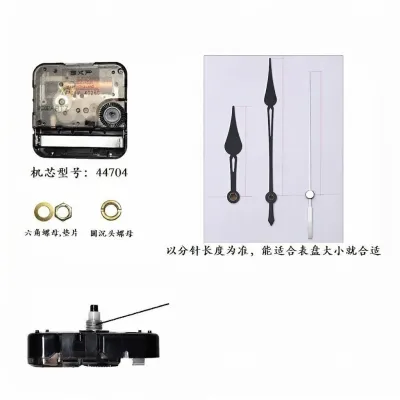
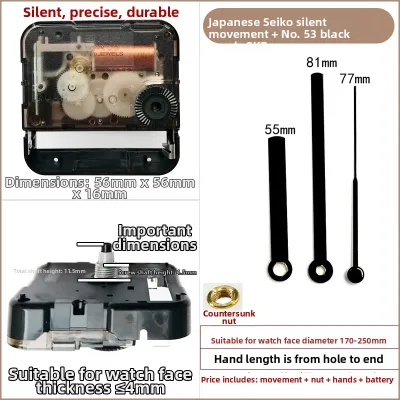

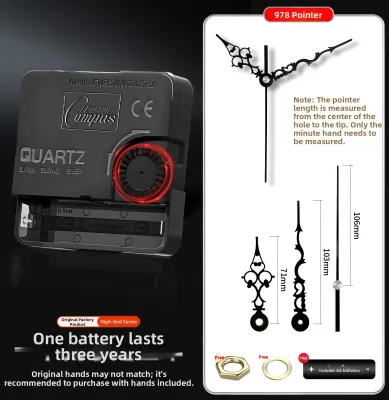


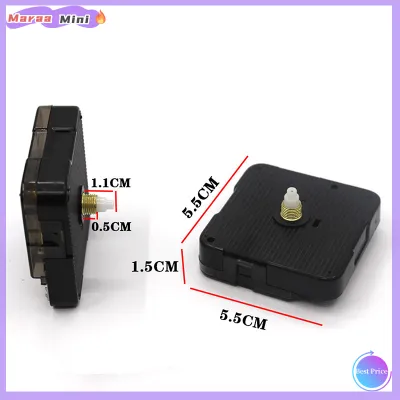
![[SG FREE ]Silent DIY Quartz Movement Wall Clock Motor Mechanism Long Spindle Repair](https://img.lazcdn.com/g/p/7785869146793244afd1b5a4ca96bf32.jpg_400x400q80.jpg_.webp)
Prices are valid at publication and may change. Please refer to the product page for the latest price.
In contrast, a mechanical clock movement is a marvel of traditional engineering that operates entirely without electricity. It relies on potential energy stored within a tightly wound mainspring. As the spring slowly unwinds, it releases power through a complex train of gears. This energy is regulated by an escapement and a balance wheel, which swing back and forth to release the gear train at precise intervals, translating the raw spring tension into steady timekeeping.
Identifying which movement powers a table clock is usually straightforward, even at a glance. Quartz clocks almost always feature a second hand that moves in distinct, one-second jumps, accompanied by a quiet, rhythmic ticking sound. On the back of the clock, you will find a battery compartment. Mechanical clocks typically feature a second hand that sweeps smoothly around the dial, accompanied by a rapid, metallic ticking sound, and you will find winding keyholes or a winding crown instead of a battery slot.
Key Comparison Dimensions for Table Clocks
Accuracy and Timekeeping
Quartz movements are highly stable and offer exceptional out-of-the-box accuracy. Because the vibration of a quartz crystal is incredibly consistent, these clocks are virtually unaffected by daily temperature changes, minor vibrations, or how the clock is positioned on your table. They will continue to display the correct time consistently until the battery runs out of power.

Mechanical movements are physical machines, making them inherently more sensitive to their environment. Factors such as gravity, changes in room temperature, and even the gradual loss of tension in the mainspring can cause a mechanical clock to gain or lose time. While high-quality mechanical clocks are adjusted to minimize these variations, they still require occasional manual correction to keep perfect time.
When shopping for a table clock, it is always wise to check the manufacturer’s technical specifications. Reliable brands will list the expected timekeeping tolerance for their movements, allowing you to verify if a specific model meets your personal standards for punctuality.
Maintenance and Longevity
Quartz table clocks require very little hands-on maintenance. Your primary task will be replacing the battery, typically every one to two years. In humid climates like Singapore, it is crucial to use high-quality, leak-resistant batteries and replace them promptly to prevent acid leakage from corroding the delicate electronic contacts. If a quartz movement does eventually fail, the entire mechanism is usually simple and inexpensive to replace.
Mechanical table clocks require a commitment to long-term care to preserve their intricate parts. Over time, the specialized oils that lubricate the gears can dry out, and dust can find its way into the movement. To prevent premature wear, mechanical clocks should be professionally cleaned, oiled, and adjusted every few years, depending on the manufacturer’s guidelines.
Environmental factors play a significant role in the longevity of these movements. An open-faced or loosely sealed mechanical clock exposed to high humidity and dust will require more frequent servicing than a sealed quartz clock. If you choose a mechanical model, ensure you are comfortable with the periodic effort and cost of professional horological maintenance.
Aesthetics, Sound, and Craftsmanship
For many decor enthusiasts, the visual appeal of a mechanical clock is unmatched. Many mechanical table clocks feature skeleton dials or glass cases that showcase the moving gears, brass plates, and swinging balance wheel. The smooth, sweeping motion of the second hand adds a sense of life and motion to a room, making the clock a captivating conversation piece on a mantelpiece or study desk.
Quartz movements allow for much greater flexibility in clock design. Because the electronic components are compact and lightweight, quartz table clocks can be designed with ultra-thin profiles, minimalist cases, or integrated into delicate sculptural art. They do not require heavy metal frames to support high-tension springs, allowing designers to use a wider variety of creative materials.
The acoustic profile of the clock is another important consideration for your home. A mechanical clock’s rapid, metallic tick can be a comforting, nostalgic presence in a busy living room or home office, but it might prove distracting in a quiet bedroom. Quartz clocks are often much quieter, and many modern quartz movements are designed with silent sweep mechanisms specifically for noise-sensitive spaces.
Budget and Value Considerations
Quartz table clocks are highly accessible and cost-effective. Because they are straightforward to manufacture, you can find reliable, beautifully designed quartz clocks starting well under S$100. They offer excellent utility and style without requiring a significant upfront financial commitment or ongoing maintenance costs.
Mechanical table clocks are premium luxury items that command a higher price point. The cost reflects the skilled labor required to assemble, tune, and decorate the intricate gear systems. A quality mechanical table clock is an investment that can cost several hundred to several thousand Singapore dollars, depending on the complexity of the movement and the prestige of the maker.
When evaluating long-term value, keep in mind that mass-produced quartz clocks are generally treated as disposable items if they break down after many years. High-end mechanical clocks, however, are built to be repaired rather than replaced. If properly maintained, a quality mechanical clock can retain its value and be passed down through generations as a cherished family heirloom.
Decision Framework: Matching the Movement to Your Lifestyle
To finalize your choice, consider how the clock will fit into your daily habits and the specific room where it will be displayed.
Choose a quartz movement if:
- You want a reliable, hassle-free timepiece for a busy workspace or bedside table.
- You require strict punctuality for scheduling daily appointments and alarms.
- You prefer a lightweight, low-profile clock design that fits easily into minimalist decor.
- You want to minimize ongoing maintenance tasks and avoid professional servicing fees.
Choose a mechanical movement if:
- You appreciate the artistry of traditional watchmaking and want a visually engaging decor piece.
- You enjoy the tactile, hands-on ritual of winding your clock on a regular schedule.
- You are looking for a high-quality heirloom piece to display prominently in a living room, library, or formal dining area.
- You are willing to invest in periodic professional maintenance to keep the mechanism running smoothly.
Before placing your clock, verify the environmental conditions of the room. Mechanical movements should not be placed near strong magnetic fields, such as those generated by large desktop speakers, subwoofers, or high-end computer setups, as magnetism can disrupt the steel hairspring. Additionally, avoid placing delicate mechanical clocks directly under air conditioning vents or in spots that receive intense, direct tropical sunlight, as extreme temperature fluctuations can affect timekeeping accuracy.
What to Check Before Buying a Table Clock
Before making your final purchase, take a moment to review the product specifications to ensure the clock meets your practical needs. For mechanical clocks, check the stated power reserve. Some models must be wound daily, while others feature multi-day power reserves that only require winding once a week. For quartz clocks, verify the battery type required and check if the manufacturer provides an estimated battery lifespan.
Next, examine the physical build quality of the clock. Look for durable case materials such as solid brass, polished hardwood, or high-grade stainless steel, and check whether the dial cover is made of scratch-resistant mineral glass or acrylic. Ensure the overall dimensions and weight of the clock are suitable for your table, shelf, or mantelpiece, keeping in mind that top-heavy designs can be easily tipped over on busy surfaces.
Finally, review the warranty terms and after-sales support. This is especially important for mechanical clocks, which may eventually require specialized adjustments. Confirm whether the manufacturer has authorized service centers or if there are reputable, qualified watchmakers in Singapore who are experienced in servicing the specific brand and movement type you are considering.
Frequently Asked Questions (FAQ)
Do mechanical table clocks need to be wound every day?
The winding frequency of a mechanical table clock depends entirely on its specific movement design. While some traditional models have a 24-hour power reserve and require daily winding, many high-quality table clocks feature 8-day movements that only need to be wound once a week. Always consult the product manual for the recommended winding schedule, and be careful to stop winding as soon as you feel increased resistance to avoid damaging the mainspring.
Can I replace a quartz movement with a mechanical one in the same case?
Replacing a quartz movement with a mechanical one in the same clock case is generally impractical. Mechanical movements require specific mounting points, thicker cases to accommodate the gear trains, and precise alignment for winding keyholes or crowns. Additionally, the hands of a quartz clock are usually too lightweight and have different mounting hole sizes than those required for a mechanical movement. If you want to change movement types, it is best to purchase a new clock designed specifically for that mechanism.
Community discussion
Share your experience or ask a question. Comments are reviewed before publication.