
Finding the right reading light in Singapore involves balancing optical performance with physical durability. While many brands claim to offer “eye-safe” or “flicker-free” lighting, their actual performance varies significantly based on their engineering focus. Premium specialized eye-care brands typically invest in custom diffusers, honeycomb lenses, and advanced LED drivers to minimize glare and flicker. Traditional lighting manufacturers focus on robust, standardized electrical designs and reliable physical construction. Meanwhile, budget and lifestyle brands prioritize minimalist aesthetics and low price points, often at the expense of advanced optical control and long-term joint stability.
To make an informed decision, you must look past marketing buzzwords and evaluate specific technical specifications, physical materials, and safety certifications. The ideal reading light should provide uniform illumination across your workspace, maintain a stable position without sagging, and carry recognized electrical safety marks. By understanding how different brand categories approach these design challenges, you can select a lamp that protects your eyes during long study sessions and lasts for years on your desk.
Key Criteria for Evaluating Eye Comfort
Evaluating eye comfort requires looking at measurable optical specifications rather than subjective claims. The first critical factor is illuminance, measured in lux, which indicates the amount of light reaching your reading surface. For comfortable reading and study, a desk lamp should deliver between 500 and 1000 lux on the primary work area. However, high brightness alone is insufficient; uniformity is equally important. Poorly designed lamps create a harsh hotspot directly under the bulb, surrounded by rapid fall-off and deep shadows. This contrast forces your pupils to constantly adjust as your eyes move across the page, leading to rapid eye fatigue. Look for brands that publish polar curves or uniformity ratios, aiming for a ratio where the minimum illuminance is at least one-third of the maximum illuminance across the designated task area.
Products mentioned in this guide
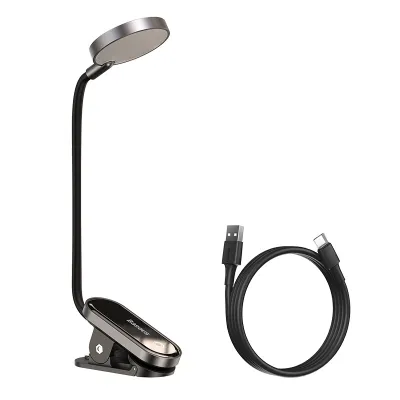
![[LOCAL SELLER] LED Touch On/Off Switch 3 Modes Clip Desk Lamp 2000MAh Eye Protection Desk Light Dimmer Rechargeable USB Led Table Lamp](https://img.lazcdn.com/g/p/c5062fc78b0d51f10105f68700cb1e94.jpg_400x400q80.jpg_.webp)
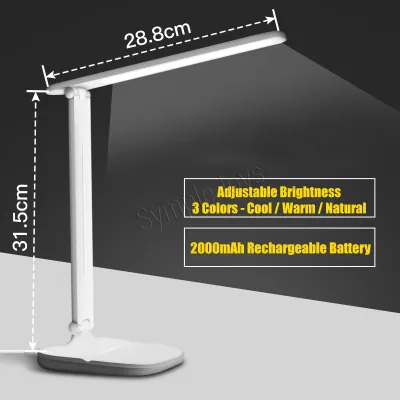
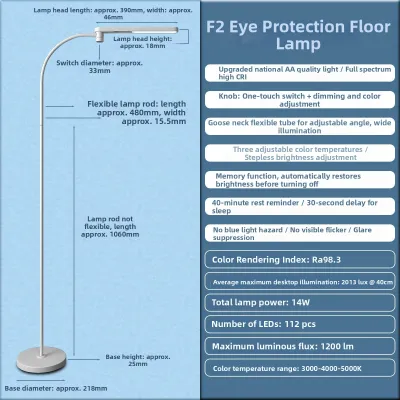
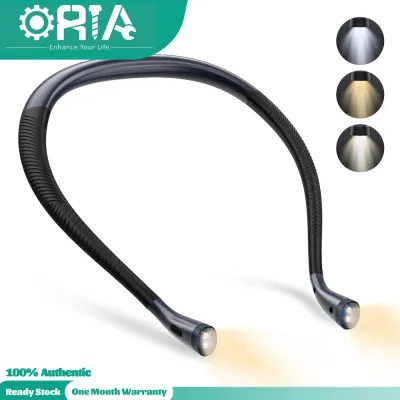
![[SG stock]Teacher day Gift Mini Book Light LED Night Light USB Rechargeable Clip On Reading Lamp Brightness Adjustable Bedroom Travel](https://img.lazcdn.com/g/p/158e98bcbacab16537c08ec35b24cce7.jpg_400x400q80.jpg_.webp)
Prices are valid at publication and may change. Please refer to the product page for the latest price.
Color temperature and the Color Rendering Index (CRI) directly influence visual clarity and circadian rhythm. Color temperature, measured in Kelvin (K), dictates the warmth or coolness of the light. While some users prefer a cool white light for focus, perceived color temperature and its spatial effects are highly subjective, conditional preferences rather than universal performance facts. For daytime study or highly detailed work, a neutral to cool light between 4000K and 5000K enhances alertness and contrast. For evening reading, a warm light between 2700K and 3000K is often preferred to minimize blue light exposure before sleep. The CRI measures how accurately a light source reveals the true colors of objects compared to natural daylight. For reading and color-sensitive tasks, select a lamp with a CRI (Ra) of 90 or higher. High-CRI lighting makes text sharper and reduces the cognitive strain of processing visual information.
Flicker and blue light hazards are critical health considerations that require independent verification. Invisible high-frequency flicker, common in low-quality LED drivers, can cause headaches, eye strain, and general discomfort even if you cannot consciously perceive it. When comparing brands, look for compliance with the IEEE 1789 standard, which defines safe limits for LED flicker. Additionally, verify the blue light hazard classification under the IEC/EN 62471 standard. Safe reading lights are typically certified as Exempt Group (RG0) or Risk Group 1 (RG1), indicating they pose no photobiological hazard during normal use. Look for physical certification marks from reputable testing bodies, such as TÜV Rheinland or UL, on the product packaging or manufacturer specification sheets.
Assessing Build Quality and Durability
A reading light is a mechanical device as much as an optical one, and its physical construction determines its lifespan. The joint and arm mechanisms are the most common failure points in adjustable lamps. Friction joints, counterbalanced springs, and ball-and-socket connections must withstand daily adjustments without losing tension. Low-quality joints often suffer from sagging, where the lamp head slowly droops over time due to gravity and wear. High-quality brands use adjustable tension screws, internal steel springs, or heavy-duty brass hinges that allow you to tighten the joints if they loosen. When evaluating a lamp, check if the joints move smoothly without squeaking and hold their position firmly at extreme angles.

The stability of the lamp depends heavily on its base weight and footprint. A reading light with a long, articulating arm requires a substantial base to counteract the leverage when the arm is fully extended. If the base is too light, the lamp will tip over easily, risking damage to the LED module or your desk. Look for lamps with weighted steel or cast-iron bases, or those that offer heavy-duty desk clamps as an alternative mounting option. The bottom of the base should feature a non-slip, non-marring material, such as high-density foam or rubber, to prevent sliding and protect your furniture from scratches.
Material selection affects both physical durability and heat dissipation. LEDs are highly sensitive to heat; excessive operating temperatures accelerate lumen depreciation and shorten the lifespan of the LED driver. Premium lamps utilize aluminum or high-grade alloys for the lamp head and arm, acting as a physical heat sink to draw warmth away from the diodes. Budget models often rely entirely on thin plastics, which can warp, discolor, or become brittle over time due to continuous heat exposure. Inspect the finish quality, looking for anodized or powder-coated metal surfaces that resist scratching, corrosion, and fingerprint oils.
Comparing Popular Brand Categories in the Market
The Singapore market features a wide array of reading lights, which can be broadly categorized into three distinct tiers based on their design priorities and engineering standards.
Specialized eye-care brands occupy the premium tier of the market. These manufacturers focus almost exclusively on optical health, integrating advanced technologies such as custom-engineered light guides, ambient light sensors for automatic dimming, and asymmetric optical designs that project light across the desk without reflecting off computer screens. Their physical construction typically matches their premium price, utilizing heavy-duty aluminum alloys, precision-engineered joints, and highly stable bases. While these brands require a significant upfront investment, they offer the most comprehensive flicker control, high CRI values, and long-term mechanical reliability.
Traditional lighting manufacturers represent the mid-range, reliable core of the market. These brands have decades of experience in general illumination and electrical engineering. Their reading lights conform strictly to international safety standards and offer dependable, no-nonsense build quality. While they may lack some of the cutting-edge smart features or specialized optical geometries found in premium eye-care brands, they provide excellent color rendering, stable light output, and highly durable physical components. They represent a balanced choice for users who want a safe, long-lasting lamp without paying a premium for advanced sensor suites.
Budget and lifestyle brands prioritize modern aesthetics, smart-home ecosystem integration, and low price points. These lamps often feature sleek, minimalist designs that look highly appealing on a modern desk. However, to maintain low prices, manufacturers frequently make compromises. The physical construction often relies heavily on plastics rather than metal heat sinks, and the joint mechanisms may wear out or sag after a few months of regular use. Optically, while they may offer adjustable color temperatures, their flicker control and color rendering indices are often lower than those of specialized or traditional brands. They are best suited for casual, short-duration reading rather than intense, prolonged study.
Decision Framework: Matching Brands to Your Needs
Choosing the right reading light brand depends on your specific daily activities, workspace constraints, and budget. To guide your decision, consider how your primary use case aligns with the strengths and limitations of each brand category.
If your routine involves prolonged study, detailed drafting, or working alongside a computer monitor, investing in a specialized eye-care brand is highly recommended. The advanced optical engineering in these lamps—such as asymmetric light distribution—prevents screen glare and ensures uniform illumination across large textbooks, reducing the risk of eye strain during multi-hour sessions. These brands are also ideal for children and students whose developing eyes are particularly sensitive to poor lighting conditions and high-frequency flicker.
For general bedside reading, casual desk work, or environments where physical durability is the primary concern, traditional lighting brands offer the most practical solution. Their robust mechanical designs withstand frequent adjustments, and their standard-compliant LED drivers ensure safe, flicker-free performance. These lamps are also easier to maintain over time, as traditional manufacturers often use standard power adapters and offer reliable customer support channels in Singapore.
Budget or lifestyle brands are highly suitable for secondary spaces, guest rooms, or occasional reading sessions where the lamp serves partly as a decorative accent. If you only read for thirty minutes before bed, the advanced optical sensors of a premium lamp are unnecessary, making a stylish, budget-friendly model a sensible choice. However, if you select a budget model, ensure it still carries basic electrical safety certifications and avoid adjusting the joints excessively to prolong its mechanical lifespan.
Before finalizing your choice, verify your physical workspace constraints. If you have a small or cluttered desk, a lamp with a massive, weighted base may not fit; look for brands that offer space-saving clamp mounts. If you plan to use the lamp in a bedroom, check if the minimum brightness level is low enough to avoid disturbing a sleeping partner. Finally, if you require smart-home integration, ensure the lamp’s wireless protocols are compatible with your existing home automation hub.
Pre-Purchase Verification and Safety Checks
Before purchasing any reading light in Singapore, you must perform several critical safety and quality checks to protect your investment and your home. First, verify that the lamp or its power adapter carries the Enterprise Singapore SAFETY Mark. This mark indicates that the electrical appliance has been tested and certified to meet local safety standards, protecting you against short circuits, overheating, and electrical fires. This is especially important for lamps that remain plugged in continuously.
Additionally, verify the electrical specifications of the lamp. Ensure the voltage is compatible with Singapore’s standard 230V supply, and check the wattage limits to prevent overloading your outlets. If the lamp uses a replaceable bulb, confirm the base or interface type (such as E27 or GU10) to ensure easy replacement. For models with dimming capabilities, verify whether the dimming method (such as step-dimming or continuous touch-dimming) matches your preference. If you are installing a fixed-wired wall lamp, a model in a damp environment (like a semi-outdoor balcony), or a suspended fixture, always prioritize safety by isolating the power supply, following the manufacturer’s installation instructions, and consulting a qualified professional for the installation.
Next, carefully review the manufacturer’s warranty terms. A reliable reading light should offer at least a one-year warranty, with premium brands often extending this to three or five years. Pay close attention to what the warranty covers; some policies cover the LED module but exclude the power adapter, touch controls, or mechanical joints. Ensure there is a clear process for local claims or repairs in Singapore, as shipping a heavy lamp overseas for servicing can be prohibitively expensive.
Finally, whenever possible, test the lamp in a physical showroom before buying. Adjust the arm through its full range of motion to check for joint stiffness and stability. Turn the lamp on and observe the light pattern on a flat surface; check for visible hotspots, harsh glare, or distracting shadows. If you are purchasing from an online marketplace, read customer reviews specifically mentioning long-term durability, and verify the retailer’s return policy in case the lamp arrives with loose joints or optical defects.
Frequently Asked Questions (FAQ)
How often should I replace the bulbs in my reading light?
Most modern reading lights feature integrated LED modules rather than traditional replaceable bulbs. These integrated LEDs are designed to last between 25,000 and 50,000 hours, which translates to over a decade of typical daily use. Because you cannot replace the individual diodes, you will need to replace the entire lamp or the LED driver if it fails. Look for lumen depreciation ratings on the packaging, such as L70, which indicates the light will retain 70% of its original brightness at the end of its rated lifespan.
Can I use a standard desk lamp for reading in bed?
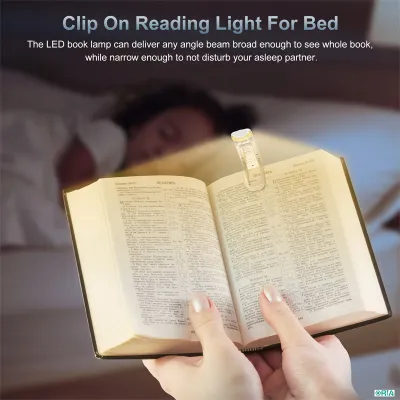
While you can use a standard desk lamp, it is often less than ideal for bedside reading. Standard desk lamps typically have a wider beam angle and higher maximum height, which can cause direct glare when you are lying down and may disturb a sleeping partner. Dedicated bedside reading lights feature narrower, highly adjustable beams that allow you to direct light precisely onto your book while keeping the surrounding area dark, minimizing eye strain and partner disturbance.
Community discussion
Share your experience or ask a question. Comments are reviewed before publication.