
Choosing the right sanctuary for daily prayers and reflection is a deeply personal and significant decision for Hindu households. When setting up a sacred space in Singapore, homeowners frequently face a crucial dilemma: should they purchase a ready-made Indian pooja cabinet or engage a custom carpenter to build a bespoke altar? Both paths offer distinct advantages, but they cater to very different household priorities, spatial constraints, and budgets.
There is no single “best” option for every home. A ready-made Indian pooja cabinet is highly recommended for those who need a fast, hassle-free setup, have standard floor space, and prefer a fixed, predictable budget. Conversely, custom carpentry is the ideal route for homeowners dealing with awkward spatial layouts—such as specific HDB or condominium alcoves—as well as those who require exact Vastu Shastra dimensions or desire highly specific, integrated architectural details. By evaluating your budget, aesthetic preferences, and timeline, you can easily determine which approach will best serve your spiritual and domestic needs.
Cost and Budget: Predictable Pricing vs. Custom Quotes
One of the most immediate differences between these two options is how costs are structured and presented. Ready-made cabinets purchased from local retail showrooms or ordered from international manufacturers offer upfront, transparent pricing. What you see on the price tag is generally what you pay for the physical item. However, buyers must look beyond the base retail price and account for ancillary logistics. If you are importing a solid wood cabinet from overseas, you must verify potential hidden fees, including international freight charges, local import taxes, port handling fees, delivery to your high-rise residence, and professional assembly fees if the unit arrives flat-packed.
Products mentioned in this guide
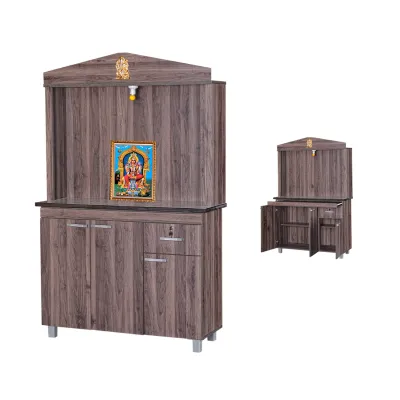
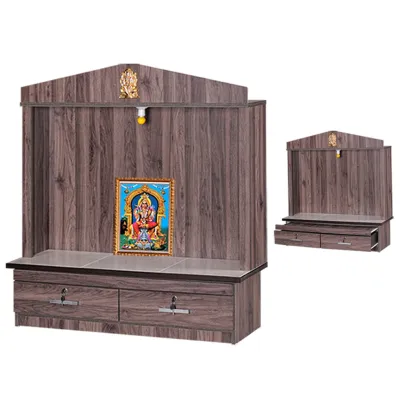
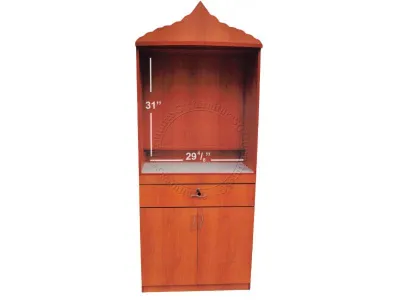
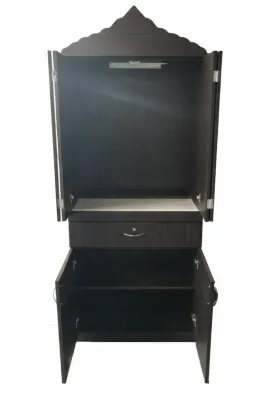
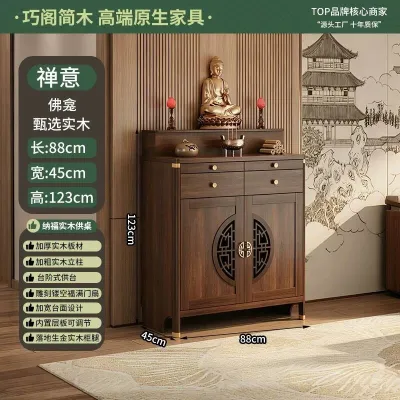
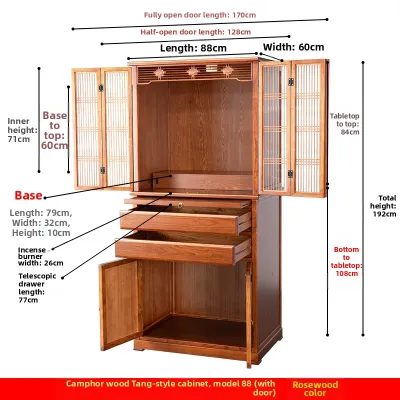
![[HOMIEST] ORATE 2FT Altar Cabinet Prayer Cabinet Religious Worship Natural/Walnut](https://img.lazcdn.com/g/p/cfaa0a6f73682165358fbd07edf06f9b.jpg_400x400q80.jpg_.webp)
Prices are valid at publication and may change. Please refer to the product page for the latest price.
Custom carpentry, on the other hand, operates on a variable pricing model based on a range of bespoke factors. A local carpenter will typically price the project based on material selection, overall dimensions, and design complexity. For instance, choosing premium solid teak wood will result in a significantly higher quote than opting for engineered wood (such as plywood or blockboard) finished with high-pressure laminates. Intricate design details, such as CNC-routed patterns, custom-carved doors, or integrated architectural arches, will also increase labor costs.
To avoid unexpected expenses when commissioning custom work, always request an itemized quote from your contractor or interior designer. Ensure the quote explicitly covers site preparation, delivery, installation, debris removal, and any specialized hardware like soft-close hinges or magnetic door catches. Furthermore, if you plan to install integrated LED strip lights or spotlights inside the cabinet, verify whether the electrical wiring and driver installation are included in the carpentry quote or if they require a separate fee for a licensed electrician.
While custom carpentry generally demands a higher initial investment, high-end imported ready-made solid wood cabinets can sometimes match or exceed the cost of local custom builds due to heavy shipping weight and import logistics. To make an accurate financial comparison, calculate the total “installed” cost of both options—including delivery, assembly, and any necessary modifications—rather than comparing base retail prices alone.
Design Authenticity: Traditional Motifs and Material Choices
For many families, the aesthetic and cultural authenticity of an Indian pooja cabinet is of paramount importance. Ready-made cabinets are often manufactured in regions with deep traditions of religious craftsmanship. These units frequently feature classic motifs such as carved Om symbols, lotus flowers, temple spires (gopurams), and peacock designs. The advantage of buying ready-made is that you can physically inspect the showroom model or view detailed product photographs to verify that the proportions, carvings, and overall finish align with your family’s aesthetic expectations before making a purchase.

Custom carpentry offers a different kind of authenticity by allowing you to personalize every religious and design element. If your family follows specific regional traditions, a custom build allows you to incorporate exact symbolic details that mass-produced units cannot replicate. Furthermore, custom fabrication is the most reliable way to ensure strict compliance with Vastu Shastra principles. You can work with your carpenter to design the altar using precise auspicious height-to-width ratios, specify the exact placement of sacred geometric patterns, and ensure the unit is configured for optimal directional orientation within your home.
Regardless of which route you choose, verifying the materials used is essential for long-term durability. When shopping for ready-made units, carefully read the product specifications to distinguish between solid timber and engineered wood with thin veneers. Solid wood construction offers excellent longevity but requires careful inspection.
In Singapore’s tropical climate, high humidity levels can cause natural timber to expand, warp, or crack if the wood has not been properly seasoned or kiln-dried. Additionally, ask retailers or carpenters about pest-resistance treatments. Because pooja cabinets often hold organic offerings like flowers, fruits, and oils, they can attract pests. Ensuring the material is treated for termite resistance and sealed against moisture is vital to preserving your altar for generations.
Lead Times and Setup: Immediate Delivery vs. Fabrication Wait
Your moving-in timeline or upcoming religious milestones will heavily influence your decision. Ready-made cabinets offer a clear advantage when time is short. If you purchase a unit that is locally stocked in a Singapore showroom, delivery and setup can often be arranged within a few business days. However, if you choose a highly specialized model that must be shipped from overseas, lead times can stretch to several weeks or even months due to shipping schedules, customs clearance, and potential port delays. You must also consider the setup effort; some imported units require DIY assembly, while others may necessitate hiring a local handyman to ensure they are safely anchored.
Commissioning custom carpentry is inherently a multi-stage process that requires patience. A typical custom workflow involves several distinct phases:
- Initial Consultation: Discussing your design vision, material preferences, and functional needs with the designer or carpenter.
- On-Site Measurement: Taking precise measurements of the designated space, accounting for skirting boards, wall plugs, and nearby doorways.
- 3D Design Rendering: Reviewing and refining digital drawings of the proposed cabinet to finalize details.
- Material Sourcing and Off-Site Fabrication: Cutting, assembling, and finishing the cabinet components in a local carpentry workshop.
- On-Site Installation: Assembling and mounting the completed unit in your home, which typically takes one to two days.
This entire custom process generally takes anywhere from four to twelve weeks, depending on the complexity of the design and the carpenter’s current schedule. If you are planning to inaugurate your new home or celebrate a major festival like Diwali (Deepavali) or Navaratri, it is crucial to work backward from your target date. Always add a generous buffer of at least three to four weeks to accommodate unexpected fabrication or shipping delays.
Space Planning: Fitting Pooja Units into HDB and Condo Layouts
Singapore’s urban residential landscape presents unique spatial challenges. In most modern HDB flats and condominiums, dedicated prayer rooms are rare. Consequently, homeowners must integrate their pooja altars into multi-functional spaces such as living rooms, dining areas, or small study alcoves.
Custom carpentry excels at maximizing limited square footage. A bespoke built-in or floating pooja cabinet can be tailored to fit seamlessly into awkward corners, under-utilized niches, or structural alcoves that would otherwise go to waste. Designers can create floor-to-ceiling units that utilize vertical space efficiently, incorporating hidden storage compartments below the altar to keep prayer books, incense, oils, and matchboxes organized and out of sight. This helps maintain a clean, clutter-free environment in smaller apartments.
Freestanding ready-made cabinets require a more cautious approach to space planning. Before purchasing, you must measure your allocated floor space with extreme precision. Be sure to account for height, width, depth, and the thickness of existing skirting boards, which can prevent a flat-backed cabinet from sitting flush against the wall. You must also ensure that the cabinet’s doors can open fully without obstructing walkways, blocking natural light, or violating fire safety clearances.
Fire safety is a critical consideration for any prayer altar. If you plan to burn incense (agarbatti) or light traditional oil lamps (diyas), ensure there is adequate vertical clearance and ventilation above the flame area. For custom builds, you can instruct your carpenter to line the burner shelf with heat-resistant materials like tempered glass, quartz, or natural stone. For ready-made wooden units, consider adding a protective glass top or a pull-out metal tray to catch hot ash and prevent scorch marks on the wood.
Additionally, before signing a contract for a heavy wall-mounted or built-in custom unit, check the latest HDB or condominium management renovation guidelines. Ensure your plans do not involve hacking structural walls, violating weight limits for wall-mounted fixtures, or interfering with existing electrical risers.
Ready-Made vs. Custom Carpentry at a Glance
To help you quickly compare your options, this table summarizes the key practical differences between ready-made and custom-built pooja cabinets:
| Feature | Ready-Made Pooja Cabinet | Custom Carpentry |
|---|---|---|
| Cost Predictability | Fixed and highly transparent upfront retail pricing | Variable quotes based on labor, materials, and complexity |
| Design Flexibility | Standard traditional motifs and pre-set factory finishes | Fully personalized layout, Vastu dimensions, and details |
| Lead Time | Days for local stock; weeks/months for overseas imports | Several weeks to months for design, fabrication, and installation |
| Space Optimization | Freestanding units requiring exact pre-measured floor space | Built-in or floating designs tailored to awkward alcoves |
| Installation Effort | Simple delivery, DIY assembly, or basic handyman setup | Professional on-site installation and wall anchoring |
Final Decision Framework: How to Make Your Choice
To finalize your decision, evaluate your current living situation and household priorities against these specific scenarios:
Choose a Ready-Made Cabinet if:
- You need the prayer altar set up quickly to align with an imminent move-in date or religious holiday.
- You have a standard, easily accessible floor area with plenty of clearance for a freestanding furniture piece.
- You prefer a highly predictable, fixed budget without the risk of design changes or contractor variations.
- You are satisfied with classic, widely available traditional carvings and standard finishes.
Choose Custom Carpentry if:
- Your home has an awkward corner, a narrow niche, or a specific structural alcove where a standard cabinet will not fit.
- You require strict adherence to Vastu Shastra dimensions or want to incorporate unique family design traditions.
- You want a seamless, built-in look that integrates storage for prayer accessories and matches your home's existing interior design.
- You have a flexible timeline and can afford to wait several weeks for design approvals and fabrication.
Verify First if:
- You are currently renting your home or plan to relocate in the near future. Freestanding ready-made cabinets are highly portable assets that you can easily pack and transport to a new residence. In contrast, custom built-in carpentry is a permanent fixture that cannot be easily salvaged or reinstalled in a different layout, making it a sunk cost upon moving.
Regardless of the path you choose, dedicating time to plan your pooja cabinet ensures that your sacred space remains safe, beautiful, and deeply integrated into the daily life of your home. By balancing practical considerations like material durability and spatial limits with your spiritual needs, you will create a peaceful, harmonious sanctuary for daily prayers.
Community discussion
Share your experience or ask a question. Comments are reviewed before publication.