
Selecting the best recessed ceiling light brands for a Singapore HDB flat with a standard 2.6-meter ceiling height requires prioritizing physical dimensions, thermal safety, and glare control over mere brand prestige. Because a 2.6m ceiling severely limits the depth of false ceilings—often restricted to a drop of 75mm to 100mm to preserve livable headroom—standard deep-can recessed fixtures are impractical. The ideal brands are those offering ultra-slim integrated LED downlights, low-profile drivers, and certified local safety compliance. Rather than looking for a single universal brand, homeowners must evaluate specific product lines based on their housing depth, heat dissipation capabilities, and local warranty support.
By focusing on verifiable technical specifications and structural compatibility, you can avoid the common pitfalls of low-ceiling lighting, such as excessive glare, visual claustrophobia, and premature driver failure. This guide outlines the critical physical constraints, brand evaluation criteria, and room-by-room strategies to help you choose lighting solutions that maximize space, ensure electrical safety, and maintain visual comfort in your home.
Why 2.6m Ceilings Change Your Recessed Lighting Choices
Standard HDB flats built with a 2.6m floor-to-ceiling height present unique spatial challenges that directly dictate your choice of recessed ceiling lights. To install recessed lighting, a false ceiling must be constructed below the original concrete slab. To maintain a comfortable living environment and comply with local spatial standards, this false ceiling is typically dropped by only 75mm to 150mm. This shallow plenum space severely restricts the physical height of the light fixtures you can install, ruling out traditional deep-can downlights that require 120mm or more of vertical clearance.
Products mentioned in this guide
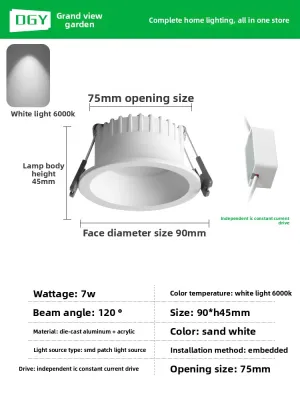
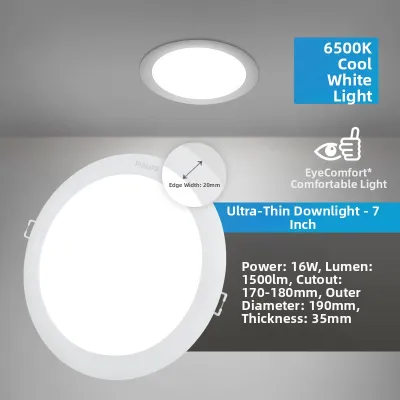
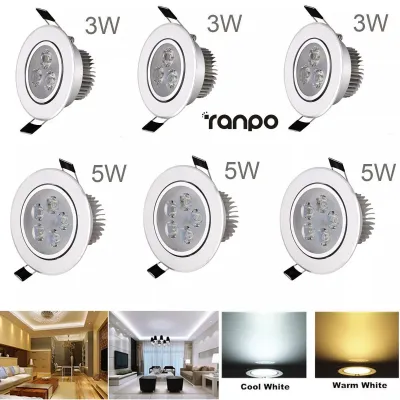
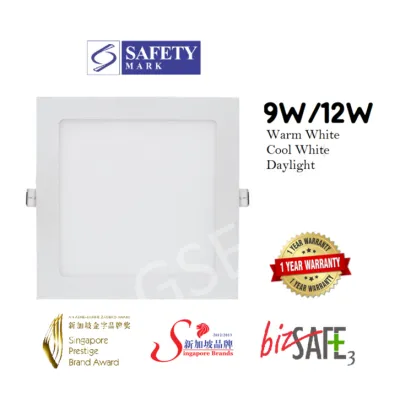
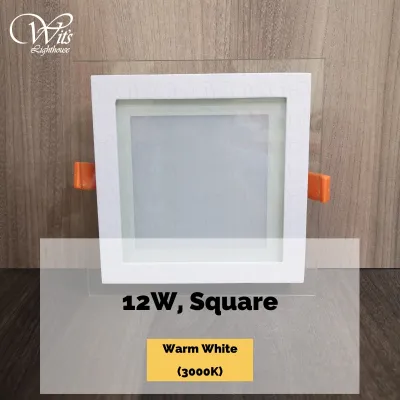
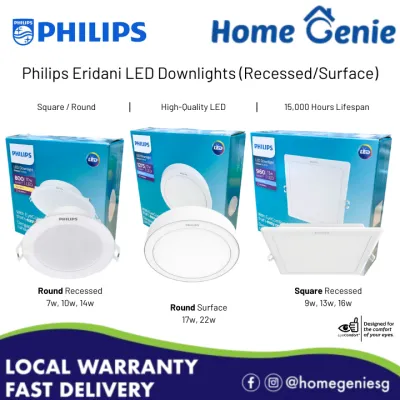
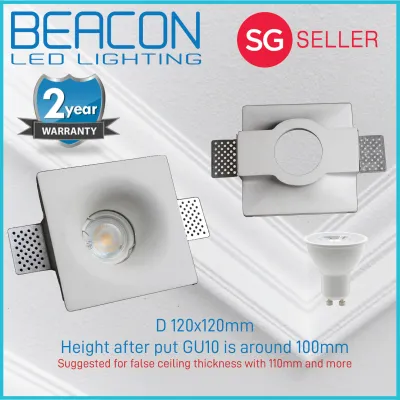
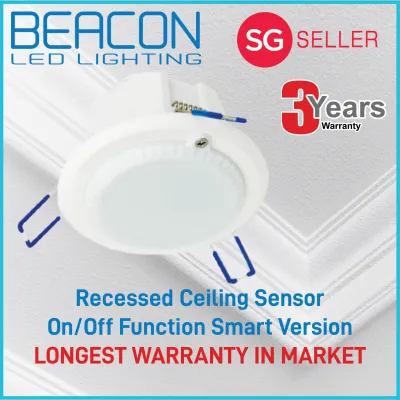
Prices are valid at publication and may change. Please refer to the product page for the latest price.
Confining electrical fixtures to a shallow, unventilated plenum space creates a highly challenging thermal environment. Light-emitting diodes (LEDs) are highly efficient, but they still generate significant heat at their junction points. When LED drivers and heat sinks are squeezed into tight ceiling cavities with minimal airflow, heat accumulates rapidly. Without adequate thermal dissipation, the operating temperature of the LED chips and internal capacitors rises, which can drastically shorten the lifespan of the fixture and lead to premature driver failure.
Furthermore, a 2.6m ceiling height brings the light source physically closer to the eyes of the occupants. In a room with a higher ceiling, light has more space to disperse before reaching eye level. In a standard HDB flat, however, a poorly chosen recessed light can create intense, localized glare and harsh hot spots. This proximity increases the risk of visual discomfort, making the ceiling feel lower and more oppressive. To prevent a cramped, clinical feel, you must select fixtures designed to diffuse light widely and minimize direct glare.
Key Specifications to Check Before Buying
Before purchasing any recessed ceiling light, you must verify its physical dimensions against your false ceiling measurements. The housing depth of the fixture is the most critical dimension; for a shallow false ceiling with a 75mm drop, look for ultra-slim LED downlights with a housing depth of 30mm or less. This leaves a safe clearance of at least 45mm between the top of the fixture and the concrete slab, allowing air to circulate. Additionally, check the cut-out hole dimensions (typically ranging from 75mm to 120mm) to ensure they match the hole saw sizes your installer plans to use.

Optical performance is equally vital for maintaining visual comfort in low-ceiling spaces. Pay close attention to the beam angle and the Unified Glare Rating (UGR) specified in the product datasheet. A narrow beam angle (under 36 degrees) creates dramatic, high-contrast pools of light, which can make a low ceiling feel dark and patchy. For general ambient lighting in a 2.6m room, a wider beam angle between 60 and 110 degrees is preferred to distribute light evenly. To control glare, look for fixtures with a recessed diffuser or a physical baffle that shields the light source from direct line of sight, aiming for a lower UGR where possible.
Wattage and lumen output must be carefully balanced to prevent overheating and over-illumination. In a low-ceiling environment, high-wattage fixtures are unnecessary and generate excessive heat. Instead, opt for lower-wattage fixtures (typically 6W to 9W for bedrooms and 9W to 12W for living areas) that offer high luminous efficacy, measured in lumens per watt (lm/W). This ensures you achieve the desired brightness without overloading the tight ceiling cavity with heat. Always verify that the fixtures are rated for the standard Singapore voltage of 220V–240V AC at 50Hz.
Evaluating Brands for Low-Ceiling HDB Flats
When shortlisting lighting brands for your HDB flat, look specifically for manufacturers that offer dedicated “slim,” “ultra-low profile,” or “integrated thin panel” product lines. Reputable brands like Philips, Megaman, Panasonic, and established local Singapore lighting suppliers design fixtures specifically for high-density, low-clearance residential spaces. Avoid brands that only offer bulky, universal commercial fixtures, as these rarely fit the tight tolerances of an HDB false ceiling without requiring an unnecessarily deep ceiling drop.
Local warranty terms and after-sales support are crucial indicators of a brand’s reliability. Because the LED driver (the power supply unit) is the component most sensitive to heat and electrical fluctuations, it is the most common point of failure. Choose brands that offer a local warranty of at least one to three years, and verify that they sell standalone replacement drivers. If a driver fails after the warranty period, being able to purchase a matching replacement driver locally saves you from having to replace the entire light fixture, which would require matching the exact cut-out dimensions again.
Most importantly, verify compliance with Singapore safety standards. Under the Consumer Protection (Safety Requirements) Scheme, external LED drivers and power adapters are controlled goods. They must carry the blue Safety Mark issued by Enterprise Singapore, complete with a unique registration number. This certification ensures the driver has undergone rigorous testing for electrical safety, short-circuit protection, and thermal limits. Avoid purchasing unbranded or uncertified fixtures from overseas online marketplaces, as they may lack these essential safety protections and pose a fire hazard in your ceiling cavity.
Room-by-Room Lighting Strategy for HDB Flats
In HDB living areas, relying solely on a rigid grid of high-brightness recessed lights can make the space feel flat, clinical, and visually oppressive. Instead, use a layered lighting strategy to create a sense of height and warmth. Combine a few low-glare, wide-beam recessed downlights for general ambient illumination with perimeter cove lighting or wall-mounted sconces. Directing some light upward or along the walls draws the eye upward, making the 2.6m ceiling feel spacious rather than restrictive. Decorative styles and spatial effects are highly subjective, so adjust the placement to suit your furniture layout.
For HDB bedrooms, the primary focus is on relaxation and supporting natural circadian rhythms. Select recessed fixtures with warm color temperatures, typically between 2700K and 3000K, which mimic the soft glow of evening light. If you plan to install dimmable fixtures, verify the compatibility between the LED driver and your wall dimmer switch (such as Triac or trailing-edge dimmers) to prevent annoying flickering or buzzing. Position the fixtures away from the area directly above the bed pillow to ensure you are not staring directly into a light source when lying down.
Kitchens and bathrooms present demanding environments characterized by high humidity, steam, and grease accumulation. In these zones, standard indoor recessed lights can suffer from moisture ingress, leading to electrical shorts or corrosion. You must select fixtures with an appropriate Ingress Protection (IP) rating. For bathrooms, fixtures installed near showers or basins should carry at least an IP44 rating to guard against water splashes. Kitchen lights benefit from flat, easy-to-clean glass covers that prevent grease and cooking residue from settling on the LED chips.
Installation Safety and Professional Boundaries
Installing recessed lighting in an HDB false ceiling requires careful structural and electrical planning. Before cutting any holes, verify the load-bearing capacity of the false ceiling framework. The gypsum board or calcium silicate board must be securely supported by metal runners, and fixtures should never be installed directly beneath structural metal studs. Ensure that the manufacturer’s specified clearances around the fixture and driver are strictly maintained. Never cover the light fixture or driver with thermal insulation unless the product is explicitly certified as insulation contact (IC) rated.
All fixed electrical wiring works in Singapore, including running new lighting points, modifying existing circuits, and connecting external LED drivers to the mains power, must be performed by a Licensed Electrical Worker (LEW). This is a legal requirement designed to protect your home from electrical hazards, short circuits, and fire risks. A professional installer will ensure that the circuit load is balanced, the wiring is properly insulated, and all connections are housed in approved junction boxes within the ceiling plenum.
Before any installation, maintenance, or replacement work begins, ensure that the electrical power is completely isolated at the main distribution board (DB box). Do not rely solely on the wall switch to cut the power. If you encounter damaged wiring, signs of moisture ingress from the concrete slab above, or structural concrete beams during the cutting process, halt all work immediately. Consult your LEW or the HDB authority to resolve these structural or electrical issues safely before proceeding with the installation.
Frequently Asked Questions (FAQ)
Can I install recessed lights in an HDB flat without a false ceiling?
No, you cannot install true recessed ceiling lights in an HDB flat without a false ceiling. Recessed fixtures require a hollow cavity (plenum space) behind the ceiling surface to house the fixture body, the external LED driver, and the electrical wiring. Hacking or drilling deep recesses into the original structural concrete ceiling slab of an HDB flat is strictly prohibited by building regulations, as it compromises the structural integrity of the building.
If you prefer not to install a false ceiling, you can achieve a similar modern aesthetic by using surface-mounted downlights or track lighting systems. Surface-mounted downlights are installed directly onto the concrete slab and house their drivers within their own decorative outer casings, which typically range from S$15 to S$40 per fixture. Track lighting allows you to position and angle multiple spotlights along a single slim track, providing excellent task and ambient lighting without reducing your 2.6m headroom.
How many recessed lights do I need for a standard HDB living room?
To determine the number of recessed lights needed, you should calculate the total required lumens based on your room’s floor area and target lux levels, rather than relying on a generic fixture count. For a standard living room, a general ambient light level of 150 lux (lumens per square meter) is typically recommended. Multiply your living room’s area in square meters by 150 to find the total lumens required. For example, a 20-square-meter living space requires approximately 3,000 lumens of total light output.
Once you have the total lumen requirement, divide it by the lumen output of your chosen fixture. If you select a 9W slim downlight that produces 750 lumens, you would need approximately four fixtures (3,000 divided by 750) to achieve the target light level. When planning the layout, space the fixtures evenly—typically 1.0m to 1.2m apart for a 2.6m ceiling height—to ensure the light beams overlap smoothly at floor level, preventing dark corners and minimizing harsh glare.

Community discussion
Share your experience or ask a question. Comments are reviewed before publication.