
When planning a renovation for a Housing & Development Board (HDB) flat in Singapore, the standard ceiling height of 2.6 meters presents a unique design challenge. Installing a false ceiling to accommodate recessed downlights inevitably lowers this clearance further, often leaving a tight void of only 50mm to 150mm. To achieve a clean, modern aesthetic without making the living space feel cramped or poorly lit, selecting the right recessed downlight is critical.
The ideal fixtures must feature an ultra-shallow housing profile, a wide beam angle to distribute light evenly across a lower height, and robust glare-reduction features to protect your eyes when the light source is closer to eye level. By focusing on these technical specifications and verifying local safety standards, you can create a bright, comfortable, and visually spacious home.
Quick Answer: Core Checks for 2.6m HDB Ceilings
To successfully install recessed downlights in a standard 2.6m HDB flat, homeowners must prioritize three fundamental checks before purchasing any fixtures. First, verify the physical clearance of your false ceiling void; standard HDB renovations typically allow for a false ceiling drop of 75mm to 100mm, meaning you require ultra-thin downlights with a housing depth of 50mm or less.
Products mentioned in this guide
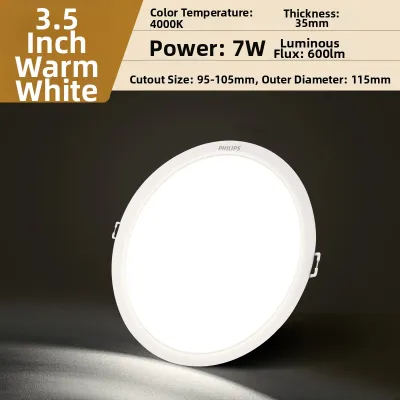
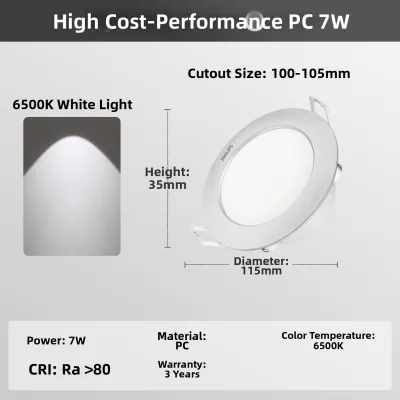
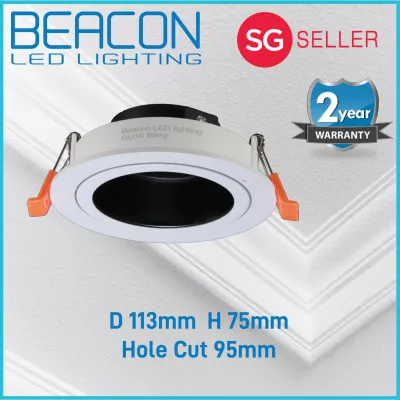
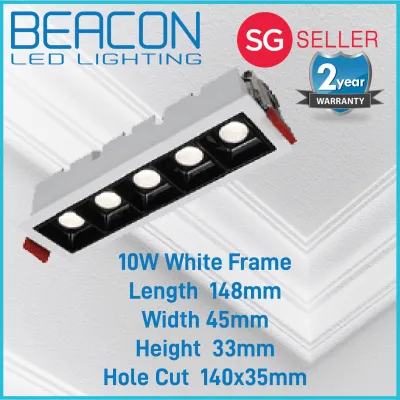
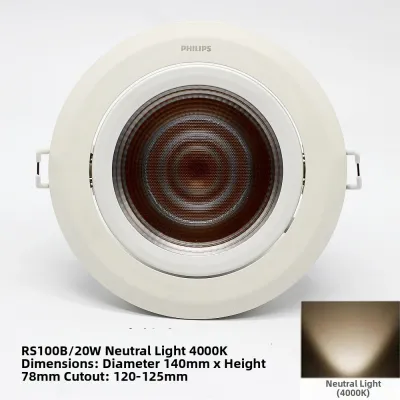
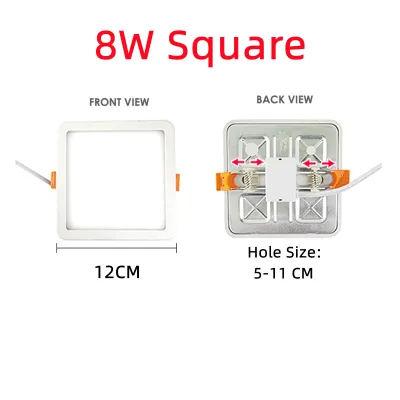
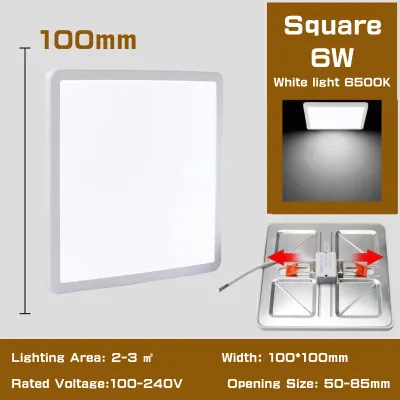
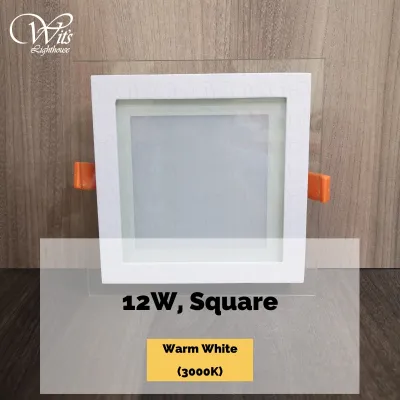
Prices are valid at publication and may change. Please refer to the product page for the latest price.
Second, opt for fixtures with wide beam angles—ideally between 90 and 110 degrees—and integrated anti-glare diffusers to ensure soft, even illumination without harsh hot spots. Finally, ensure every product carries the mandatory Singapore Safety Mark certification to guarantee electrical safety and compliance with local housing regulations.
Key Specifications for 2.6m Ceiling Heights
Housing Depth & Cut-out Size
The physical dimensions of a recessed downlight dictate whether it can physically fit into your ceiling structure. In a 2.6m HDB flat, preserving vertical space is paramount. A typical false ceiling drop of 75mm reduces the net room height to approximately 2.52m. To accommodate this, look for ultra-slim or flat-panel LED downlights, which often have an overall housing depth of just 25mm to 45mm.

This shallow profile leaves sufficient clearance above the fixture for heat dissipation and wiring. Before cutting holes in the gypsum board, always cross-reference the manufacturer’s specified cut-out diameter (commonly 75mm, 100mm, or 125mm) with the physical dimensions of the light. A mismatched cut-out can lead to unstable mounting or visible gaps that ruin the seamless ceiling finish.
Beam Angle & Light Distribution
Beam angle determines how wide the light spreads as it travels downward. With a low ceiling height of 2.6m, narrow beam angles (such as 24 or 36 degrees) create tight, intense cones of light on the floor, leaving the upper walls in shadow—a phenomenon known as the “cave effect.”
For general ambient lighting in HDB living rooms and bedrooms, select downlights with a wide beam angle of 90 degrees or more. This wide distribution ensures that the light cones overlap closer to the ceiling level, creating a uniform wash of light across the entire room and making the space feel larger and more open.
Anti-Glare & Deep Recessed Designs
Because a 2.6m ceiling places the light source closer to your standing and sitting eye levels, glare can quickly cause eye strain and headaches. Standard flat-panel downlights with flush diffusers emit light in all directions, which can be uncomfortable when viewed from the side.
To mitigate this, look for deep recessed designs where the LED chip is set back 10mm to 20mm inside the housing. This physical barrier blocks direct line-of-sight to the light source from wider viewing angles. Alternatively, fixtures equipped with honeycomb louvers or micro-prismatic diffusers help control light spill, directing the illumination downward while keeping the ceiling plane visually quiet and comfortable.
Color Temperature (CCT)
Color temperature is measured in Kelvin (K) and should be selected based on the specific function of each room rather than the ceiling height itself. For living rooms and bedrooms where relaxation is the priority, a warm white light of 3000K creates a cozy, inviting atmosphere.
For kitchens, bathrooms, and study areas where task performance is key, a cool white light of 4000K provides excellent clarity and focus without being overly clinical. Daylight options of 6500K are best reserved for utility yards or specific task areas where precise color rendering is required. Many modern LED downlights offer tri-color switching, allowing you to toggle between these temperatures during installation to find the perfect balance for your home.
Identifying Reliable Lighting Brands & Sellers
Safety Mark Certification
In Singapore, household electrical appliances—including LED drivers and downlights—are classified as Controlled Goods under the Consumer Protection (Safety Requirements) Registration Scheme. Before purchasing any downlight brand, look for the distinctive Safety Mark logo on the product packaging or the LED driver itself.
This certification ensures the product has been tested to meet stringent electrical safety standards, reducing the risk of short circuits, overheating, or electrical fires. Avoid buying unbranded or uncertified fixtures from overseas online marketplaces, as these products often bypass local safety testing and may fail prematurely or pose a hazard to your home.
Warranty Terms & After-Sales Support
A reliable lighting brand is defined by the strength of its local warranty and after-sales service. When comparing brands, check the duration of the warranty, which typically ranges from one to three years. Crucially, verify what the warranty covers; some manufacturers cover only the LED chip, while others include the external LED driver, which is actually the component most prone to failure over time.
Opt for brands that offer “one-to-one exchange” policies at local service centers or retail showrooms, ensuring you can quickly replace a faulty unit without waiting weeks for overseas shipping.
Authorized Retailers & Official Stores
To guarantee you are purchasing genuine, certified products, always buy from authorized physical showrooms or verified official online storefronts. Established lighting hubs in Singapore, such as those along Balestier Road or Jalan Besar, allow you to view the physical fixtures, test their brightness, and verify their build quality in person.
Purchasing from authorized dealers also ensures that you receive valid tax invoices and official warranty cards, which are essential if you need to make a claim in the future. A certified, high-quality recessed downlight in Singapore typically ranges from S$15 to S$45 per unit, depending on its smart features and driver specifications.
Driver Quality & Flicker-Free Claims
The longevity and performance of an LED downlight depend heavily on the quality of its external driver. Low-quality drivers often produce invisible high-frequency flickering, which can cause headaches, eye fatigue, and interfere with video recording on mobile devices.
Reliable brands explicitly state “flicker-free” on their product specifications. Additionally, check the Color Rendering Index (CRI) of the fixture; a CRI of 80 or higher is recommended for residential spaces to ensure that colors, wood grains, and skin tones appear natural and vibrant under the artificial light.
Installation & Electrical Safety Checks
False Ceiling Clearance
Before your contractor begins installing the false ceiling, it is vital to measure the exact void depth available. Standard HDB flats often have structural concrete beams, electrical conduits, or air conditioning copper pipes running along the soffit. These obstructions can significantly reduce the available clearance in specific areas of the ceiling.
Ensure your contractor maps out these obstacles before cutting the downlight holes. If a structural beam blocks a planned light position, you may need to adjust the layout or select an ultra-thin downlight model that can fit into a shallower clearance of 30mm or less.
Wiring & Load Limits
When retrofitting recessed downlights into an older HDB flat, you must assess the condition of the existing electrical wiring. Ensure that the total wattage of all planned downlights does not exceed the rated capacity of the lighting circuit, which is typically protected by a 6A or 10A Miniature Circuit Breaker (MCB) in the distribution board.
While modern LED downlights consume very little power (typically 7W to 12W per fixture), overloading can still occur if too many fixtures are chained together on a single switch or if the existing wiring is degraded.
Professional Installation Boundary
Working with electrical wiring poses severe risks of shock, fire, and structural damage. In Singapore, any modification to your home’s fixed electrical wiring—including installing new lighting points, running conduits behind a false ceiling, or replacing a distribution board—must be performed by a Licensed Electrical Worker (LEW) or a qualified electrical contractor.
Always isolate the mains power at the distribution board before any maintenance or installation work begins. Never attempt to splice wires or mount fixtures yourself; professional installation ensures compliance with the Singapore Standard SS 638 (Code of Practice for Electrical Installations).
Heat Dissipation & Insulation
Although LED downlights are highly efficient, they still generate heat, which is concentrated at the back of the fixture near the aluminum heat sink. If your false ceiling contains thermal or acoustic insulation materials (often installed to reduce noise from neighbors upstairs), you must ensure the downlights are rated for insulation contact (IC-rated).
Non-IC-rated fixtures require a clear air gap of at least 50mm around and above the heat sink to prevent heat buildup. Trapped heat can drastically shorten the lifespan of the LED chip and driver, or in worst-case scenarios, melt nearby materials.
Comparing Downlight Features & Functionalities
Fixed vs. Adjustable (Gimbal)
When planning your lighting layout, consider how each room will be used. Fixed downlights point directly downward, providing broad, even ambient light that is ideal for general illumination in living rooms, dining areas, and hallways.
Adjustable or gimbal downlights allow you to tilt the light source (usually by 15 to 30 degrees). These are perfect for accent lighting, allowing you to direct light toward a feature wall, a piece of artwork, or a workspace, adding depth and visual interest to your HDB flat’s interior design.
Standard vs. Smart Downlights
Traditional downlights operate via standard wall switches and offer reliable, straightforward performance. Smart downlights, which connect via Wi-Fi, Bluetooth, or Zigbee protocols, allow you to adjust brightness, change color temperatures, and set automated schedules via a smartphone app or voice assistant.
However, smart lighting requires a stable wireless network and constant power to the fixture. If you plan to use smart downlights, you may need to install compatible smart wall switches or ensure your wiring includes a neutral wire, which is increasingly common in newer HDB flats but may require retrofitting in older units.
Dimmable vs. Non-Dimmable
Dimmable downlights offer the flexibility to transition from bright, functional task lighting to a soft, relaxed ambiance for movie nights. However, dimming LEDs requires precise compatibility between the LED driver and the wall dimmer switch.
Standard non-dimmable downlights will flicker, buzz, or fail to turn on if connected to a dimmer switch. When purchasing, ensure both the downlight driver and the dimmer switch are explicitly rated as compatible (typically using trailing-edge or leading-edge phase-cut dimming technology) to ensure smooth, flicker-free operation.
Frequently Asked Questions (FAQ)
Can I install recessed downlights without a false ceiling?
True recessed downlights cannot be installed directly into a standard concrete HDB ceiling because they require a physical cavity or void to house the fixture’s body and electrical driver. If you do not wish to install a false ceiling, you can achieve a similar modern aesthetic by using surface-mounted downlights or track lighting systems.
Surface-mounted downlights feature an integrated outer casing that bolts directly to the concrete ceiling, housing all electrical components neatly inside without requiring any structural cutting.
How many downlights do I need for a standard HDB bedroom?
The number of downlights required depends on the room’s dimensions and the desired light levels, measured in lux (lumens per square meter). For a standard HDB bedroom of approximately 10 to 12 square meters, a general ambient light level of 100 to 150 lux is recommended.
If you select downlights with a light output of 600 lumens each, you would typically require four to six fixtures, spaced evenly across the ceiling. Always consult the manufacturer’s spacing guidelines and consider the beam angle to ensure the light cones overlap correctly at floor level.
Why do my new LED downlights flicker when dimmed?
Flickering is almost always caused by an electrical mismatch between the LED driver and the wall dimmer switch. Traditional dimmer switches designed for older incandescent bulbs often have a high minimum wattage requirement (e.g., 40W), which a low-power LED downlight (e.g., 9W) cannot meet, causing the circuit to become unstable.
To resolve this, ensure you are using a dedicated LED-compatible dimmer switch and verify that the total wattage of your connected downlights falls within the switch’s specified minimum and maximum load limits.

Community discussion
Share your experience or ask a question. Comments are reviewed before publication.