
When sudden power outages occur, having a reliable emergency light source is essential for maintaining safety and comfort at home. Rechargeable LED light bulbs have become a popular solution, serving as standard household lights during normal times and automatically switching to battery power when the grid fails. However, choosing the right bulb requires a careful comparison of battery backup times and brightness levels. Because manufacturers use different testing standards and marketing terms, understanding how to evaluate these specifications is key to finding a bulb that keeps your home illuminated when you need it most.
Decoding Brightness and Battery Specifications
To make an informed comparison, you must first understand how brightness and energy consumption are measured in modern LED bulbs. Historically, consumers relied on wattage to estimate a bulb’s brightness, but wattage only measures electrical power consumption. For LED technology, brightness is measured in lumens. A standard household LED bulb might emit 800 lumens while drawing only 9 watts of electricity. When comparing rechargeable options, you must look at both the active lumen output (when connected to main power) and the emergency lumen output (when running on the internal battery).
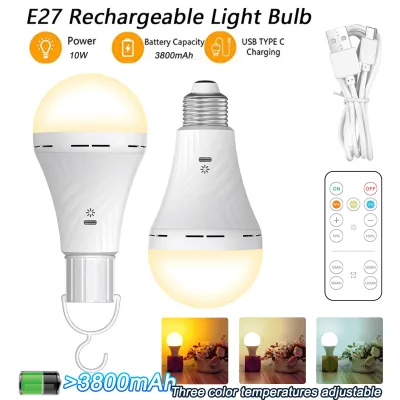
The battery capacity of these bulbs is typically measured in milliampere-hours (mAh). This rating indicates the total electrical charge the battery can store. In theory, a higher mAh rating means a longer backup time, but the actual runtime depends heavily on the bulb’s power consumption during emergency mode. For instance, a bulb with a 2,000 mAh battery running at a highly efficient, dimmed setting will last significantly longer than the same bulb running at full brightness.
Products mentioned in this guide
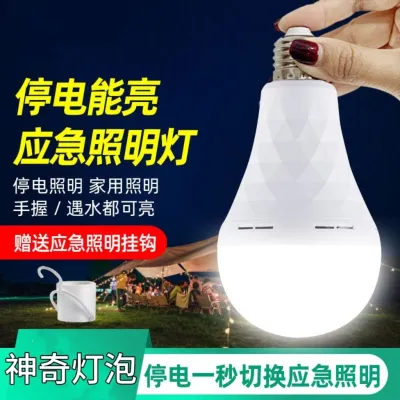
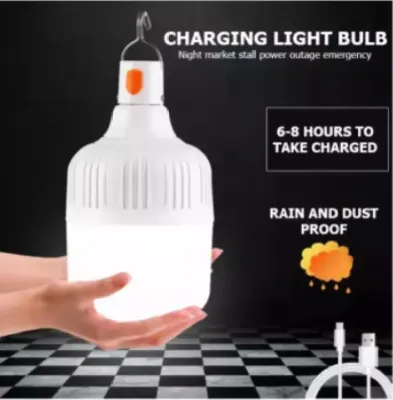
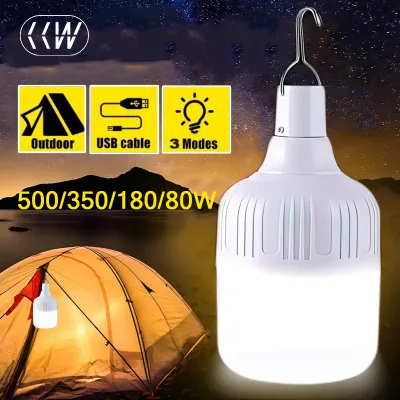
Prices are valid at publication and may change. Please refer to the product page for the latest price.
This highlights the inherent trade-off between maximum brightness and extended battery life. To prolong emergency illumination, many rechargeable bulbs are designed to automatically reduce their lumen output when switching to battery power. A bulb that provides a bright 800 lumens during normal operation might drop to 300 or 150 lumens during a power failure. When comparing brands, always check the packaging or technical specifications to verify the exact emergency lumen output rather than assuming the bulb will maintain its full everyday brightness.
How to Evaluate Brand Claims for Backup Time
When browsing online marketplaces or local lighting shops in Singapore, you will often see bold claims of “up to 6 hours” or “up to 8 hours” of backup light. It is crucial to approach these estimates with a critical eye. In most cases, these maximum runtimes are calculated under ideal laboratory conditions using the lowest possible brightness setting or a dedicated eco-mode. If you run the bulb at its highest available emergency brightness, the actual backup time may be cut in half.

To estimate how a bulb will perform in your home, you should calculate your expected runtime based on your typical usage patterns. Consider the frequency and duration of power interruptions in your area. While Singapore’s electrical grid is highly reliable, localized blackouts can still occur due to internal circuit trips, heavy storms, or scheduled maintenance in older HDB estates or condominiums. If you only need emergency lighting to safely navigate your home or locate emergency supplies, a bulb that offers 2 to 3 hours of moderate brightness is usually more than sufficient.
Additionally, you should investigate the long-term reliability of the internal battery. Like all rechargeable lithium-ion batteries, the cells inside these bulbs will gradually degrade over time, especially since they remain constantly connected to a live electrical socket. Look for brands that offer clear warranty terms covering both the LED components and the battery itself. Some manufacturers provide built-in battery health indicators or degradation warnings, which can help you identify when a bulb’s backup capacity has dropped below a safe threshold and needs replacement.
Comparing Hardware, Base Types, and Charging Features
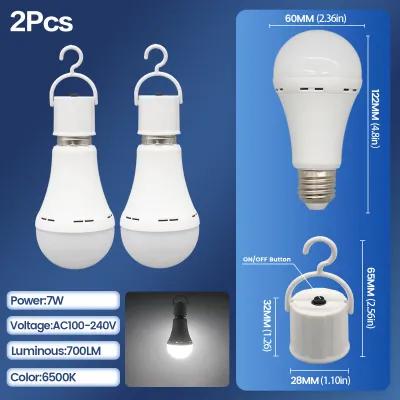
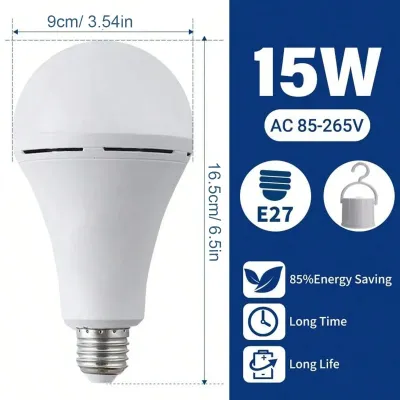
Beyond brightness and battery life, the physical design and functionality of a rechargeable bulb determine how easily it integrates into your daily life. The first step is verifying the base type of your existing light fixtures. In Singapore, the most common interfaces are E27 (screw-in) and B22 (bayonet) bases. Because rechargeable bulbs house an internal battery and charging circuitry, they are physically larger and heavier than standard LED bulbs. It is essential to measure the dimensions of your lamp shades or enclosed fixtures to ensure the bulb will fit without touching the sides.
Charging mechanisms also vary significantly between models. The most convenient option for daily use is standard socket charging, where the bulb automatically recharges its battery whenever the light switch is turned on during normal operation. However, some versatile models also feature dedicated micro-USB or USB-C ports. This allows you to remove the bulb from its fixture and charge it using a standard phone charger, a portable power bank, or even a small solar panel, making it highly useful as a portable lantern for outdoor activities or prolonged emergencies.
Another critical feature to compare is how the bulb activates during an outage. Many advanced rechargeable bulbs feature smart internal sensors that can detect a loss of mains power. If the wall switch is in the “on” position when the power goes out, the bulb will instantly switch to battery power without manual intervention. Other simpler models require you to manually activate emergency mode, either by screwing on a specialized hook cap that completes the electrical circuit or by flipping a physical switch on the bulb’s body.
Decision Framework: Matching Bulbs to Your Space
Choosing the right rechargeable bulb is not about finding a single “best” option, but rather matching the bulb’s specifications to the specific requirements of each room. For primary living areas, kitchens, and dining rooms where family members gather, you should prioritize high-lumen, high-capacity models. These spaces require sufficient ambient light to perform daily tasks safely during an extended outage. Keep in mind that these high-performance bulbs will be bulkier and heavier, so you must ensure your fixtures can accommodate them.
Conversely, for transitional spaces like hallways, bathrooms, or stairwells, compact and lower-lumen models are much more practical. In these areas, the primary goal is safe navigation rather than intense illumination. Lower-lumen bulbs draw less power, allowing them to provide reliable backup light with smaller, lighter batteries. This makes them easier to install in delicate wall sconces or compact ceiling fixtures.
Before making a purchase, always perform a physical compatibility check. Weighing the bulb against the structural limits of your light fixtures is highly recommended. If you plan to install rechargeable bulbs in multi-bulb chandeliers or track lighting systems, the cumulative weight of multiple battery-integrated bulbs can put significant strain on the mounting brackets. Always verify that your existing fixtures can safely support the additional load before installation.
Installation Limits and Battery Maintenance
To ensure the safe and long-term operation of your rechargeable LED bulbs, you must adhere to proper installation and maintenance practices. Because these bulbs contain sensitive electronic components and lithium-ion batteries, they require more care than standard LEDs. When installing or replacing any bulb, always isolate the power supply at the main circuit breaker first to prevent electrical shock. If you are working at height to reach ceiling fixtures or dealing with suspended loads, ensure your ladder is secure, or consider hiring a qualified electrical professional to assist you.
Heat dissipation is another critical factor that directly affects battery health and safety. Operating a high-capacity rechargeable bulb in a fully enclosed or poorly ventilated fixture traps the heat generated by both the LED driver and the charging circuit. This elevated temperature can rapidly degrade the battery’s capacity, shorten its overall lifespan, or even cause the battery to swell. Always ensure there is adequate ventilation around the bulb, and avoid using them in tight, enclosed glass globes unless the manufacturer explicitly states it is safe to do so.
Finally, establishing a routine maintenance schedule will help preserve the battery’s emergency capacity. If a rechargeable bulb remains plugged in and turned on constantly, the battery stays at a continuous 100% charge, which can accelerate degradation. To keep the battery chemistry active, it is highly recommended to perform periodic discharge and recharge cycles. Every few months, turn off the main power or remove the bulb to run it on battery power until it fully discharges, then reinstall it to let it charge back to full capacity.
Frequently Asked Questions (FAQ)
Can I use a rechargeable light bulb in an enclosed or outdoor fixture?
Using rechargeable light bulbs in fully enclosed fixtures is generally not recommended due to the high risk of heat buildup. The internal lithium-ion battery and charging circuitry generate heat during operation, and trapping this heat inside an enclosed space can severely degrade the battery’s lifespan and compromise safety. For outdoor installations, standard indoor rechargeable bulbs must not be used. Singapore’s tropical climate brings high humidity and heavy rainfall, which can easily damage the internal electronics. If you require emergency lighting outdoors, you must verify that the bulb has an appropriate Ingress Protection (IP) rating, such as IP44 or higher, and strictly follow the manufacturer’s guidelines for damp or outdoor environments.
Do rechargeable bulbs work with standard dimmer switches?
In most cases, standard rechargeable LED bulbs are not compatible with traditional wall dimmer switches. Dimmer switches work by rapidly chopping the electrical current to reduce the voltage delivered to the bulb, which interferes with the constant current required by the bulb’s internal charging circuitry. Attempting to use a standard rechargeable bulb on a dimmed circuit can cause persistent flickering, prevent the battery from charging, or permanently damage the internal driver. If you require dimming functionality, you must specifically look for models certified by the manufacturer as dimmable-compatible, and verify that your dimmer switch is compatible with LED technology.
Community discussion
Share your experience or ask a question. Comments are reviewed before publication.