
Quick Answer: Which Material Provides the Strongest Scent Throw?
Choosing the right reed diffuser stick depends on the physical properties of the material and how they interact with your fragrance oil. Fiber sticks generally offer the most consistent and powerful scent throw because of their engineered, highly uniform porous structure. They wick both thick and thin oils efficiently without requiring frequent manual intervention.
In contrast, natural rattan reeds provide a classic, moderate throw that works well with lighter, alcohol-based fragrances, though they require regular flipping to prevent clogging. Bamboo skewers, while occasionally used as a DIY alternative, perform poorly because their dense cellular walls and internal nodes block the capillary action necessary to draw oil upward. For most home environments, fiber is the practical choice for maximum fragrance delivery, while rattan remains a strong option for those who prefer natural materials and a gentler scent profile.
Understanding Reed Diffuser Stick Materials
To understand why different sticks perform the way they do, it helps to look at their microscopic structures. Passive diffusion relies entirely on capillary action, which is the ability of a liquid to flow through narrow spaces without the assistance of external forces. The material you choose determines how quickly the oil travels upward and how evenly it evaporates into the air.
Products mentioned in this guide
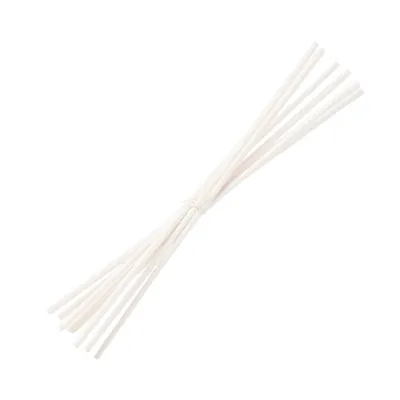
![[ARORAH] Soft High Quality Reed Diffuser Sticks 50s](https://img.lazcdn.com/g/p/d9d8197dafbf46513c865b568957df26.jpg_400x400q80.jpg_.webp)
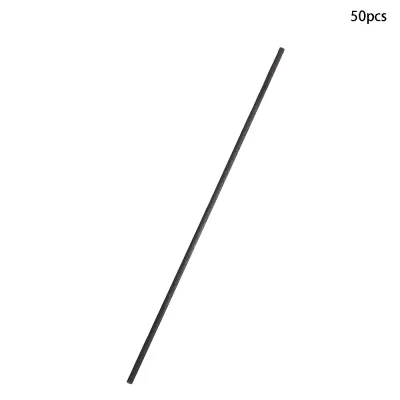
![[KIRONA SCENT] Willow Wood Reed Sticks (Set of 10pcs / 20pcs) for Aura Reed Diffuser](https://img.lazcdn.com/g/p/d3da56f72d8809402967c23226d885ee.jpg_400x400q80.jpg_.webp)
Prices are valid at publication and may change. Please refer to the product page for the latest price.

Rattan Reeds
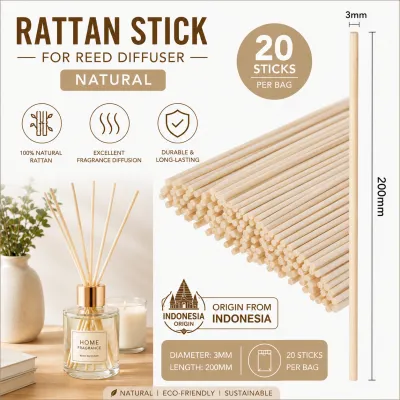
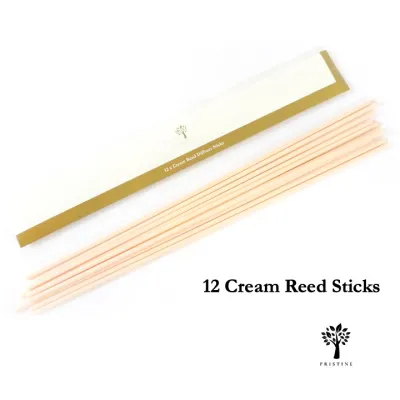
Rattan is a naturally climbing palm native to tropical regions. When harvested and dried, the inner core of the rattan stem reveals a complex network of microscopic, hollow channels running vertically along the length of the stick. These natural channels, often referred to as lumen, act like tiny straws that draw the fragrance oil upward from the vessel to the exposed tip.
While rattan is highly effective for traditional aromatherapy, its natural origin means the channels vary in size and shape. Over time, heavy essential oils or highly viscous carrier oils can clog these irregular passages. Dust and environmental debris also settle into the open ends, gradually slowing down the wicking process. To maintain a steady scent throw, you must regularly flip the reeds to expose the saturated ends to the air.
Fiber Sticks
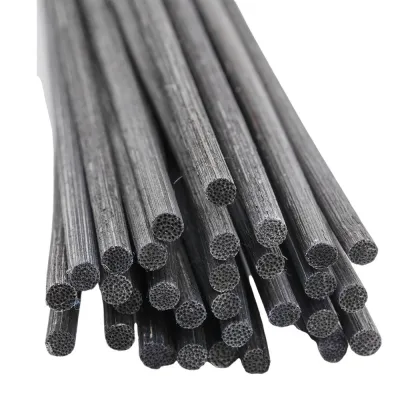
Fiber sticks are manufactured from synthetic materials, typically polyester or nylon filaments that are compressed and bonded together. Unlike natural rattan, which relies on hollow tubes, fiber sticks utilize the uniform spaces between tightly packed parallel threads to pull liquid upward. This engineered design ensures that every stick has identical porosity and wicking capability.
Because the pore size is precisely controlled during manufacturing, fiber sticks resist clogging much better than natural wood. They are highly compatible with a wide range of diffuser bases, including water-based, alcohol-based, and heavy oil-based solutions. Additionally, because they are synthetic, these sticks can be dyed in various colors, such as deep black or sleek grey, using colorfast dyes that will not bleed into your diffuser liquid or stain your surrounding decor.
Bamboo Skewers
Bamboo is frequently mistaken for rattan due to its similar woody appearance, but its internal anatomy is fundamentally different. Bamboo is a grass with a incredibly dense, fibrous cellular structure designed to provide structural strength rather than fluid transport. Furthermore, bamboo stems contain solid horizontal partitions, or nodes, that completely block any continuous vertical flow of liquid.
If you place a bamboo skewer into diffuser oil, you will notice that the liquid barely travels past the surface line. The oil cannot reach the top of the stick, resulting in almost zero evaporation and an extremely weak scent throw. Using bamboo skewers for home fragrancing is generally ineffective and leads to wasted oil, as the fragrance remains trapped in the bottle.
How to Match Stick Material to Your Diffuser Oil
Achieving the perfect fragrance balance in your home requires matching the porosity of your reed diffuser stick to the viscosity of your diffuser oil. Thick carrier oils, such as sweet almond, safflower, or heavy synthetic bases, require the wide, uniform capillary spaces found in fiber sticks. If you attempt to use rattan with these heavy bases, the natural channels will quickly become saturated and sluggish, stopping the scent throw entirely.
Conversely, lighter, highly volatile solvent bases—such as those containing alcohol or specialized light esters—work beautifully with rattan reeds. The natural, slightly restricted flow of rattan prevents these fast-evaporating liquids from disappearing too quickly, extending the lifespan of your diffuser. If you use fiber sticks with a highly volatile, thin liquid, the wicking action may be so aggressive that the bottle empties in a fraction of the expected time.
Regardless of the material you choose, you can easily control the intensity of the fragrance by adjusting the number of sticks in the vessel. For small, enclosed spaces like a typical bathroom or study, starting with three to five sticks prevents the scent from becoming overwhelming. For larger, open-concept living areas, increasing the count to eight or ten sticks expands the evaporation surface area to fill the room.
When selecting your setup, consider how the aesthetic matches your interior design. Sleek, black fiber sticks complement modern, minimalist, or industrial spaces, while natural, slightly curved rattan reeds suit rustic, bohemian, or classic decor. Always ensure that the length of the sticks is proportional to the height of your vessel; a good rule of thumb is that the sticks should extend at least twice the height of the bottle to ensure proper air contact.
Maintenance Tips for Consistent Fragrance
To keep your reed diffuser operating at peak performance, establish a simple maintenance routine based on the material you have selected. For rattan reeds, plan to flip the sticks once every one to two weeks. This action brings the fully saturated bottom ends to the top, providing an immediate boost in fragrance. Fiber sticks, due to their continuous wicking design, rarely require flipping, though doing so occasionally can help clear any dust that has settled on the exposed tips.
Over time, all diffuser sticks will eventually reach the end of their functional lifespan. You can tell it is time to replace your sticks when the fragrance throw noticeably fades despite the bottle still containing plenty of oil. Visually, saturated or clogged sticks may appear darker, feel greasy to the touch, or show a buildup of household dust. On average, expect to replace your diffuser sticks every two to three months, or whenever you refill the vessel with a fresh batch of oil.
Placement plays a critical role in how effectively the scent diffuses and how long your oil lasts. Position your diffuser in a high-traffic area, such as a hallway, entryway, or near a doorway, where the natural movement of people creates gentle air currents that carry the scent throughout the space. Avoid placing the vessel in direct sunlight, near air conditioning vents, or close to heating elements. In warm, humid climates, direct heat and strong drafts will cause the fragrance oil to evaporate rapidly without allowing the scent to distribute evenly.
Finally, always handle diffuser oils with care. When flipping or replacing sticks, perform the task over a sink or a protective tray. Diffuser liquids contain concentrated oils and solvents that can permanently damage, stain, or strip the finish off varnished wood, plastic, and painted surfaces if spilled.
Frequently Asked Questions (FAQ)
Can I reuse reed diffuser sticks for a new fragrance?
Reusing old reed diffuser sticks for a new scent is not recommended. Once a stick has been used, its internal pores are fully saturated with the original fragrance oil and carrier base. Introducing these saturated sticks to a new scent will cause cross-contamination, altering the intended fragrance profile and often resulting in an unpleasant mixture. Furthermore, older sticks are likely already partially clogged with dust and dried oil residues, which will severely limit their ability to wick the new fragrance effectively.
Why is my reed diffuser not smelling anymore?
If your reed diffuser has stopped throwing scent, the most common culprit is clogged pores in the sticks, often caused by dust accumulation or oil saturation. Another common cause is poor air circulation; if the diffuser is placed in a stagnant corner or a dead-air space, the scent will pool around the bottle rather than circulating. Additionally, check the oil level and quality, as very old oil can lose its volatile fragrance compounds over time, leaving behind a thick, scentless base. Lastly, consider olfactory fatigue, where your nose simply becomes accustomed to a constant background scent.
Do fiber sticks require less maintenance than rattan?
Yes, fiber sticks generally require significantly less maintenance than natural rattan reeds. Because fiber sticks are engineered with a highly consistent, open pore structure, they maintain a continuous upward pull of liquid without drying out at the tips. Rattan reeds rely on natural, irregular channels that are prone to drying out and clogging, which requires you to flip them regularly to keep the scent active. If you prefer a low-maintenance option that performs consistently without frequent handling, fiber is the ideal choice.
Community discussion
Share your experience or ask a question. Comments are reviewed before publication.