
A whole-house light replacement is a major undertaking for any Singapore homeowner. Whether you are renovating a newly collected Build-To-Order (BTO) flat, upgrading an older Housing & Development Board (HDB) resale unit, or refreshing a condominium, replacing every downlight requires a systematic approach. Selecting the right brand is not just about finding the lowest price per unit; it is about ensuring long-term color consistency, driver reliability, and safety compliance across your entire living space.
Making a hasty decision can lead to mismatched color temperatures across your rooms, premature driver failures, and potential electrical hazards. By understanding the core technical specifications and evaluating brands based on their manufacturing standards and local support, you can execute a seamless replacement project that enhances your home’s aesthetic and functional value.
What Makes a Downlight Brand Reliable for Whole-House Replacement?
When replacing a single broken light fixture, a minor variation in color or brightness might go unnoticed. However, a whole-house replacement demands strict consistency because multiple fixtures are often installed in close proximity along corridors or within open-plan living and dining areas. A reliable brand must deliver uniform performance across dozens of units.
Products mentioned in this guide
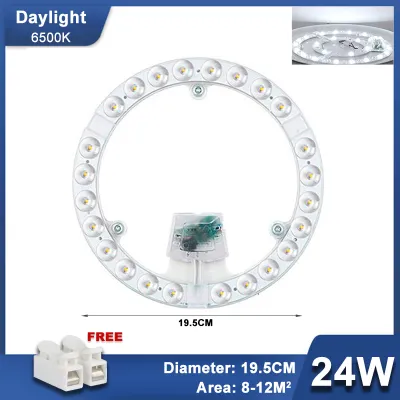
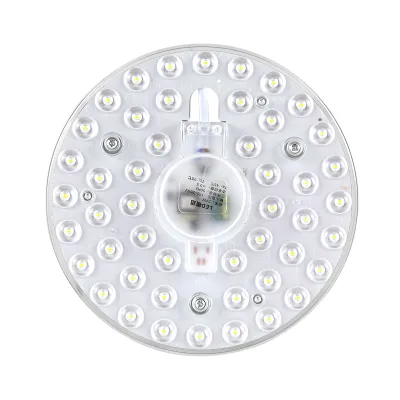
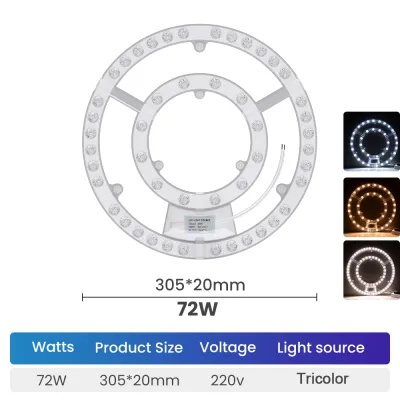
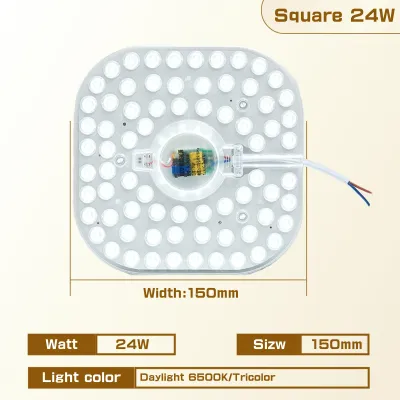
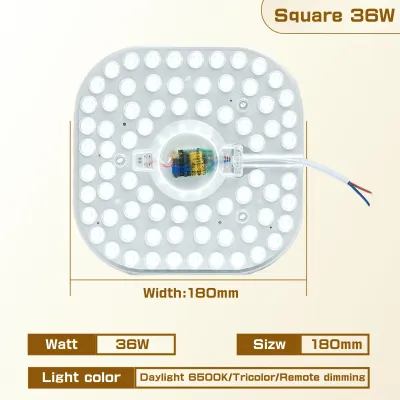
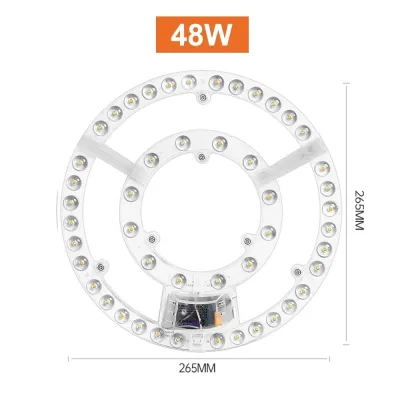
Prices are valid at publication and may change. Please refer to the product page for the latest price.
MacAdam Ellipse Steps (SDCM): This metric measures the variation in color temperature among individual LED chips. For a cohesive aesthetic, look for brands that specify their products within a narrow MacAdam ellipse, ideally SDCM 3 or lower. When downlights have a high SDCM rating, you may notice that some fixtures emit a slightly yellowish light while others look bluish, even though they are all labeled with the same color temperature (such as 4000K Cool White). Sticking to a low SDCM rating ensures that any color variation remains virtually imperceptible to the human eye.
Driver Quality: While the LED chip itself is highly durable, the driver—the component that converts your home’s alternating current (AC) to the direct current (DC) required by the LED—is the most common failure point. High-quality drivers regulate current smoothly, preventing high-frequency flicker that causes eye strain and headaches. They also minimize electromagnetic interference and operate silently, avoiding the annoying buzzing sound common in low-end fixtures. Reliable brands design their drivers with robust thermal management to withstand continuous use.
Local Warranty Support: Purchasing downlights in bulk (often 20 to 50 units for a standard HDB flat or condo) increases the mathematical probability of encountering a defective unit over time. Opting for a brand with established local distributors or dedicated service centers in Singapore ensures you can quickly swap out a faulty unit under warranty. Without local support, you may face long shipping delays or find that a specific model has been discontinued, forcing you to install a mismatched fixture that disrupts the visual harmony of your ceiling.
Key Specifications to Verify Before Buying in Bulk
Before finalizing your purchase, you must cross-check the technical specifications of your chosen brand against your home’s physical and electrical layout. This verification prevents costly installation delays and avoids the need for unexpected ceiling modifications.

Cut-out size versus outer diameter: You must measure the existing cut-out holes in your false ceiling accurately. The cut-out size refers to the diameter of the hole needed in the plasterboard, while the outer diameter (or bezel size) is the total width of the fixture’s faceplate. If your new downlights have a cut-out requirement smaller than your existing holes, the fixtures will slip through; if they are too large, you will have to widen the holes. Standard cut-out sizes in Singapore typically range from 75mm (approx. 3 inches) to 125mm (approx. 5 inches). Matching these dimensions precisely saves you from the messy, labor-intensive, and costly process of patching, plastering, and repainting your ceilings.
Voltage and electrical compatibility: Singapore’s electrical grid operates at a nominal voltage of 230V AC at a frequency of 50Hz. Any downlight you select must be rated to operate safely within this range. Many modern downlights feature integrated drivers, meaning the driver is housed within the fixture itself. This design simplifies wiring and is highly beneficial for shallow false ceilings. If you choose fixtures with external drivers, ensure there is sufficient physical space in the ceiling void to house both the driver and the fixture safely.
IP ratings for different zones: Ingress Protection (IP) ratings indicate how well a fixture is sealed against dust and moisture. While standard dry areas like living rooms, bedrooms, and hallways only require IP20-rated downlights, areas exposed to moisture demand higher protection. In bathrooms—especially directly above showers—and kitchens where cooking steam and grease accumulate, you should install downlights with at least an IP44 rating. This prevents moisture from penetrating the enclosure, protecting the internal electronics from short-circuiting and corrosion.
Dimmability and switch compatibility: If you plan to adjust the light levels in your living room or master bedroom, you must verify that the downlights are dimmable and compatible with your switches. Standard LED downlights do not dim smoothly on traditional trailing-edge or leading-edge wall dimmers without specialized dimmable drivers. Incompatible pairings often result in visible strobing, buzzing, or a limited dimming range. If you are integrating your lights with a smart home system, ensure the downlight drivers are explicitly certified to work with your specific smart switches or dimming modules.
Evaluating Brand Tiers for Consistent Quality and Availability
When executing a whole-house light replacement, categorizing brands by their market positioning and supply chain strengths helps you balance your budget against performance expectations. Rather than relying on arbitrary “top lists,” evaluate brands based on their manufacturing standards and local availability.
When ordering 20 or more units, always ask the supplier or official retail store for a batch consistency guarantee. Manufacturers group LEDs into “bins” based on color and brightness; requesting fixtures from the same production batch minimizes the risk of subtle color shifts across your home.
International Lighting Brands
Established global manufacturers design products that undergo rigorous international testing and certification. These brands offer exceptional lumen maintenance (meaning the lights retain their brightness over years of use without rapidly dimming) and highly engineered optical designs that control glare.
- Pros: High manufacturing consistency, reliable warranty backing, and extensive research into optical comfort and glare reduction.
- Cons: Higher upfront cost per unit, which can significantly impact your budget when buying in bulk. Additionally, because global brands rely on international supply chains, local distributors in Singapore may occasionally run out of stock for specific color temperatures or trim styles mid-project, potentially delaying your renovation.
Regional and Local Specialist Brands
Regional brands and local specialist labels focus heavily on the Southeast Asian market. They often design fixtures specifically tailored to the shallow false ceiling depths common in Singapore HDB flats and condominiums, where clearance space is highly restricted.
- Pros: Highly competitive bulk pricing tiers, designs optimized for local ceiling constraints, and highly responsive local customer service, making warranty claims straightforward.
- Cons: When exploring local or regional options, you must diligently verify safety certifications. Ensure that the drivers and fixtures carry the Enterprise Singapore Safety Mark, which proves they have been tested to meet local electrical safety standards. Avoid unbranded or generic imports that lack this certification, as they may exhibit inconsistent build quality.
Installation and Safety Boundaries for HDB and Condo Ceilings
Executing a whole-house downlight replacement involves working with mains electricity, which carries inherent risks. Observing safety and regulatory boundaries protects your property, your family, and your product warranties.
When to Hire a Licensed Electrical Worker (LEW): In Singapore, safety regulations dictate when you must engage a Licensed Electrical Worker (LEW). If you are performing a simple, like-for-like replacement where the existing wiring, connectors, and mounting brackets remain unchanged, a competent homeowner or general handyman can often handle the physical swap. However, if your project involves running new wiring, adding new lighting points, altering the circuit layout, or upgrading your distribution board (DB) to support a higher electrical load, you are legally required to hire an LEW. Bypassing this requirement violates local regulations and can lead to severe safety hazards.
Heat Dissipation and Fire Safety: Although LED downlights generate significantly less heat than older halogen bulbs, they still produce thermal energy at the rear of the LED chip. Proper heat dissipation is critical to prevent the chip from overheating, which rapidly degrades its lifespan and brightness. Ensure the downlights you select feature robust aluminum heat sinks rather than cheap plastic housings. When installing fixtures in false ceilings, verify that there is adequate clearance space around the light (typically at least 50mm of free air space) and that they are not covered by thermal insulation or placed directly against wooden carpentry, which can trap heat and create a fire hazard.
Warranty Protection and Risk Mitigation: Always review the manufacturer’s installation instructions and product labels before commencing any work. Improper installation practices—such as bypassing safety grounds, cutting original wiring harnesses, or pairing non-dimmable fixtures with dimmer switches—will immediately void the manufacturer’s warranty. If the instructions provided by the brand conflict with your existing electrical setup, stop immediately and consult a qualified professional.
Frequently Asked Questions (FAQ)
Can I mix different downlight brands in the same room?
Mixing different downlight brands in a single room is highly discouraged, even if the specifications on the packaging appear identical. For instance, two brands might both label their products as 4000K (Cool White) with a 60-degree beam angle, but differences in phosphor coatings, lens designs, and color rendering indexes (CRI) will create a highly visible visual mismatch. One set of lights may look slightly pinkish or green compared to the other, and the light distribution on your walls and floors will be uneven. To maintain a cohesive and professional aesthetic, always purchase identical models from a single brand—and ideally from the same manufacturing batch—for any shared or open-plan space.
Do I need to change the transformer when replacing old downlights?
Yes, if you are upgrading from older low-voltage halogen systems (such as 12V MR16 bulbs) to modern LED downlights, you must address the existing transformers. Halogen systems rely on external magnetic or electronic transformers to step down the voltage from 230V to 12V. Modern LED downlights operate on constant-current LED drivers, which are incompatible with old halogen transformers. Attempting to run new LED fixtures through old transformers will cause severe flickering, buzzing, rapid component failure, or even fire hazards. A qualified electrician must safely bypass or remove the old transformers and wire the new LED drivers directly to the mains power supply.
Community discussion
Share your experience or ask a question. Comments are reviewed before publication.