
Selecting the right LED downlights for a whole-home lighting setup in Singapore requires balancing visual comfort, spatial constraints, and local electrical compliance. Reliable brands commonly considered for comprehensive residential projects include Philips for smart ecosystems, Panasonic for optical comfort, and Opple or NVC Lighting for cost-effective, high-volume installations. The optimal choice depends on your ceiling depth, dimming requirements, and budget strategy.
Planning a cohesive lighting layout for an entire flat or condominium involves more than simply choosing a brand. You must evaluate how different fixtures perform across varying room functions while ensuring the selected systems install safely within your specific ceiling structure. Understanding these technical and structural parameters will help you avoid costly installation errors and achieve a visually harmonious home.
Essential Criteria for Whole-Home LED Downlights in Singapore
Maintaining visual harmony across an open-plan layout or a multi-room flat requires strict consistency in color temperature. Mixing different brands or even different batches of the same brand within a single sightline can result in distracting color mismatches, where one section of your living room appears warm yellow while another looks clinical white. For a balanced home environment, homeowners typically select 3000K (Warm White) for relaxing areas like bedrooms and living rooms, and 4000K (Cool White) for task-oriented spaces like kitchens, study rooms, and bathrooms. Consistent color rendering ensures that transition zones, such as hallways connecting these spaces, do not feel jarring to walk through.
Products mentioned in this guide
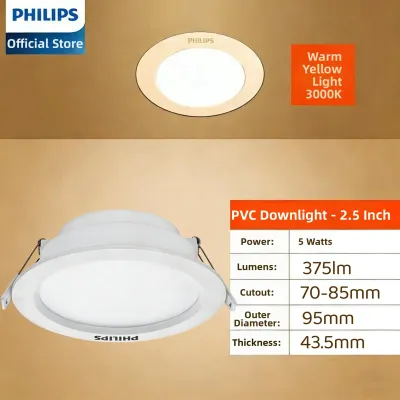
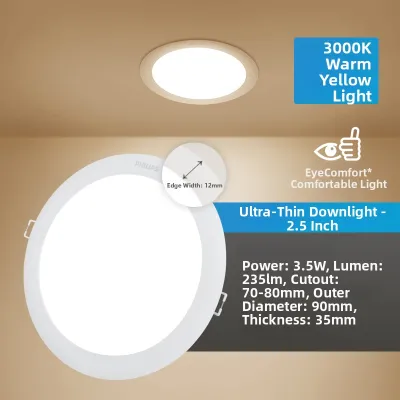
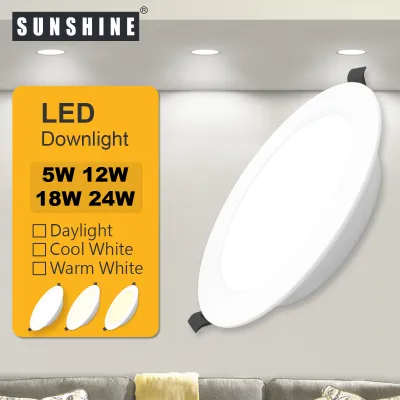
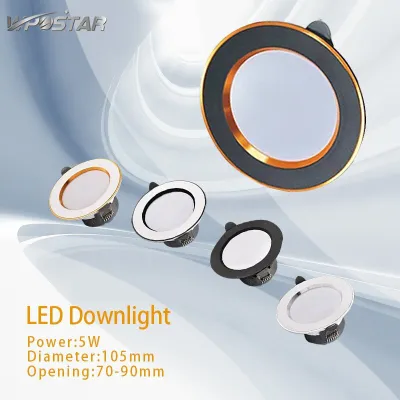
Prices are valid at publication and may change. Please refer to the product page for the latest price.
Local electrical safety and compliance are paramount when sourcing fixtures for a full-home renovation. Singapore operates on a 230V, 50Hz single-phase electrical supply, meaning all downlight drivers must be rated for this standard. Under the Consumer Protection (Safety Requirements) Registration Scheme administered by Enterprise Singapore, controlled goods such as LED drivers must carry the Safety Mark. This certification ensures the driver has been tested against local safety standards to prevent electrical fires, short circuits, and early component failure. Before purchasing any downlight in bulk, always verify that the physical driver unit or its official documentation displays the Safety Mark logo alongside its unique registration number.
Physical ceiling constraints vary significantly between Singapore property types and dictate the physical dimensions of your downlights. In modern Housing & Development Board (HDB) Build-To-Order (BTO) flats and private condominiums, false ceilings are commonly installed to conceal electrical conduits, air-conditioning copper pipes, and water heater lines. These false ceilings are often suspended with a shallow clearance of only 75mm to 100mm from the concrete soffit to maximize room headroom. Deep-recessed downlights, which offer excellent glare control, require greater vertical clearance and may not fit into these shallow voids. Conversely, ultra-thin integrated downlights can fit into tight spaces but offer less shielding against direct glare.
When selecting your fixtures, you must also choose between integrated LED downlights and retrofit options. Integrated downlights feature built-in LED chips and custom-engineered drivers within a single sealed housing, which allows for superior thermal management and a highly compact, low-profile design. However, if an integrated fixture fails, you must replace the entire unit. Retrofit downlights utilize a separate housing designed to hold standard GU10 or MR16 LED bulbs. While retrofit systems allow you to swap out individual bulbs easily without touching the ceiling structure, they often have larger vertical profiles and may offer less sophisticated optical lenses or limited smart dimming capabilities.
Top LED Downlight Brand Categories for Whole-Home Projects
Premium and Smart Ecosystem Brands (e.g., Philips)
Premium global brands like Philips are highly favored for main living areas, dining rooms, and master bedrooms where lighting versatility and smart integration are prioritized. These manufacturers invest heavily in high-grade thermal management, utilizing aluminum or advanced thermal synthetics to draw heat away from the LED chips. Efficient heat dissipation is critical in Singapore’s tropical climate, as excessive heat buildup in enclosed false ceilings is the primary cause of premature driver failure and color shifting over time.

If you plan to implement a smart home ecosystem, premium options like the Philips Hue series or their smart-enabled functional downlights offer extensive customization. These systems allow for tunable white control, enabling you to transition the light from a crisp 6500K daylight in the morning to a soft, relaxing 2200K warm amber in the evening. You can also establish app-based zoning to control groups of lights simultaneously, creating custom scenes for movie nights, dining, or reading.
These advanced features come at a higher price point, making a whole-home installation a significant financial investment. When planning a premium or smart setup, you must verify compatibility with your existing smart home hubs, such as Apple Home, Google Home, or Zigbee-based controllers. Additionally, smart downlights require a constant electrical current to remain responsive to wireless commands, meaning they cannot be paired with traditional wall-mounted TRIAC dimmer switches unless specifically certified by the manufacturer.
Durability and Eye-Care Focused Brands (e.g., Panasonic)
Brands that prioritize optical engineering and eye comfort, such as Panasonic, are excellent choices for study areas, home offices, and children’s bedrooms. A primary consideration in these spaces is minimizing high-frequency flicker, which is often invisible to the naked eye but can cause headaches, eye strain, and fatigue during extended periods of concentration. High-quality drivers from eye-care focused brands deliver a smooth, stable direct current to the LED chips, virtually eliminating flicker.
These brands also focus on low-glare designs, often utilizing deep-recessed configurations and specialized optical lenses. A deep-recessed downlight positions the light source further back inside the ceiling housing, shielding the physical light source from your direct line of sight at normal viewing angles. Specialized diffusers and micro-prismatic lenses help distribute the light evenly across the room, eliminating harsh hot spots and reducing sharp shadows that can make working or reading uncomfortable.
When sourcing these fixtures in bulk for a whole-home project, look for specific optical safety certifications, such as the IEC photobiological safety standard, which certifies that the light emission is safe for human eyes over long-term exposure. Additionally, confirm the manufacturer’s warranty terms for bulk purchases. Reliable eye-care brands typically offer multi-year warranties that cover both the LED chip and the driver, providing peace of mind for a large-scale installation.
Value and High-Volume Project Brands (e.g., Opple or NVC Lighting)
For budget-conscious homeowners or large-scale renovations where cost optimization is essential, value-focused brands like Opple and NVC Lighting are highly popular among local interior designers and contractors. These manufacturers specialize in producing reliable, high-volume fixtures that provide uniform light output at a fraction of the cost of premium smart systems. This makes them highly suitable for secondary bedrooms, utility rooms, hallways, and kitchens where basic, dependable illumination is the primary goal.
These brands offer a wide range of standard cut-out sizes, typically ranging from 75mm to 150mm, making them highly versatile for both new false ceiling installations and direct replacements in existing ceilings. Their clean, minimalist bezel designs blend seamlessly into various interior styles, from modern minimalist to industrial, without drawing unnecessary attention to the fixtures themselves.
When ordering large quantities of value-focused downlights, it is vital to secure your purchase through authorized local distributors in Singapore. This ensures that you receive genuine products that comply with local safety standards and are backed by local warranty support. Furthermore, try to order all your required fixtures in a single batch; high-volume manufacturing can sometimes result in subtle color temperature variations between different production runs, and batch ordering minimizes this risk.
Comparing Key Features for Multi-Room Installations
Selecting the right downlight for each room requires comparing technical specifications against the specific functional needs of that space. The table below outlines the primary technical dimensions you should evaluate when comparing brand offerings:
| Technical Dimension | General Living & Hallways | Kitchens & Bathrooms | Study Rooms & Home Offices |
|---|---|---|---|
| Color Rendering Index (CRI) | CRI >80 | CRI >90 (for color accuracy) | CRI >90 (for visual comfort) |
| Unified Glare Rating (UGR) | UGR <22 (standard comfort) | UGR <22 (general task) | UGR <19 (low-glare requirement) |
| Typical Beam Angle | 60° to 90° (wide wash) | 90° to 110° (uniform flood) | 36° to 60° (focused task) |
| IP Rating Requirement | IP20 (dry indoor areas) | IP44 or higher (moisture zones) | IP20 (dry indoor areas) |
| Dimming Compatibility | Optional (TRIAC or Smart) | Typically non-dimmable | Optional (0-10V or Smart) |
Color rendering is particularly critical in areas where you perform color-sensitive tasks. A Color Rendering Index (CRI) of 80 is acceptable for general hallways and utility rooms, but a CRI of 90 or higher is strongly recommended for dining tables, vanity mirrors, and walk-in wardrobes. A higher CRI ensures that food, clothing colors, and skin tones are represented accurately under artificial light, preventing a washed-out or greyish appearance.
Beam angles dictate how light is distributed throughout a room. Wide beam angles of 90 degrees or more create a broad, uniform wash of light that is ideal for general ambient lighting in living rooms and kitchens. Narrower beam angles of 24 to 36 degrees act as spotlights, allowing you to highlight specific architectural features, artwork, or feature walls. Mixing these beam angles across different rooms adds depth and visual interest to your home.
Dimming compatibility must be verified early in the planning stage to prevent operational issues. If you plan to use wall-mounted dimmer switches, you must ensure that your LED downlights are explicitly labeled as dimmable and that the driver is compatible with your specific dimmer type, such as trailing-edge TRIAC dimmers. Mismatched dimming components frequently lead to visible flickering, audible buzzing, or rapid driver degradation. For complex dimming setups, consulting with your ID or electrical contractor is highly recommended.
Finally, clarify the warranty terms for bulk purchases. Some retail warranties may only cover the physical LED chip, leaving you responsible for purchasing replacement drivers if they fail. Ensure that the warranty covers both components and understand the claim process; some brands require you to bring the faulty unit to a local service center, while others coordinate claims directly through your installing contractor.
Installation Safety and Ceiling Constraints
All fixed electrical wiring, circuit routing, and ceiling modifications in Singapore must comply with local regulations. Under the Electricity Act, any electrical installation work must be performed exclusively by an Energy Market Authority (EMA) licensed electrical worker or a qualified professional. Attempting to install or modify electrical wiring yourself poses severe safety risks, including electrical shock and fire hazards, and can void your home insurance policy.
Before any installation, inspection, or maintenance work begins, ensure that the electrical power is completely isolated at the main distribution board (DB box). Never rely solely on the wall switch to turn off the power, as some circuits may still carry live current if the wiring was previously installed incorrectly.
Moisture-prone environments require specialized fixtures to prevent water ingress and electrical shorting. Standard IP20-rated downlights are suitable only for dry indoor areas like bedrooms and living rooms. For bathrooms, kitchens, and covered outdoor balconies, you must install fixtures with an Ingress Protection (IP) rating of IP44 or higher. In bathrooms, IP44-rated fixtures are required in Zone 2 areas (within 0.6 meters of the shower or bathtub) to protect against splashing water and high humidity.
Thermal management within false ceilings must be carefully managed to prevent heat buildup. Ensure that your false ceiling cavity has adequate ventilation and that the downlights are not installed in direct contact with flammable materials or thermal insulation blankets, unless the fixtures are explicitly rated for insulation contact (IC-rated). Overheating not only shortens the lifespan of the LED driver but also presents a potential fire hazard over time.
Always follow the manufacturer’s installation instructions regarding minimum clearance distances and cut-out dimensions. If you discover that your existing home wiring is degraded, if the ceiling structure shows signs of cracking or instability, or if the physical fixture specifications conflict with your home’s installation environment, stop the project immediately and consult a licensed professional to rectify the issue.
Frequently Asked Questions (FAQ)
Can I mix different LED downlight brands in one home?
It is generally not recommended to mix different LED downlight brands within the same open-plan space or continuous line of sight. Different manufacturers use different LED chips and phosphor coatings, which can result in noticeable variations in color temperature, color rendering, and light output, even if the nominal specifications (such as 3000K) are identical. If you must use different brands to meet budget or functional needs, restrict each brand to separate, enclosed rooms or isolated zones to maintain visual consistency.
Do all LED downlights sold in Singapore need the Safety Mark?
Yes, the LED driver or power supply unit packaged with the downlight is classified as a controlled good under Singapore’s Consumer Protection (Safety Requirements) Registration Scheme. This means it must be tested, registered, and carry a valid Safety Mark before it can be legally sold and installed in Singapore. Always check the physical driver housing, product packaging, or official manufacturer specifications for the Safety Mark logo and its unique 8-digit registration number to ensure compliance and household safety.
Community discussion
Share your experience or ask a question. Comments are reviewed before publication.