
Finding reliable USB fairy lights in Singapore requires looking beyond generic online listings to understand how different brand categories, wire materials, and safety certifications impact performance. Because the local market is heavily saturated with unbranded imports and curated white-label products, identifying a reliable option means evaluating technical specifications rather than relying solely on brand names. By matching the right category of seller with your specific decorative goals and environmental conditions, you can secure lighting that is both visually stunning and electrically safe.
Whether you are decorating an indoor bedroom, setting up a cozy balcony display, or preparing for a festive event, the longevity of your fairy lights depends on key factors like wire insulation, LED driver stability, and moisture resistance. Singapore’s unique tropical climate—characterized by high humidity and ambient warmth—poses specific challenges to low-voltage electronics. Understanding how to navigate these factors ensures you invest in lights that maintain their brightness and color consistency without becoming safety hazards.
How to Evaluate USB Fairy Light Brands for Quality and Value
Evaluating the quality of USB fairy light brands requires looking closely at physical construction rather than just aesthetic photos. The most critical component of any fairy light string is the wire itself. High-quality brands typically offer robust wire configurations, whereas cheaper alternatives use ultra-thin, brittle metal strands. When examining a brand, check if they specify the wire type: insulated silicone or PVC sleeves provide the highest level of protection against physical wear and moisture, while bare copper wire is highly flexible but more fragile.
Products mentioned in this guide
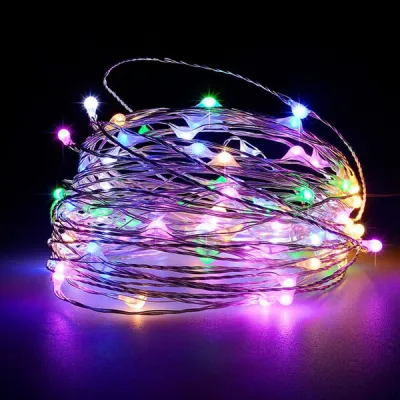
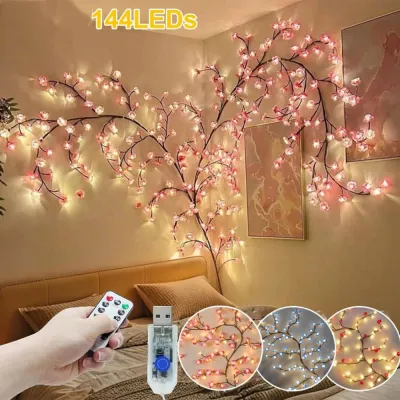
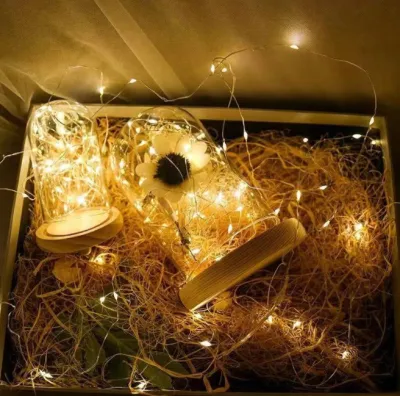
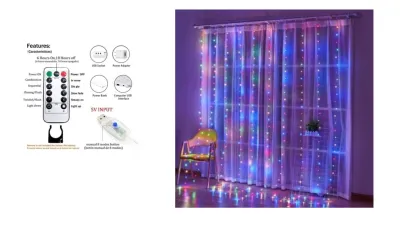
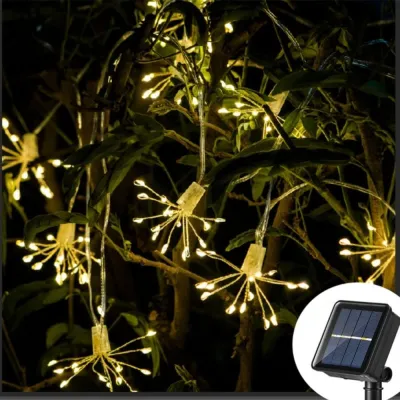
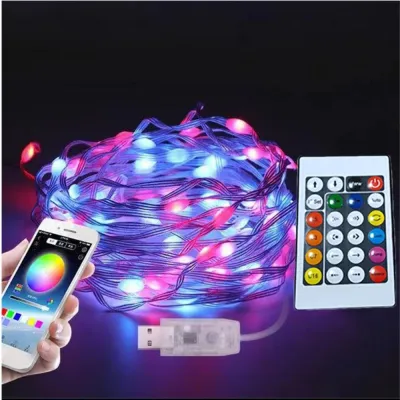
Prices are valid at publication and may change. Please refer to the product page for the latest price.
The integrity of the solder joints at each LED node is another major indicator of manufacturing quality. On low-grade fairy lights, these joints are often poorly insulated with thin drops of glue, leaving them vulnerable to snapping when the wire is bent or pulled. Premium brands use injection-molded plastic or thick, double-layered heat-shrink tubing to seal each LED connection. This structural reinforcement prevents water ingress and protects the delicate electrical connections from mechanical stress during installation.
Brightness and light consistency are also key differentiators between reputable brands and low-cost options. Reliable brands provide detailed specifications regarding their LED chips, such as the chip size and design, along with the color rendering index (CRI) and color temperature. Cheap lights often suffer from inconsistent color temperatures, where a single string may display a mix of warm white, yellowish, and harsh cool white tones. Look for brands that guarantee color consistency across the entire string, ensuring a cohesive and pleasing visual effect.
In the context of decorative lighting, value for money is not determined by the lowest purchase price, but by the overall lifespan and durability of the product. A cheap, unbranded string of lights that fails after a few weeks of use represents poor value compared to a slightly more expensive option that lasts for years. Consider the brand’s warranty terms and return policies; brands that offer clear customer support channels and product guarantees demonstrate confidence in their manufacturing standards and provide peace of mind.
Finally, user reviews can provide invaluable insights into a brand’s real-world performance. When browsing online marketplaces or retailer sites, look past the initial five-star ratings and focus on detailed feedback. Specifically, search for comments regarding flickering, dead LEDs upon arrival, or structural failures at the USB connector. If multiple reviews mention that the USB plug becomes excessively hot or that the wire snapped during normal setup, it is a clear sign of sub-par quality control.
Common Brand Categories Available in Singapore
Home and Lifestyle Retailers
Established global home furnishing and lifestyle brands with a physical presence in Singapore represent a highly accessible option for casual buyers. These retailers offer curated, design-focused lighting collections that are designed to integrate seamlessly with modern interior aesthetics. When you buy from a reputable lifestyle brand, you are primarily paying for aesthetic consistency, reliable basic safety standards, and straightforward local return policies.

The primary advantage of lifestyle retailers is their adherence to strict consumer safety regulations, ensuring that their products are safe for indoor residential use. However, these lights often come with a premium price tag and limited technical features. You will rarely find advanced options like adjustable color temperatures, complex flashing sequences, or ultra-long lengths in this category. Furthermore, these products are typically designed for dry indoor environments, making them unsuitable for outdoor balconies or high-humidity areas.
Specialty Lighting and Decor Brands
For users who require high-performance lighting for permanent installations, large-scale events, or challenging environments, specialty lighting and festive decor brands are the ideal choice. These brands focus exclusively on illumination technology and professional-grade decorations. They supply products that offer superior brightness, robust heat dissipation, and advanced control features, such as built-in timers, radio-frequency (RF) remote controls, and smart home integration.
Specialty brands are characterized by their transparency regarding technical specifications. They routinely provide detailed datasheets that outline exact wattage, LED spacing, lumen output, and Ingress Protection (IP) ratings. While their products carry a higher upfront cost and may feature bulkier control boxes, their industrial-grade wiring and superior weatherproofing make them the most reliable option for long-term use in Singapore’s demanding climate.
E-commerce Platforms and White-Label Brands
Online marketplaces host an overwhelming variety of white-label USB fairy lights, offering unparalleled diversity in terms of styles, lengths, and specialized designs like curtain lights or canopy arrays. These products are highly budget-friendly and allow consumers to experiment with different decorative setups without a significant financial commitment. The convenience of direct-to-door shipping makes this a highly popular shopping channel.
The main challenge when buying white-label brands online is the high level of inconsistency in quality control. It is common to find discrepancies between the advertised product photos and the actual item received, particularly regarding color temperature and wire thickness. Additionally, these budget options rarely come with local warranties, making returns or exchanges difficult if the product arrives damaged or fails shortly after purchase.
To navigate this category successfully, you must adopt a strategic approach to online shopping:
- Filter by local stock: Prioritize listings that ship from local warehouses in Singapore, as this significantly simplifies the return process if the lights are defective.
- Examine user photos: Look closely at customer-uploaded photos in the review section to verify the actual color temperature and build quality of the USB connector.
- Avoid suspiciously cheap listings: If a 20-meter light string is priced significantly lower than the market average, it likely uses sub-par wiring and lacks basic electrical safety features.
Key Specifications to Check Before Buying
USB Interface and Cable Length
When selecting USB fairy lights, it is important to consider both the connector type and the total length of the cable. While USB Type-A remains the most common interface, an increasing number of modern brands are adopting USB Type-C connectors to match contemporary power banks and wall chargers. Ensure that the connector type is compatible with your intended power source without requiring fragile adapters.
The physical length of the light string has a direct impact on electrical performance due to a phenomenon known as voltage drop. Because USB fairy lights operate on a low 5V system, electrical resistance increases as the wire gets longer. If a light string is excessively long (typically over 10 to 15 meters) and uses thin, low-gauge wiring, the LEDs at the far end of the string will appear noticeably dimmer than those closest to the USB plug. To prevent this, look for brands that utilize thicker copper conductors (such as 22 AWG or 24 AWG) for longer runs, or choose systems that use parallel wiring to distribute power evenly.
Wire Material
The material and design of the wire determine both the aesthetic flexibility and the physical durability of the fairy lights.
- Bare Copper Wire: This style features micro-LEDs mounted directly onto thin, uninsulated copper or silver-colored wire. It is highly flexible, making it incredibly easy to wrap around delicate objects, weave into floral arrangements, or shape into custom designs. However, because it lacks a protective outer sleeve, bare copper wire is highly susceptible to physical damage from repeated bending. It is also prone to rapid oxidation when exposed to Singapore's humid air, which can cause the wire to tarnish and eventually fail.
- Insulated PVC or Silicone Wire: This design encloses the electrical conductors within a flexible plastic or silicone sleeve. While these wires are thicker and more visible than bare copper, they offer vastly superior durability and safety. The insulation protects the copper from atmospheric moisture, prevents short circuits, and allows the lights to withstand the physical stress of being hung, pulled, or stepped on. This is the recommended wire material for any permanent installation or semi-outdoor setup.
LED Density and Spacing
LED density refers to the number of light-emitting diodes packed into a single meter of wire, and it dictates the overall visual effect of the display. A high-density configuration (such as 20 LEDs per meter) creates a bright, continuous line of light that is ideal for accentuating architectural features, creating backlights, or forming dense light curtains. Conversely, a lower-density setup (such as 10 LEDs per meter) produces a softer, more dispersed “starry” effect, which is perfect for creating a relaxed, ambient atmosphere in bedrooms or cozy reading corners.
IP Ratings for Local Climate
The Ingress Protection (IP) rating indicates how effectively the light string is sealed against dust and moisture. This specification is critical in Singapore, where high humidity and sudden tropical downpours can easily ruin unprotected electronics.
- IP20: Offers no protection against liquids. These lights are strictly for indoor, dry environments and should never be used in bathrooms, kitchens, or near open windows.
- IP44: Provides protection against splashing water from all directions. This is the minimum rating required for sheltered outdoor areas, such as covered balconies, patios, or verandas where wind-blown rain might occur.
- IP65 or IP67: Offers complete protection against dust and low-pressure water jets. These lights are fully weatherproof and are suitable for exposed outdoor gardens, trees, and festive displays.
- Important Safety Note: Even if a product is advertised as having an IP65 light string, the USB controller, connector, and power adapter are almost always rated IP20. You must keep these electrical connection points inside a weatherproof junction box or strictly indoors to prevent water ingress and electrical hazards.
Power Supply, Safety, and Usage Limits in Singapore
Power Output Limits
Standard USB ports found on laptops, older power banks, and basic wall chargers typically output 5V at 1A, providing a maximum of 5W of power. While this is sufficient for short, low-density fairy lights, longer strings or multi-functional color-changing lights often require a higher current, such as 5V at 2A or 2.4A (10W to 12W). Always check the manufacturer’s specifications to ensure your power source can deliver the required amperage.
Avoid the practice of daisy-chaining multiple USB fairy lights together using cheap USB hubs or splitters. Overloading a single USB port can cause a significant voltage drop, resulting in rapid flickering, dimming, or complete failure of the lights. Furthermore, drawing excessive current through a cheap USB controller can cause it to overheat, creating a potential fire hazard. If you are using modern fast-charging adapters (such as USB-PD or Quick Charge), ensure the fairy light’s controller is designed to handle the power delivery safely, as cheap, non-compliant controllers can fail when connected to smart chargers.
Adapter Safety
While the fairy lights themselves operate at a safe, low voltage of 5V, the USB wall adapter plugs directly into Singapore’s 230V, 50Hz mains power supply. It is absolutely critical that the adapter you use is of high quality and fully certified for safety. In Singapore, you must look for the distinctive Safety Mark printed on the adapter’s housing. This mark indicates that the device has been tested and approved by Enterprise Singapore, the local safety authority, and is certified to protect against electrical short circuits, overcurrent, and overheating. Never use unbranded, ultra-cheap adapters imported from unverified online sources, as they often lack essential safety components and pose a serious fire risk.
Heat and Material Degradation
Singapore’s tropical climate, where indoor temperatures can easily exceed 30°C in non-air-conditioned spaces, can accelerate the physical degradation of cheap plastics, adhesives, and wire insulation. Over time, prolonged exposure to heat and ambient humidity can cause cheap PVC insulation to become brittle, crack, or turn sticky. To maximize the lifespan of your lights, keep the USB controller box—which contains the delicate microchips responsible for light patterns—out of direct sunlight, such as away from west-facing windows. Additionally, ensure that the controller is placed in a well-ventilated area and kept away from highly flammable materials like curtains, bedsheets, or paper decorations.
When to Stop and Consult
To maintain a safe home environment, you must monitor the condition of your decorative lighting and know when to take action. Immediately unplug and discard your USB fairy lights if you observe any of the following warning signs:
- A distinct burning or melting plastic smell emanating from the wire, controller, or adapter.
- The USB connector or controller box feels excessively hot to the touch during operation.
- The lights begin to flicker erratically, dim unexpectedly, or fail to respond to control settings.
- There is visible cracking, melting, peeling, or discoloration of the wire insulation or the USB plug housing.
If you are planning a complex, permanent lighting installation that involves running wires through walls, integrating lights into fixed home automation systems, or mounting fixtures in damp outdoor areas, do not rely on DIY methods. In these scenarios, always consult a licensed electrical worker (LEW) in Singapore to ensure compliance with local electrical codes and safety standards.
Frequently Asked Questions (FAQ)
Can I leave USB fairy lights on all night?
While low-voltage LED fairy lights generate very little heat compared to traditional incandescent bulbs, leaving any electrical device running unattended overnight carries a minor risk of component failure. To maximize safety and prolong the lifespan of the LEDs, it is highly recommended to use lights with built-in timers (such as a 6-hour on, 18-hour off cycle), connect them to a smart plug that can be scheduled to turn off, or manually switch them off before going to sleep.
Do USB fairy lights consume a lot of electricity?
No, USB fairy lights are exceptionally energy-efficient. Because they typically operate at 5V and draw between 0.5A and 1A, their power consumption ranges from a mere 2.5W to 5W. Running a 5W string of lights for 8 hours a day will consume approximately 1.2 kWh of electricity over an entire month. At typical Singapore household electricity tariffs, this amounts to less than S$0.50 per month, making them an incredibly cost-effective decorative option.
Are copper wire fairy lights safe for outdoor use?
Generally, bare copper wire fairy lights are not suitable or safe for outdoor use in Singapore. Even if the product description claims they are water-resistant, bare copper wire relies on a microscopic layer of lacquer for insulation. Exposure to Singapore’s intense humidity, salt-laden air, and heavy tropical downpours will rapidly oxidize the copper (causing it to turn green or black), degrade the lacquer, and lead to short circuits or dead LED nodes. For outdoor areas like balconies, gardens, or patios, always choose lights specifically designed with fully insulated, IP44- or IP65-rated PVC or silicone sleeves.
Community discussion
Share your experience or ask a question. Comments are reviewed before publication.