
To light a standard Housing & Development Board (HDB) flat with a 2.6-meter ceiling without making the space feel cramped, homeowners should look for lighting brands that specialize in ultra-slim, flush-mounted LED panels and “skylight” style fixtures. Because a 2.6m clearance leaves little vertical headroom, the ideal fixture should have a profile thickness of under 50mm—and ideally closer to 10mm to 25mm. Rather than focusing on a single “best” brand, the key is evaluating brands based on their driver integration, optical diffusion technology, and local safety certifications. This guide provides a comprehensive framework to help you select the right low-profile ceiling lights, achieve a spacious natural-light effect, and navigate Singapore’s specific installation and safety requirements. By understanding the physical limits of your ceiling and the technical specifications of modern LED panels, you can transform a standard flat into a bright, visually open home.
Physical and Optical Limits for 2.6m Ceilings
A ceiling height of 2.6 meters is the standard baseline for most public housing in Singapore. While this height is perfectly functional, it presents unique challenges for interior lighting design. Any fixture that protrudes significantly from the ceiling plane eats into the visual volume of the room, making the space feel smaller and more enclosed. To maintain an open, airy atmosphere, the physical thickness of your ceiling lights must be kept to an absolute minimum. A maximum fixture thickness of 50mm is highly recommended for main living areas, while ultra-slim profiles of 10mm to 25mm are ideal for bedrooms and corridors where the spatial footprint is even tighter.
The optical behavior of the light source is just as important as its physical dimensions. Traditional flush-mounted lights often rely on a central bulb or a cluster of high-power LEDs positioned behind a basic plastic dome. This setup creates a concentrated point-source of light, which results in high-contrast glare directly beneath the fixture and rapid light fall-off toward the corners of the room. This harsh contrast draws the eye upward to a bright, glaring spot, which psychologically lowers the perceived height of the ceiling. In contrast, a “skylight” style fixture utilizes edge-lit LED technology and an advanced diffuser panel to create a soft, uniform glow across its entire surface. This diffuse illumination mimics the natural, scattered light of the sky, reducing harsh shadows and making the ceiling appear to recede upward.
Products mentioned in this guide
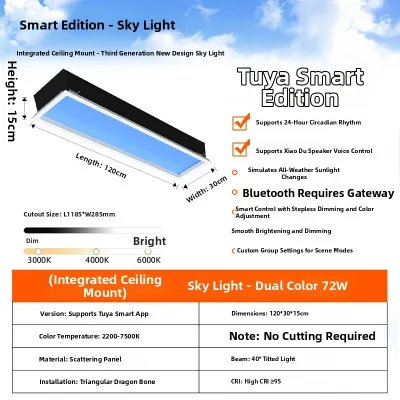
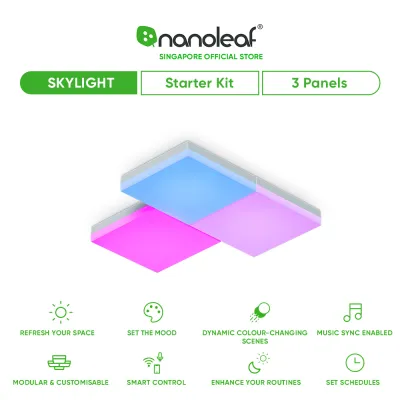
Prices are valid at publication and may change. Please refer to the product page for the latest price.
Furthermore, the physical design of the fixture’s frame, or bezel, plays a critical role in spatial perception. Wide, dark, or heavy bezels create a distinct visual frame around the light source, emphasizing the fixture as an intrusive object attached to the ceiling. On the other hand, frameless or ultra-narrow bezel designs allow the light to bleed seamlessly to the very edge of the panel. When the illuminated surface extends to the edge, the boundary between the fixture and the white ceiling plaster is minimized. This optical trick makes the light source look like an architectural opening—a literal skylight—rather than a bulky appliance. Additionally, choosing a flat base design that sits completely flush against the concrete prevents dark shadow gaps around the rim, which would otherwise highlight the fixture’s thickness and break the clean, integrated aesthetic.
How to Evaluate Lighting Brands for Slim Profiles
When navigating the Singapore lighting market, identifying reliable brands requires looking beyond marketing buzzwords and focusing on concrete engineering specifications. A key indicator of a high-quality brand is whether they offer dedicated, ground-up slim-profile or low-clearance product lines, rather than simply adapting standard, deep-housing fixtures. True low-profile brands design their fixtures with integrated LEDs, where the light-emitting diodes are mounted directly to the internal aluminum chassis. This integrated design allows for superior heat dissipation in a housing that is often less than 20mm thick, eliminating the need for bulky bulb sockets and separate, thick mounting brackets.

Electrical safety and local compliance are non-negotiable when selecting a lighting brand in Singapore. The local electrical grid operates at 230V and 50Hz, and all fixed ceiling lights must be compatible with these parameters. More importantly, you must verify that the brand’s products carry the Enterprise Singapore SAFETY Mark. This certification indicates that the internal LED driver—the component most prone to failure or overheating—has undergone rigorous testing to meet local safety standards. Be cautious of unbranded or generic fixtures imported directly from overseas e-commerce platforms; these often lack the SAFETY Mark, feature sub-standard drivers that flicker constantly, and can pose a genuine fire hazard in your home.
Because integrated LED fixtures do not use replaceable bulbs, the longevity of the light is entirely dependent on the quality of the internal LEDs and the driver. Therefore, you should evaluate brands based on their warranty terms and the availability of local after-sales support. A reputable brand should offer a comprehensive warranty of at least two to three years, covering both the LED panel and the driver. Prioritize brands that maintain a physical showroom or an authorized distributor network in Singapore. Having a local point of contact ensures that if a driver fails due to a power surge, you can easily obtain a replacement part or a complete unit swap without waiting weeks for international shipping, minimizing any disruption to your daily life.
Achieving a Skylight Effect in Compact Rooms
Simulating a natural skylight in an HDB flat with a 2.6m ceiling requires careful consideration of color temperature, diffusion quality, and light distribution. The color temperature of the light source has a profound psychological impact on how we perceive room volume. In compact HDB layouts, a 3000K warm white light, while cozy, can sometimes make a small room feel visually congested due to its heavy yellow undertones. Conversely, a 4000K natural white light closely replicates the crisp, clean quality of natural daylight. This neutral tone opens up the space, making walls appear to recede and giving the illusion of a higher ceiling. For maximum flexibility, look for brands that offer tri-color switching or smart CCT (Correlated Color Temperature) tuning, allowing you to use 4000K for daytime tasks and transition to a warmer 3000K in the evening.
The quality of the diffuser panel is the defining factor in creating a convincing skylight illusion. High-quality fixtures utilize PMMA (polymethyl methacrylate) or advanced polycarbonate diffusers that scatter light evenly without absorbing excessive lumen output. When evaluating fixtures, pay close attention to the Unified Glare Rating (UGR). A UGR of under 19 is highly desirable for residential spaces, as it indicates that the light is diffused sufficiently to prevent eye strain when viewed from normal standing or sitting positions. This is especially critical in low-ceiling environments where the light source is physically closer to your eyes.
Cheaply manufactured LED panels often suffer from edge-lighting flaws and dark spots that immediately ruin the skylight effect. These flaws typically appear as bright “hot spots” along the perimeter where the LED strips are housed, or as a dim, shadowy patch in the center of the panel. A true skylight-style fixture must deliver perfectly uniform illumination across its entire surface. When visiting a lighting showroom, ask to see the fixture turned on at its maximum brightness. Inspect the panel from various angles to ensure there are no visible individual LED dots, yellowing of the diffuser, or uneven light distribution that would break the clean, architectural illusion of an open sky.
HDB Installation Constraints and Safety Rules
Installing flush-mounted or skylight-style lights in an HDB flat requires a clear understanding of the structural and electrical boundaries of public housing. Standard HDB flats are constructed with reinforced concrete slabs. If you are mounting your fixtures directly to this raw concrete ceiling, weight is rarely an issue, as concrete can easily support heavy fixtures. However, if your flat features a suspended plasterboard false ceiling—often installed to conceal air-conditioning copper pipes or electrical conduits—the load-bearing capacity is significantly lower. Standard gypsum boards can typically support only light loads of up to 2kg to 3kg. Any heavy, large-format skylight panel must be anchored directly to the concrete slab above using threaded rods or concrete rawlplugs, rather than relying on the fragile plasterboard.
Before purchasing any flush-mounted fixture, you must also assess the condition of your existing ceiling junction boxes. HDB ceiling points are typically equipped with standard circular concrete boxes. Some ultra-slim, imported flush lights feature proprietary mounting brackets that do not align with the screw-hole spacing of Singapore’s standard junction boxes. This can lead to difficult installations, requiring custom adapter plates or additional drilling into the concrete slab, which must be done carefully to avoid hitting embedded steel reinforcement bars or electrical conduits. Furthermore, in older HDB estates, the existing wiring may be brittle or lack a dedicated earth wire, which is a critical safety requirement for metal-framed light fixtures.
Given these complexities, it is essential to know when to engage a professional. In Singapore, any modification to fixed electrical wiring—such as running new lighting points, installing dimmer switches, or replacing a distribution board—must be carried out by a Licensed Electrical Worker (LEW) certified by the Energy Market Authority (EMA). While a simple, direct replacement of an existing light fixture can be performed by a competent handyman, hiring an LEW ensures full compliance with the SS 638 electrical safety standard. This professional oversight is particularly crucial when installing flush-mounted lights in damp zones like kitchens and bathrooms, where proper Ingress Protection (IP) ratings and robust earthing are mandatory to prevent electrical shocks.
Final Pre-Purchase Verification Checklist
Before finalizing your purchase of a flush-mounted or skylight-style ceiling light, go through this practical checklist to ensure a seamless installation and optimal performance in your HDB flat:
- Physical Dimensions and Clearance: Measure the exact thickness of the fixture. Ensure it is under 30mm if it will be installed near tall built-in wardrobes or kitchen cabinets to prevent the doors from scraping against the light. Verify that the overall footprint of the light is proportional to your room size.
- Mounting Bracket Compatibility: Confirm that the fixture's mounting bracket is compatible with standard Singapore circular junction boxes. If the fixture is wider than your existing ceiling rose, ensure it will completely cover any unpainted patches or old screw holes on your ceiling.
- Dimming and Smart Integration: If you plan to use a wall dimmer or connect the light to a smart home ecosystem, verify that the LED driver is explicitly labeled as dimmable or smart-compatible. Connecting a standard, non-dimmable LED driver to a traditional dimmer switch will cause annoying flickering, buzzing, and premature driver failure.
- Safety Certification: Double-check that the fixture or its integrated LED driver carries the Enterprise Singapore SAFETY Mark. This is your primary guarantee against electrical hazards and ensures the product is safe for long-term use.
- Warranty and Support: Confirm that the retailer provides a local warranty of at least two years. Ensure that all costs, including delivery, installation by a qualified technician, and any necessary ceiling patching, are clearly quoted in S$ to avoid hidden fees.
Frequently Asked Questions (FAQ)
Can I mount heavy flush lights on HDB false ceilings?
Standard gypsum or calcium silicate false ceilings commonly installed during HDB renovations are not structurally designed to support heavy, large-format skylight panels directly. Attempting to screw a heavy fixture directly into the plasterboard can cause the ceiling to sag, crack, or even collapse over time. To safely mount a heavy flush light, the installer must secure the mounting brackets directly to the structural concrete slab above using concrete anchors or threaded rods that pass through the false ceiling. Alternatively, the false ceiling must be reinforced internally with timber or metal support channels (such as C-channels) during the renovation phase to distribute the weight safely.
Are skylight-style LED panels more energy-efficient than downlights?
Yes, a single large skylight-style LED panel can often be more energy-efficient than installing multiple recessed downlights to achieve the same level of brightness. Because a skylight panel features a wide beam angle (typically 110 to 120 degrees) and a large, highly efficient diffuser, it distributes light evenly across a broad area, eliminating dark shadow zones. To achieve the same uniform light coverage with downlights, you would need to install four to six individual fixtures. This not only increases overall power consumption (measured in total watts) but also requires extensive ceiling cutting and wiring, making the single flush panel a more efficient and less invasive choice for standard HDB rooms.

Community discussion
Share your experience or ask a question. Comments are reviewed before publication.