
Selecting the right down lights led for a standard Housing & Development Board (HDB) flat requires balancing spatial limitations with visual comfort. With a typical ceiling height of 2.6 metres, every centimetre of vertical space impacts how light disperses across your living areas. Choosing fixtures that are too bulky or excessively bright can make a room feel cramped and cause uncomfortable glare. Conversely, selecting underpowered lights can leave corners in shadow, making your home feel smaller than it is.
To achieve a clean, modern aesthetic without sacrificing headroom, homeowners must evaluate how different downlight designs interact with standard HDB layouts. This guide outlines the key technical specifications, structural considerations, and brand evaluation criteria necessary to select the most reliable and visually comfortable lighting setup for your home.
Understanding Ceiling Constraints in Standard HDB Flats
A ceiling height of 2.6 metres presents unique spatial challenges that directly influence your choice of down lights led. At this height, the physical distance between the light source and your eyes is relatively short. This proximity means that any harsh, unshielded light source can easily cause discomfort when you look across a room. To maintain visual comfort, the lighting design must focus on minimizing direct glare while ensuring even light distribution.
Products mentioned in this guide
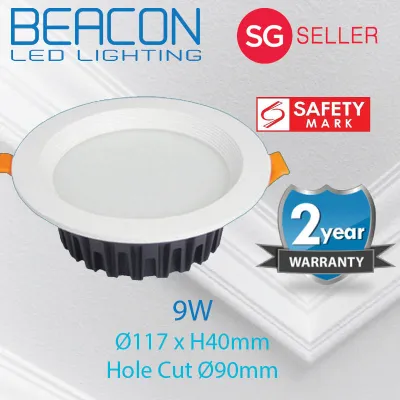
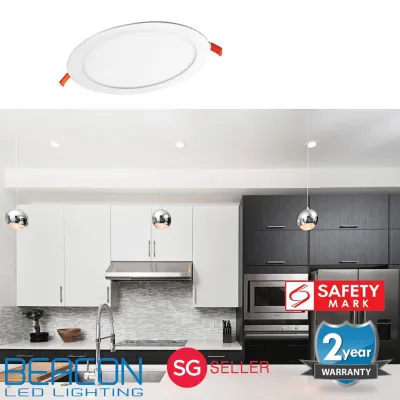
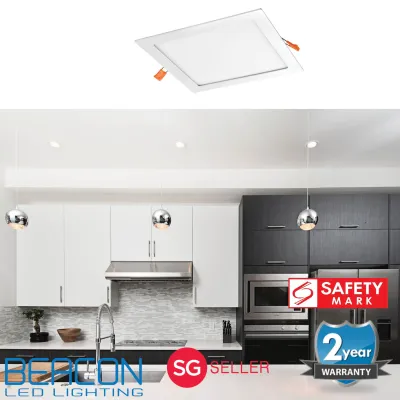
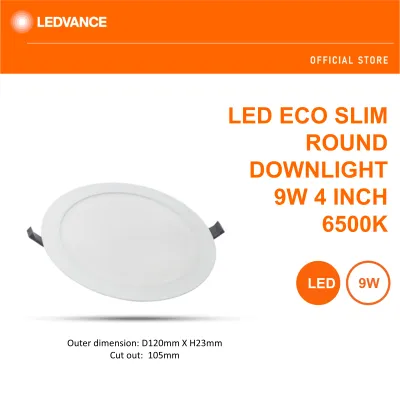
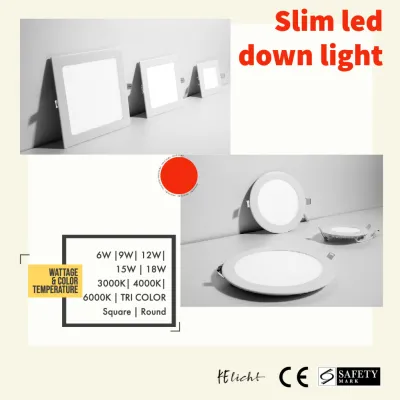
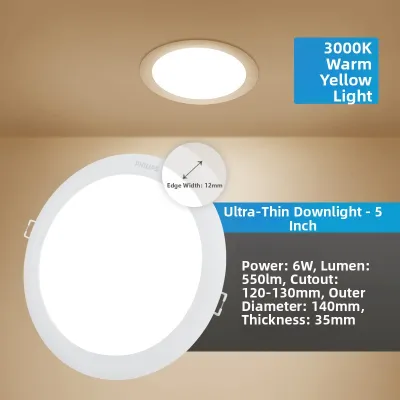
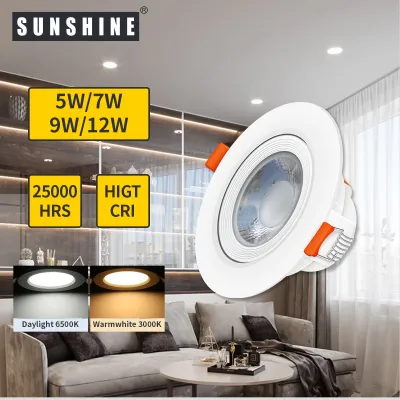
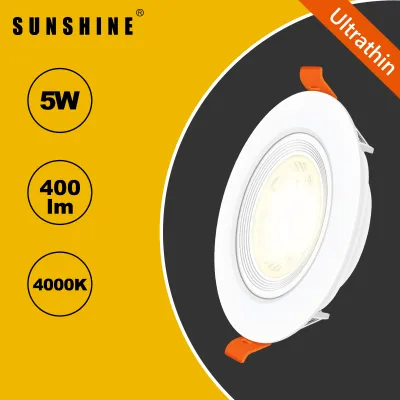
Prices are valid at publication and may change. Please refer to the product page for the latest price.
The decision to install a false ceiling or keep the original concrete slab is the most significant factor in your downlight selection. A false ceiling, also known as a drop ceiling, allows you to install recessed downlights for a flush, seamless look. However, constructing a false ceiling typically lowers the room height by 10 to 15 centimetres, leaving an effective ceiling height of 2.45 to 2.5 metres. In these compact spaces, choosing ultra-slim recessed downlights is essential to avoid dropping the ceiling any further than necessary.
If you prefer to maintain the maximum 2.6-metre height, you must work with the exposed concrete slab. Because you cannot cut recesses into structural concrete, recessed downlights are not an option. Instead, you must opt for surface-mounted downlights or track lighting systems. Surface-mounted fixtures sit directly on the concrete surface, extending downward into the room. To keep the space feeling open, look for low-profile surface-mounted fixtures that do not protrude excessively.
The space behind a false ceiling, known as the plenum space, is often highly restricted in HDB flats. A shallow plenum space of only 5 to 8 centimetres limits the physical height of the downlight housing you can install. Standard recessed downlights with deep heat sinks may not fit within these tight cavities. If a fixture is forced into a space without adequate clearance, heat can build up rapidly, leading to premature failure of the LED driver and the light source itself. Therefore, verifying the physical dimensions of both the fixture and the ceiling cavity is a critical first step.
Key Downlight Specifications for 2.6m Ceilings
When browsing down lights led, understanding how to read product specifications is vital for ensuring compatibility with a 2.6-metre ceiling. The first physical specification to verify is the cut-out hole size and the required clearance depth. For recessed installations, standard cut-out diameters typically range from 75 millimetres to 125 millimetres. Ensure the physical height of the downlight housing allows for at least 10 to 20 millimetres of empty space above the fixture to facilitate natural air circulation and heat dissipation.

Beam angles play a decisive role in how light is distributed across your rooms. For general ambient lighting in a standard HDB flat, a wide beam angle of 90 to 120 degrees is highly recommended. Wide beam angles spread light broadly, reducing harsh shadows and creating a soft, even wash of light that makes small rooms feel more spacious. Narrower beam angles, such as 36 to 60 degrees, concentrate light into a tight spotlight. While excellent for highlighting artwork or dining tables, narrow beams can create high-contrast “hot spots” on the floor if used as the primary light source on a low ceiling.
Lumen output, which measures the total amount of visible light emitted by a source, must be carefully calibrated for lower ceilings. A common mistake is selecting high-wattage commercial downlights that emit excessive lumens, resulting in an uncomfortably bright home environment. For a 2.6-metre ceiling, a lumen output of 600 to 800 lumens per fixture is generally ideal for general living areas. This range provides sufficient brightness for daily activities without overwhelming the senses.
Color temperature, measured in Kelvin (K), defines the warmth or coolness of the light. For living rooms and bedrooms, warm white light (2700K to 3000K) creates a relaxing, cozy atmosphere. Cool white light (4000K) is highly suited for task-oriented areas such as kitchens, study rooms, and bathrooms, where clarity and focus are required. Daylight (6000K to 6500K) should be used sparingly in residential settings, as its high blue-light content can feel clinical and harsh at a 2.6-metre height, particularly during evening hours.
To combat glare, look for downlights equipped with anti-glare features. Deep-recessed reflectors, where the LED chip is positioned deep inside the fixture housing, physically block the light source from direct line-of-sight at normal viewing angles. Frosted diffusers and honeycomb louvres also help soften the light output. These features ensure that even though the ceiling is relatively low, the light remains comfortable to live under.
Evaluating Brand Reliability and Local Support
Selecting reliable down lights led brands involves looking beyond aesthetic appeal to evaluate safety, build quality, and after-sales support. In Singapore, electrical safety is paramount. Any LED downlight and its accompanying driver must comply with local safety regulations. Look for products that carry the recognized local safety certification mark. This mark indicates that the electrical components have undergone rigorous testing to ensure they resist overheating, short circuits, and electrical shocks under local voltage conditions (typically 220V to 240V).
Warranty terms offer a clear indication of a manufacturer’s confidence in their product’s durability. A reliable brand should offer a comprehensive warranty of at least two to five years, covering both the LED chip and the external driver. Because the driver is often the first component to fail in an LED system, ensure the warranty explicitly covers driver replacement. Opting for brands with established local service centers or authorized distributors ensures that if a component does fail, you can easily obtain a replacement without waiting weeks for international shipping from an online marketplace.
Smart home integration is another key consideration for modern HDB renovations. If you plan to dim your lights or control them via mobile applications, verify the compatibility of the downlight driver with your preferred smart home ecosystem. Some brands offer integrated smart downlights that connect directly to Wi-Fi or Zigbee hubs. If you prefer traditional dimming, ensure the downlights are compatible with trailing-edge or leading-edge wall dimmers to prevent annoying flickering or buzzing sounds when the lights are dimmed.
When choosing between international lighting brands and specialized local suppliers, consider your project’s specific needs. International brands often provide extensive research and development, resulting in superior color rendering indexes (CRI of 90 or higher) and highly efficient thermal management systems. On the other hand, local specialized suppliers frequently design fixtures tailored specifically to the standard cut-out sizes and shallow plenum depths common in local housing estates, making installation more straightforward.
Installation Safety and Professional Boundaries
Working with electrical installations requires strict adherence to safety protocols to protect both the installer and the property. Before any installation, maintenance, or replacement of down lights led begins, the power supply must be completely isolated. Turn off the main circuit breaker at your home’s distribution board. Never rely solely on the wall switch to cut power, as neutral wires can still carry residual voltage that poses a serious shock hazard.
If you are installing surface-mounted downlights or track lighting directly onto a concrete ceiling, you must be mindful of structural constraints. HDB concrete slabs contain tensioned steel rebars that provide structural integrity to the building. When drilling holes for mounting brackets, use a stud finder with metal detection capabilities to avoid drilling into these rebars. Damaging structural steel is not only hazardous but can also violate local building regulations.
Verify that your existing lighting circuits can handle the electrical load of your new downlights. While LED downlights are highly energy-efficient and draw significantly less power than older halogen fixtures, overloading can still occur if too many fixtures are added to a single circuit. Ensure the total wattage of all connected lights remains well within the rated capacity of your circuit breaker, which is typically designed for residential lighting loads.
While replacing a simple plug-and-play LED driver or swapping out an existing bulb can often be managed safely, complex electrical work must be left to qualified professionals. Any task involving new fixed wiring, cutting new holes in false ceilings, running cables through concrete walls, or installing fixtures in damp zones like bathrooms requires a licensed electrical worker. A professional installer ensures that all wiring complies with local electrical codes, reducing the risk of electrical fires and ensuring your home insurance remains valid.
Frequently Asked Questions (FAQ)
Can I install recessed downlights directly into an HDB concrete ceiling?
No, you cannot install recessed downlights directly into a standard HDB concrete ceiling slab. Hacking or cutting recesses into structural concrete slabs is strictly prohibited under local housing regulations because it compromises the structural integrity of the building. To achieve the flush look of recessed downlights, you must first install a false ceiling (drop ceiling) to create a cavity for the fixtures and wiring. If you prefer not to install a false ceiling, you should choose surface-mounted downlights or track lighting systems, which mount directly onto the concrete surface without requiring structural alterations.
How do I calculate the ideal brightness for a standard HDB bedroom?
To calculate the ideal brightness, you should use lumens per square metre (also known as lux) as your baseline rather than relying on wattage. For a standard bedroom, an ambient light level of 100 to 150 lux is generally recommended. First, calculate the area of your bedroom in square metres (for example, a 12-square-metre room). Multiply the area by your target lux level (12 square metres multiplied by 150 lux equals 1,800 lumens). This means you need a total of 1,800 lumens of light. If you select downlights that emit 600 lumens each, you will need three fixtures evenly spaced across the room to achieve comfortable ambient lighting. You can adjust this calculation upward if your room has dark walls or heavy furniture, as dark surfaces absorb more light.

Community discussion
Share your experience or ask a question. Comments are reviewed before publication.