
Selecting the right LED light module for a standard Singapore public housing flat requires a careful balance of brightness, light distribution, and visual comfort. With a typical ceiling height of 2.6 meters, the physical distance between the light source and your eyes is relatively short. This low clearance means that choosing an overly bright or poorly diffused light source can easily lead to harsh glare, eye strain, and an uncomfortable living environment. Instead of simply purchasing the highest wattage available, homeowners must evaluate specific technical specifications to ensure their lighting is both functional and comfortable.
Upgrading to a modern LED light module is a highly practical way to refresh your home’s lighting without replacing the entire ceiling fixture. Many of these modules are designed as direct replacements that mount magnetically or via screws inside your existing ceiling light chassis. By understanding how to calculate your room’s actual light requirements, match wattage to efficiency, select appropriate beam angles, and observe local safety standards, you can create a beautifully lit home that feels spacious and welcoming.
Calculating Lumen Output Based on Room Size and Function
To determine the ideal brightness for your space, you must look at lumen output rather than wattage. Lumens measure the total amount of visible light emitted by a source, while lux represents the intensity of that light distributed over a specific area. The standard formula to calculate your lighting needs is simple: total lumens equal the target lux multiplied by the room’s area in square meters. By using this calculation, you can avoid the common mistake of over-illuminating a room, which is particularly problematic with a 2.6-meter ceiling.
Products mentioned in this guide
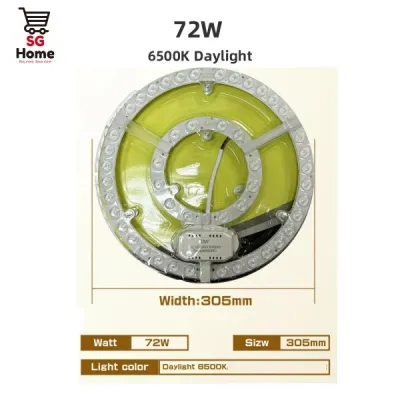
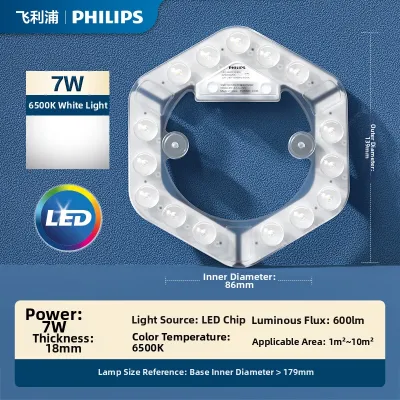
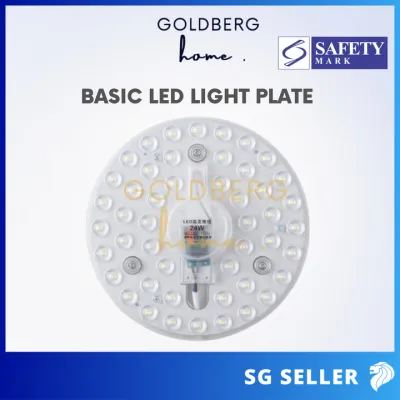
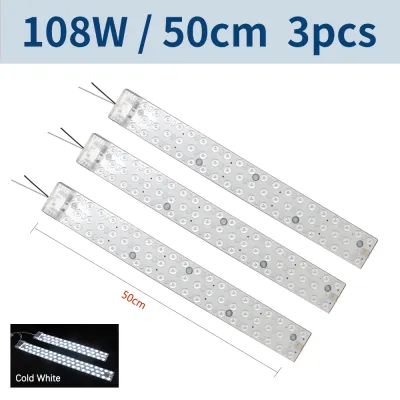
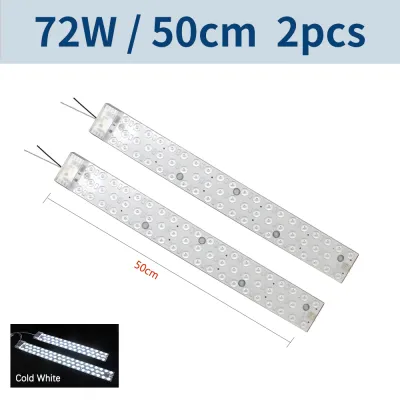
![[Authorized Dealer] Philips 36W LED Ceiling Module](https://img.lazcdn.com/g/p/3cab0045eb8ba3d8dc7a8f92b48516dc.jpg_400x400q80.jpg_.webp)
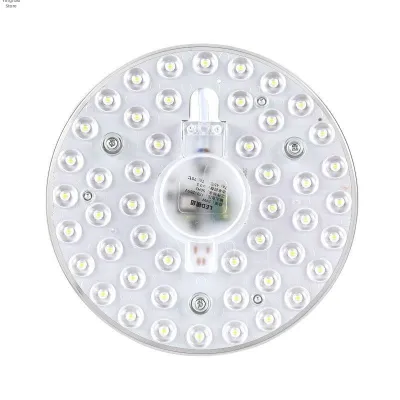
Prices are valid at publication and may change. Please refer to the product page for the latest price.
Different areas of a home require different levels of illuminance depending on their primary function. For general ambient lighting in living rooms and bedrooms, a target of 100 to 150 lux is typically sufficient to create a cozy, relaxed atmosphere. In contrast, task-oriented spaces such as kitchens, bathrooms, and study corners demand higher visual acuity, requiring an illuminance level of 200 to 300 lux. For example, a standard bedroom measuring 10 square meters would require a total light output of approximately 1,000 to 1,500 lumens, which can be delivered by a single central ceiling fixture or split across multiple smaller points.
While a 2.6-meter ceiling height minimizes light decay—meaning very little light intensity is lost as it travels from the ceiling to the floor—several environmental factors still influence how bright a room actually feels. Light-colored walls and ceilings reflect light efficiently, enhancing the overall brightness of the space and allowing you to use lower-lumen modules. Conversely, dark accent walls, heavy curtains, and matte furniture absorb light, meaning you may need to target the higher end of the recommended lumen range to achieve the same perceived brightness.
Matching Wattage to Lumen Requirements and Energy Efficiency
Once you have calculated your required lumen output, the next step is to select a module with the appropriate wattage. Wattage indicates how much electrical power the module consumes, not how much light it produces. To evaluate the energy efficiency of an LED light module, you must look at its luminous efficacy, which is expressed in lumens per watt (lm/W). A highly efficient module will deliver the necessary brightness while consuming minimal electricity, helping to keep your household utility bills low.

Modern, high-quality LED modules typically offer an efficacy rating of 90 lm/W to 130 lm/W or higher. When shopping for a replacement, always check the product packaging or specifications sheet for this ratio. Choosing a module with superior efficacy allows you to achieve your target brightness at a lower wattage. For instance, to obtain 1,500 lumens of light, a highly efficient 12-watt module can easily replace an older, less efficient 18-watt or 24-watt alternative, reducing energy consumption without sacrificing light quality.
Before purchasing a new module, it is essential to inspect your existing ceiling light chassis to ensure physical and electrical compatibility. Every light fixture has a maximum wattage limit printed on its label, which must never be exceeded. Additionally, you must verify that the chassis provides adequate heat dissipation. Although LEDs are highly efficient, they still generate heat at the junction point of the chips. A metal chassis acts as a heat sink; if a high-wattage module is installed in a small, poorly ventilated plastic enclosure, the heat buildup will rapidly degrade the LED chips and driver, leading to premature failure.
Selecting Beam Angles and Diffusers to Prevent Glare at 2.6m
At a ceiling height of 2.6 meters, the angle at which light leaves the fixture plays a critical role in visual comfort. If the beam angle is too narrow, the light will be concentrated into a sharp, intense cone, creating harsh hot spots on the floor and leaving the upper portions of your walls in deep shadow. This high-contrast effect makes rooms feel smaller and causes significant eye fatigue. For general ambient lighting in low-ceiling spaces, a wide beam angle of 120 degrees or more is highly recommended to distribute light evenly across the room.
To completely eliminate the discomfort of looking directly at bright light sources, the design of the fixture’s cover or diffuser is just as important as the beam angle. Exposed LED chips emit highly concentrated points of light that cause immediate glare. Utilizing a frosted acrylic cover, an opal diffuser, or a micro-prismatic lens helps to scatter these individual points of light. This scattering effect transforms the harsh, direct beams into a soft, uniform glow that fills the room without irritating your eyes.
When planning your lighting layout, pay close attention to the placement of your fixtures relative to key furniture pieces. Avoid positioning unshielded, high-intensity LED modules directly above areas where you will be sitting or lying down for extended periods, such as directly over the head of a bed, a dining table, or the center of a sofa. If a fixture must be placed in these locations, ensure it features a high-quality diffuser or opt for indirect lighting methods that bounce light off the ceiling to create a soft, glare-free environment.
Installation Safety and Electrical Compliance in Singapore
Working with electrical fixtures requires strict adherence to safety protocols to prevent electrical shocks, short circuits, and fire hazards. Before beginning any physical work on your ceiling light, the most critical step is to isolate the power supply. Do not rely solely on the wall switch to turn off the power, as some older wiring configurations may only cut the neutral wire, leaving the live wire active at the fixture. Always switch off the corresponding circuit breaker at your home’s main distribution board and use a reliable voltage tester to confirm the wires are completely dead.
In Singapore, household electrical installations must comply with local safety standards and regulations. While homeowners are generally permitted to perform simple, direct replacements of plug-and-play LED modules that connect to existing terminal blocks, any modification to the fixed electrical wiring of the home is a different matter. If your installation requires running new wires, altering the circuit layout, or installing a new light switch point, you must engage a Licensed Electrical Worker (LEW) to perform the work safely and legally.
Finally, perform a thorough physical compatibility check before mounting your new LED light module. Measure the internal dimensions of your existing chassis to ensure the new module fits comfortably inside without touching the outer cover. Many modern replacement modules feature magnetic mounting feet, which allow them to cling securely to the steel base of an existing ceiling dome. Ensure the magnetic connection is strong and stable, and verify that all wiring connections are secured tightly within the terminal block to prevent loose contacts that could cause sparking.
Frequently Asked Questions (FAQ)
Can I use a dimmable LED module in my existing HDB ceiling light?
Yes, you can use a dimmable LED light module, but it requires careful compatibility verification. For dimming to work correctly, the LED module, its internal driver, and your wall-mounted dimmer switch must all support the same dimming technology. Most residential dimmers use phase-cut dimming, which is categorized into leading-edge and trailing-edge technologies. If you connect a dimmable LED module to an incompatible dimmer switch, you will likely experience rapid flickering, buzzing noises, or a severely restricted dimming range.
Never attempt to connect a standard, non-dimmable LED module to a dimmer switch circuit. Doing so subjects the driver to fluctuating voltage levels it was not designed to handle, which can lead to overheating, permanent component damage, and a potential electrical fire hazard. If you want to introduce dimming capabilities to your ceiling light, ensure that both the module and the driver are explicitly labeled as dimmable, and verify that your wall switch is compatible with LED loads.
What color temperature is best for reducing eye strain in HDB bedrooms?
For bedrooms and other resting areas, a warm white color temperature ranging from 2700K to 3000K is highly recommended to minimize eye strain and support relaxation. Lower color temperatures emit a soft, amber-toned light that closely mimics natural sunset. This warm light minimizes your exposure to blue-spectrum wavelengths, which are known to suppress the production of melatonin, the hormone responsible for regulating your sleep-wake cycle.
In contrast, cooler color temperatures such as cool white (4000K) or daylight (6000K to 6500K) are better suited for task-oriented spaces where high visual acuity is necessary, such as kitchens, bathrooms, or study desks. While cool light helps you stay alert and focused during daytime tasks, using it in a bedroom during the evening can cause visual discomfort and disrupt your natural sleep patterns. Choosing the right color temperature for each room’s specific function ensures both visual comfort and physical well-being.

Community discussion
Share your experience or ask a question. Comments are reviewed before publication.