
Choosing a long LED ceiling light for a Singapore HDB flat with a standard 2.6-meter ceiling height requires balancing illumination with vertical clearance. A fixture that is too thick or poorly proportioned can make a living or dining room feel cramped and visually oppressive. To achieve a spacious, modern aesthetic, homeowners must focus on ultra-slim profiles, flush-mount designs, and verified technical specifications rather than relying solely on generic brand names or unverified online listings. This guide outlines the essential proportions, technical specifications, and evaluation methods to help you select the right slim-profile fixtures for your home.
Understanding the 2.6m Ceiling Constraint in HDB Flats
Standard HDB flats built by the Housing & Development Board typically feature a floor-to-ceiling height of approximately 2.6 meters. When you factor in floor finishes, such as vinyl, tiles, or cement screed, along with potential ceiling plastering, this vertical clearance can shrink even further. Installing a bulky, dangling pendant light or a thick surface-mounted fixture immediately compromises this limited space. A fixture that protrudes 15 to 20 centimeters from the ceiling leaves only about 2.4 meters of clearance, which not only poses a physical hazard for taller individuals but also creates a heavy visual weight that draws the eye downward, making the entire room feel smaller and more enclosed.
Furthermore, low ceilings present unique light distribution challenges. In a rectangular room, a light source that is too close to the ceiling cannot spread its beam widely before hitting the floor or walls. This often results in a “cave effect,” where the center of the room is intensely illuminated while the upper corners remain in deep shadow. To combat this, a long LED ceiling light must be selected with a wide beam angle and a highly diffused lens to wash the entire space with uniform light, visually expanding the room’s boundaries.
Products mentioned in this guide
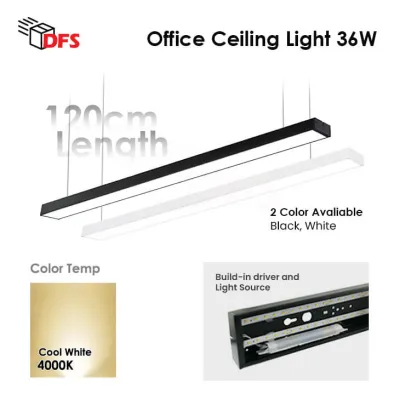
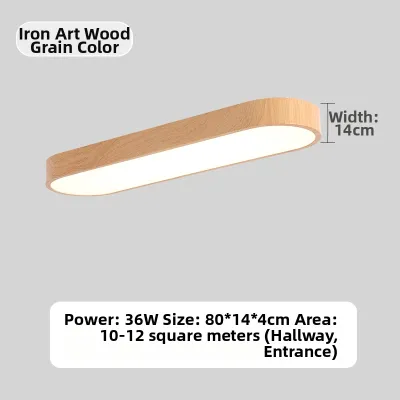
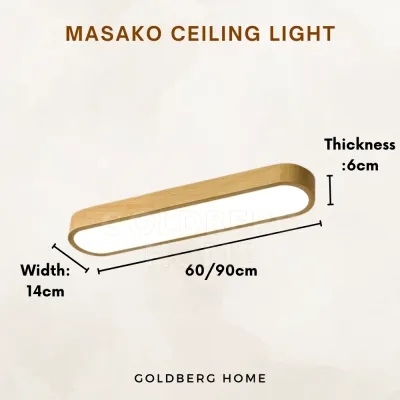
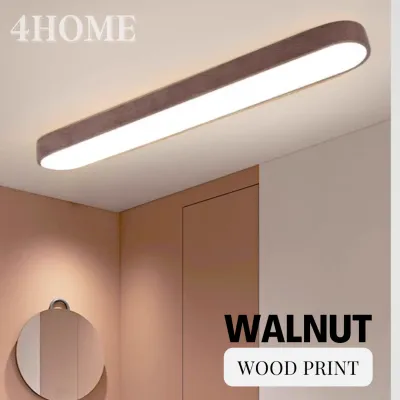
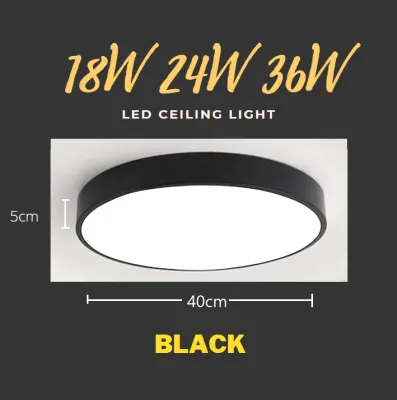
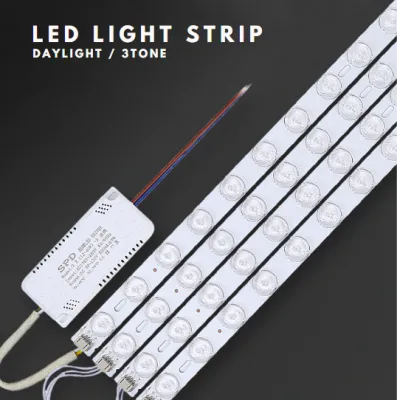
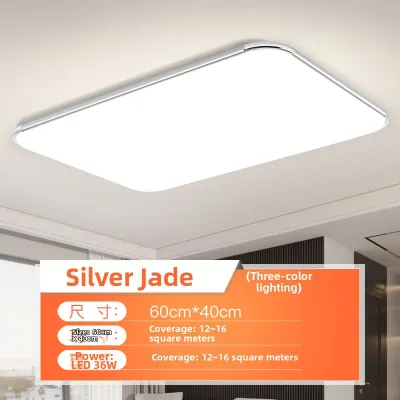
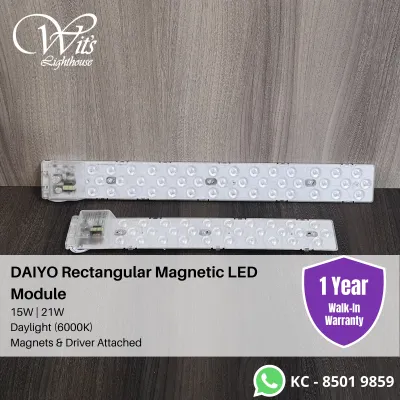
Prices are valid at publication and may change. Please refer to the product page for the latest price.
Key Specifications to Check Before Buying Long LED Ceiling Lights
When shopping for long LED ceiling lights, it is crucial to look past marketing buzzwords and verify specific technical details on product labels or specification sheets.

First, prioritize physical thickness. For a 2.6m ceiling, look for fixtures with a total thickness of 50mm or less. Ultra-slim models, often measuring between 15mm and 30mm, are ideal because they sit almost flush against the concrete slab, minimizing the visual break between the ceiling plane and the light source.
Second, evaluate luminous flux and wattage. Do not rely on wattage as a measure of brightness, as LED efficiency varies widely. Instead, check the lumen (lm) rating. For a standard HDB living room of 15 to 20 square meters, a total light output of 3,500 to 5,000 lumens is recommended for general ambient lighting. Look for a luminous efficacy of at least 80 to 100 lumens per watt (lm/W) to ensure energy efficiency.
Third, consider the Color Temperature (CCT) and Color Rendering Index (CRI). A color temperature of 3000K (Warm White) to 4000K (Cool White) is generally preferred for residential spaces. Cool white (4000K) is particularly effective in making spaces feel clean and open, while warm white (3000K) creates a cozy atmosphere. Avoid daylight (6500K) in low-ceiling living areas, as the high blue-light content can feel clinical and harsh. Additionally, ensure the Color Rendering Index (CRI) is Ra 80 or higher, with Ra 90 being the gold standard for accurate color representation of furniture, skin tones, and decor.
Finally, check the beam angle and diffuser quality. A narrow beam angle will create harsh cones of light and dark spots. Look for a beam angle of 110 degrees or wider. The diffuser material is equally important; high-grade polymethyl methacrylate (PMMA) or polycarbonate diffusers help scatter the light evenly, preventing the individual LED chips (hotspots) from being visible through the cover.
Design and Profile Features That Prevent a Cramped Feel
Aesthetic and structural design choices play a significant role in how a light fixture integrates into a low-ceiling environment.
Frameless and ultra-thin bezel designs are highly effective for 2.6m HDB flats. Traditional ceiling lights often feature thick plastic or metal borders that frame the light source, creating a stark visual contrast against the ceiling and drawing attention to the fixture’s physical boundaries. Frameless designs allow the light-emitting surface to extend to the very edge of the unit, creating a seamless transition that makes the ceiling appear higher and more continuous.
The choice between edge-lit and direct-lit LED panel technologies also impacts the fixture’s profile. Edge-lit LED panels place the LED chips along the inner frame, directing the light sideways into a light guide plate (LGP) that bounces the light downward through a diffuser. This technology allows for incredibly thin profiles (often under 15mm) and exceptionally uniform, glare-free light. Direct-lit panels, on the other hand, place the LEDs directly behind the diffuser, pointing downward. While direct-lit fixtures are often more cost-effective and energy-efficient, they require a deeper housing (usually 35mm to 50mm) to allow the light to mix properly and avoid visible hotspots.
Color matching is another simple yet highly effective design strategy. Since most HDB ceilings are painted in matte white or light off-white shades, selecting a long LED light with a matte white or brushed aluminum frame minimizes visual contrast. When the light is turned off, the fixture blends into the ceiling plane rather than standing out as an architectural obstacle.
Lastly, consider linear proportions and placement. Long, linear LED ceiling lights are particularly well-suited for rectangular HDB living and dining layouts. By aligning the long axis of the light fixture parallel to the longest wall of the room, you create a visual line that guides the eye across the space. This linear alignment elongates the perceived dimensions of the room, making a narrow or compact living area feel significantly more spacious.
How to Evaluate Lighting Brands and Verify Local Compliance
With numerous lighting brands available on online marketplaces, it is essential to equip yourself with methods to assess quality and verify local compliance.
In Singapore, household electrical appliances and lighting components (specifically LED drivers and luminaires) are classified as Controlled Goods under the Consumer Protection (Safety Requirements) Registration Scheme. When evaluating lighting brands, always check for the Enterprise Singapore Safety Mark on the product packaging, the fixture itself, or the LED driver. This mark indicates that the product has been tested by an accredited certification body and complies with local safety standards, reducing the risk of electrical short circuits, shocks, or fires.
Avoid relying on promotional images or simplified product descriptions on online marketplaces, which frequently use misleading angles to make fixtures appear thinner than they are. Instead, request or download the official manufacturer specification sheet. This document should provide precise physical dimensions (length, width, and depth in millimeters), electrical specifications (input voltage of 220V-240V AC, 50Hz), and certified photometric data.
The LED driver (the component that regulates power to the LEDs) is typically the first part of a ceiling light to fail. Reputable brands will offer a comprehensive local warranty of at least one to two years, covering both the LED panel and the driver. Before purchasing, verify whether the brand has a dedicated local distributor or service center in Singapore. A local presence ensures that if a driver fails, you can easily obtain a replacement without waiting weeks for overseas shipping.
While online shopping offers convenience, visiting a physical lighting showroom in Singapore (such as those in Balestier, Jalan Besar, or light industrial hubs) is highly recommended. Seeing the long LED ceiling light illuminated in person allows you to evaluate the build quality, check for any flickering (which can cause eye strain), and observe how the diffuser handles glare and hotspots.
Installation Safety and Electrical Compliance Checks
Proper installation is critical to ensure the safety and longevity of your long LED ceiling light.
Long linear LED fixtures can range from lightweight plastic panels to heavier aluminum-framed units. Before installation, it is essential to verify the type of ceiling structure in your HDB flat. Standard HDB ceilings are made of solid precast concrete slabs. Mounting a fixture directly to concrete requires drilling holes with a rotary hammer drill and using high-quality masonry wall plugs (rawlplugs) and screws to ensure the fixture is securely anchored.
If your HDB flat has a false ceiling (typically constructed of gypsum plasterboard suspended from a metal frame), you must exercise extra caution. Standard masonry plugs will not hold in plasterboard. Instead, you must use specialized heavy-duty toggle bolts, butterfly anchors, or spring toggles that expand behind the plasterboard to distribute the weight. Additionally, ensure that the weight of the long LED fixture does not exceed the structural capacity of the false ceiling grid.
Any fixed electrical wiring work in Singapore must comply with local regulations. For safety and compliance, it is highly recommended to engage an Energy Market Authority (EMA) Licensed Electrical Worker (LEW) or a qualified professional electrician. If your installation requires modifying the existing wiring, adding new switch lines, or mounting heavy fixtures at height, attempting a DIY installation can be extremely hazardous. Always ensure the main power supply at the distribution board (DB box) is completely isolated before any electrical work begins.
Although LED lights are highly efficient, they still generate heat at the semiconductor junction. Enclosed flush-mount fixtures must have adequate thermal management, such as an aluminum backing plate or integrated heat sinks, to dissipate this heat. Ensure that the fixture is installed with proper clearance and is not covered by ceiling insulation or decorative elements, as trapped heat will rapidly degrade the LED chips and shorten the lifespan of the driver.
Frequently Asked Questions (FAQ)
Can I install a long LED ceiling light on an HDB false ceiling?
Yes, you can install a long LED ceiling light on an HDB false ceiling, provided you use the correct mounting hardware and verify the weight limits. Plasterboard false ceilings cannot support heavy fixtures using standard screws. You must use specialized toggle bolts or hollow-wall anchors that expand behind the board to distribute the load. For very long or heavy linear fixtures, it is safest to locate the underlying metal support studs (using a stud finder) and screw the mounting bracket directly into the metal frame, or anchor the fixture through the false ceiling into the concrete slab above using threaded rods.
Are edge-lit long LED panels better than direct-lit for 2.6m ceilings?
For a standard 2.6m HDB ceiling, edge-lit long LED panels are generally the superior choice. Because the LEDs are mounted on the sides and directed through a light guide plate, edge-lit panels can achieve an ultra-slim profile (often under 15mm) that sits almost flush with the ceiling, maximizing headroom. They also provide exceptionally uniform, glare-free light with no visible hotspots. Direct-lit panels are typically thicker (35mm to 50mm) to allow space for light mixing, which can feel more intrusive in a low-ceiling environment, though they may offer slightly higher energy efficiency.

Community discussion
Share your experience or ask a question. Comments are reviewed before publication.