
Creating a balanced, cohesive whole-house lighting plan requires matching the specific physical and electrical properties of your light fixtures to the functional demands of each room. The Philips Meson downlight series is a popular choice for recessed ceiling installations, particularly in homes with false ceilings such as local apartments, HDB flats, and condominiums. To build an effective layout, you must evaluate key specifications—including wattage, lumen output, cut-out dimensions, and color temperature—against the unique layout and purpose of every living space. Rather than relying on a single model for the entire home, a successful plan uses a calculated mix of different Meson variants to provide adequate task lighting, comfortable ambient illumination, and safe operation.
Assessing Room-by-Room Lighting Requirements
Before purchasing any lighting fixtures, it is essential to map out the functional zones of your home. Every room serves a different purpose, and a one-size-fits-all approach to lighting often results in spaces that are either uncomfortably bright or frustratingly dim. Lighting design generally divides illumination into three categories: ambient, task, and accent lighting. Ambient lighting provides the general illumination for a room, allowing you to navigate safely. Task lighting focuses bright, clear light on specific work areas, such as kitchen countertops, study desks, or vanity mirrors. Accent lighting highlights architectural features or artwork, though this is less common with standard wide-beam downlights.
To estimate the number of downlights needed for a space, you must consider the room’s dimensions, ceiling height, and the desired light levels. In standard residential properties with a ceiling height of approximately 2.6 to 2.8 meters, downlights are typically spaced 1 to 1.5 meters apart. Spacing them too far apart creates dark spots and uneven pools of light, while placing them too close together can make the ceiling look cluttered and cause uncomfortable glare. To calculate a basic layout, measure the length and width of the room to find the total square area. For general ambient lighting in a living room or bedroom, aiming for an even grid that covers the floor area without casting harsh shadows is a reliable starting point.
Products mentioned in this guide
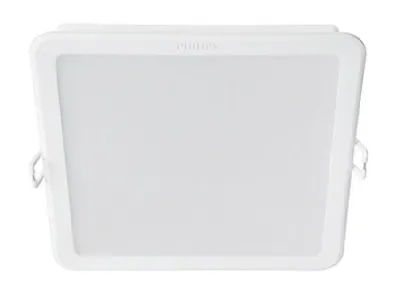
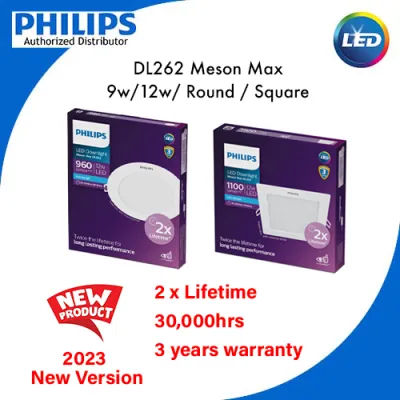
![[Local Set] [3 Year Warranty] Philips Meson LED Downlight Ceiling Light 9W/13W Round/Square [Bundle Deal Available]](https://img.lazcdn.com/g/p/d8d02051d9b113c0010c4b1a40161081.png_400x400q80.png_.webp)
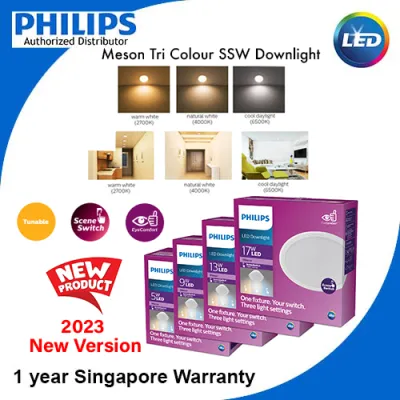
![[Climate Voucher] PHILIPS 3 Color Meson LED Downlight 5.5W 9W 13W 17W Tri Tone Scene Switch for False Ceiling Local Warranty](https://img.lazcdn.com/g/p/4f25f6fa6bf4fcf754b08b97b4102da3.jpg_400x400q80.jpg_.webp)
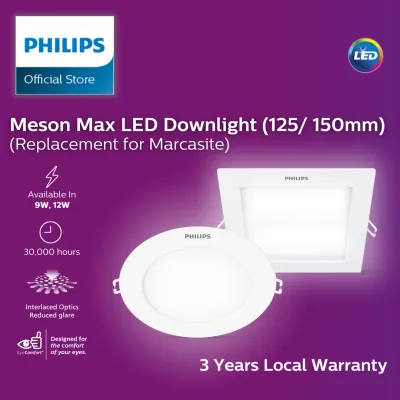
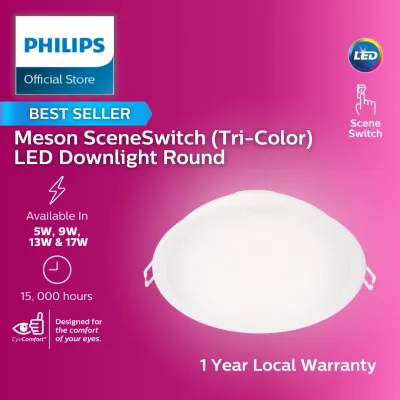
![[Climate Voucher] PHILIPS Meson Scene Switch Tri Color 3 Tone Changeable LED Downlight 5W 9W 13W 17W SceneSwitch](https://img.lazcdn.com/g/p/4750beeb678d6132dca764e882152bd0.jpg_400x400q80.jpg_.webp)
Prices are valid at publication and may change. Please refer to the product page for the latest price.
Certain zones within the home require specialized planning. For instance, high-moisture areas like bathrooms and utility yards demand fixtures that can withstand damp conditions. In contrast, study rooms and home offices require focused, high-intensity light to reduce eye strain during long hours of work. By identifying these specific needs early, you can determine which areas require higher-wattage fixtures, which zones benefit from warmer, softer tones, and where you need to prioritize moisture-resistant designs.
Key Philips Meson Specifications to Verify Before Purchase
When selecting fixtures from the Philips Meson range, reading the product packaging and specification sheets carefully is crucial to ensure compatibility with your home’s infrastructure. The first specification to verify is the relationship between wattage and lumen output. Wattage indicates the amount of electrical power the fixture consumes, while lumens measure the actual brightness emitted. Because LED technology is highly efficient, a low-wattage downlight can produce a significant amount of light. For example, a 5W LED downlight may provide sufficient light for a small hallway, whereas a 13W or 17W model is better suited for larger spaces requiring higher visibility. Always check the lumen rating on the box to understand the true brightness of the fixture.

Color temperature, measured in Kelvin (K), is another critical specification that dictates the ambiance of your home. The Philips Meson series generally offers three main color temperatures: warm white (3000K), neutral white (4000K), and cool daylight (6500K). Warm white emits a soft, yellowish glow that promotes relaxation, making it ideal for bedrooms and living areas. Neutral white provides a clean, balanced light that mimics natural daylight, which is excellent for kitchens, study rooms, and bathrooms. Cool daylight offers a bright, bluish-white light that enhances focus and visibility, making it suitable for utility areas, home offices, and detailed task zones.
Physical dimensions and cut-out sizes are among the most common pain points during installation. Recessed downlights require a specific hole diameter in the false ceiling, known as the cut-out size. The Philips Meson range includes various cut-out sizes, such as 90mm, 105mm, 125mm, and 150mm. Before purchasing, you must measure any existing ceiling cut-outs precisely. If you are planning a new false ceiling, coordinate with your renovation contractor to ensure the holes are cut to match the exact specifications of your chosen Meson models. Additionally, verify the recess depth—the vertical space inside the false ceiling—to ensure there is enough clearance for the fixture’s integrated driver and proper heat dissipation.
Finally, pay close attention to dimmability and smart features. Standard Philips Meson downlights are designed as non-dimmable fixtures. If you intend to control your lights with a dimmer switch or integrate them into a smart home system, you must verify whether the specific variant supports these features. Attempting to dim a standard, non-dimmable LED downlight can lead to persistent flickering, buzzing noises, and permanent damage to the internal LED driver.
Matching Downlight Specifications to Specific Living Spaces
To create a harmonious whole-house lighting plan, you must strategically assign different Philips Meson models to specific rooms based on their functional demands.
In living and dining areas, flexibility and comfort are paramount. These spaces are used for hosting guests, watching television, dining, and relaxing. To support these diverse activities, plan a layered lighting scheme. For general ambient lighting, consider using mid-range wattage options, such as 9W or 13W Meson downlights, spaced evenly across the ceiling. Opting for a warm white (3000K) or neutral white (4000K) color temperature helps create an inviting atmosphere. If your dining table is a focal point, you might complement the downlights with a central pendant light, using the downlights primarily to fill the surrounding space with soft, glare-free illumination.
Kitchens and home workspaces require a completely different approach, prioritizing high visibility and safety. Cooking involves sharp knives, hot surfaces, and precise measurements, while working or studying demands sustained mental focus. For these areas, select higher-wattage Meson models, such as 13W or 17W, to ensure a high lumen output. Neutral white (4000K) or cool daylight (6500K) is highly recommended here, as these color temperatures improve contrast and reduce eye fatigue. When planning the layout, position the downlights directly over the countertops, sink, and prep zones. If fixtures are placed only behind you, your body will cast shadows over your workspace, making tasks more difficult and less safe.
Bedrooms are personal sanctuaries dedicated to rest and recovery. The lighting here should signal to your body that it is time to wind down. Low-wattage Meson downlights, such as 5W or 9W models in warm white (3000K), are ideal for creating a calm, low-glare environment. Avoid placing downlights directly over the head of the bed, as looking directly into a ceiling light while lying down can cause discomfort. Instead, position the fixtures along the perimeter of the room, near wardrobes, or along walkways to provide gentle, indirect illumination.
Bathrooms and utility areas present unique environmental challenges due to high humidity, steam, and potential water splashes. When planning lighting for these zones, check the product packaging for appropriate ingress protection (IP) ratings. While standard downlights are suitable for dry areas, fixtures installed directly over showers or bathtubs require a higher level of moisture resistance to prevent electrical faults. For general bathroom vanity areas, neutral white (4000K) is excellent for grooming and applying makeup, while cool daylight (6500K) is highly practical for utility yards and laundry areas where you need to inspect garments for stains.
Installation Boundaries and Electrical Compatibility
While planning your lighting layout is an exciting design process, the physical installation of recessed downlights involves strict safety boundaries and electrical compatibility checks. Before any installation work begins, you must verify that the fixtures are compatible with your local mains voltage, which is typically 230V AC at 50Hz. Using fixtures with incompatible voltage ratings can cause immediate failure, electrical fires, or severe shocks.
Another critical factor is heat dissipation. Although LED downlights run much cooler than older halogen or incandescent bulbs, they still generate heat at the back of the fixture where the driver and LED chips are located. To prevent overheating, ensure there is adequate clearance between the top of the downlight and any ceiling insulation, concrete slabs, or wooden framing. The product manual will specify the minimum clearance required—often at least 50mm of free air space around the fixture. Never cover a downlight directly with thermal insulation unless the fixture is explicitly rated for direct insulation contact, as trapped heat will drastically shorten the lifespan of the LED driver and create a fire hazard.
For safety and compliance, it is vital to recognize the limits of do-it-yourself (DIY) efforts. While replacing an existing, identical downlight with a simple plug-and-play connector is manageable for some homeowners, any work involving fixed electrical wiring, cutting new holes in a plasterboard ceiling, modifying circuits, or working at significant heights must be handled by a licensed electrical worker or qualified professional. A licensed electrician will ensure that your home’s electrical circuits are not overloaded, that all connections are safely housed in junction boxes, and that the installation complies with local electrical safety standards. Always isolate the power at the main distribution board (DB box) before inspecting or touching any electrical wiring.
Frequently Asked Questions (FAQ)
Can I mix different color temperatures in the same open-plan space?
Mixing different color temperatures in a single, open-plan area is generally not recommended, as it can create a jarring visual contrast. For example, having a cool daylight (6500K) light source directly adjacent to a warm white (3000K) light source in a shared living-dining room can make the space feel disjointed and visually uncomfortable. To maintain a cohesive look, use a uniform color temperature for your primary ambient downlights throughout the open-plan layout. If you wish to create different moods, use secondary lighting layers—such as warm table lamps or neutral under-cabinet LED strips—to zone specific areas without disrupting the overall ceiling aesthetic.
How do I know if my existing dimmer switch is compatible with LED downlights?
To determine if your existing dimmer switch is compatible, you must check the specifications of both the dimmer and the specific Philips Meson downlight model. Standard Philips Meson downlights are non-dimmable and will flicker or buzz if connected to a dimming circuit. If you have purchased a dimmable variant, keep in mind that older dimmer switches designed for high-load incandescent or halogen bulbs often do not work correctly with low-draw LED fixtures. You may need to replace your existing switch with a compatible trailing-edge LED dimmer. Consult a licensed electrician to verify your dimmer’s minimum load requirements and compatibility before installation.
Community discussion
Share your experience or ask a question. Comments are reviewed before publication.