
Creating a statement wall display in a Singapore home requires balancing visual impact with structural safety and material durability. Because of the island’s year-round high humidity and the prevalence of solid concrete walls in local housing, selecting a large picture frame is not merely an aesthetic choice. To achieve a gallery-grade focal point that endures, you must evaluate the frame’s structural engineering, the archival quality of its internal components, and the specific mounting requirements of your wall type. Rather than relying on brand names alone, the key to finding the best quality lies in understanding how different materials perform under tropical conditions and verifying the construction methods used by local framing channels.
Evaluating Build Quality and Archival Standards in Large Frames
Solid wood frames add organic warmth but are hygroscopic, meaning they absorb and release moisture from the air. In Singapore’s humid climate, unsealed or poorly constructed wood frames can warp, twist, or split over time. If choosing wood, look for kiln-dried hardwoods or frames with protective rear sealants. Engineered wood (MDF) is highly stable against warping but is dense, heavy, and can swell permanently if exposed to direct moisture or high condensation. Anodized aluminum or metal frames offer exceptional structural rigidity for oversized displays, remaining completely impervious to humidity while keeping the overall weight manageable.
Corner joinery is the primary failure point for large frames. Standard picture frames often rely on simple glued miter joints reinforced with light V-nails. For statement frames exceeding 60cm on any side, look for reinforced corners. High-quality wood frames utilize double V-nails, corner splines, or heavy-duty metal corner brackets screwed directly into the frame’s rear profile. Metal frames should feature internal L-brackets with dual tension screws to prevent the corners from pulling apart under the weight of heavy glazing.
Products mentioned in this guide
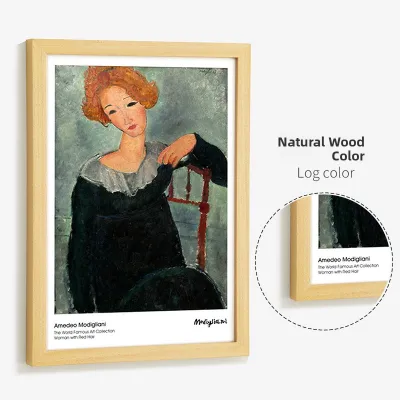

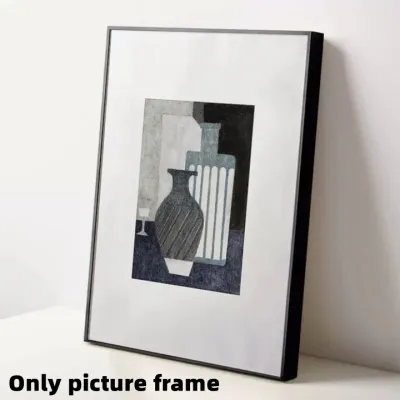

Prices are valid at publication and may change. Please refer to the product page for the latest price.
Glazing selection directly impacts both safety and preservation. Standard float glass is scratch-resistant and highly clear, but its extreme weight makes it hazardous for very large frames, especially if mounted in high-traffic areas or above seating. Lightweight acrylic is highly recommended for oversized statement pieces. It is virtually shatterproof and significantly reduces the load on your wall fasteners. However, standard acrylic scratches easily and can attract dust due to static electricity. For premium displays, look for acrylic options featuring anti-reflective coatings and UV-filtering properties, which block destructive ultraviolet rays from Singapore’s intense natural light, preventing your artwork from fading.
Archival safety is critical to prevent your artwork from deteriorating inside the frame. Standard cardboard or cheap paper backings contain lignin, which breaks down over time and releases acids that cause yellowing, brittle paper, and dark spots on your prints. Ensure the frame utilizes acid-free, buffered matboards and barrier papers. The backing board should be made of inert materials like acid-free foam core or corrugated plastic.
Hanging hardware must match the frame’s scale. Avoid simple sawtooth hangers for large frames. Instead, look for heavy-duty D-rings screwed directly into the side rails of the frame, positioned about one-third of the way down. For exceptionally heavy or wide pieces, a French cleat system—where one interlocking bracket is mounted to the frame and another to the wall—distributes the weight evenly across the wall surface and prevents the frame from tilting over time.
Comparing Framing Channels and Customization Options in Singapore
To source these high-quality frames in Singapore, you can choose between three primary channels, each serving different budgets, timelines, and preservation needs.

Professional local framing studios, often found in established creative hubs or industrial estates across Singapore, offer the highest level of customization and craftsmanship. These specialized workshops allow you to select from hundreds of frame profiles, specify exact matting widths, and choose specialized museum-grade glazing. The framers handle the mounting process using reversible, archival techniques, making this channel indispensable for high-value original paintings, delicate textiles, or irreplaceable family heirlooms. While this bespoke service requires a higher financial investment and a longer turnaround time, it guarantees that the frame is structurally engineered for the specific weight and dimensions of your piece.
Large home furnishing retailers and global decor chains provide a highly accessible, budget-friendly alternative for standard frame sizes. These ready-made frames are ideal for standard poster sizes or digital prints where archival preservation is not the primary concern. However, off-the-shelf options typically feature limited profile styles, standard glass instead of lightweight acrylic, and non-archival backing materials. If you choose this route for a statement wall, consider purchasing the frame for its outer structure and upgrading the internal components—such as ordering a custom acid-free matboard from a local shop—to elevate the overall look and protect your print.
Online custom framing platforms and e-commerce print-and-frame services offer a convenient middle ground. These services allow you to upload digital files, select frame styles and matting online, and receive a fully assembled, ready-to-hang product delivered to your doorstep. This option is highly efficient for contemporary photography and digital art. When using online platforms, it is crucial to verify the exact material specifications before ordering. Check that they use lightweight acrylic rather than heavy glass for large sizes, and inquire about their shipping protections. Oversized frames are highly vulnerable to transit damage, so ensure the provider offers robust packaging and a clear return or replacement policy for items damaged during delivery.
Planning Proportions and Layouts for Statement Wall Displays
A successful statement wall relies as much on spatial planning and visual proportions as it does on the quality of the frame itself. Before purchasing, you must calculate the ideal frame-to-wall ratio to ensure the display complements rather than overwhelms your room. As a general guideline, a single statement frame should occupy approximately two-thirds to three-quarters of the available wall space above a piece of furniture, such as a sofa or sideboard. If the frame is too small, it will look lost; if it is too large, it will make the room feel cramped.
Matting is a powerful tool for elevating the visual impact of your artwork. A wide mat border—ranging from 5cm to 10cm—creates a visual breathing space that draws the eye inward, making even a modest print look like a curated gallery piece. When framing large pieces, consider bottom-weighting the mat, where the bottom margin is slightly wider than the top and sides. This classic technique compensates for an optical illusion that makes the bottom of a mat appear narrower when hung at eye level.
Deciding between a single oversized focal piece and a curated gallery wall cluster depends on your room’s architecture and your personal style. A single, massive frame creates a clean, minimalist, and dramatic focal point, which works exceptionally well in modern Singapore apartments with clean lines. Conversely, a gallery wall cluster allows you to display a collection of memories or diverse art styles. To keep a cluster looking cohesive, maintain a consistent spacing of 5cm to 8cm between frames, and use a unified color palette or matching frame profiles to tie the arrangement together.
Always account for your home’s architectural features and natural sightlines. In Singapore, standard residential ceiling heights typically range from 2.6 to 2.8 meters. Hanging a large frame too high can disrupt the room’s balance; the center of the artwork should generally sit at eye level, approximately 1.4 to 1.5 meters from the floor. If you are mounting the frame above a console or sofa, leave a clearance of 15cm to 25cm between the bottom of the frame and the top of the furniture to prevent accidental bumps and maintain a harmonious visual flow.
Pre-Purchase Verification and Safe Installation Practices
Before finalizing your purchase, perform a rigorous pre-purchase verification to avoid logistical headaches. Measure the artwork’s exact thickness and compare it to the frame’s rabbet depth—the inner recess where the glass, mat, artwork, and backing sit. If the rabbet depth is too shallow, the backing board will protrude, preventing a flush fit against the wall. Additionally, consider the physical logistics of bringing an oversized frame into your home. Measure your apartment’s lift doors, internal lift cabin dimensions, stairwells, and entryways to ensure the packaged frame can be safely maneuvered without damage.
Safe installation of large, heavy frames requires matching your mounting hardware to the specific wall construction of your home. In Singapore, structural walls are typically made of solid concrete or masonry, while internal partition walls are often constructed of drywall. For concrete walls, standard adhesive hooks or light nails will fail under the weight of a large frame. You must use a rotary hammer drill to create a pilot hole, insert a high-quality plastic wall plug, and secure a heavy-duty screw. For drywall partitions, locate the vertical timber or metal studs behind the wall to anchor your screws directly. If a stud is not positioned where you want to hang the frame, use specialized metal toggle bolts or hollow-wall anchors designed to expand behind the drywall and distribute the load safely.
Recognize the boundaries of DIY installation to prevent property damage or personal injury. If your statement frame weighs more than 15 kilograms, requires mounting on high walls near double-volume ceilings, or involves drilling into complex structural columns containing hidden utility lines, stop and hire a qualified professional installation service. Professional art installers possess specialized equipment, such as electronic wall scanners to detect hidden electrical conduits and water pipes, and they can guarantee a perfectly level, secure mount that protects both your investment and your household.
Frequently Asked Questions (FAQ)
How do I clean large acrylic or glass frame glazing without streaks?
Cleaning large glazing surfaces requires gentle techniques to avoid scratching or leaving unsightly streaks. For glass glazing, spray a small amount of ammonia-free glass cleaner onto a clean, lint-free microfiber cloth—never directly onto the glass, as liquid can seep under the frame edges and ruin the artwork. Wipe in a consistent S-pattern. For acrylic glazing, strictly avoid standard glass cleaners, ammonia, or alcohol-based products, which can cause the plastic to cloud or crack. Instead, use a specialized acrylic cleaner or a mild solution of dish soap and warm water applied with a clean, damp microfiber cloth, wiping gently without applying heavy pressure.
Can I use adhesive hanging strips for large, heavy picture frames?
While adhesive hanging strips are highly convenient for rental properties, they are generally not recommended for large, heavy statement frames. Adhesive systems rely heavily on perfect surface preparation, paint adhesion, and environmental stability. Singapore’s high humidity can degrade the adhesive bond over time, leading to sudden, catastrophic failure. Always check the manufacturer’s strict weight limits, which usually apply to the combined weight of multiple strips. For any frame weighing more than a few kilograms, or containing fragile glass glazing, mechanical anchors such as screws and wall plugs are essential to ensure long-term safety and peace of mind.
Community discussion
Share your experience or ask a question. Comments are reviewed before publication.