
To secure your outdoor spaces in Singapore with a rechargeable flood light, you must balance battery capacity, weatherproofing, and sensor accuracy. The tropical climate—characterized by sudden torrential downpours, high humidity, and intense year-round heat—demands careful evaluation of product specifications rather than relying on generic marketing claims. Selecting the right unit involves matching the light’s physical capabilities to your specific property layout, whether you are securing a landed home driveway, a private service yard, or a temporary outdoor workspace.
By focusing on verifiable technical specifications, you can avoid the common pitfalls of premature battery failure, false sensor triggers, and water ingress. This guide outlines the essential criteria for evaluating rechargeable motion sensor flood lights, helping you make an informed purchase that provides reliable security and peace of mind.
Core Selection Criteria for Rechargeable Security Lights
When evaluating a rechargeable flood light, the battery is the heart of the system. Most portable or solar-assisted security lights utilize either Lithium-ion (Li-ion) or Lithium Iron Phosphate (LiFePO4) batteries. LiFePO4 batteries generally offer superior thermal stability and a higher number of charge-discharge cycles, making them highly suitable for Singapore’s warm climate. When reading manufacturer labels, look for the battery capacity rated in milliampere-hours (mAh) or Watt-hours (Wh). A higher capacity ensures the light can sustain multiple triggers throughout the night, especially during consecutive cloudy days when solar-assisted units cannot fully recharge.
Products mentioned in this guide
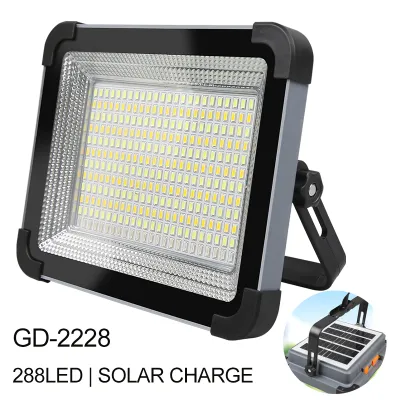
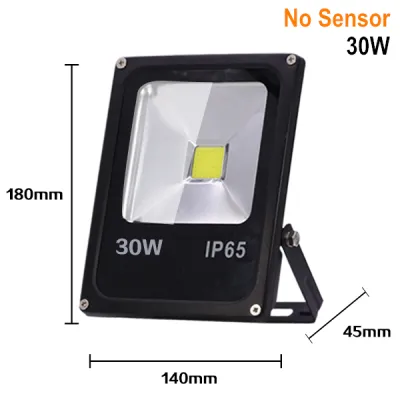
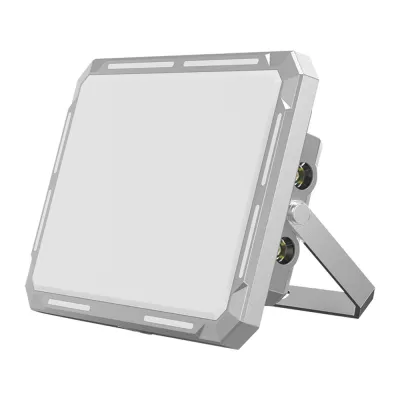
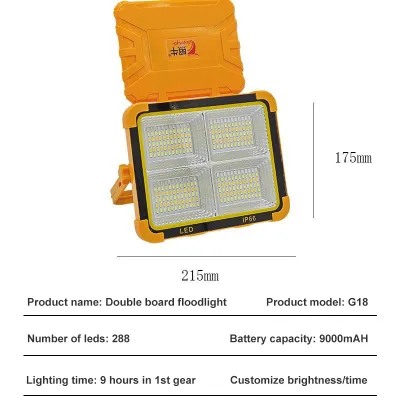
Prices are valid at publication and may change. Please refer to the product page for the latest price.
Lumen output determines the brightness of the light, but it must be considered alongside the beam angle. For general security, a light output of 500 to 1,000 lumens is typically sufficient for residential driveways and entryways. If you require intense illumination for a larger area, look for units delivering 1,500 lumens or more. However, keep in mind that higher lumen outputs draw more power, rapidly depleting the battery if the light is triggered frequently. A wide beam angle of 120 degrees distributes light over a broad area but reduces the overall projection distance, whereas a narrower beam of 60 to 90 degrees concentrates the light for longer-range visibility.
Ingress Protection (IP) ratings are critical for any outdoor electrical device in Singapore. The first digit of the IP rating refers to dust protection, while the second digit refers to water resistance. For outdoor security lights, an IP65 rating is the absolute baseline, indicating protection against dust and low-pressure water jets from any direction. For unsheltered areas exposed to intense monsoon rains, opting for an IP66 or IP67 rating provides a much higher level of protection against water ingress, preventing internal condensation and short circuits.
Evaluating the price-to-performance ratio in S$ requires looking beyond the initial purchase price. Budget-friendly options under S$30 often feature lightweight plastic housings and lower-capacity batteries that may degrade within a year. Mid-range to premium units, ranging from S$50 to over S$150, typically offer robust aluminum housings, high-efficiency solar panels, replaceable battery compartments, and extended warranties of two to three years. Investing in a durable unit with a replaceable battery often yields a lower total cost of ownership over time, as you can simply replace the battery cell rather than the entire fixture when the capacity eventually declines.
Evaluating Motion Sensor Technologies
Motion sensors primarily rely on two distinct technologies: Passive Infrared (PIR) and microwave. PIR sensors detect changes in infrared radiation, which corresponds to body heat moving across the sensor’s field of view. This makes PIR highly effective at detecting humans and vehicles while remaining relatively indifferent to wind-blown foliage or rain. Microwave sensors, on the other hand, emit high-frequency electromagnetic waves and detect the reflections off moving objects. While microwave sensors are incredibly sensitive and can detect motion through thin walls or glass, they are highly prone to false triggers in outdoor residential environments due to moving plants, heavy rain, or passing birds.

To ensure effective coverage, check the sensor’s detection range and angle. Most residential security lights offer a detection angle between 120 and 180 degrees, with a range extending from 5 to 12 meters. Adjustable sensor heads are highly beneficial, allowing you to tilt and swivel the sensor independently of the light source. This flexibility ensures you can target specific entry points, such as a gate or a doorway, without capturing irrelevant movement from a public pavement or a neighbor’s property.
Sensitivity and time-delay settings are essential for fine-tuning your security setup. Look for units that feature adjustable dials, often labeled “SENS” (sensitivity) and “TIME” (duration). Adjusting the sensitivity helps minimize false triggers caused by small animals or distant traffic. The time-delay setting controls how long the light remains illuminated after motion ceases, typically adjustable from 10 seconds to several minutes. Setting a shorter duration (such as 15 to 30 seconds) conserves battery power, ensuring the light remains operational throughout the night.
Always consult the product manual for specific sensor limitations and optimal mounting orientations. PIR sensors are most sensitive to movement across their detection fields rather than directly toward or away from the sensor. Mounting the light at the manufacturer’s recommended height—usually between 2 and 2.5 meters—ensures the detection cone covers the intended ground area effectively without creating blind spots directly beneath the fixture.
Matching Light Configurations to Outdoor Scenarios
Different areas of your property demand specific light configurations to balance security needs with battery conservation. For driveways and main gates, prioritize high lumen output and a wide detection zone. These areas require bright, immediate illumination to deter intruders and provide safe passage for vehicles. Look for dual-head or triple-head flood lights with adjustable panels, which allow you to direct light down the driveway while simultaneously illuminating side pathways. A robust aluminum housing is also recommended for these exposed areas to withstand prolonged exposure to direct sunlight and heat.
For side alleys and service yards, a more focused and compact design is often appropriate. These spaces are typically narrow, meaning a wide-angle flood light might spill excess light into neighboring windows, causing light pollution and potential disputes. A single-head light with a focused beam and an adjustable sensor head allows you to direct the light precisely along the pathway. Because these areas may receive less direct sunlight, a rechargeable unit with a detachable solar panel on a long cable is highly advantageous, allowing you to mount the solar panel on the roofline while keeping the light fixture sheltered in the alley.
If you live in a rented property or require a temporary security setup, look for portable or standalone rechargeable units. Many modern flood lights feature heavy-duty clamp mounts, magnetic bases, or weighted stands that require no drilling or permanent structural modifications. These units can be easily charged via a standard USB port indoors and mounted temporarily on gutters, fences, or scaffolding. This flexibility allows you to relocate the light as your security needs change or take it with you when you move.
It is important to recognize when a rechargeable unit is insufficient and a hardwired security light is necessary. If the target area experiences high foot traffic, such as a shared commercial pathway or a busy residential entrance, a rechargeable battery will deplete rapidly due to constant triggering. In these high-duty-cycle scenarios, or where continuous, uninterrupted overnight illumination is required for surveillance cameras, installing a permanent, mains-powered security light is the only reliable solution.
Installation Boundaries and Maintenance Practices
Proper installation is key to maximizing both the lifespan of your flood light and the accuracy of its motion sensor. When choosing a mounting location, avoid placing the sensor directly opposite highly reflective surfaces, such as white gloss walls, glass panels, or swimming pools, which can bounce light and heat signatures, causing false triggers. Additionally, keep the sensor away from localized heat sources like air conditioning compressors, outdoor water heaters, or dryer vents, as the sudden drafts of warm air will easily trip a PIR sensor.
Before mounting heavy, battery-integrated flood lights, verify the structural integrity of the mounting surface. Concrete, brick, and solid timber pillars provide excellent support, but lightweight plastic fencing, thin metal sheets, or gypsum board may warp or fail under the weight of a heavy fixture, especially during high winds. Always use the appropriate wall plugs and screws supplied by the manufacturer, and ensure the mounting bracket is sealed against the wall to prevent water from pooling behind the fixture and seeping into the mounting holes.
Routine maintenance is straightforward but essential for long-term reliability. Periodically wipe the motion sensor lens with a soft, damp microfiber cloth to remove dust, salt residue, and spiderwebs, which can severely degrade detection range. If your unit is solar-assisted, keep the solar panel clear of fallen leaves, bird droppings, and accumulated grime to maintain charging efficiency. Check the battery health indicators regularly, and if the light’s runtime begins to drop noticeably, inspect the battery compartment for signs of swelling or corrosion.
Always observe clear safety boundaries during installation. If you are mounting a light near existing electrical conduits, outdoor power sockets, or in damp zones, isolate the power at your home’s main distribution board before drilling. If your installation requires tapping into your home’s fixed electrical wiring to install a permanent charging outlet or a backup power supply, do not attempt to do this yourself. Halt the installation and consult a licensed electrical worker to ensure compliance with local safety standards and regulations.
Frequently Asked Questions (FAQ)
Do rechargeable flood lights work during prolonged rainy periods?
Yes, rechargeable flood lights can work during prolonged rainy periods, but their performance depends heavily on battery capacity and how they are charged. Solar-assisted models will experience significantly reduced charging efficiency on cloudy or rainy days, as solar panels require direct sunlight to reach peak output. To ensure continuous operation during monsoon seasons, look for units with a large battery buffer capacity that can sustain several days of typical motion-triggered use without a full charge. Additionally, many high-quality outdoor flood lights feature a manual USB charging port, allowing you to take the unit down and charge it fully from a wall outlet indoors when consecutive rainy days deplete the battery.
Can I adjust the motion sensor to ignore small animals?
Yes, you can adjust most motion sensors to minimize triggers from small animals like stray cats, dogs, or birds. The most effective method is to adjust the physical tilt angle of the sensor head, pointing it slightly upward so that its detection field starts above the height of small animals on the ground. You can also use the sensitivity dial (SENS) on the unit to lower the detection threshold, requiring a larger heat signature to trigger the light. For advanced customization, some users apply physical masking tape over the lower portion of the sensor lens, effectively blocking the sensor’s view of the ground immediately surrounding the light while keeping the distant, head-height detection zone active.
What electrical certifications should I look for on the product label?
When purchasing a rechargeable flood light or its charging accessories in Singapore, safety compliance is paramount. For any AC power adapter or charger plug that connects directly to your wall outlet, look for the Enterprise Singapore Safety Mark, which indicates the device has been tested and certified safe for local electrical standards. For the flood light fixture itself, look for recognized international safety and environmental certifications such as CE, RoHS, and FCC on the product label or packaging. These markings verify that the device complies with strict limits on hazardous materials, electromagnetic interference, and low-voltage electrical safety, ensuring the internal lithium battery and circuitry are safe for residential use.
Community discussion
Share your experience or ask a question. Comments are reviewed before publication.