
Selecting the right ceiling fixtures for a Housing & Development Board (HDB) flat requires a careful balance of aesthetics, optical performance, and physical dimensions. With a standard ceiling height of approximately 2.6 metres, HDB interiors present unique spatial constraints that make bulky or deeply suspended light fixtures impractical. To maintain an open, airy atmosphere and prevent rooms from feeling cramped, homeowners must focus on low-profile surface-mounted lights.
Rather than searching for a single universal brand, the most effective approach is to evaluate lighting manufacturers based on their technical specifications, optical engineering, and local safety compliance. This guide outlines the critical physical and optical requirements for low-ceiling environments, provides a structured framework for shortlisting reliable brands, and details the essential installation checks required for Singapore homes.
Why 2.6m Ceilings Change Your Surface Light Requirements
The physical clearance of a room dictates how light behaves and how the eye perceives space. In a standard 2.6m HDB flat, every centimetre of vertical space is valuable. Installing a fixture that protrudes too far downward creates an immediate visual obstacle. This visual weight draws the eye upward and highlights the physical limits of the ceiling, making a compact living room or bedroom feel significantly more confined than its actual floor area suggests.
Products mentioned in this guide
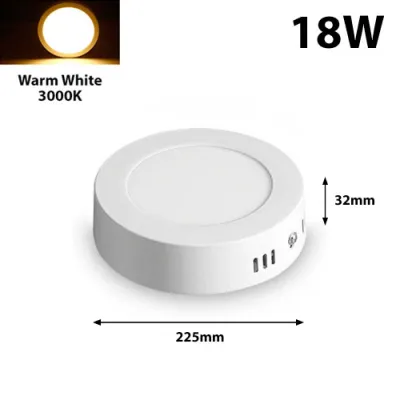
![[Local Seller] LED Ceiling Surface Mounted Downlight LED Panel Light Square Round](https://img.lazcdn.com/g/ff/kf/Sdd11b528478549189cb70a967ccae3d2t.jpg_400x400q80.jpg_.webp)
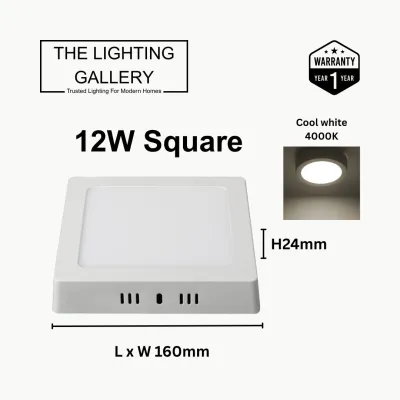
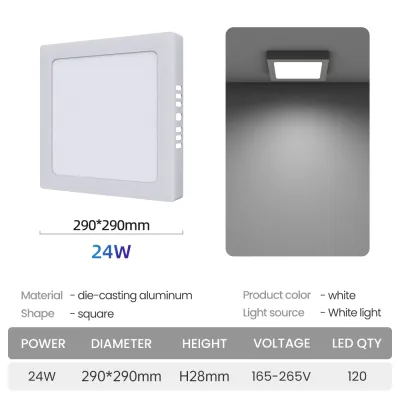
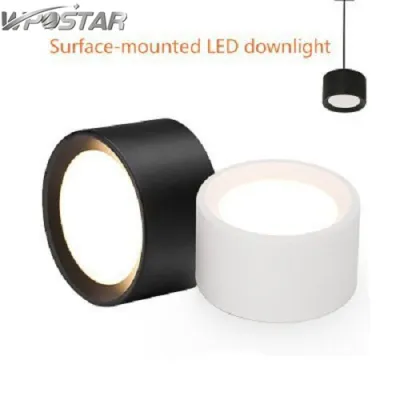
Prices are valid at publication and may change. Please refer to the product page for the latest price.
Beyond visual aesthetics, low ceilings compress the distance between the light source and the living plane. Traditional surface lights with narrow beam angles project light downward in a tight cone. In a low-ceiling room, this results in intense, localized pools of light directly beneath the fixture, while the upper corners of the walls and the ceiling itself remain in deep shadow. This stark contrast, often referred to as the cave effect, makes spaces feel smaller and causes eye strain due to the rapid transition between bright and dark zones.
Thermal management is another critical factor influenced by ceiling height and fixture design. Slim, surface-mounted fixtures have very small internal volumes, which naturally restricts airflow around the light-emitting diodes (LEDs) and the electronic driver. Heat is the primary driver of LED degradation and premature component failure. Reputable brands address this by engineering high-grade aluminum heat sinks and using thermally conductive housings to draw heat away from the electronics, ensuring the fixture maintains its brightness and color consistency over years of continuous use.
Essential Design Features for Low-Ceiling Surface Lights
When comparing different lighting brands, you must look past marketing descriptions and focus on specific design features and optical configurations. The construction of the fixture directly influences how thin it can be and how comfortably it distributes light across your living spaces.

Ultra-Slim Profiles: Edge-Lit vs. Back-Lit Panels
Surface-mounted LED lights generally fall into two optical categories, each with distinct trade-offs in depth and light quality:
- Edge-Lit Panels: These fixtures place the LEDs along the inner perimeter of the frame, pointing inward toward a light guide plate. The plate redirect the light downward through a diffuser. Because the LEDs are on the side rather than the back, edge-lit panels can be incredibly thin, often measuring between 10mm and 15mm in thickness. They produce an exceptionally soft, uniform light with no visible hotspots, making them ideal for low HDB ceilings where the fixture is frequently in the occupant's direct line of sight.
- Back-Lit Panels: In this configuration, the LEDs are mounted on a plate directly behind the diffuser, pointing straight down. To prevent individual LEDs from appearing as bright spots through the cover, these fixtures require a certain amount of physical depth—typically between 25mm and 50mm—to allow the light to mix and spread evenly. While slightly thicker than edge-lit models, back-lit fixtures are generally more energy-efficient and cost-effective because they do not lose light within a guide plate.
Diffuser Materials and Glare Control
Because a 2.6m ceiling brings the light source closer to eye level, glare control is paramount for visual comfort. High-quality brands utilize advanced diffuser materials such as polymethyl methacrylate (PMMA) or high-grade polycarbonate treated with micro-prismatic structures. These materials scatter light rays in multiple directions, reducing high-angle glare. When reviewing technical specifications, look for brands that provide a Unified Glare Rating (UGR). A UGR of less than 19 is highly recommended for study areas and home offices, while a UGR under 22 is suitable for general living spaces.
Color Temperature and Color Rendering
Multi-functional HDB flats require versatile lighting that can transition from task-oriented daytime activities to relaxing evening routines. Brands that offer selectable color temperatures (Correlated Color Temperature, or CCT) via a physical toggle switch on the driver or through smart controls provide the greatest flexibility. Look for fixtures that offer a range from 2700K (warm white) for bedrooms to 4000K (cool white) for kitchens and study areas. Additionally, ensure the brand specifies a Color Rendering Index (CRI) of at least Ra 80, with Ra 90 or higher preferred for dining areas and vanity mirrors to ensure colors appear natural and accurate.
How to Evaluate and Shortlist Surface Light Brands
To build a reliable shortlist of surface light brands for your HDB renovation, you must look for manufacturers that demonstrate technical transparency, provide robust local support, and offer products tailored to compact residential layouts.
Verify Brand Specialization and Technical Transparency
Prioritize brands that specialize in architectural, low-profile, or integrated residential lighting rather than companies that produce generic, bulky commercial fixtures. A reputable manufacturer will provide comprehensive specification sheets detailing the exact physical dimensions, lumen output, luminous efficacy (lumens per watt), beam angle, and driver specifications. Avoid brands that omit these technical details or rely solely on vague descriptions like “super bright” or “ultra-thin” without providing verifiable measurements.
Assess Local Warranty and Replacement Support
In Singapore’s humid tropical climate, electronic components are subjected to constant environmental stress. The most common point of failure in an LED fixture is not the LED chip itself, but the electronic driver that regulates the current. When shortlisting brands, verify that they have an established local distributor, physical showroom, or dedicated service center in Singapore. A reliable brand should offer a local warranty of at least one to three years. Furthermore, check if the brand sells replacement drivers independently; this allows you to repair a faulty light in the future without having to purchase and install an entirely new fixture.
Match Brand Specifications to Room Requirements
Before purchasing, map the physical dimensions and optical characteristics of the fixtures to the specific layout of your HDB flat. A large, high-output fixture may work perfectly in an open-concept living room but overwhelm a small utility room or hallway. Use the following matrix to guide your brand evaluation based on room-specific needs:
| Room Type | Primary Lighting Priority | Recommended Profile Depth | Key Optical Feature to Verify |
|---|---|---|---|
| Living Room | Wide, even ambient light; flexible atmosphere | Under 35mm | Wide beam angle (110° or greater), CCT-switchable driver |
| Bedroom | Low glare, relaxing environment | Under 30mm | High Color Rendering Index (Ra 90+), micro-prismatic diffuser |
| Kitchen | High task visibility, easy maintenance | Under 40mm | High lumen output, sealed housing (IP40 or higher to resist grease) |
| Bathroom | Moisture resistance, compact footprint | Under 30mm | IP44 water-resistance rating, integrated driver |
| Hallway | Unobtrusive, continuous illumination | Under 20mm | Ultra-slim edge-lit panel, moderate lumen output |
Pre-Purchase and Installation Checks for HDB Flats
Once you have selected a brand and specific fixtures, you must perform several critical electrical and structural checks to ensure a safe, compliant, and durable installation in your HDB flat.
Electrical Safety and Certification
Singapore operates on a 230V, 50Hz alternating current (AC) electrical grid. Any surface light fixture you purchase must be rated for this voltage range. Crucially, verify that the products carry the Safety Mark issued by Enterprise Singapore. This certification indicates that the fixture and its integrated driver have undergone rigorous testing by an approved conformity assessment body and comply with local safety standards. Using non-certified electrical products can lead to short circuits, premature driver failure, or electrical fires, and may void your home insurance coverage.
Ceiling Mounting Conditions and Structural Integrity
Standard HDB ceilings are constructed from solid concrete slabs. Mounting a surface light onto concrete requires drilling holes with a rotary hammer drill, inserting appropriate plastic wall plugs, and securing the mounting bracket with steel screws. Ensure the brand’s mounting bracket is robust and provides multiple fixing points to distribute the weight evenly.
If you have installed a plasterboard false ceiling to conceal wiring or air conditioning pipes, the mounting requirements change significantly. False ceilings cannot support heavy fixtures directly. You must ensure the selected surface lights are lightweight (typically under 2 kilograms) or that the installation team secures the mounting bracket directly to the metal support channels behind the plasterboard. Always check the weight specifications of the fixture before purchasing.
Installation Boundaries and Professional Safety
While replacing a simple light bulb is a straightforward task, installing a new surface-mounted light fixture involves working with fixed electrical wiring. Before any installation work begins, you must isolate the electrical circuit by switching off the corresponding miniature circuit breaker (MCB) at your home’s main distribution board. Confirm the power is off using a reliable voltage tester.
If the installation requires modifying existing wiring, extending circuits, mounting fixtures at significant heights, or working in damp zones like bathrooms, do not attempt a DIY installation. In Singapore, any modification to fixed electrical wiring must be performed by a licensed electrical worker registered with the Energy Market Authority (EMA). A professional installation ensures that all connections are properly insulated, grounded, and compliant with local electrical wiring standards.
Frequently Asked Questions (FAQ)
Can I use dimmable surface lights with standard HDB switches?
No, standard on/off wall switches cannot dim a light fixture. If you connect a dimmable surface light to a standard switch, it will only operate at full brightness. To enable dimming functionality, you must install a compatible dimmer switch that matches the dimming method of the fixture’s driver, such as a trailing-edge phase-cut dimmer.
Using an incompatible dimmer switch or attempting to dim a non-dimmable fixture can lead to severe flickering, audible buzzing, unstable light output, and permanent damage to the LED driver. Always verify the dimming protocol specified by the lighting brand and consult a qualified professional to ensure your wall switches and light drivers are fully compatible.
Are smart surface lights a good choice for 2.6m ceilings?
Smart surface lights can be an excellent choice for 2.6m ceilings, provided you select models designed with a low physical profile. Smart fixtures contain integrated wireless communication modules (such as Zigbee, Wi-Fi, or Bluetooth) and advanced digital dimming drivers. In some budget brands, these additional electronic components require a thicker housing, which can make the fixture protrude further from the ceiling.
However, many reputable architectural lighting brands offer highly integrated smart surface lights that maintain a thickness of under 40mm. When choosing smart lighting, weigh the convenience of app-based control, automated scheduling, and hands-free voice commands against the slightly higher initial cost and the necessity of maintaining a stable home wireless network. Ensure the smart driver is rated for continuous power connection, as turning off the physical wall switch will cut power to the smart module, rendering remote controls inactive.

Community discussion
Share your experience or ask a question. Comments are reviewed before publication.