
An emergency kit is a fundamental safety asset for any household, and in a Singapore Board (HDB) flat, space efficiency and reliability are the primary criteria for every item you include. When a sudden power outage occurs or a household circuit breaker trips, having a dependable light source prevents panic and ensures your family can navigate the home safely. A USB torch light has become the modern standard for these kits, offering a compact form factor, rechargeable convenience, and compatibility with the power banks you likely already own. Selecting the right model requires balancing brightness, battery architecture, and storage durability to ensure the light works the moment you press the switch.
To build a truly resilient emergency setup, you must look beyond basic retail descriptions and evaluate how a torch light performs within the specific layout of your home. This guide details how to assess your flat’s layout, analyze technical specifications, understand battery safety, and store your equipment to withstand tropical humidity.
Assessing Your HDB Flat's Emergency Lighting Needs
Every HDB flat has a unique layout, but most share common architectural features that dictate your emergency lighting requirements. The first step in selecting a USB torch light is evaluating where your family will gather and how far the light needs to carry. For instance, a three-room flat has different spatial demands than a double-story executive maisonette. You must map out the path from your primary living areas to the main distribution board (DB box), which is typically located near the entrance or inside a utility closet. The torch light must provide enough immediate illumination to let you safely navigate past furniture, toys, or narrow corridors to inspect your circuit breakers.
Products mentioned in this guide
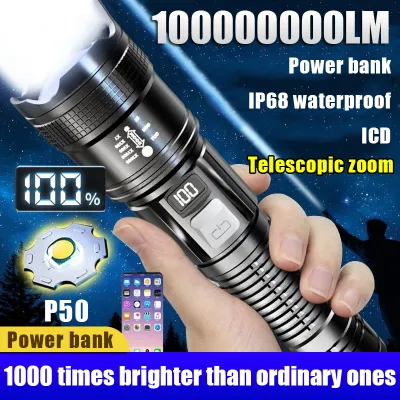
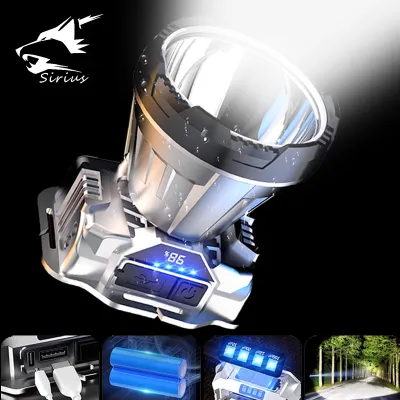
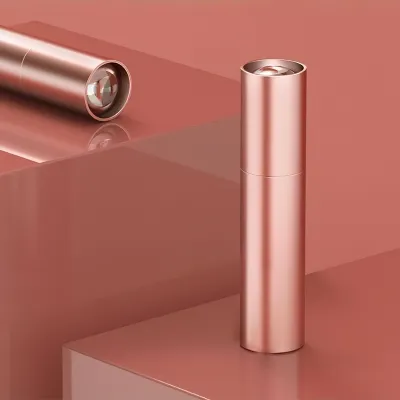
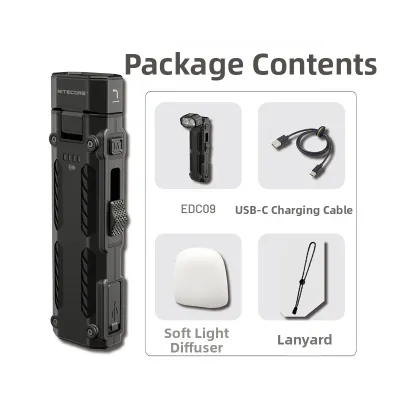
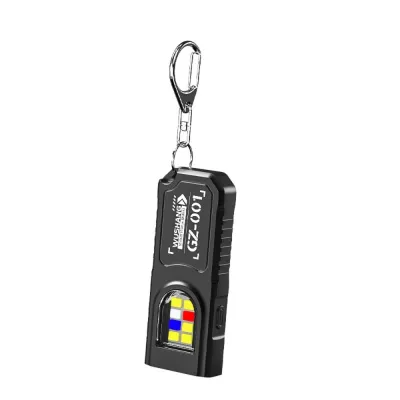
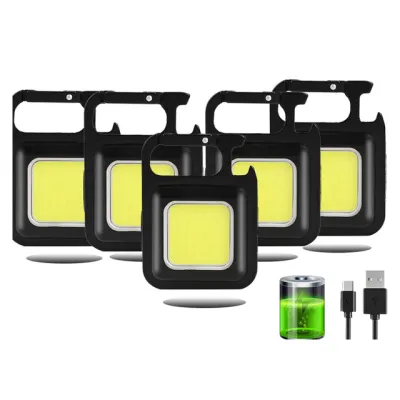
Prices are valid at publication and may change. Please refer to the product page for the latest price.
Storage spaces in HDB flats present specific challenges. Many modern flats feature a designated household shelter with thick, reinforced concrete walls and heavy steel doors. These shelters are designed for safety but are completely devoid of natural light when closed. If you store your emergency kit inside the household shelter or a deep utility cabinet, your torch light must be easy to locate in absolute darkness. This means prioritizing models with glow-in-the-dark accents, reflective strips, or a highly visible chassis color rather than a matte black finish that blends into the shadows.
Runtime requirements also depend on your household size and local infrastructure. While Singapore’s electrical grid is exceptionally reliable, localized cable disruptions or internal household electrical faults can leave you without power for several hours. If you live alone, a torch with a continuous runtime of two to three hours on medium mode is generally sufficient to resolve a minor electrical issue or wait out a localized outage. For larger families with children or elderly members, you may need a light that can run continuously for six to eight hours on a lower setting, allowing you to maintain a calm environment throughout the night without exhausting the battery.
Finally, consider the primary tasks you will perform during an outage. If you simply need to check the DB box or find a spare key, a small, directional beam is ideal. However, if you need to prepare a meal in the kitchen, tend to a child, or read instructions, you will require a light source that can stand upright on a flat surface and diffuse light across an entire room. Identifying these scenarios beforehand prevents you from purchasing a torch that is either too weak to be useful or too focused to illuminate a shared living space.
Evaluating Core Specifications for USB Torch Lights
When browsing for a USB torch light, the sheer variety of technical specifications can be overwhelming. The most common metric advertised is brightness, measured in lumens. For indoor emergency use within an HDB flat, excessively high lumen ratings are not only unnecessary but can actually be counterproductive. A torch emitting 1,000 lumens or more will create intense, blinding glare when reflected off light-colored plaster walls, polished floor tiles, or mirrors in a compact bathroom. For general indoor navigation and close-up tasks, a torch with an adjustable output ranging from 15 to 300 lumens is highly effective, comfortable for the eyes, and far more energy-efficient.

Beam pattern is another critical factor that determines how usable the light is in tight spaces. Flashlights generally offer either a spot beam, a flood beam, or an adjustable zoom mechanism:
- Spot Beams: These project a narrow, concentrated column of light over a long distance. While excellent for outdoor search-and-rescue, a pure spot beam creates a harsh, narrow circle of light indoors, leaving your peripheral vision in complete darkness.
- Flood Beams: These distribute light widely and evenly across a broad area. A flood beam is highly recommended for HDB interiors because it mimics natural room lighting, making it easier to monitor an entire room or work with both hands.
- Adjustable Zoom Beams: These models allow you to slide or twist the bezel to transition between a spot and a flood pattern. While versatile, the moving parts in zoom mechanisms can sometimes introduce entry points for dust and moisture, which requires careful handling.
Physical durability and ergonomics ensure the torch remains functional after years of storage and occasional drops. Look for models constructed from high-grade aluminum alloys or impact-resistant polycarbonate. A drop-resistance rating of at least one meter is standard for quality emergency gear, ensuring the light survives a fall from a kitchen countertop or utility shelf onto hard terrazzo or vinyl flooring. Additionally, check the physical dimensions and weight; the torch should be light enough for a child or elderly family member to hold comfortably for extended periods without hand fatigue.
Navigating Battery and USB Charging Standards
An emergency torch is only as reliable as its power source. Understanding how your light stores and receives power ensures that it will actually turn on when the main electricity fails. Modern portable lighting relies almost exclusively on lithium-based battery chemistry, which offers high energy density and a low self-discharge rate, meaning the battery retains its charge even when left unused for months.
Built-In vs. Removable Battery Configurations
One of the most important decisions you will make is choosing between a torch with a sealed, built-in battery and one that utilizes removable, rechargeable cells. Built-in lithium-ion batteries allow manufacturers to design incredibly compact, lightweight, and highly water-resistant torches. These are highly convenient because you do not need to manage separate charging cradles or worry about losing loose components. However, if the internal battery degrades over several years of storage, the entire unit must be replaced, which is less sustainable.
Removable rechargeable battery configurations, which often use standard sizes like 18650 or 21700 lithium-ion cells, offer excellent long-term versatility. If the battery eventually loses its capacity, you can simply purchase a replacement cell rather than discarding the entire torch. Furthermore, in an extended emergency, you can swap out a depleted battery for a fully charged spare in seconds. The trade-off is that these models tend to be slightly bulkier and require a basic understanding of battery safety, such as checking the protective wrapping on the cells for tears and disposing of degraded batteries at designated e-waste recycling points across Singapore.
Cable Compatibility and Charging Speeds
To ensure your torch can be recharged easily during a prolonged power failure, prioritize models that utilize a USB-C charging port. USB-C has become the universal standard for modern smartphones, tablets, and portable electronics, meaning you can easily share cables and power banks without cluttering your emergency kit with proprietary cords. Older Micro-USB ports are still common on budget models, but they are slower to charge, less durable, and require you to keep a specific, aging cable format on hand.
When charging your torch, always verify the input voltage and current limits specified by the manufacturer, which are typically printed on the body of the light or in the user manual. Most standard USB torches require a 5V input with a current limit of 1A or 2A. While many modern USB-C power adapters designed for laptops or fast-charging smartphones can safely negotiate down to these lower power levels, using an uncertified or extremely cheap high-wattage charger can risk overheating the torch’s internal charging circuitry. For maximum safety, charge your emergency torch using a reputable, certified multi-port wall adapter or a high-quality portable power bank, and never leave the device charging unattended on flammable surfaces like beds or sofas.
Optimizing Storage and Accessibility in HDB Spaces
Having the perfect emergency torch is of little use if you cannot find it in the dark or if the battery has corroded due to poor storage conditions. Singapore’s tropical climate, characterized by high relative humidity and warm temperatures, can accelerate the degradation of electronic components and battery cells. To protect your investment, avoid storing your emergency kit in high-humidity zones such as bathrooms, unventilated service yards, or directly adjacent to kitchen cooking areas where grease and moisture accumulate. Instead, choose a cool, dry, and centrally located spot, such as a living room cabinet, a hallway drawer, or a dedicated shelf in your household shelter.
Accessibility is paramount during a sudden blackout. To make your torch easy to deploy, consider utilizing its physical design features to mount it in a visible location:
- Magnetic Bases: Many emergency torches feature a strong magnet integrated into the tail cap. This allows you to snap the torch directly onto the metal shelving units commonly used in HDB storerooms, or onto the interior steel frame of your household shelter door, keeping it at eye level.
- Lanyards and Carabiners: Attaching a high-visibility lanyard or a small carabiner to your torch allows you to hang it from a dedicated hook near your DB box or on the inside of a utility cabinet door.
- Glow-in-the-Dark Indicators: If your torch does not have built-in luminescent parts, you can apply a small strip of high-grade photoluminescent tape to the handle, making it instantly visible when the lights go out.
Maintaining your emergency torch requires minimal effort but must be done consistently. Establish a recurring quarterly schedule—perhaps aligned with seasonal cleaning or routine household chores—to inspect your emergency gear. During this check, turn the torch on to verify that all brightness modes function correctly, inspect the charging port for dust or lint accumulation, and top up the battery charge. Lithium-ion batteries store best when kept between 40% and 80% charge, but for an emergency tool, keeping it charged to around 90% ensures you have maximum runtime when you need it most, without causing excessive wear on the battery cells over years of storage.
Building Your Condition-Based Shortlist
To finalize your purchase, you should match your specific household profile and living arrangements to the appropriate category of USB torch light. Rather than searching for a single universal winner, evaluate how different designs serve different household dynamics and budgets.
For small households, couples, or individuals living in two-room or three-room flats, an ultra-compact keychain or pocket-sized USB-C torch is often the most practical choice. These lights are incredibly lightweight, take up virtually no space in a drawer, and typically offer a brightness range of 50 to 150 lumens, which is more than enough to illuminate a short hallway or a bedroom. Because they are small, they are also highly portable, allowing you to carry them in a pocket if you need to evacuate the flat quickly.
For larger families residing in four-room, five-room, or executive flats, a high-capacity, multi-functional torch is highly recommended. These larger models often feature a robust handgrip, a high-capacity battery (such as a 21700 cell), and a secondary side-mounted light source that functions as an area lantern. This dual-purpose design allows you to use the main beam to navigate to your DB box, and then set the torch upright on a dining table to cast a soft, wide floodlight that illuminates the entire room for dinner or family activities. Some of these high-capacity models also feature a reverse-charging function, allowing the torch to act as an emergency power bank to top up a mobile phone if your primary power banks are depleted.
When planning your budget, expect to spend between S$15 and S$40 for a reliable, entry-level USB-C torch from a reputable manufacturer. Torches in this price range typically offer solid aluminum construction, basic water resistance, and reliable battery protection circuitry. If you require advanced features such as high-impact drop ratings, certified dust and water protection, or user-replaceable battery systems, budgets can range from S$45 to S$80. Avoid extremely cheap, unbranded options priced under S$10 on online marketplaces; these often lack essential battery safety protections, use low-quality LEDs that degrade quickly, and may pose a fire hazard during charging.
Before making your final purchase on any e-commerce platform or at a local hardware store, verify the seller’s warranty terms and return policies. A reputable seller should offer at least a six-month to one-year local warranty, giving you peace of mind that the device can be replaced if it exhibits charging issues or battery defects. Carefully read customer reviews, paying close attention to feedback regarding real-world battery runtime, the tactile feel of the power button, and whether the charging port cover stays securely closed to protect against dust and moisture. By taking a systematic, specification-focused approach, you can equip your HDB flat with a reliable emergency light source that stands ready to illuminate your home whenever the need arises.
Community discussion
Share your experience or ask a question. Comments are reviewed before publication.