
Integrating smart appliances into a modern home layout requires a clear understanding of how different devices communicate, especially within the unique structural environment of a Housing & Development Board (HDB) flat. The Ottai CGM, a contemporary smart curtain glide motor, offers an elegant way to automate your window treatments, control natural light, and enhance your home’s energy efficiency.
To integrate this device successfully into your existing smart home ecosystem, you must coordinate its wireless communication protocols, physical installation requirements, and software configurations with your central hub. By doing so, you can establish seamless, automated routines that coordinate your curtains with smart lighting, climate control systems, and environmental sensors.
Checking Smart Home Compatibility Before Setup
Before unboxing or mounting your new hardware, you must verify that your current home network and smart home ecosystem can communicate with the device. Smart curtain motors typically operate on one of three primary wireless protocols: standard 2.4GHz Wi-Fi, Zigbee, or Bluetooth. You can identify the specific protocol utilized by your model by reviewing the technical specifications printed on the product packaging or within the official user manual. If your device uses a Zigbee protocol, you will need a compatible Zigbee gateway or a smart home hub that features a built-in Zigbee radio to bridge the motor to your home network.
Products mentioned in this guide
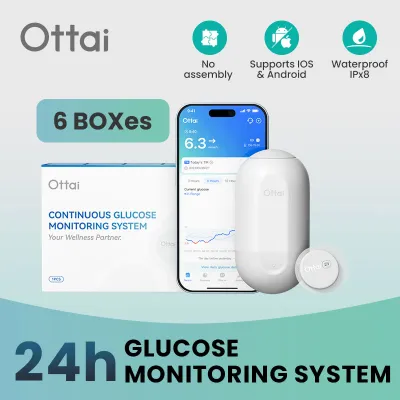


Prices are valid at publication and may change. Please refer to the product page for the latest price.
If the device connects directly via Wi-Fi, you must evaluate your home router configuration. Most modern routers provided by local telecommunications companies operate on dual bands, broadcasting both 2.4GHz and 5GHz frequencies under a single network name. Because most smart home accessories only support the 2.4GHz band due to its superior range and ability to penetrate solid obstacles, pairing failures are common when your smartphone is connected to the 5GHz band during setup. To prevent this, access your router’s administration panel to temporarily separate the bands into distinct network names, or enable a dedicated 2.4GHz guest network specifically for your smart home devices.
Additionally, you must confirm that your primary smart home control application—whether you use Apple Home, Google Home, Amazon Alexa, or a proprietary manufacturer app—is compatible with the device. Check the manufacturer’s documentation to see if the device requires a specific regional server setting within its companion app. Some smart home ecosystems restrict device visibility or integration capabilities if your account region does not match the physical location of your home network. Ensuring these network and software prerequisites are met beforehand will prevent pairing errors and streamline the subsequent installation steps.
Physical Installation and Network Prep in an HDB
Physical installation in an HDB flat requires careful planning due to the structural materials commonly used in local residential construction. Most HDB walls and ceilings are constructed from pre-cast, reinforced concrete, which is exceptionally durable but challenging to drill into. Before mounting your curtain tracks or brackets, check the manufacturer’s specifications for weight limits, clearance requirements, and recommended mounting hardware. You must ensure that the ceiling or wall can support the combined weight of the motorized track, the motor unit itself, and your chosen curtain fabrics, especially if you are installing heavy, multi-layered blackout drapes.

To maintain the clean lines and minimalist aesthetics of a modern smart home, you must also plan your power source and cable routing carefully. Determine whether your model is powered by a rechargeable internal battery or requires a continuous connection to an electrical outlet. For battery-powered units, ensure there is sufficient clearance around the motor to easily access the charging port or remove the battery pack when needed. If your motor requires constant AC power, locate the nearest electrical outlet. To avoid unsightly exposed wires, you can route the power cable through slim, paintable PVC trunking running along the corner of the wall or behind the curtain folds. If your installation requires modifying fixed electrical wiring, installing a new power point, or drilling close to concealed utility lines, stop immediately and engage a licensed electrical worker to perform the work safely.
Once the physical track and motor are securely mounted, you can prepare the device for its initial network connection. Refer to the manufacturer’s instructions to locate the physical power switch and the reset button on the motor unit. Typically, putting a smart curtain motor into pairing mode involves holding down a specific button for several seconds until an LED indicator light begins to flash rapidly or an audible beep is emitted. Ensure your smartphone is positioned close to the motor and connected to your prepared 2.4GHz network before initiating the pairing sequence in your smart home app.
Linking the Ottai CGM to Your Central Hub
With the motor in pairing mode, open the manufacturer’s designated smart home application on your mobile device to complete the initial registration. Follow the on-screen prompts to scan for new hardware, input your local Wi-Fi credentials, and establish a secure connection. Once the device is successfully registered to your account, check for any available firmware updates within the app settings. Installing the latest firmware immediately is highly recommended, as manufacturers frequently release updates to resolve connectivity bugs, improve motor calibration accuracy, and patch security vulnerabilities.
After completing the initial setup in the proprietary app, you can link the device to your central smart home ecosystem, such as Google Home or Apple Home. This is typically achieved by navigating to the integrations or partner connections section of your primary smart home app, searching for the manufacturer’s service, and entering your login credentials to authorize the link. Once authorized, the smart curtain motor will appear as a controllable accessory within your central dashboard.
To ensure intuitive control, assign a clear, descriptive name to the device and place it in its corresponding virtual room within your app. Avoid generic names; instead, use terms like “Living Room Left Curtain” or “Master Bedroom Sheers” that are easy to pronounce and remember. This naming convention is crucial for accurate voice control via smart speakers. Before building complex automations, perform a series of manual tests. Use the app slider to open the curtains to 50%, command your voice assistant to close them completely, and verify that the physical limits of the track are correctly calibrated so the motor stops automatically when the curtains are fully open or closed.
Designing Automated Routines for Compact HDB Living
The true value of integrating a smart curtain motor lies in creating automated routines that optimize your living environment, particularly in compact HDB layouts where temperature control and space efficiency are paramount. In Singapore’s tropical climate, managing solar heat gain through your windows can significantly reduce your reliance on air conditioning. You can design an “Afternoon Cool” routine that automatically closes the curtains on west-facing windows at 13:00 and reopens them at 18:00, keeping your living spaces shaded during the hottest hours of the day.
You can also group your smart curtains with other connected devices to create cohesive scenes. For example, a “Movie Night” scene can be programmed to close the living room curtains fully, dim your smart ambient lighting to a warm 10% brightness, and turn on your television and soundbar with a single voice command or tap on a wireless smart button. Conversely, a “Morning Wakeup” routine can gradually open your bedroom curtains by 20% increments starting at 06:30, allowing natural light to wake you gently instead of a harsh audio alarm, while simultaneously triggering your smart kitchen plug to begin brewing coffee.
Furthermore, you can leverage environmental and occupancy sensors to make your home react dynamically to changing conditions. If you have a motion sensor in your study, you can program the curtains to close slightly when occupancy is detected to eliminate glare on your computer monitor. In compact rooms where the sound of a motor might feel amplified during quiet hours, check your device settings in the app to see if you can adjust the motor speed. Setting the motor to a slower, quieter operation mode for late-night or early-morning routines ensures that automated adjustments do not disturb sleeping household members.
Troubleshooting Connectivity and Integration Issues
Even with a careful setup, you may occasionally encounter connectivity issues, such as the device appearing offline or failing to respond to automation triggers. In HDB flats, the primary culprit behind wireless signal degradation is the structural reinforced concrete walls, which act as highly effective barriers to radio frequencies. If your smart curtain motor is located in a bedroom far from your main living room router, it may experience weak signal strength. To resolve this, consider repositioning your router to a more central location, installing a Wi-Fi mesh system to ensure consistent coverage across all rooms, or placing a compatible signal repeater or smart plug near the bedroom door to help route the wireless signal.
If signal strength is adequate but the device remains unresponsive, verify that all associated software is up to date. Check for pending updates for your smartphone’s operating system, your central smart home hub, and the specific control applications you use. Software mismatches after a major operating system update can sometimes disrupt third-party integrations. Restarting your home router and your central smart home hub can also clear temporary network caches and restore communication with offline devices.
When standard troubleshooting steps fail to restore connectivity, a factory reset of the motor may be necessary. Refer to your product manual for the exact physical button sequence required to clear the device’s memory and restore its default settings. After performing a reset, you will need to remove the device from your smart home applications and repeat the pairing process from the beginning. If the motor consistently fails to connect to your network or drops offline immediately after a successful pairing, contact the manufacturer’s official customer support channel to check for hardware defects or compatibility issues with your specific router model.
Frequently Asked Questions (FAQ)
Can I control the Ottai CGM if my home internet goes down?
If your home internet connection is interrupted, cloud-dependent features such as remote app control from outside your home and voice assistant commands will become temporarily unavailable. However, you can still operate your smart curtains using local physical control methods. Most motorized curtain tracks feature a manual override function, allowing you to trigger the motor simply by giving the curtain fabric a gentle tug in your desired direction. Additionally, if your setup includes a dedicated physical remote control that communicates directly with the motor via radio frequencies, or if your system runs on a local smart hub that processes automations locally without relying on cloud servers, your pre-programmed schedules and local controls will continue to function normally.
Will thick HDB walls affect the wireless range of the device?
Yes, the reinforced concrete walls and structural pillars standard in HDB construction can significantly reduce the effective range of wireless signals, including Wi-Fi, Zigbee, and Bluetooth. This structural interference can lead to delayed responses or frequent disconnections if the motor is located far from your wireless transmitter. To mitigate this issue, you can implement a mesh Wi-Fi network to distribute signal coverage evenly throughout your flat. If your device utilizes the Zigbee protocol, adding mains-powered Zigbee accessories—such as smart wall switches, in-wall relays, or smart plugs—will automatically expand your network mesh, as these devices act as signal repeaters that pass data along to hard-to-reach areas of your home.

Community discussion
Share your experience or ask a question. Comments are reviewed before publication.