
Selecting the right square LED ceiling light for a standard Housing & Development Board (HDB) flat requires balancing illumination with physical headroom. In a typical HDB room with a 2.6-meter ceiling, a fixture that is too thick or overly wide can make the space feel cramped and visually oppressive. For these standard heights, a slim surface-mounted square LED light with a thickness of under 50 millimeters is generally the most practical choice, ensuring the room remains open and well-lit.
Understanding HDB Ceiling Constraints and Light Proportions
A ceiling height of 2.6 meters is standard across most modern HDB flats, presenting a unique set of spatial challenges when planning your interior lighting. This height leaves little vertical clearance once you account for standard furniture heights, door swings, and the physical stature of the occupants. Installing a bulky, deep-set light fixture lowers the visual plane of the room, drawing the eyes downward and creating a claustrophobic atmosphere. To maintain a spacious and airy feel, the physical depth of the light fixture must be kept to an absolute minimum.
When shopping for square LED profiles, you will primarily choose between surface-mounted and recessed fixtures. Recessed square lights sit flush with the ceiling, but they require a false ceiling to conceal the housing, wiring, and driver. Since installing a false ceiling further reduces the precious 2.6-meter clearance by at least 100 to 150 millimeters, direct surface-mounted fixtures are usually the preferred option for preserving maximum headroom in standard HDB flats. Surface-mounted options sit directly on the concrete slab, preserving the original height of the room.
Products mentioned in this guide
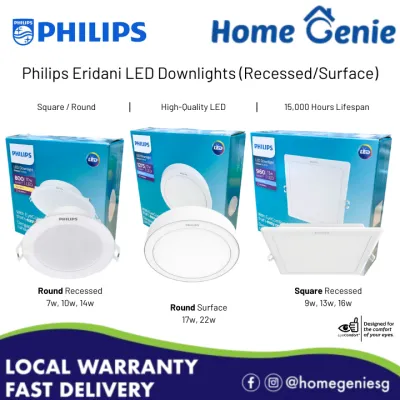
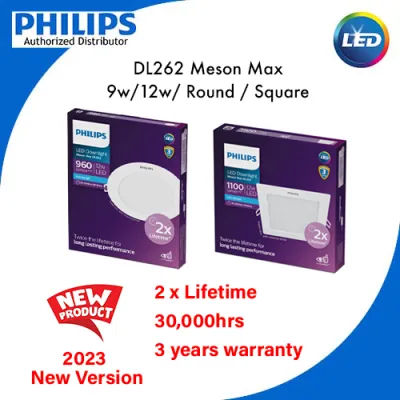
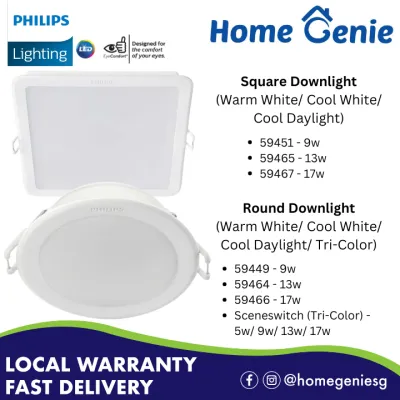
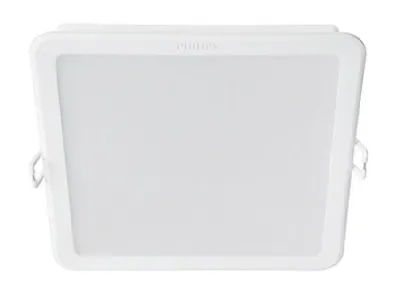
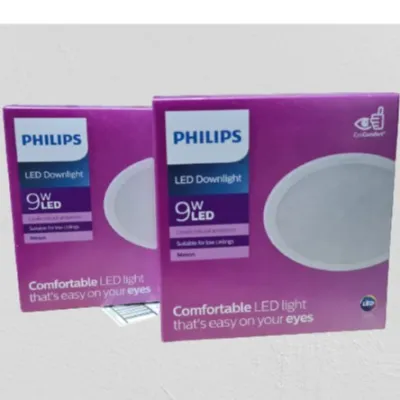
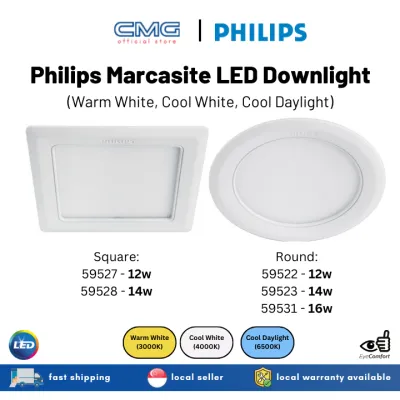
Prices are valid at publication and may change. Please refer to the product page for the latest price.
Before purchasing any fixture, always check the product specifications for the exact depth or thickness. A slim profile of 20 to 40 millimeters keeps the light close to the concrete slab, ensuring that tall occupants and high wardrobe doors have plenty of clearance. This low-profile design allows the square shape to blend seamlessly into the ceiling plane rather than protruding awkwardly into the living space, making the room feel larger and more cohesive.
Matching Light Dimensions to Room Area
The physical footprint of your square LED light should scale with the floor area of the room to maintain balanced proportions. A light that is too small will look lost on a large ceiling, while an oversized fixture can visually overwhelm a compact room, making the walls feel as though they are closing in.

For smaller spaces such as standard HDB bedrooms, study rooms, or utility areas, a square fixture with side lengths between 300 and 400 millimeters is highly effective. This size provides sufficient light coverage without dominating the ceiling. It fits neatly into the center of the room, aligning well with typical bedroom layouts and wardrobe placements. A single fixture of this size is usually more than enough to illuminate a standard 9 to 12 square meter bedroom.
In larger communal areas like living rooms or dining spaces, a single small fixture is rarely sufficient to provide even illumination. For these zones, a larger square fixture measuring 500 to 600 millimeters on each side can serve as a central design element. Alternatively, installing multiple smaller square lights spaced evenly across the ceiling can distribute light more uniformly, preventing harsh shadows in the corners of the room and creating a more balanced visual environment.
To calculate the ideal fixture width, a practical guideline is to measure the room’s width and length in meters, add those two numbers together, and multiply the sum by ten to get a target fixture width in millimeters. For example, a room measuring 3 meters by 3 meters would suggest a fixture width of approximately 600 millimeters, which can be split into multiple smaller units or met by a single balanced fixture depending on your layout preferences. This simple formula helps prevent the common mistake of buying a fixture that is disproportionate to the room’s footprint.
Key Specifications to Verify for HDB Compatibility
Beyond physical dimensions, successful installation in an HDB flat depends on verifying several technical and electrical specifications. Standard concrete ceilings in HDB flats present specific mounting conditions that differ from drywall or plasterboard ceilings commonly found in private developments.
First, inspect the existing ceiling junction box and wiring setup. Standard HDB flats typically feature a central concrete junction box. Ensure the mounting bracket of the square LED light aligns with the screw holes of the standard ceiling box, or verify if you will need to drill new mounting holes into the concrete slab to secure the fixture. Some fixtures come with universal mounting brackets that accommodate various hole spacings, which simplifies the installation process significantly.
Next, evaluate the weight of the fixture against the load-bearing capacity of your ceiling. While lightweight plastic or aluminum square LED lights pose no structural risk, heavier glass or metal-framed fixtures must be securely anchored. Always use appropriate concrete wall plugs and screws rather than relying solely on the junction box screws to support the weight of the light. This ensures the fixture remains safely attached to the ceiling over years of use.
Finally, consider the lumen output and color temperature to enhance the perception of space. For a 2.6-meter ceiling, a high lumen output paired with a wide beam angle helps spread light horizontally across the ceiling, reducing dark spots that make a room feel smaller. Opting for a neutral white or warm white color temperature can create an inviting atmosphere without the harsh glare often associated with cool daylight fixtures, making the living space feel warm and open.
Installation Checks and Safety Boundaries
Working with electrical fixtures requires strict adherence to safety protocols to prevent personal injury or damage to your home’s electrical system. Before attempting any installation or replacement, you must isolate the power supply.
Always turn off the main circuit breaker at the distribution board (DB box) rather than relying solely on the wall switch. Use a reliable voltage tester to verify that the wires are completely dead before touching them. Inspect the existing wiring for any signs of degradation, such as brittle insulation or exposed copper, which must be addressed before mounting the new fixture. Ensuring a clean, safe connection is paramount to preventing electrical hazards.
Drilling into an HDB concrete ceiling requires care to avoid hitting embedded structural steel reinforcement bars or electrical conduits. Use a rotary hammer drill with a depth stop, and proceed slowly. If you encounter sudden resistance or metal shavings, stop drilling immediately and select an alternative mounting point to avoid damaging the building’s structure or utility lines.
If you are unsure about the wiring configuration, if the existing wires are damaged, or if the installation requires modifying the fixed electrical wiring of your home, stop immediately. In Singapore, any complex electrical work or modifications to fixed wiring should be handled by a licensed electrical worker (LEW) to ensure compliance with local safety standards and regulations.
Frequently Asked Questions (FAQ)
Can I use a suspended square LED light in an HDB bedroom?
Suspended or pendant-style square LED lights are generally not recommended for standard 2.6-meter HDB ceilings. A suspended fixture requires significant vertical clearance to prevent it from becoming a physical hazard for tall occupants or interfering with daily activities. To maintain safety and comfort, the bottom of any hanging fixture should sit at least 2.1 to 2.3 meters above the floor, which leaves very little room for suspension cables in a 2.6-meter space. If you prefer the look of a suspended light, reserve it for placement directly over a dining table where foot traffic is not an issue, or stick to a flush surface-mounted square LED profile for general bedroom lighting.
Do Philips square LED ceiling lights require an external driver?
Many modern Philips square LED ceiling lights feature an integrated driver, meaning the electrical components are housed entirely within the slim body of the fixture itself. This design simplifies installation, as you only need to connect the mains wiring directly to the fixture’s terminal block. However, some ultra-thin or recessed models may utilize an external driver. If your chosen model requires an external driver, you must ensure there is adequate space to house it, either within the ceiling junction box or inside a false ceiling cavity, while maintaining proper ventilation to prevent overheating. Always check the product specification sheet before purchase to confirm the driver configuration.

Community discussion
Share your experience or ask a question. Comments are reviewed before publication.