
A peaceful bedroom is a sanctuary designed for recovery, yet modern convenience often introduces subtle disruptors into this quiet space. One of the most common culprits is the bedside clock. Choosing an led clock digital display for your bedroom requires balancing clear nighttime visibility with the absolute necessity of pitch-black darkness for high-quality sleep. The ideal bedroom clock should not function as an unwanted nightlight; instead, it must integrate seamlessly into your sleep environment, offering highly customizable display settings and gentle waking mechanisms. By understanding how light and sound interact with human biology, you can select a digital timepiece that supports your circadian rhythm rather than disrupting it.
How Bedroom Lighting and Alarms Affect Your Sleep Cycle
Human biology is deeply synchronized with the natural cycle of light and darkness. When night falls, the brain naturally releases melatonin, a hormone critical for signaling to the body that it is time to rest. Exposure to artificial light sources—especially the short-wavelength blue light emitted by many standard digital screens—can suppress melatonin production, tricking the brain into thinking it is still daytime. This delay in melatonin release can significantly prolong the time it takes to fall asleep and reduce the overall duration of deep, restorative sleep phases.
The disruption does not stop with light; the auditory environment of your bedroom plays an equally critical role in how you start your day. Traditional alarm clocks often rely on abrupt, high-decibel beeping patterns designed to startle you awake. This sudden auditory shock can trigger a sharp spike in cortisol and adrenaline, elevating your heart rate and morning stress levels. Waking up abruptly from a deep sleep phase also induces severe sleep inertia—that heavy, groggy feeling that can persist for hours after leaving bed.
Products mentioned in this guide
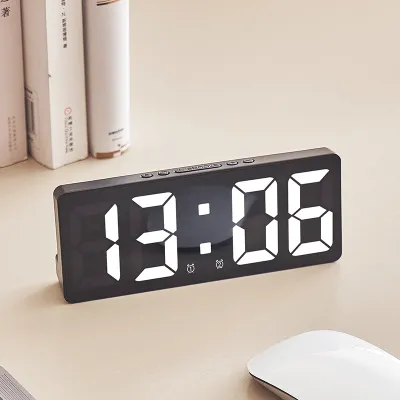
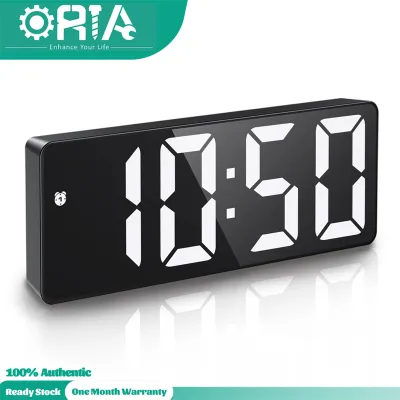
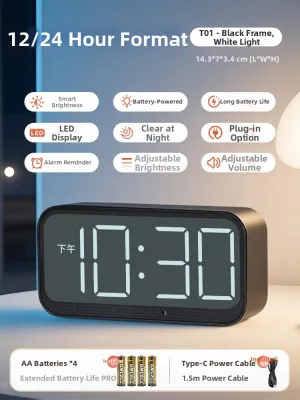
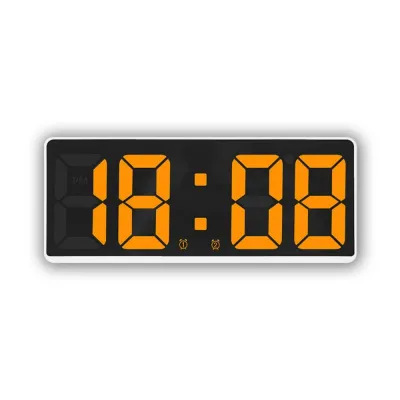
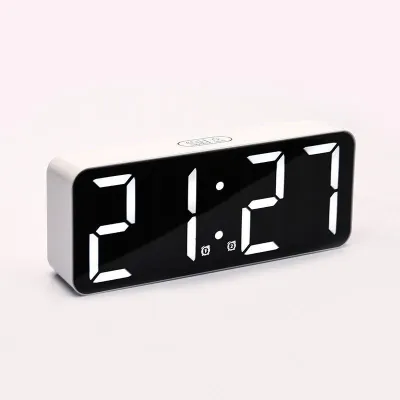
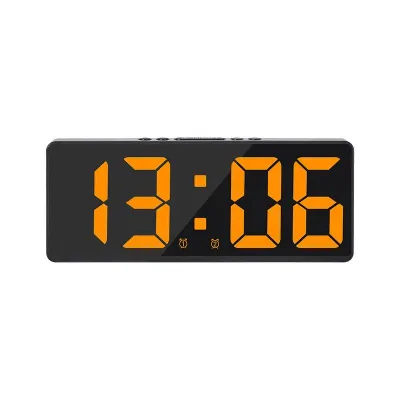

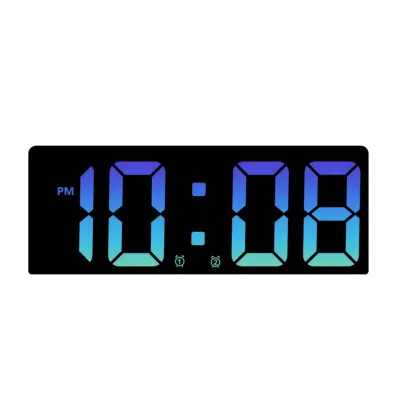
Prices are valid at publication and may change. Please refer to the product page for the latest price.
To protect your sleep hygiene, a bedroom timepiece must meet strict baseline requirements. It must preserve the natural darkness of your room throughout the night while providing a clear, non-disruptive way to check the time if you wake up. Additionally, it should facilitate a gentle transition into wakefulness, replacing sudden shocks with progressive cues. Balancing these factors is the key to choosing a sleep-friendly digital clock.
Choosing an LED Clock Digital Display for a Dark and Restful Bedroom
To maintain a restful sleep environment, the display of your bedroom clock must be highly adaptable to changing light conditions. A screen that is easily readable under bright midday sun is almost always too bright for a pitch-black bedroom at midnight.

Adjustable Brightness and Auto-Dimming
When evaluating digital clocks, prioritize models that offer extensive manual dimming ranges or continuous dial adjustments rather than just two or three preset levels. Many standard digital clocks remain surprisingly bright even on their lowest setting, casting a persistent glow across the nightstand. For highly light-sensitive individuals, look for clocks that feature a “zero-light” or complete display shut-off mode. This function turns the screen completely dark after a few seconds of inactivity, allowing you to wake the display temporarily with a soft tap or a clap when you actually need to check the time.
Alternatively, models equipped with integrated ambient light sensors offer hands-free convenience. These sensors detect when the bedroom lights are switched off and automatically scale the LED brightness down to its lowest threshold. When shopping, review the manufacturer’s specifications for the minimum brightness output. If the product documentation does not specify an ultra-low or micro-brightness level, the lowest setting may still be bright enough to disturb your sleep in a fully darkened room.
Screen Color and Night Mode Options
The color of the LED digits is just as important as the overall brightness. Cool light colors, such as stark white, bright blue, or green, have a high concentration of blue-wavelength light, which is highly disruptive to night vision and melatonin production. If you must use a clock with a white or blue display, ensure it features a dedicated night mode that automatically shifts the display to a warmer, dimmer hue after sunset.
For optimal sleep preservation, search for clocks that utilize warm color temperatures, such as deep red or amber. Red light has the least impact on your circadian rhythm and does not degrade night vision, making it the ideal choice for mid-night time checks. Avoid fixed, non-adjustable blue LED displays for primary bedroom use, as they are highly likely to interfere with your ability to fall back asleep after waking up in the middle of the night.
Anti-Glare and Viewing Angles
The physical construction of the clock’s screen face significantly influences how light behaves in your bedroom. Glossy, mirror-finish screens have become highly popular for their modern aesthetic, but they tend to reflect light from bedside lamps, streetlights, or passing cars, creating distracting glare. A matte screen finish is generally preferable, as it diffuses external light reflections and maintains readability without requiring high brightness levels.
Additionally, consider the viewing angles of the display. Some clocks are designed with limited horizontal or vertical viewing angles, or feature adjustable physical tilts. While wide viewing angles are excellent for living room clocks, a bedroom clock with a restricted viewing angle can be highly beneficial. By angling the clock slightly away from your direct line of sight, you can ensure the display is visible only when you actively look down at it, preventing the screen from casting a wide beam of light across your entire bed.
Alarm Options That Wake You Gently Without Disrupting Rest
The way you wake up sets the tone for your entire day. A sleep-friendly clock should ease you out of slumber gradually, working in harmony with your body’s natural waking mechanisms.
Gradual Wake and Sunrise Simulators
Gradual wake features are designed to mimic the natural progression of dawn. Sunrise simulator clocks utilize a built-in light source that slowly brightens over a period of 15 to 30 minutes before your scheduled alarm time. This gradual increase in ambient light signals your brain to reduce melatonin production and increase cortisol levels naturally, transitioning you into a lighter sleep stage before any sound is played.
For the auditory component, prioritize clocks that offer progressive volume settings. These alarms start at an almost imperceptible whisper and slowly build to your target volume over several minutes. This gentle approach is highly beneficial for both deep and light sleepers. Light sleepers are often awakened by the very first, quietest notes, sparing them from loud noises, while deep sleepers are gradually coaxed awake as the volume steadily increases.
Customizable Sound Profiles and Vibration
Traditional, harsh buzzer sounds are notorious for triggering a stress response upon waking. Modern bedroom digital clocks often replace these jarring beeps with customizable sound profiles, including natural soundscapes like rainfall, ocean waves, birds chirping, or gentle acoustic chimes. These organic sounds provide a much calmer transition to wakefulness.
If you share a bed with a partner who operates on a different schedule, look for clocks featuring dual-alarm configurations. This allows you to set separate wake times and distinct sound profiles for each person. For completely silent waking, some advanced models offer wireless vibration pads or bed shakers that slide under your pillow or mattress. These accessories vibrate gently to wake you directly through physical sensation, leaving your partner completely undisturbed.
Snooze Mechanics and Weekend Modes
The physical design of the snooze button can have a surprisingly large impact on your morning routine. Large, physical tactile buttons located on the top of the clock are easy to locate by touch alone, preventing you from having to open your eyes and look directly at a bright screen to silence the alarm. Conversely, touch-sensitive flat panels can be frustrating to navigate in the dark and often lead to accidental setting changes or missed alarms.
To maintain consistent sleep hygiene, look for clocks with programmable alarm schedules, such as “5-day” (weekday only), “2-day” (weekend only), or “7-day” modes. This feature prevents the common frustration of forgetting to turn off your early weekday alarm on Friday night, ensuring your weekend rest remains uninterrupted without requiring constant manual reprogramming.
Power, Size, and Smart Features for Nightstand Use
Beyond lighting and alarms, a bedroom clock must be practical, safe, and well-suited to the physical constraints of your bedside table.
- Battery Backup: Always check the power specifications of your chosen digital clock. In Singapore, where residential power is supplied at 230V AC, most digital clocks run on a 5V DC USB connection powered by a wall adapter. Ensure any USB adapter you use carries the appropriate safety certifications, such as the local Safety Mark, to guarantee electrical safety and prevent overheating. Furthermore, a reliable clock must feature an internal battery backup system (typically powered by a CR2032 coin cell or AAA batteries). This backup does not always keep the LED display illuminated during a power outage, but it ensures the internal microchip retains the correct time and alarm settings, preventing you from oversleeping if the power dips overnight.
- USB Charging Ports: Many modern nightstand clocks feature built-in USB charging ports, allowing you to charge your smartphone or tablet directly from the clock. While this is highly convenient for reducing the number of wall adapters plugged into your bedside outlet, it introduces a potential sleep hazard. Having your phone charging directly next to your pillow increases the temptation to check notifications late at night, exposing you to disruptive blue light. If you choose a clock with charging ports, practice strict sleep hygiene by placing your phone face down or utilizing "do not disturb" modes to keep the bed area distraction-free.
- Size and Footprint: Bedside tables in modern urban apartments, such as those in Singapore, are often compact. A bulky clock can quickly crowd your nightstand, leaving little room for essential items like a glass of water, reading glasses, or a book. Carefully measure your nightstand surface before purchasing and compare it against the clock's physical dimensions. A compact, low-profile design with a stable base is less likely to be accidentally knocked over when you reach to silence an alarm in the dark.
- Smart vs. Standalone: Smart clocks featuring Wi-Fi or Bluetooth connectivity offer automatic time synchronization, ensuring your clock is always accurate down to the second and automatically adjusts for any regional time changes. However, these smart features often require companion smartphone apps or continuous wireless connections, which can introduce digital clutter and notifications back into your sleeping space. Standalone digital clocks, which operate entirely offline, are often the superior choice for those looking to establish their bedroom as a dedicated screen-free, distraction-free zone.
Practical Tips for Placing and Setting Up Your Clock
Once you have selected the right digital clock, proper placement and setup are essential to maximize its benefits and protect your sleep quality.
- Optimal Distance and Angle: Position your clock at least an arm's length away from your pillow. Placing the clock too close to your head increases your exposure to any residual light emission and makes it too easy to hit the snooze button repeatedly without fully waking up. Ideally, the clock should be positioned at an angle where you can easily view the display by turning your head slightly, rather than having it face you directly. This setup prevents the display from shining light directly into your eyes while you are trying to fall asleep.
- Managing Cable Clutter: Bedside areas often accumulate multiple power cables for lamps, phones, and clocks, creating a cluttered environment that can elevate stress. Route your clock's power cable neatly behind the nightstand, keeping it clear of any pathways to prevent tripping hazards in the dark. Avoid running power cables near heating elements or trapping them tightly behind heavy furniture, which can damage the cord's insulation over time.
- Testing Before the First Night: Never wait until bedtime to configure your new clock. Set up the device during the day when you have ample light to read the manufacturer's instruction manual. Take the time to test the alarm volume, choose your preferred wake-up sound, and adjust the display dimmer to its lowest comfortable setting. By verifying these configurations beforehand, you can head to bed with full confidence that your clock will support a restful night and a peaceful morning.
Community discussion
Share your experience or ask a question. Comments are reviewed before publication.