
Choosing the right ceiling LED light for a Housing & Development Board (HDB) flat with a standard 2.6-metre ceiling height requires balancing physical clearance, light distribution, and visual proportion. In these standard Singaporean apartments, bulky or low-hanging fixtures can make a room feel cramped and visually cluttered. Opting for ultra-slim, flush-mount LED ceiling lights is the most effective way to maximize vertical headroom while ensuring bright, even illumination. By selecting fixtures that sit tight against the ceiling surface, you can create an open, airy atmosphere that enhances the perceived height of your home.
Understanding Clearance and Visual Proportions for 2.6m Ceilings
Standard HDB flats typically feature a floor-to-ceiling height of approximately 2.6 metres. This architectural constraint means that every centimetre of vertical space is highly valuable. Installing a fixture that protrudes too far downward poses a physical hazard and disrupts the visual flow of the room. To maintain a safe and comfortable living environment, a minimum clearance of 2.1 to 2.3 metres from the floor to the lowest point of the light fixture is generally recommended. This ensures that daily activities, such as stretching or changing bedsheets, can be performed without any risk of contacting the light.
Beyond physical safety, the visual weight of a ceiling fixture plays a significant role in how spacious a room feels. Heavy or thick fixtures draw the eye downward, effectively lowering the ceiling line in the occupant’s mind. Conversely, ultra-slim LED panels with a profile thickness of 1.5cm to 3cm blend almost seamlessly into the ceiling plane. This minimalist design reduces visual clutter, allowing the eye to travel across the ceiling uninterrupted. The psychological effect of this seamless integration is a stronger sense of openness, making even compact HDB bedrooms and living rooms feel significantly larger.
Products mentioned in this guide
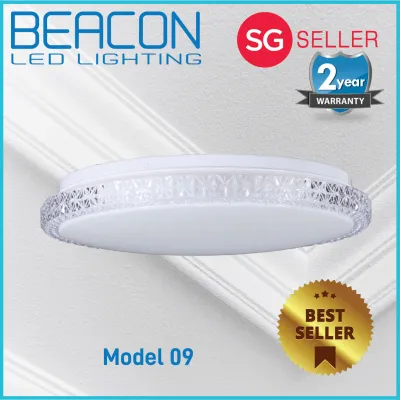
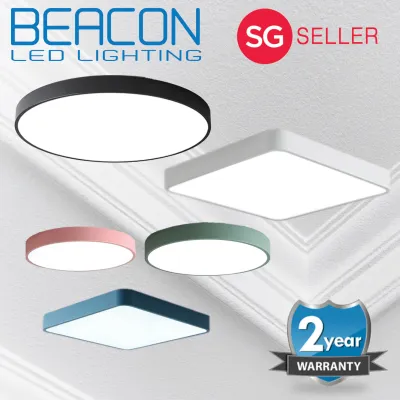
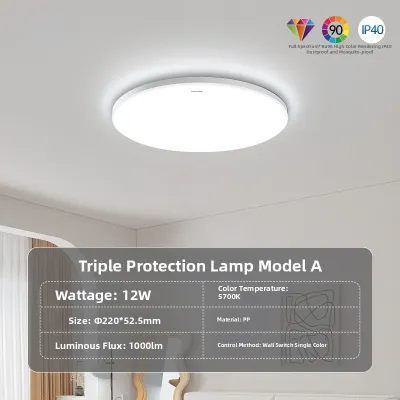
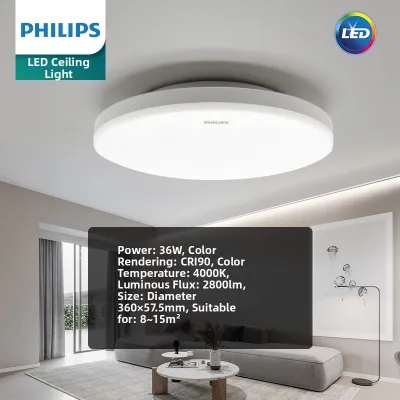
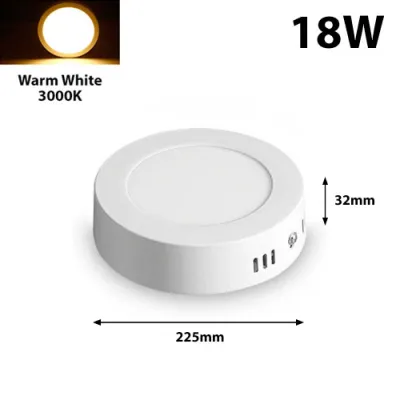
Prices are valid at publication and may change. Please refer to the product page for the latest price.
Matching Fixture Diameter and Brightness to Room Dimensions
Selecting the appropriate physical size and light output for your ceiling LED light involves analyzing the specific dimensions of each room. A common mistake is choosing a fixture based solely on its appearance in a showroom, which often has much higher ceilings. To determine a proportional fixture diameter, you can use a simple sizing guideline: measure the length and width of the room in metres, add these two numbers together, and multiply the sum by ten to get a recommended diameter range in centimetres. For instance, a standard HDB bedroom measuring 3m by 3m would benefit from a fixture with a diameter between 30cm and 40cm. A larger living room measuring 4m by 5m might require a fixture diameter of 50cm to 60cm, or a combination of multiple smaller fixtures to distribute light evenly.

Brightness should be evaluated by looking at the lumen output rather than the wattage, as modern LED efficiency varies. The required light output depends heavily on the room’s primary function and the amount of natural light it receives. Task-oriented spaces like kitchens and study rooms require higher illumination levels, typically ranging from 300 to 500 lumens per square metre. In contrast, bedrooms and living areas can comfortably operate with softer ambient lighting of 100 to 200 lumens per square metre.
Color temperature also influences both the functionality and the perceived height of a room. Cooler white tones, ranging from 4000K (cool white) to 6500K (daylight), mimic natural outdoor light and can make a space feel more expansive and clean. These tones are highly suited for utility areas, kitchens, and bathrooms. Warm white tones, typically around 2700K to 3000K, create a relaxing and cozy environment perfect for bedrooms and dining areas. However, because warm light can sometimes make a low ceiling feel slightly more enclosed, it is important to ensure the fixture provides sufficient brightness to counteract any potential dimness.
Flush-Mount vs. Semi-Flush-Mount: Evaluating Low-Clearance Options
When shopping for low-clearance ceiling lights, you will primarily encounter flush-mount and semi-flush-mount designs. Direct flush-mount fixtures are installed flat against the ceiling surface, leaving no gap. This design is highly advantageous for 2.6m HDB ceilings because it maximizes vertical clearance and casts light downward and outward in a wide, uniform beam angle. Because there is no space above the fixture, direct flush-mounts do not cast upward shadows on the ceiling, which helps maintain a clean and bright overhead plane.
Semi-flush-mount fixtures feature a small mounting bracket or stem that suspends the light body a few centimetres below the ceiling. While this design allows a portion of the light to bounce off the ceiling surface—creating a soft, indirect glow—it reduces the available headroom. In a 2.6m ceiling environment, even a small gap of 5cm to 10cm can make the fixture look visually intrusive. Furthermore, the upward light from a semi-flush fixture can highlight minor plaster imperfections, uneven paintwork, or structural joints on your HDB ceiling, creating distracting shadows.
Ceiling flatness is a crucial practical consideration when opting for direct flush-mounting. Because these fixtures sit tight against the concrete or plasterboard, any significant surface unevenness can result in visible gaps along the edges of the light. Before installation, inspect the ceiling area; if the surface is highly textured or uneven, you may need to apply a thin layer of plaster to level the mounting zone or select a fixture with a flexible foam gasket that conforms to minor surface variations.
Long-term maintenance and cleaning accessibility also differ significantly. Semi-flush-mount fixtures act as natural dust catchers, accumulating debris, cobwebs, and insects on their top surfaces over time. Cleaning them requires reaching into the narrow gap, which can be awkward. Direct flush-mount fixtures, particularly those with sealed, insect-proof designs, prevent dust and bugs from entering the interior housing. Maintenance is usually limited to a quick wipe of the exterior diffuser with a damp cloth, making them a much more practical choice for busy households.
Electrical Compatibility and Installation Safety Boundaries
Upgrading your HDB ceiling lights involves more than just selecting an aesthetically pleasing fixture; you must also ensure complete electrical compatibility and safety. Before purchasing any new LED panel, verify that the existing junction box or mounting point is structurally sound and capable of supporting the weight of the new fixture. While lightweight plastic LED panels pose little risk, larger glass or metal-framed flush-mounts require secure anchoring into the concrete ceiling slab using appropriate masonry plugs and screws.
Electrical specifications must be carefully checked to prevent circuit overloads or premature fixture failure. Ensure that the ceiling LED light is rated for Singapore’s standard residential voltage of 230V at a frequency of 50Hz. Additionally, check the maximum wattage rating of your existing lighting circuit. While LEDs consume significantly less power than legacy fluorescent or incandescent bulbs, replacing multiple fixtures on a single circuit still requires verifying that the total wattage remains well within the safe operating limits of your home’s miniature circuit breakers (MCBs).
Safety must always be the top priority during any electrical work. Before inspecting, cleaning, or replacing a light fixture, isolate the power supply by turning off the corresponding circuit breaker at your main distribution board (DB box). Simply turning off the wall switch is not sufficient, as residual current or improper wiring could still present a shock hazard. Use a reliable voltage tester to confirm that the wires are completely dead before touching them.
It is important to understand the legal and safety boundaries regarding DIY electrical work in Singapore. While a competent homeowner may perform basic, like-for-like replacements of existing light fixtures where no modification to the fixed wiring is required, more complex tasks must be handled by a professional. If your project involves installing a new junction box, running new electrical conduits, altering the fixed wiring layout, or troubleshooting complex dimming circuits, you must engage a licensed electrical worker (LEW). Hiring a qualified professional ensures that the installation complies with local electrical safety standards and prevents potential fire hazards.
A Practical Selection Checklist for Your Final Shortlist
To ensure you make an informed purchase, evaluate your shortlisted ceiling LED lights against a structured verification checklist. This systematic approach helps prevent common installation issues and ensures the selected fixtures meet your household’s specific needs.
First, confirm the exact physical dimensions of the fixture. Measure the total depth of the light housing and subtract it from your 2.6m ceiling height to calculate the precise clearance remaining. Ensure that the final clearance allows for comfortable movement of both people and furniture.
Second, evaluate the quality of the light diffusion. Look for fixtures equipped with high-quality opal or frosted diffusers that distribute light evenly across the room. Avoid fixtures with clear or poorly diffused covers, as they can produce harsh glare and hot spots that cause eye strain, especially in low-ceiling environments where the light source is closer to eye level.
Third, verify dimming compatibility if you plan to adjust the light levels. Not all LED drivers are compatible with standard wall dimmers. Check the product specifications to ensure the fixture is explicitly labeled as dimmable, and verify whether it requires a specific type of dimmer switch, such as a trailing-edge or leading-edge electronic dimmer, to prevent flickering or buzzing.
Fourth, check the Ingress Protection (IP) rating, particularly for fixtures destined for damp or humid areas. For HDB bathrooms and kitchens, select lights with at least an IP44 rating to ensure protection against water splashes and steam. For standard living rooms and bedrooms, a basic IP20 rating is generally sufficient.
Finally, review the energy efficiency ratings and the manufacturer’s warranty terms. Opt for fixtures with high energy-efficiency labels to minimize your monthly electricity bills. A comprehensive warranty of at least one to two years provides peace of mind and serves as a reliable indicator of the manufacturer’s confidence in the product’s durability.
Frequently Asked Questions (FAQ)
Is a ceiling fan with a light safe for 2.6m ceilings?
Installing a combination ceiling fan and light in an HDB flat with a 2.6m ceiling requires strict adherence to safety guidelines. To prevent accidental contact and ensure safe operation, local safety standards generally require the fan blades to be positioned at least 2.4 metres above the floor. In a room with a 2.6m ceiling, this leaves a maximum of 20cm for the entire fan body and light assembly. Standard rod-style ceiling fans are unsuitable for these dimensions as they hang too low. Instead, you must select ultra-low-profile, hugger-style ceiling fans designed specifically for low-ceiling environments, and verify that the integrated light kit does not extend below the safe clearance limit.
Can ultra-slim LED panels adequately light a large living room?
Yes, ultra-slim LED panels are highly capable of providing sufficient illumination for a large HDB living room, but success depends on your lighting layout. Relying on a single, centrally located flush-mount fixture can result in uneven light distribution, leaving the corners of a large room dim or shadowed. To achieve optimal brightness, implement a multi-point lighting strategy. You can pair a larger, high-lumen central flush-mount LED panel with strategically placed recessed downlights or slim track lighting along the perimeter of the room. This combination ensures even, shadow-free coverage and allows you to adjust the lighting levels based on different activities.
Community discussion
Share your experience or ask a question. Comments are reviewed before publication.