
Finding the right smart curtain lights in Singapore requires looking past flashy online advertisements and focusing on technical compatibility, safety certifications, and ecosystem integration. Because these decorative installations often run for hours and cover large vertical spaces, choosing a reliable brand is essential to avoid issues like flickering, premature LED failure, and electrical hazards. To make an informed decision, homeowners must evaluate how these devices connect to their existing smart home systems, whether they meet local electrical standards, and how easily they can be safely installed and maintained.
What Makes a Smart Curtain Light Brand Reliable?
A reliable smart curtain light brand is defined by its engineering quality, software support, and safety compliance rather than just its marketing presence. When evaluating options, physical build quality is the first major indicator of reliability. Premium brands use thick, durable wiring—often reinforced with clear PVC or silicone—to protect the delicate copper lines that carry power and data to each individual light-emitting diode (LED). In contrast, generic, unbranded alternatives frequently use thin, fragile wires that are easily severed during hanging or storage, leading to dead zones where sections of the curtain fail to light up.
Software stability is another critical differentiator. A smart curtain light relies heavily on its companion application to execute complex lighting patterns, schedule timers, and sync with music. Reputable brands invest in continuous software development, providing regular firmware updates that patch security vulnerabilities, improve connection stability, and introduce new lighting effects. Cheap, unbranded options often rely on outdated, generic apps that suffer from frequent connection drops, lag, and eventual abandonment, rendering the “smart” features useless over time.
Products mentioned in this guide
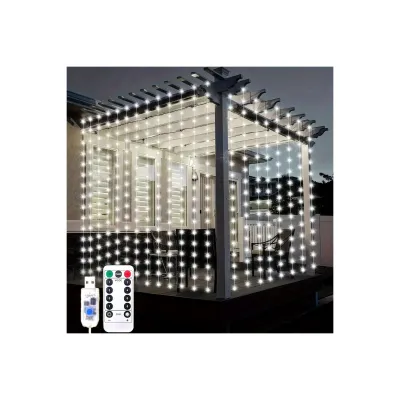
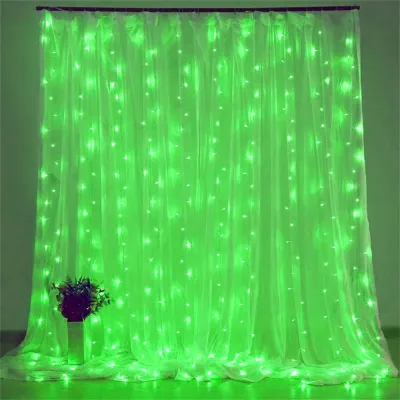
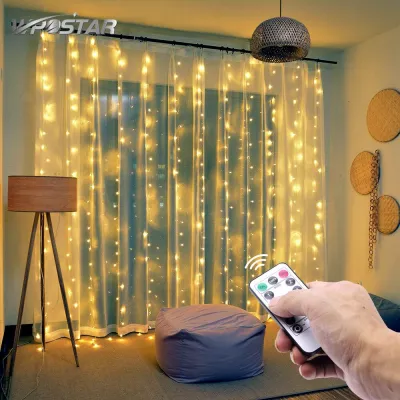
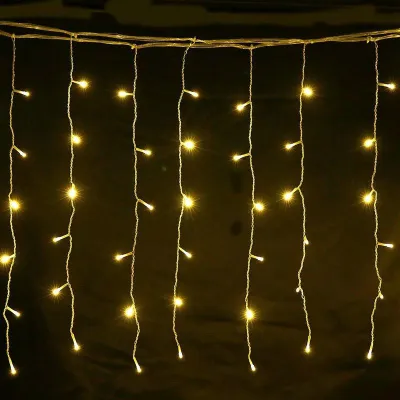
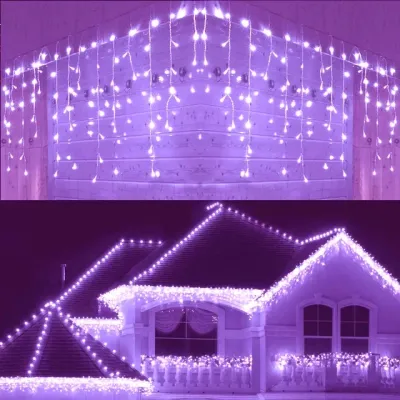
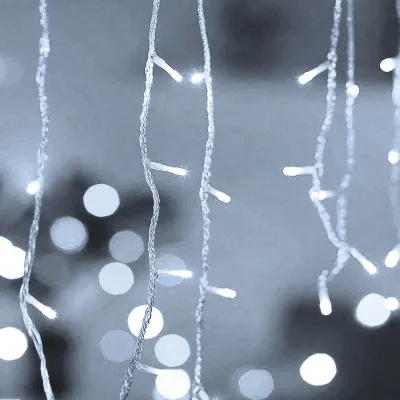
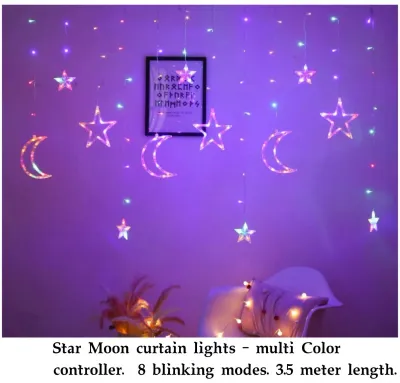
Prices are valid at publication and may change. Please refer to the product page for the latest price.
Color rendering accuracy and LED degradation are also key performance metrics. High-quality brands utilize calibrated RGB or RGBIC (Red, Green, Blue, Independent Control) chips that produce vibrant, accurate colors and smooth gradients without visible flickering. They design their power supplies to deliver consistent voltage, preventing premature LED degradation, which causes individual bulbs to dim, shift colors, or burn out prematurely. Additionally, reliable brands provide accessible customer service channels and clear local warranties, ensuring that if a controller or power adapter fails, you can easily obtain a replacement without shipping the product back overseas.
Choosing Brands by Smart Home Ecosystem
Before purchasing smart curtain lights, you must assess your current smart home infrastructure. Smart lighting is rarely a standalone purchase; it functions best when integrated into your existing home automation routines. Brand compatibility is largely dictated by the underlying software platform rather than the physical hardware. Choosing a brand that natively aligns with your preferred ecosystem ensures low latency, reliable voice control, and seamless automation.

Apple HomeKit and Matter-Compatible Options
For households deeply integrated into the iOS ecosystem, selecting brands that support Apple HomeKit or the newer Matter standard is highly recommended. Apple HomeKit enforces rigorous security and local-control requirements, meaning certified devices process commands locally within your home network whenever possible, resulting in near-instantaneous response times and enhanced privacy.
The introduction of the Matter standard has significantly expanded the options available to Singapore homeowners. Matter acts as a universal translator, allowing smart curtain lights from various manufacturers to work seamlessly across Apple Home, Google Home, Amazon Alexa, and Samsung SmartThings. When shopping, look for the official “Works with Apple Home” or “Matter” logos on the packaging. These certifications guarantee that the device has undergone testing to meet strict interoperability and security guidelines. While HomeKit and Matter-compatible brands often carry a premium price tag, the investment yields a highly stable, future-proof setup that does not rely on third-party cloud servers to perform basic daily schedules.
Tuya, Smart Life, and Broad Ecosystem Brands
A significant portion of the smart lighting market in Singapore consists of budget-friendly brands that operate on the Tuya or Smart Life platforms. These platforms act as a universal software backbone, allowing various hardware manufacturers to connect their devices to a single, shared app ecosystem. This approach makes smart curtain lights highly accessible, offering a wide variety of drop lengths, pixel densities, and custom patterns at a lower price point.
The primary benefit of Tuya-compatible brands is their ease of initial setup and broad compatibility with Google Assistant and Amazon Alexa. They also allow you to create automation rules that link your curtain lights with other Tuya-based smart plugs, sensors, and bulbs from different manufacturers. However, there are notable trade-offs. Relying on a massive, shared platform can sometimes lead to app clutter, delayed response times during peak server traffic, and varying hardware build quality across different brands.
To navigate this segment safely, verify whether the brand offers a dedicated, well-maintained proprietary app or relies entirely on the generic Smart Life application. Read recent user reviews specifically focusing on long-term Wi-Fi connection stability and the physical durability of the power controller. Opt for brands that provide clear specifications and have established local distributors in Singapore, as this indicates a higher commitment to product quality and after-sales support.
Essential Specifications to Verify Before Purchase
Even the most highly rated smart curtain light brand will fail to perform if it is incompatible with your home’s physical and electrical environment. In Singapore, the standard electrical grid operates at a voltage of 230V and a frequency of 50Hz. You must verify that any smart lighting system you purchase is rated for this input voltage. Importing devices designed solely for 110V markets (such as North America) without a compatible transformer will permanently damage the controller and poses a severe fire hazard.
Always check the plug type supplied with the product. In Singapore, household appliances must use a Type G 3-pin plug that complies with local safety regulations. Many smart curtain lights sold online come with USB connectors or two-pin European plugs. If the device uses a USB interface, verify the minimum current requirement (often 5V/2A or higher). Using an underpowered USB wall adapter can cause the lights to flicker, display incorrect colors, or fail to boot up entirely. For mains-powered units, ensure the power adapter carries the Enterprise Singapore Safety Mark, which indicates the power supply unit (PSU) has been tested and approved for safe local use.
Physical dimensions and environmental ratings are equally critical. Measure your window frame, balcony opening, or wall space accurately before purchasing. Smart curtain lights are sold in specific drop lengths (e.g., 2 meters by 2 meters) and cannot be easily customized.
Furthermore, identify the installation environment. If you plan to hang the lights on a covered balcony or patio, the lights and the controller must have an appropriate Ingress Protection (IP) rating. An IP44 rating is the minimum required for semi-outdoor areas, as it protects against splashing water from any direction. For fully exposed outdoor installations, look for IP65 or IP67-rated models. Standard indoor-rated lights (typically IP20) must never be used outdoors, as exposure to Singapore’s high humidity and sudden rainstorms will cause short circuits and electrical failures.
there is also the dimming method to consider. Smart curtain lights use internal pulse-width modulation (PWM) controllers to adjust brightness via their apps or voice assistants. You must never connect a smart lighting power supply to a traditional physical wall dimmer switch, as the chopped voltage from the wall switch will destroy the smart controller’s sensitive electronics.
Installation Safety and When to Seek Professional Help
Installing smart curtain lights is generally a straightforward process, but safety must remain your top priority. Before handling any electrical components, mounting brackets, or power cables, always perform a complete power isolation by switching off the relevant circuit breakers or unplugging the power adapter from the wall socket.
When hanging curtain lights, avoid pulling, stretching, or putting excessive tension on the vertical strands, as this can break the internal copper wiring or damage the solder joints. Use appropriate mounting hardware, such as adhesive hooks designed for cable management, curtain clips, or tension rods. Ensure that the power controller and the main power adapter are placed in well-ventilated areas. Do not wrap them in fabrics, tuck them tightly behind heavy curtains, or place them in enclosed spaces where heat can build up, as heat accumulation accelerates component degradation and increases fire risks.
Special care must be taken in damp environments or when working at heights. If you are installing lights along high ceilings, double-volume walls, or external facades, use a stable, secure ladder and have another person assist you. Never attempt to modify fixed electrical wiring, install new outdoor weatherproof sockets, or run permanent conduits yourself.
In Singapore, any modification to fixed electrical wiring or the installation of new electrical outlets must be performed by a licensed electrical worker (LEW). If the manufacturer’s installation instructions conflict with your home’s layout, or if you are unsure about the load capacity of your electrical outlets, stop immediately and consult a qualified professional electrician.
Where to Buy and Verify Authenticity in Singapore
To ensure you receive a genuine, safe, and fully supported product, purchase your smart curtain lights through authorized channels. The safest option is to buy directly from official brand websites or physical showrooms of authorized local lighting retailers. These outlets guarantee that the products are designed for the Singapore market, feature the correct Type G plugs or certified power adapters, and carry valid local warranties.
When shopping on major online marketplaces or e-commerce platforms, prioritize verified official flagship stores or local preferred sellers. Be highly cautious of unusually cheap listings from unverified third-party overseas sellers. These grey-market products often lack local warranty support, may feature outdated firmware versions that cannot connect to local servers, and frequently bypass local safety certifications.
Before finalizing your purchase, explicitly check the seller’s return policy and the terms of the local warranty. A reliable brand or distributor will clearly state the warranty duration (typically 12 to 24 months) and provide a local service center address or contact method. Investing a bit more upfront in an authorized purchase protects your home from electrical hazards and ensures you have recourse if the device encounters a technical fault.
Frequently Asked Questions (FAQ)
Can I cut or extend smart curtain lights to fit my window?
Unlike standard, single-color LED strips, smart curtain lights utilize complex digital data lines to control individual LEDs or specific zones (often referred to as addressable or RGBIC technology). Cutting these strands will permanently disrupt the data loop, causing the remaining lights to malfunction, flicker, or stop working entirely. It can also cause short circuits and will void your manufacturer’s warranty.
Similarly, attempting to extend a curtain light by splicing two sets together can overload the power supply unit (PSU) and the controller, leading to overheating or dim, uneven lighting. Always measure your space accurately before buying to select the correct factory-configured dimensions. If you have excess length, it is safer to fold or bundle the extra strands neatly using cable ties, provided you follow the manufacturer’s care guidelines and do not pinch the wires. If you are unsure about physical modifications, always consult the manufacturer’s manual or contact a qualified professional.
Community discussion
Share your experience or ask a question. Comments are reviewed before publication.