
Choosing the right smart frame to display digital art in your home requires a careful balance of screen technology, physical aesthetics, and content ecosystems. Unlike standard digital photo frames that primarily show family snapshots, art-grade smart frames are engineered to replicate the texture, depth, and color accuracy of physical paintings and illustrations. The ideal brand for your space depends on whether you prioritize a museum-like matte finish, a hybrid display that doubles as a television, or an open platform that allows you to upload your own digital creations without recurring fees.
By understanding the underlying display technologies and physical design elements, you can select a frame that seamlessly integrates into your home decor. In Singapore, where residential spaces range from high-rise HDB flats to modern condominiums, factors like ambient lighting, wall construction, and cable management play a crucial role in how realistic your digital gallery appears. Evaluating these aspects before making a purchase ensures that your investment enhances your living environment rather than looking like an out-of-place computer monitor on your wall.
What Defines an Art-Grade Smart Frame?
To understand what makes a smart frame suitable for fine art, one must look beyond basic screen size and smart home connectivity. Standard digital photo frames typically feature glossy screens that reflect windows, overhead lights, and room movement. These reflections immediately break the illusion of a physical painting, making the display look like a standard tablet or television. Art-grade smart frames, by contrast, utilize specialized matte or anti-glare screen treatments that scatter light, mimicking the non-reflective surface of paper, canvas, or matte photo paper.
Products mentioned in this guide

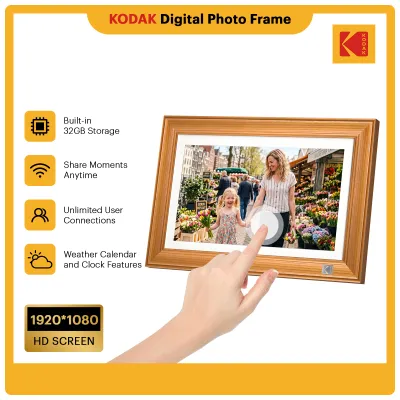

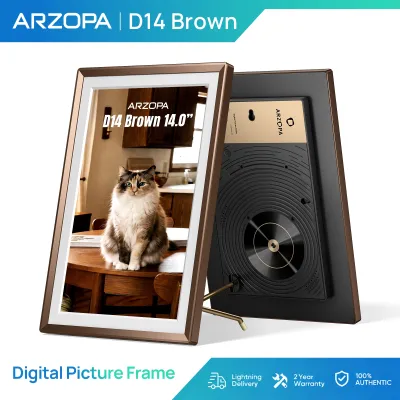

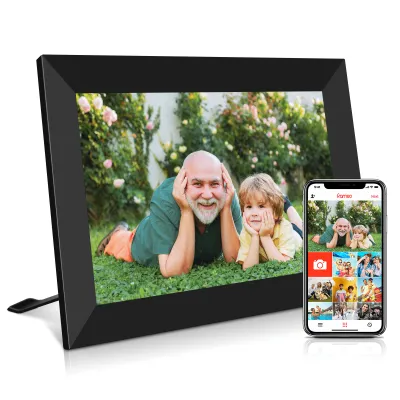
Prices are valid at publication and may change. Please refer to the product page for the latest price.
Color accuracy and color gamut support are equally critical when reproducing fine art. Classical oil paintings, watercolor illustrations, and modern digital designs rely on subtle gradients and precise color tones that standard consumer displays often fail to render accurately. An art-grade display is calibrated to cover a wider color spectrum, ensuring that deep blues, rich earth tones, and delicate skin tones are displayed exactly as the artist intended. Without this color fidelity, digital art can appear oversaturated, washed out, or artificially digital.
It is important to note that brand marketing terms for “art mode” or “canvas display” vary widely across the industry. Some manufacturers use these terms to describe simple software settings that lower screen brightness, while others use them to denote advanced hardware integrations like physical matte layers and specialized color-calibration engines. Because there is no industry-wide standard for what constitutes an “art-grade” display, readers must look past marketing labels and verify the actual hardware specifications of the screen before committing to a brand.
Core Display Technologies for Visual Fidelity
Achieving a realistic art display on a digital screen relies on several key hardware specifications. The first is the screen treatment, specifically the haze level of the anti-glare coating. High-quality art frames often use panels with a specific haze rating (typically between 25% and 40%) that diffuses incoming light without blurring the underlying image. This treatment ensures that even when placed opposite a bright window in a sunny Singapore living room, the artwork remains visible and retains its paper-like texture without harsh specular reflections.

Another essential technology is the ambient light sensor, which dynamically adjusts the display’s backlight based on the surrounding environment. A static screen brightness will look unnaturally bright at night and too dim during the day, destroying the illusion of physical art. Advanced smart frames use sensors that measure not only the intensity of the room’s light but also its color temperature (measured in Kelvin). This allows the frame to shift from a cool, bright display during midday sun to a warm, soft glow under evening incandescent lighting, matching the natural behavior of physical paper.
Resolution and pixel density (measured in pixels per inch, or PPI) determine how sharp the artwork appears from various viewing distances. For a frame mounted on a living room wall where viewers might stand just a meter away, a higher resolution like 4K (3840 x 2160) is highly beneficial for larger screen sizes, such as 27 inches or above. A lower resolution on a large screen can result in visible pixelation, which ruins the fine details of brushstrokes and pencil sketches. For smaller frames, a standard Full HD (1080p) resolution may suffice, provided the pixel density remains high enough to maintain sharp lines.
Finally, buyers should verify the panel type, color depth, and contrast ratios specified by the manufacturer. In-Plane Switching (IPS) panels are generally preferred for art displays due to their wide viewing angles, which prevent the colors and contrast from shifting when you view the frame from the side. A true 8-bit or 10-bit color depth panel is also crucial, as it allows the screen to display millions or billions of distinct colors, preventing the ugly color banding that can occur in smooth sky gradients or dark shadows. High contrast ratios help maintain deep, realistic blacks without turning dark areas into a gray, glowing haze.
Aesthetic and Physical Design Considerations
The physical design of a smart frame is just as important as its screen quality when it comes to blending into your home decor. Traditional art is defined by its framing, and digital art frames should be no different. Many leading brands offer interchangeable magnetic bezels made from authentic materials like solid wood (such as walnut, oak, or maple) or textured metals. These bezels snap onto the metal chassis of the display, allowing you to easily update the frame’s style to match changes in your interior design or seasonal decor.
Orientation flexibility is another practical consideration for displaying a diverse art collection. While some artworks are painted in landscape orientation, others require a portrait layout. High-quality smart frames feature built-in orientation sensors (gyroscopes) that automatically detect whether the frame is mounted horizontally or vertically, adjusting the user interface and artwork scaling accordingly. When selecting a brand, check if the included mounting bracket supports easy rotation, or if you will need to unmount and re-mount the hardware to change the orientation.
The visual impact of power cables is a common challenge when wall-mounting digital art. A thick, black power cord hanging down a clean wall immediately signals that the artwork is an electronic device. To combat this, some brands design their frames with ultra-thin, transparent power cables that can be easily painted over or hidden against light-colored walls. Other designs utilize a separate connection box that houses the power supply and input ports, running a single, nearly invisible cable to the frame itself, which allows the display to sit completely flush against the wall like a traditional picture frame.
Content Ecosystem and Art Curation Features
Beyond the physical hardware, the software and content ecosystem of a smart frame brand dictate your daily user experience. Many premium brands operate on a subscription-based model, offering access to vast digital libraries containing thousands of classic masterpieces from renowned museums, as well as contemporary works from independent artists. If you want to regularly rotate through famous paintings by Van Gogh, Monet, or Da Vinci, a brand with a well-curated, licensed subscription service is highly advantageous, though you must factor the ongoing monthly or annual fee into your budget.
For users who prefer to display their own creations, photography, or digital art purchased from independent online marketplaces, an open-ecosystem brand is more suitable. These frames allow you to upload files directly via a mobile app, web browser, or local USB storage without requiring an active subscription. When evaluating open platforms, pay close attention to the companion app’s usability, cloud storage limits, and how the software handles different file formats (such as JPEG, PNG, or HEIC) and aspect ratios.
Advanced software features can also enhance how digital files are rendered on the screen. Some platforms include digital matting options, allowing you to add a virtual cardboard border around your artwork with customizable widths and colors to simulate a professionally framed print. Other software suites use rendering algorithms to subtly enhance the contrast of brushstrokes, giving oil paintings a more three-dimensional appearance. Understanding how a brand’s software processes and crops your uploaded images is essential for achieving a polished, professional look.
Installation, Power, and Wall Safety Checks
Installing a large, heavy smart frame requires careful planning to ensure both aesthetic appeal and structural safety. In Singapore, residential wall construction varies significantly. While older HDB flats and some condominiums feature solid concrete or structural brick walls, newer developments may utilize drywall partitions in certain areas. Before mounting your frame, you must identify the wall material and use the appropriate mounting hardware. Solid concrete walls require a rotary hammer drill, masonry drill bits, and heavy-duty wall plugs, whereas drywall installations require locating wooden or metal studs or using specialized hollow-wall anchors.
Managing the power supply safely is another critical step in the installation process. Because smart frames require continuous electrical power, you must plan how to route the cable to the nearest electrical outlet. For a non-invasive installation, surface-mounted cable trunking or paintable cord covers offer a neat solution that is ideal for renters. If you prefer a completely hidden, cable-free look, the power cable can be routed behind the wall. However, running high-voltage cables inside wall cavities can pose safety hazards and must comply with local building codes.
In Singapore, any fixed electrical work, such as installing a new recessed outlet behind the frame or routing electrical wiring through wall cavities, should be performed by a licensed electrical worker (LEW) or a qualified professional. Attempting to modify fixed wiring without the proper training can lead to electrical hazards, short circuits, or fire risks. Always ensure that the power is completely isolated at the main distribution board (breaker) before attempting any electrical checks or installations, and consult the manufacturer’s manual for specific voltage and wattage requirements.
Building Your Conditional Shortlist of Smart Frame Brands
To help you navigate the market, you can organize your search around three main categories of smart frame brands, matching them to your specific home decor priorities and technical requirements. The first category consists of dedicated, art-first brands. These manufacturers design their products from the ground up for art reproduction, featuring high-quality matte screens, advanced ambient light sensors, and extensive subscription-based museum partnerships. This category is ideal for art enthusiasts who want the most realistic, non-reflective gallery experience and are comfortable paying a subscription fee for curated content.
The second category comprises hybrid TV-and-art displays. These are full-featured smart televisions that transition into an art-display mode when turned off. They typically offer larger screen sizes, high-brightness QLED or LED panels, and robust smart home integration. While they may not feature the same ultra-matte, paper-like texture as dedicated art frames, they are highly versatile and perfect for multi-use living spaces where a single screen must serve as both an entertainment hub and a decorative focal point.
The third category includes open-ecosystem and photography-focused frames. These brands prioritize user-uploaded content, offering seamless integration with personal cloud storage, social media, and digital art files without forcing you into a monthly subscription. They are highly suited for digital artists, photographers, and tech-savvy users who want complete control over their display content. When building your shortlist, cross-reference these brand categories with your local installation environment, ensuring the product supports Singapore’s standard 230V electrical system and fits your wall space.
Frequently Asked Questions (FAQ)
Do smart frames consume a lot of electricity when left on all day?
While smart frames do consume electricity continuously, their power consumption in art mode is typically much lower than during active video playback or standard television viewing. Most art-grade frames utilize energy-saving features, such as LED backlighting and ambient light sensors that lower the screen’s brightness in dimmer rooms, reducing power draw. To minimize electricity usage, look for brands that include built-in motion sensors or programmable timers, which automatically turn the display off when the room is empty or during sleeping hours.
Can I use a standard digital photo frame for displaying fine art?
You can use a standard digital photo frame to display fine art, but the visual results are often less convincing than those of a dedicated art frame. Standard photo frames usually feature glossy screens that create distracting reflections, narrower viewing angles that distort colors when viewed from the side, and lower color accuracy. Dedicated art frames are specifically engineered with matte, anti-glare coatings and advanced color calibration to replicate the texture and appearance of physical mediums like canvas and paper.
How do I hide the power cord for a wall-mounted smart frame?
Hiding the power cord can be achieved through several methods depending on your living situation and budget. For a quick and non-invasive solution, you can use paintable, surface-mounted cable trunking that blends into your wall color. For a completely seamless, professional look, you can have the power cable routed behind the wall or install a recessed electrical outlet directly behind the mounting bracket. In Singapore, any modifications to fixed electrical wiring or in-wall routing should be carried out by a licensed electrical worker (LEW) to ensure compliance with local safety regulations.

Community discussion
Share your experience or ask a question. Comments are reviewed before publication.