
Switching to solar garden lights eliminates the direct electricity consumption of your outdoor fixtures, effectively reducing their grid power costs to zero. However, determining your actual financial savings requires looking beyond the promise of “free” solar energy. To find your true return on investment, you must balance the running costs of traditional wired lighting against the upfront purchase prices, battery degradation cycles, and localized sunlight conditions of your outdoor space.
Baseline: Calculating the Energy Use of Wired Garden Lights
To understand how much you can save, you first need to establish what your current or planned wired outdoor lights cost to run. Begin by identifying the exact wattage of your fixtures. You can find this value printed on the product labels, the original packaging, or the manufacturer’s specification sheet.
Next, estimate how many hours these lights operate each day. This duration typically depends on seasonal daylight variations, your personal outdoor routines, or automated timer settings. For instance, security lights or pathway illumination might run from dusk until dawn, while decorative patio lights might only be active for a few hours in the evening.
Products mentioned in this guide
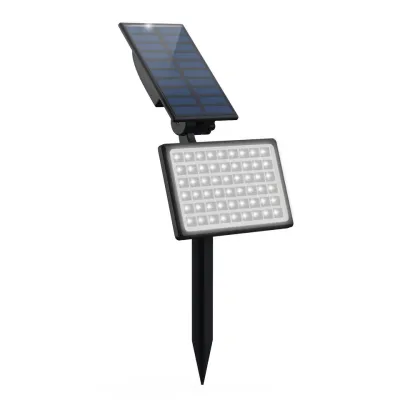
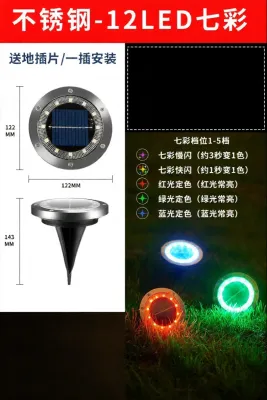
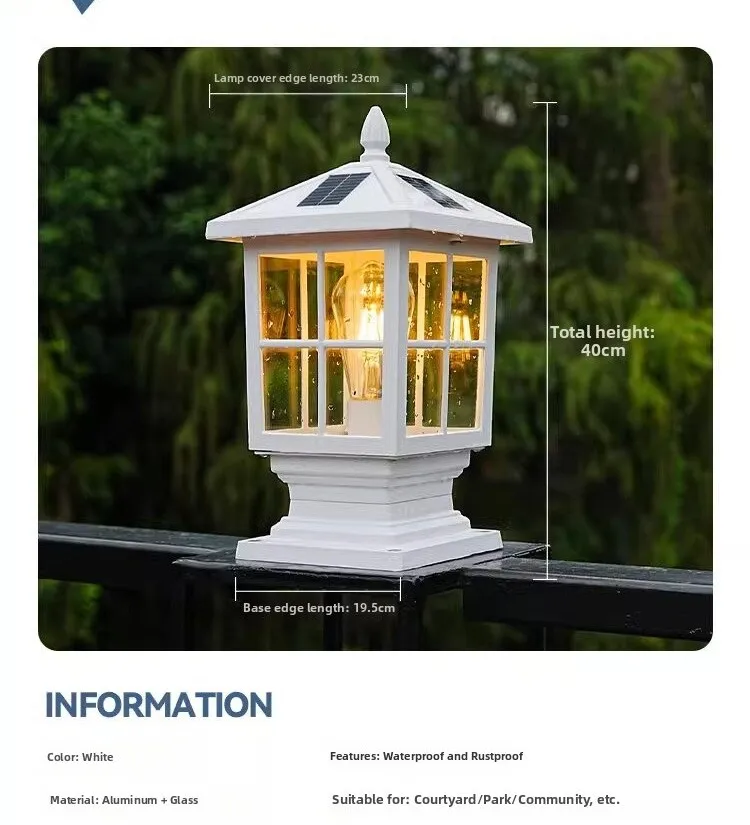
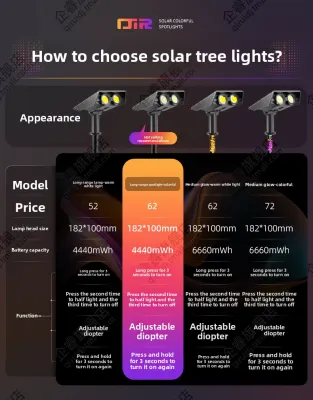

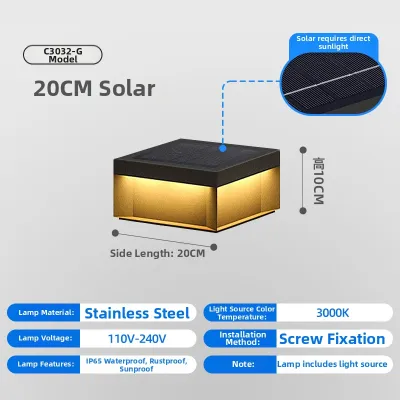
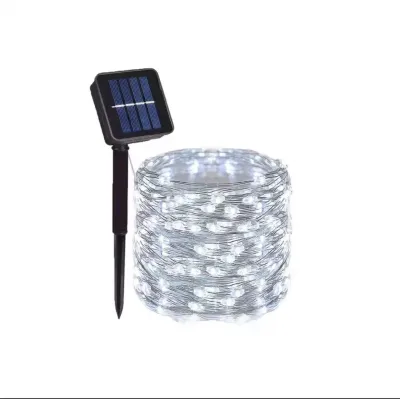
Prices are valid at publication and may change. Please refer to the product page for the latest price.
Once you have these two figures, you can calculate the daily energy consumption in kilowatt-hours (kWh). Multiply the total wattage of all your outdoor fixtures by the number of daily operating hours, then divide the result by 1,000. This standard metric aligns directly with how utility providers measure and bill your household electricity consumption.
The Hidden Costs Behind "Free" Solar Garden Lights
While solar garden lights do not draw power from your electrical panel, they are not entirely free to operate over their lifespan. These fixtures rely on an integrated solar panel to convert sunlight into electrical energy, which is then stored in a built-in rechargeable battery. Because their performance depends entirely on this cycle, panel placement and exposure angles are critical to achieving a full charge.

Over time, the components within solar units inevitably degrade. Rechargeable batteries, typically nickel-metal hydride (NiMH) or lithium-ion (Li-ion), lose their capacity to hold a charge after a certain number of cycles and require periodic replacement. Additionally, exposure to harsh outdoor elements can cause the protective plastic over integrated solar panels to cloud or yellow, eventually requiring you to replace the entire fixture.
Environmental limitations also play a significant role in your overall savings. If your garden features heavy shade, or if you experience prolonged overcast weather, solar lights may fail to charge fully. In these scenarios, you might find yourself relying on supplementary wired lighting to maintain adequate visibility, which directly impacts your projected energy savings.
How to Calculate Your Real Electricity Savings in S$
To determine your actual financial savings, you can use a straightforward comparison framework. First, calculate the annual cost of running your wired lights. Multiply your calculated annual kilowatt-hour usage by your current residential electricity tariff, which you can locate on your latest utility bill or by checking the official Energy Market Authority website.
Next, subtract the annualized maintenance costs of your solar alternatives. This includes the price of replacement batteries and a prorated portion of the initial fixture cost, spread over the expected lifespan of the units. The resulting figure represents your net annual savings in S$.
To find your break-even point, compare this net annual saving against the upfront purchase price of the solar lights. If the initial cost of the solar fixtures is lower than the expense of running and installing wired lights over a two-to-three-year period, the switch represents a positive return on investment.
When Does Switching to Solar Actually Make Financial Sense?
Evaluating your specific landscaping conditions is essential before making the investment. Solar lights require direct, unobstructed sunlight to perform optimally. Take time to observe your garden throughout the day, identifying potential shade cast by boundary walls, neighboring buildings, or dense tree foliage that could block the panels.
The physical layout of your property also dictates the financial viability of each system. Installing wired lighting in established gardens often requires extensive trenching, conduit laying, and professional cabling to protect against moisture. Because fixed outdoor wiring in damp environments carries electrical risks, safety standards require power isolation at the main distribution board and installation by a licensed electrical worker. These professional labor and material costs can make plug-and-play solar stakes highly attractive by comparison.
However, you must balance these financial advantages against your functional requirements. Solar lights generally offer lower and less consistent lumen output than wired alternatives. If your primary goal is high-intensity security lighting or precise spatial effects, a wired system remains the more reliable choice, whereas solar is ideal for soft, decorative pathway accents.
Frequently Asked Questions (FAQ)
Do solar garden lights perform reliably during the monsoon season?
Extended cloud cover and heavy rain during the monsoon season directly reduce the amount of solar radiation reaching the panels. This lack of sunlight results in incomplete battery charging, which significantly shortens the nighttime illumination runtime. To mitigate this, check product specifications before purchasing to verify the panel efficiency rating and battery capacity, ensuring the fixtures are designed to maximize charge retention during overcast periods.
How often should the rechargeable batteries be replaced?
Most rechargeable batteries in solar garden lights last between one and two years before their capacity degrades. You can identify battery failure when the lights exhibit a significantly reduced runtime, dim prematurely, or fail to turn on entirely after a clear day of sun. When replacing them, consult the manufacturer’s manual to verify the correct battery chemistry, voltage, and physical dimensions, and always isolate the unit’s power switch before opening the compartment.
Community discussion
Share your experience or ask a question. Comments are reviewed before publication.