
When selecting solar outdoor lights, you are confronted with a fundamental physical trade-off: high peak brightness versus extended runtime. Because solar-powered fixtures operate on a closed energy budget—relying entirely on the sunlight captured during the day—no single unit can deliver maximum continuous illumination and run reliably all night. Popular brands must optimize their products for either intense, short-duration security lighting or sustained, low-level ambient illumination.
To make an informed purchase, you must evaluate how a fixture balances these two performance metrics. High-lumen security lights rely on motion sensors to conserve energy, firing only when triggered, while pathway lights use low-wattage LEDs to stretch their battery reserves from dusk until dawn. Reliable brands distinguish themselves not by promising impossible performance, but by providing accurate specification sheets, utilizing durable battery chemistries, and integrating high-efficiency photovoltaic panels that maximize energy harvest even under less-than-ideal weather conditions.
Decoding Specs: How to Compare Lumens and Battery Capacity
Evaluating the technical specifications of a solar outdoor light requires an understanding of how light output, battery storage, and solar conversion efficiency interact. Marketing materials often highlight eye-catching numbers, but verifying the relationship between these components will help you determine how a fixture will perform in real-world conditions.
Products mentioned in this guide
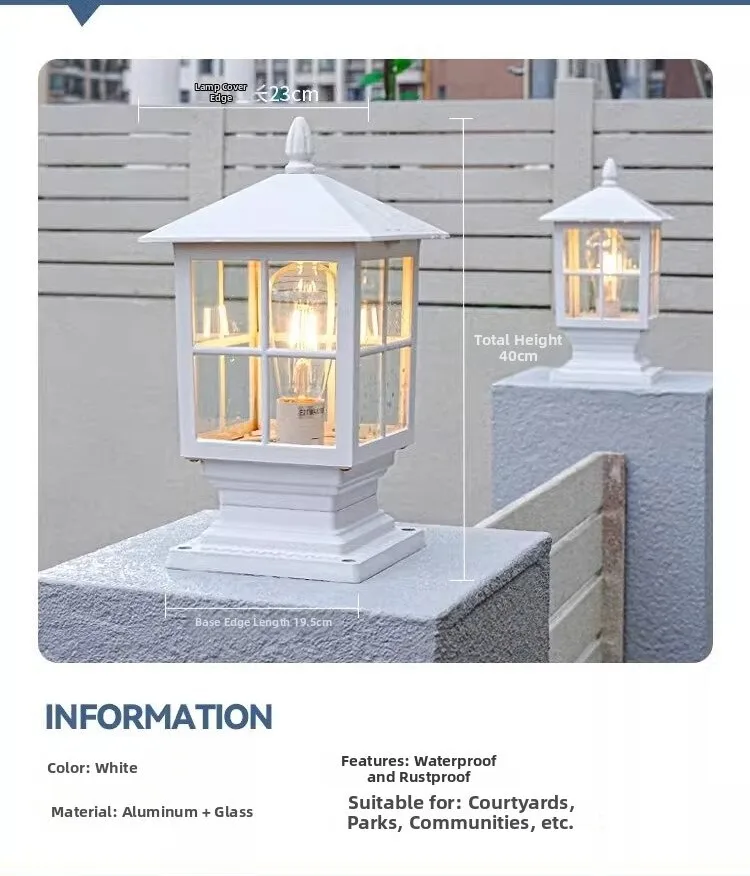
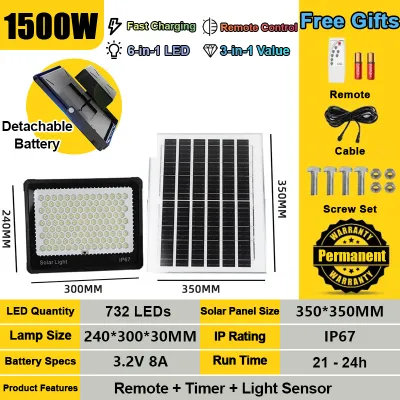
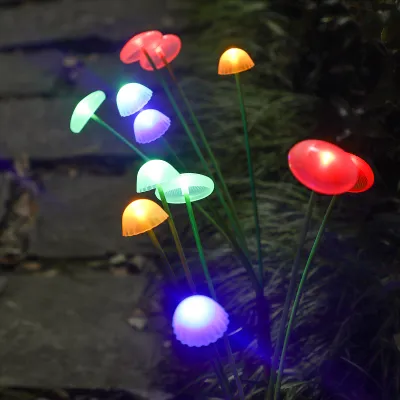
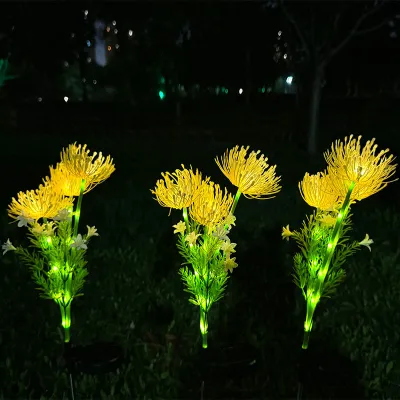
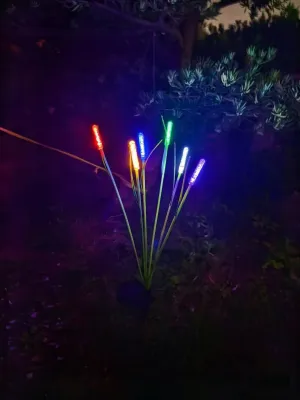
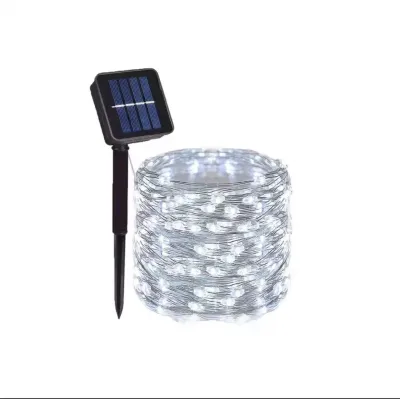
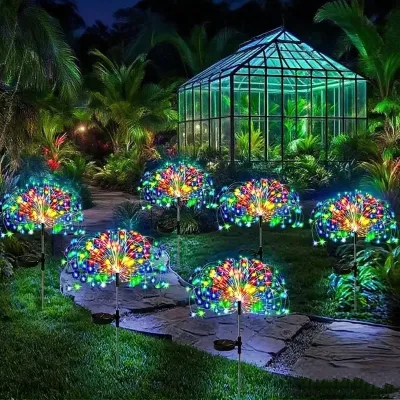
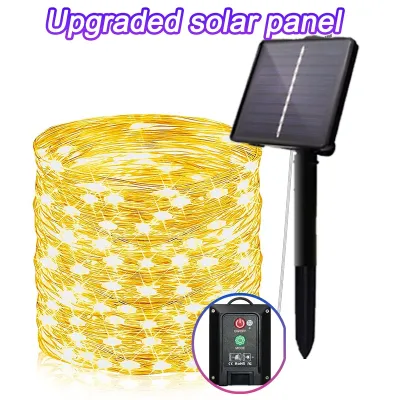
Prices are valid at publication and may change. Please refer to the product page for the latest price.
Lumens versus Lux
Lumens measure the total volume of visible light emitted by a source in all directions. Lux, on the other hand, measures luminous flux per unit area (one lux equals one lumen per square meter). While a brand may advertise a high lumen rating, the actual visual impact depends on how that light is distributed. A floodlight with a wide 120-degree beam angle spreads its lumens over a large area, resulting in a lower lux level but broad coverage. Conversely, a focused pathway light with a narrow 30-degree beam concentrates its light, producing high lux over a small footprint. When comparing brands, consider whether you need wide-area coverage or intense, localized illumination.
Battery Capacity and Chemistry
Battery capacity is measured in milliamp-hours (mAh) or watt-hours (Wh), representing the total electrical charge the battery can store. However, the battery chemistry dictates how efficiently this energy is discharged and how long the cell will last over years of daily cycling:
- Lithium Iron Phosphate (LiFePO4): Operating at a nominal voltage of 3.2V, LiFePO4 cells are the gold standard for premium solar fixtures. They offer exceptional thermal stability, resisting degradation in high ambient temperatures, and support 2,000 to 3,000 charge-discharge cycles before dropping to 80% of their original capacity.
- Lithium-ion (Li-ion): Typically operating at 3.7V, standard Li-ion batteries offer high energy density in a compact size. They are highly efficient but more sensitive to high temperatures and generally provide a shorter lifespan of 300 to 500 cycles.
- Nickel-Metal Hydride (NiMH): Commonly found in budget pathway lights, these 1.2V batteries have lower energy density and are prone to the "memory effect" if not fully discharged. They degrade more rapidly under constant heat, often requiring replacement within one to two years.
Solar Panel Wattage and Conversion Efficiency
An oversized battery is useless if the solar panel cannot generate enough power to charge it. Solar panels are classified into two main types:
- Monocrystalline Silicon: These panels feature a uniform, dark appearance and offer the highest conversion efficiency, typically between 18% and 22%. They perform significantly better in low-light and overcast conditions, making them ideal for maximizing energy harvest on cloudy days.
- Polycrystalline Silicon: Recognizable by their speckled blue appearance, these panels are more cost-effective to produce but have lower efficiency ratings of 13% to 16%. They require a larger physical surface area to generate the same wattage as a monocrystalline equivalent.
To verify compatibility, calculate the battery’s energy capacity in watt-hours (Wh = Voltage x Ah) and compare it to the panel’s wattage rating. A 3.2V, 5,000mAh (16Wh) battery paired with a 2W solar panel will require at least eight hours of peak, unobstructed sunlight to charge fully, assuming ideal conversion efficiency.
Ingress Protection (IP) Ratings
Because solar lights are permanently exposed to the elements, their IP rating is critical for protecting internal electronic components and battery housings. An IP rating consists of two digits: the first indicates protection against solid objects (0 to 6), and the second indicates protection against liquids (0 to 9). For outdoor solar lighting, look for a minimum rating of IP65, which guarantees the enclosure is completely dust-tight and protected against low-pressure water jets from any direction. For areas prone to heavy splashing or temporary pooling water, an IP67 rating ensures the fixture can withstand temporary immersion.
Performance Profiles: Security Floodlights vs. Pathway Lights
Solar outdoor lights are engineered for specific roles, and their performance profiles reflect different design priorities. Understanding these differences helps you match the right light to your specific space.

Security and Motion-Sensor Floodlights
Security floodlights are designed to deliver intense, high-lumen bursts of light to illuminate driveways, entryways, or blind spots. To support outputs ranging from 800 to over 2,000 lumens, these fixtures utilize high-capacity lithium-ion or LiFePO4 batteries and large, high-wattage solar panels.
Because continuous operation at such high brightness would drain even a fully charged battery within one to two hours, these lights rely on Passive Infrared (PIR) motion sensors. They remain in a low-power standby mode—either completely off or dimmed to a minor fraction of their peak output—until motion is detected, at which point they illuminate at 100% capacity for a pre-programmed duration (typically 20 to 60 seconds).
When evaluating security models, prioritize brands that offer adjustable motion sensitivity, customizable illumination timers, and dual- or triple-head physical designs. Furthermore, models that feature a detachable solar panel connected to the light fixture via a long extension cable are highly advantageous, as they allow you to mount the light head in a shaded area (such as under an eave) while placing the solar panel in direct sunlight.
Pathway, Garden, and Decorative Lights
Pathway and landscape lights are engineered for continuous, low-intensity illumination from dusk until dawn. Producing a modest output of 5 to 50 lumens, these fixtures focus on runtime and aesthetic appeal rather than raw power. The perceived color temperature of these lights—ranging from warm white (2700K to 3000K) to cool white (5000K to 6500K)—is a matter of personal preference and does not dictate the physical energy efficiency of the LED.
To achieve all-night runtime, pathway lights pair low-power LEDs with smaller capacity batteries, often integrated directly with a small solar panel on top of the fixture. Because the energy draw is minimal, these lights can easily run for 8 to 12 hours on a single day’s charge. However, they provide insufficient light for task-oriented activities or active security surveillance, serving instead to define borders, guide footsteps along walkways, and enhance nighttime curb appeal.
Because their solar panels are integrated directly into the light housing, placement is critical. If a pathway light is installed in the shadow of a wall, hedge, or tree, its daily charging capacity will be severely compromised, resulting in diminished brightness and premature shutoff during the night.
Real-World Performance: Weather and Installation Factors in Singapore
In tropical environments like Singapore, the performance of solar outdoor lights is heavily influenced by local climate conditions and architectural layouts. While manufacturers test their products under standardized laboratory conditions, actual performance depends on how you manage environmental variables.
Tropical Climate Challenges
Singapore’s climate is characterized by high relative humidity (often exceeding 80%), high ambient temperatures, and frequent heavy rainfall, particularly during the Northeast and Southwest monsoon seasons. High humidity accelerates electrochemical corrosion on non-treated battery terminals and wiring contacts. If moisture penetrates the fixture, it can cause rapid failure of the internal charge controller.
Furthermore, consecutive days of heavy cloud cover and rain drastically reduce solar irradiance. Under thick overcast skies, a solar panel’s output can drop by up to 80% compared to a clear day. This means that during the monsoon season, your solar lights may not receive enough energy to fully recharge, leading to shorter runtimes or dim output at night.
Shading and Architectural Obstructions
Urban and suburban properties in Singapore present unique shading challenges. High-rise HDB common corridors, deep roof eaves on landed properties, perimeter walls, and dense tropical landscaping (such as broad-leafed palms and heliconias) create significant shade.
Solar panels require direct, unshaded sunlight to charge efficiently. Ambient daylight or indirect shadow charging is highly inefficient and will not fully charge high-capacity batteries. Even partial shading on a single section of a solar panel can reduce its output by more than half due to the way photovoltaic cells are wired in series.
Actionable Installation Tips
To maximize the performance and lifespan of your solar outdoor lights in Singapore, apply the following installation practices:
- Equatorial Panel Angle: Because Singapore is located approximately 1.35 degrees north of the equator, the sun passes almost directly overhead year-round, shifting slightly north or south depending on the season. Mount your solar panels nearly flat (horizontal), but maintain a slight tilt of 5 to 10 degrees. This minor angle prevents standing rainwater from pooling on the glass and utilizes gravity to wash away dust, pollen, and bird droppings during downpours.
- Avoid Light Pollution: Do not place solar fixtures directly beneath active streetlights, HDB corridor lighting, or powerful indoor spillover lights. The integrated phototransistor (dusk-to-dawn sensor) inside the solar light detects this ambient light and may falsely determine that it is still daytime, preventing the fixture from turning on.
- Airflow and Heat Dissipation: Direct afternoon sunlight can cause solar panel and battery housing temperatures to soar. Ensure there is adequate clearance and airflow around the battery compartment to prevent overheating, which accelerates lithium-ion battery degradation and can, in extreme cases, trigger thermal runaway.
- Electrical Safety and Professional Boundaries: If you opt for hybrid solar-mains systems to guarantee continuous operation during monsoon seasons, ensure all electrical components comply with local safety regulations. For any fixed wiring modifications, installation in damp or wet areas, or work at height, always isolate the power supply at the main distribution board, follow the manufacturer's precise installation instructions, and engage a licensed electrical worker (LEW) to ensure compliance with local electrical safety standards.
Decision Framework: Choosing the Right Performance Profile
To select the most reliable solar outdoor light for your property, use this structured decision framework to match your spatial requirements and performance expectations with the correct product category.
Choose High-Brightness Security Lights if:
- You need to monitor and illuminate active zones such as driveways, side alleys, or main entry points.
- You require immediate, high-intensity illumination to deter intruders or assist with nighttime navigation.
- The installation site allows you to mount a separate solar panel on a rooftop or sunny wall while running a cable to the light fixture mounted under a shaded carport or eave.
- You are comfortable with light that remains off or dimmed until motion triggers the sensor.
Choose Long-Runtime Pathway Lights if:
- Your primary goal is continuous, low-intensity ambient lighting for garden borders, walkways, or architectural features.
- You prefer a soft, non-glaring aesthetic that remains active from dusk until dawn without sudden, jarring motion triggers.
- The installation fixtures can be placed in open garden beds, lawn areas, or fence tops that receive unobstructed daylight for most of the day.
- You do not rely on these fixtures for task lighting, reading, or active security surveillance.
- You are comfortable replacing budget-friendly units or batteries every few years due to outdoor exposure.
Verify First if:
- Your intended installation spot receives less than 4 to 6 hours of direct, unshaded sunlight daily. If the area is heavily shaded by buildings or dense foliage, standard integrated solar lights will perform poorly. In these scenarios, you should prioritize split-unit solar lights with long extension cables (allowing you to position the panel several meters away in a sunny spot) or consider installing low-voltage, hardwired LED lighting systems connected to a mains power source.
Final Pre-Purchase Checklist
Before purchasing any solar outdoor light, verify these two critical factors to protect your investment:
- Warranty Terms: Check the manufacturer's warranty documentation carefully. Many brands offer a multi-year warranty on the light fixture housing and LED elements but limit the warranty on the internal rechargeable battery to six months or exclude it entirely, as batteries are classified as consumable parts.
- Battery Replaceability: Inspect the product design to determine if the battery compartment is user-accessible and uses standard battery sizes (such as standard 18650 or 32700 cylindrical cells). Avoid completely sealed units where the battery cannot be replaced; once the battery naturally degrades after a few years of daily cycling, the entire fixture must be discarded, creating unnecessary electronic waste.
Frequently Asked Questions (FAQ)
Can I replace the battery in a solar outdoor light to improve performance?
Yes, you can replace the battery if the fixture features an accessible battery compartment. However, upgrading to a cell with a higher milliamp-hour (mAh) capacity will not improve the light’s runtime or brightness unless the integrated solar panel has a high enough wattage rating to fully charge that larger capacity during daylight hours. If the panel’s output is too low, the larger battery will remain permanently undercharged, resulting in no noticeable performance gain.
Why does my solar light's brightness decrease after a few hours?
Many reputable brands program smart power-management profiles into their charge controllers to prevent the battery from draining completely before morning. These systems are designed to run the light at 100% brightness for the first two to three hours of darkness, and then automatically dim the output to 30% or 50% for the remainder of the night. This dimming curve conserves energy and ensures that the fixture can maintain basic navigational lighting until dawn.
Do solar outdoor lights work effectively during prolonged rainy seasons?
Solar outdoor lights experience a significant drop in performance during prolonged rainy or overcast seasons because solar panels require direct solar irradiance to charge efficiently. Under heavy cloud cover, the charging current drops, preventing the battery from reaching full capacity. For critical security areas where consistent illumination is mandatory year-round, you should consider hybrid solar-mains systems or dedicated low-voltage hardwired LED fixtures.

Community discussion
Share your experience or ask a question. Comments are reviewed before publication.