
Choosing the right sensor for your outdoor solar security light depends entirely on your property layout, local weather conditions, and how much traffic passes by your home. Passive Infrared (PIR) sensors work well for standard, enclosed spaces like front porches or narrow driveways where you only want to detect direct human movement. Microwave sensors excel in large, open yards or complex layouts where detection needs to pass through light obstacles like foliage or thin wooden fences. Dual-technology sensors offer a highly reliable solution for high-security zones where you must minimize false alarms caused by wind, pets, or passing cars.
To make an informed decision, you need to understand how these technologies operate. A Passive Infrared (PIR) sensor functions by detecting changes in infrared radiation, which is essentially heat energy. Every living being, including humans and animals, emits body heat that a PIR sensor monitors within its field of view. When a warm object moves across the sensor’s grid, it detects a rapid change in infrared energy and triggers the light. Because this technology relies on heat signatures, it requires a direct, unobstructed line of sight to function correctly. Any physical barrier, such as a glass window, a thick bush, or a plastic sheet, will block the infrared radiation and prevent the sensor from triggering.
Microwave sensors, often referred to as radar sensors, operate on an active detection principle. Instead of waiting to receive heat signatures, a microwave sensor continuously emits high-frequency radio waves into the surrounding environment. These waves bounce off nearby objects and reflect back to the sensor. When a moving object enters the detection zone, it alters the frequency of the reflected waves, which the sensor registers as motion. Because radio waves can pass through non-metallic materials, microwave sensors can detect movement through glass, drywall, thin wood, and light foliage. This makes them highly sensitive, though it also means they can detect movement outside your property boundaries if not properly adjusted.
Products mentioned in this guide
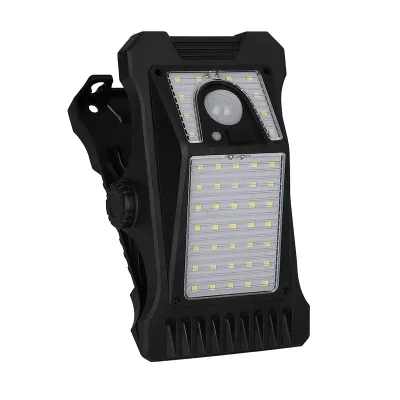
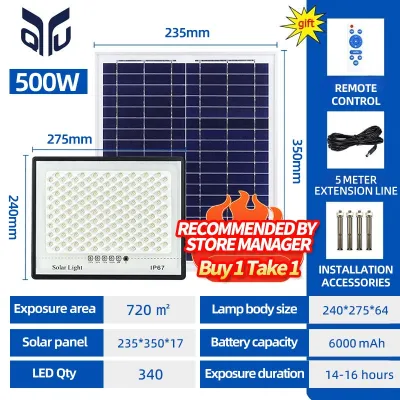
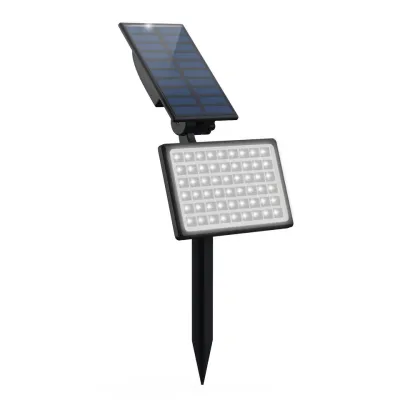
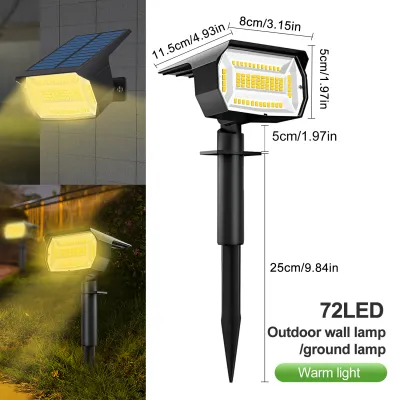
Prices are valid at publication and may change. Please refer to the product page for the latest price.
Dual-technology (Dual Tech) sensors combine both PIR and microwave detection methods into a single unit to maximize reliability. For a dual-technology solar light to turn on, both sensors must detect motion simultaneously or within a very short window. The PIR sensor must register a change in heat, and the microwave sensor must detect a physical shift in wave reflections. By requiring both triggers to activate, this technology prioritizes false-alarm reduction over maximum sensitivity. If wind blows a branch across the yard, the microwave sensor might detect the movement, but the PIR sensor will not detect a heat signature, keeping the light off and conserving battery power.
Key Performance Differences Across Sensor Types
When comparing these technologies, you must evaluate how they perform in real-world outdoor conditions. Detection range, angle, and speed sensitivity vary significantly between sensor types, and you should always verify the exact specifications on the product label before purchasing. Generally, microwave sensors offer a wider detection angle and a longer range than standard PIR sensors, making them highly responsive to fast-moving objects. However, this high sensitivity can be a double-edged sword depending on where you install the fixture.
Environmental factors play a massive role in how often your security lights will trigger unnecessarily. PIR sensors are highly stable in calm environments but can be fooled by sudden temperature changes, such as hot air currents, warm car hoods, or direct sunlight hitting the lens. They are generally excellent at ignoring wind-blown leaves because foliage does not emit body heat. In contrast, microwave sensors are highly susceptible to false triggers from moving tree branches, heavy rain, wind-blown debris, and even small animals. Because their radio waves can penetrate thin barriers, a microwave sensor mounted near a street might trigger every time a car drives past your fence.
Power consumption is another critical factor, especially for solar-powered fixtures that rely entirely on stored battery energy. Microwave sensors operate actively by continuously transmitting and receiving radio signals, which requires a constant flow of electricity. This continuous polling draws more standby power from the solar battery than a passive PIR sensor, which remains dormant until it detects a heat signature. If your solar panel receives limited daily sunlight, a microwave sensor might drain the battery quickly, especially during periods of consecutive cloudy days. Dual-technology sensors also require careful power management, as running two sensor modules simultaneously can increase standby power draw, though they offset this by reducing the energy wasted on false light activations.
The ultimate trade-off when choosing a sensor technology is between maximum detection coverage and the risk of nuisance activations. A highly sensitive microwave sensor ensures that no movement goes unnoticed, but it can lead to constant, annoying light cycles that disturb your neighbors and drain your battery. A PIR sensor offers localized, reliable detection but might miss an intruder who is wearing heavy, heat-insulating clothing. Understanding these performance characteristics allows you to match the sensor’s strengths to the specific demands of your outdoor environment.
Which Sensor Fits Your Specific Outdoor Space?
Selecting the right sensor technology requires a clear understanding of your property’s physical layout and security priorities. For standard residential spaces like front porches, narrow driveways, and enclosed entryways, a PIR sensor is usually the most practical choice. These areas typically have a clear line of sight, meaning the sensor can easily detect anyone approaching the door without being triggered by activities in the neighbor’s yard. Using a PIR sensor here ensures the light only activates when someone is physically present in the immediate area, keeping false alarms to an absolute minimum.

If you need to monitor a large open yard, a long pathway, or an area with dense landscaping, a microwave sensor is far more effective. Because microwave signals can penetrate light foliage, the sensor will still detect movement even if a bush partially blocks the line of sight. This technology is also ideal if you want to conceal the security light behind a decorative glass panel or inside a protective non-metallic enclosure. It provides broad, wide-angle coverage that ensures any movement across a large perimeter is immediately illuminated, making it excellent for expansive backyards or open commercial spaces.
For high-security zones, busy perimeters, or homes located close to public sidewalks and streets, a dual-technology sensor is a highly reliable option. If you have pets that roam the yard at night, or if wind-blown trees constantly trigger your current lights, a dual-tech sensor will solve these issues. By requiring both heat detection and physical movement to trigger the light, it filters out the vast majority of environmental noise. This ensures that your solar security light only turns on when a human-sized, warm object enters the designated area, preserving battery life and preventing light pollution.
To simplify your decision, you can use a straightforward conditional framework based on your specific installation site:
- Choose PIR if your target area is enclosed, has a clear line of sight, and you want to avoid false triggers from wind, street traffic, or neighboring properties.
- Choose Microwave if you need wide-angle coverage over a large, open area, or if you must detect motion through light obstacles like plants, glass, or thin wooden fences.
- Choose Dual Tech if you require high reliability in a high-traffic or high-wind area where eliminating false alarms is your primary concern.
- Verify first if your mounting surface restricts the sensor's orientation, as some models do not allow you to adjust the detection angle physically, which can limit their effectiveness.
Installation and Placement Checks for Reliable Detection
Proper installation is just as important as choosing the right sensor technology. To maximize detection accuracy, you must mount the fixture at the height and angle recommended in the manufacturer’s installation guide. PIR sensors generally perform best when mounted between two and three meters high, angled slightly downward to capture cross-body movement. Microwave sensors are less sensitive to mounting angles but still require stable positioning to prevent the fixture itself from vibrating in the wind, which can cause self-triggering.
When positioning your solar security light, take extra care to avoid common environmental interference. Never point a PIR sensor directly at heat sources like air conditioning exhaust vents, outdoor grills, or highly reflective surfaces like swimming pools and large glass windows. These surfaces can reflect sunlight or heat, causing the sensor to cycle on and off repeatedly. For microwave sensors, avoid pointing them toward busy public streets or shared fences where they might detect passing cars or neighbors walking in their own yards.
Because these are solar-powered fixtures, you must ensure the solar panel receives adequate direct, unshaded sunlight throughout the day. If your ideal sensor location is under a deep porch roof or shaded by mature trees, look for a solar security light with a detachable solar panel. This design allows you to mount the light fixture in the shaded area where security is needed, while placing the solar panel several meters away on a sunny roof or fence line. Always verify that the cable connections are tightly sealed against moisture to prevent water ingress.
After mounting the fixture, take the time to test and adjust the physical sensitivity and time-delay dials, which are usually located on the bottom or back of the sensor housing. Walk across the detection zone at various speeds to ensure the light triggers exactly when and where you want it to. If your installation requires working at significant heights, running fixed wiring for a hybrid solar-grid system, or mounting heavy fixtures to unstable surfaces, always isolate the power supply if applicable and consult a qualified electrician to ensure a safe and compliant installation.
Frequently Asked Questions (FAQ)
Can I adjust a microwave sensor to stop detecting street traffic?
Many microwave solar security lights feature sensitivity dials or range adjustment settings that allow you to reduce the detection radius. If your fixture has these controls, turning down the sensitivity can help prevent the radio waves from reaching beyond your property boundary. If physical dials are not available, you can try repositioning the fixture to angle the sensor downward, which limits how far the waves travel. Alternatively, placing a physical metal shield on one side of the sensor can block the radio waves from traveling in that specific direction, helping to isolate your detection zone.
Do dual sensor solar lights drain the battery faster?
Dual-technology sensors do consume slightly more standby power than single PIR sensors because they must keep two detection modules active. However, this minor increase in standby current is often offset by the significant energy savings achieved by preventing false alarms. A standard single-sensor light that triggers repeatedly throughout the night due to wind or passing cars will drain its battery far faster than a dual-tech light that only activates when a genuine target is detected. To ensure reliable performance, check the product specifications for battery capacity and look for models with larger solar panels.
Will a PIR sensor work if mounted behind a glass window?
No, a PIR sensor will not work if it is mounted behind a glass window or any other solid, transparent barrier. Glass blocks the infrared radiation (body heat) that PIR sensors rely on to detect motion. If you place a PIR solar light indoors pointing out a window, it will fail to trigger when someone approaches from the outside. If you must mount a security light inside a window or glass enclosure to detect outdoor movement, you must use a microwave sensor, as its radio waves can easily penetrate glass and other non-metallic materials.

Community discussion
Share your experience or ask a question. Comments are reviewed before publication.