
Quick Answer: Which Sensor Technology is More Reliable?
Choosing the most reliable motion sensor for a solar street light is not a matter of finding a single, universally superior technology. Instead, the right choice depends entirely on your specific installation environment, mounting height, and local climate conditions. Both passive infrared (PIR) and microwave sensors have distinct physical characteristics that dictate how they perform in real-world outdoor scenarios.
PIR sensors are highly effective for focused, close-range detection and are excellent at minimizing false alarms caused by wind-blown foliage or distant traffic. However, their sensitivity drops significantly in hot tropical climates. In places like Singapore, where ambient daytime and nighttime temperatures frequently hover between 30°C and 35°C, the thermal contrast between a moving human body and the surrounding environment is minimal, which can cause PIR sensors to miss motion or experience a dramatically reduced detection range.
Microwave sensors offer a much wider, more consistent detection area that remains completely unaffected by ambient heat. They emit high-frequency radio waves to detect movement, making them highly reliable for large open spaces or high-pole installations. The trade-off is their high sensitivity; microwave signals can penetrate non-metallic objects, meaning heavy tropical rain, swaying tree branches, or nearby moving vehicles can trigger false alarms and potentially drain the solar battery if the sensor is not properly calibrated.
Products mentioned in this guide
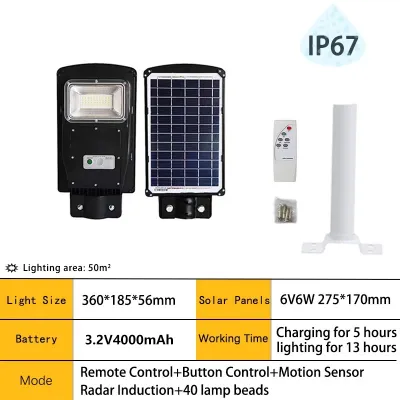
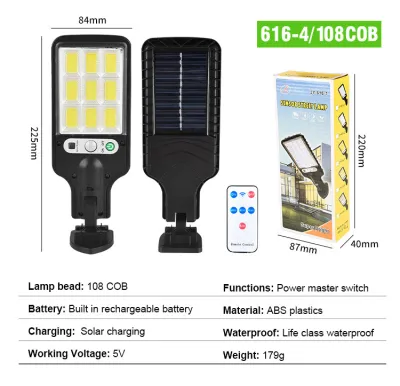
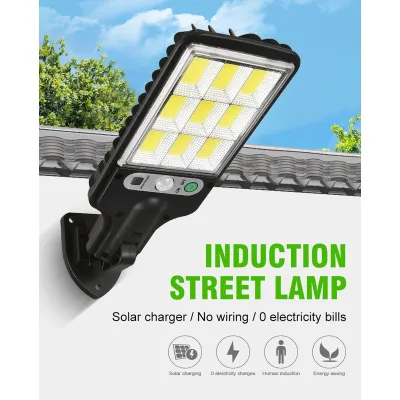
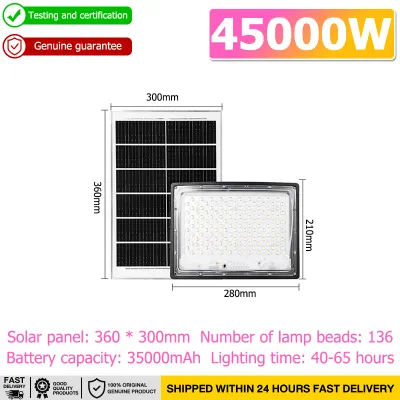
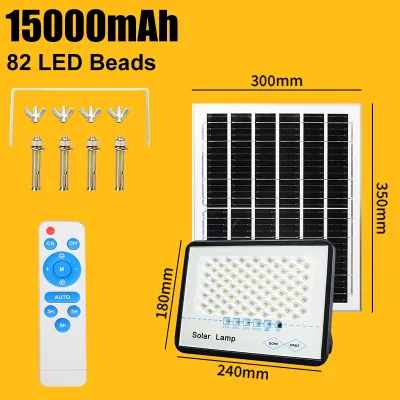
Prices are valid at publication and may change. Please refer to the product page for the latest price.
How PIR and Microwave Motion Sensors Work
To understand why these two technologies perform so differently in the field, it is helpful to examine the physics behind how they detect motion. Each sensor relies on a completely different part of the electromagnetic spectrum to monitor its surroundings.

Passive Infrared (PIR) Sensors
PIR sensors are passive devices, meaning they do not emit any energy into the environment. Instead, they measure incoming infrared radiation—essentially heat signatures—from objects within their field of view. The core of a PIR sensor is a pyroelectric material housed behind a multi-segmented plastic dome known as a Fresnel lens.
This Fresnel lens divides the detection area into multiple narrow optical zones. When a warm object, such as a human or a vehicle, moves from one zone to another, the sensor detects a rapid change in the infrared energy striking its pyroelectric elements. This sudden differential triggers the solar street light to switch from its low-power standby mode to full brightness. Because this process relies on optical line-of-sight, a PIR sensor cannot see through solid objects, plastic light covers, or dense foliage.
Microwave (Radar) Sensors
Microwave sensors are active devices that continuously project low-power, high-frequency electromagnetic waves into the surrounding area. These sensors typically operate at frequencies like 5.8 GHz, sending out continuous pulses and measuring the time it takes for those waves to reflect back to the receiver.
When an object moves within the detection zone, it alters the frequency of the reflected radio waves. The sensor detects this frequency shift—a physical phenomenon known as the Doppler effect—and registers it as motion. Because radio waves easily pass through non-metallic materials, microwave sensors do not require an exposed dome. They can be mounted completely inside the sealed protective housing of the solar street light, shielding them from environmental wear.
PIR vs Microwave: Key Performance Differences
When planning an outdoor solar lighting installation, comparing these technologies across key performance dimensions will help you select the system that matches your site conditions.
Detection Range and Angle
PIR sensors generally offer a localized, cone-shaped detection field. Most standard PIR models integrated into solar street lights provide a horizontal detection angle of up to 120 degrees, with a reliable reach of 5 to 10 meters. This makes them highly suited for targeted areas where you only want the light to trigger when someone is directly underneath or approaching the fixture.
Microwave sensors provide much broader, often omnidirectional coverage. They can achieve a 360-degree detection field that extends up to 15 or 20 meters from the fixture. Because the radar waves propagate outward in all directions, a microwave sensor can detect motion from behind the light pole or around physical obstacles, offering comprehensive security coverage for large properties.
Environmental Interference in Tropical Climates
Singapore’s tropical climate presents unique challenges for outdoor motion sensors, particularly regarding temperature and precipitation.
- Temperature Sensitivity: PIR sensors rely on a temperature differential between a moving target (a human body is typically around 37°C) and the background environment. When outdoor temperatures reach 30°C to 35°C, this thermal contrast is severely degraded. As a result, the PIR sensor’s effective range can shrink by more than half, or it may fail to trigger altogether. Microwave sensors are completely unaffected by ambient air temperature, maintaining identical detection ranges in midday heat or cool night air.
- Weather and Foliage: During heavy tropical downpours, the sheer volume of falling rainwater can reflect microwave signals, leading to frequent false triggers. Similarly, wind-blown palm fronds or dense roadside shrubbery will reflect radar waves and keep the light illuminated at 100% capacity. PIR sensors are much less susceptible to these false triggers because leaves and rain do not emit the localized, moving heat signatures required to trip the sensor. However, heavy condensation or a thick film of water on the exposed PIR lens can temporarily block infrared light, reducing its sensitivity until the lens dries.
Power Consumption
Power management is a critical factor for any off-grid solar street light. Because PIR sensors are passive, they draw a negligible amount of standby current—often less than 0.1 Watts. This minimal draw preserves the battery, ensuring the light has ample reserve power even after several consecutive cloudy or rainy days.
Microwave sensors must actively generate and transmit electromagnetic waves, which requires a constant power draw of approximately 0.5 to 1.5 Watts in standby mode. While this is still relatively low, the continuous power consumption combined with potential false triggers from rain or wind can drain the battery faster than a PIR system during extended periods of poor weather.
Concealed Installation and Durability
PIR sensors require an unobstructed, exposed polyethylene dome to receive infrared waves. Over time, exposure to intense tropical UV radiation can cause this plastic dome to yellow, crack, or become brittle. Accumulations of dust, soot, and bird droppings on the dome will also degrade its detection capabilities.
Microwave sensors can be installed entirely behind the robust polycarbonate or glass cover of the solar street light. This concealed setup protects the sensor from physical damage, UV exposure, and moisture ingress, resulting in a cleaner luminaire design and a longer overall service life for the sensor components.
Performance Comparison Summary
| Feature | PIR (Passive Infrared) | Microwave (Radar) |
|---|---|---|
| Detection Method | Passive heat signature tracking | Active electromagnetic wave reflection |
| Typical Range | 5 to 10 meters | 15 to 20 meters |
| Field of View | Focused cone (typically up to 120°) | Wide area (up to 360°) |
| Temperature Impact | Highly sensitive; range drops in hot weather | Immune to ambient temperature changes |
| False Trigger Risk | Low; ignores wind, rain, and distant objects | High; can be triggered by rain, trees, and wind |
| Sensor Placement | Must be exposed (external dome required) | Can be completely concealed inside housing |
| Standby Power Draw | Extremely low (<0.1W) | Moderate (0.5W to 1.5W) |
How to Choose the Right Sensor for Your Installation
To determine which technology will perform best on your property, evaluate the specific layout, mounting parameters, and surrounding vegetation of your installation site.
Choose PIR if:
- You are lighting narrow paths: It is ideal for residential driveways, narrow garden walkways, or specific entry gates where you want targeted illumination without triggering the light for activities in neighboring yards.
- You want to minimize false alarms: If the installation site is close to busy public roads, swaying trees, or heavy foliage, PIR will prevent the light from turning on unnecessarily.
- The mounting height is low: PIR performs exceptionally well when installed on walls or poles under 4 meters in height, where the sensor remains close to the path of pedestrians.
- Battery conservation is your top priority: For smaller solar light fixtures with compact battery capacities, the passive nature of PIR ensures maximum battery life.
Choose Microwave if:
- You need to cover large, open areas: It is highly suited for commercial parking lots, wide industrial yards, public parks, or broad roadways where a single light must detect motion across a wide radius.
- The mounting height is high: For street lights mounted on poles higher than 5 meters, microwave sensors maintain reliable ground-level detection where PIR sensors would struggle due to distance and heat dissipation.
- You require high durability: If the light is installed in an area prone to high wind, dust, or physical debris, a concealed microwave sensor inside an IP65 or IP66 rated housing will outlast an exposed PIR dome.
- You prefer a clean aesthetic: The absence of an external sensor dome allows for a sleek, modern luminaire profile.
Verify First If:
Before finalizing your purchase, inspect the installation site for dense, moving vegetation. If you must mount a light in an area with heavy tree canopies but still require the range of a microwave sensor, look for solar street lights that feature adjustable microwave sensitivity. Many commercial-grade fixtures allow you to dial down the radar range or use a remote control to fine-tune the detection threshold, preventing wind-blown leaves from draining your battery.
Additionally, verify the electrical specifications of the solar light system. Ensure the battery capacity (measured in Ampere-hours, Ah) and solar panel wattage are sufficiently sized to handle the standby draw of a microwave sensor, especially if you expect consecutive rainy days during the monsoon season.
Installation and Maintenance Tips for Reliable Detection
Proper placement and routine care are essential to maximize the performance and lifespan of your solar street light sensors.
Positioning and Mounting
- PIR Sensors: Position the fixture so that pedestrians walk across the sensor’s field of view rather than directly toward it. PIR sensors are far more sensitive to lateral movement (cutting across the thermal zones) than radial movement (moving straight toward the lens).
- Microwave Sensors: Avoid mounting these lights close to large, vibrating metal structures, outdoor air conditioning compressors, or busy roadways. The radar waves can bounce off metallic surfaces or detect the continuous movement of fan blades, causing the light to remain permanently on.
Routine Maintenance
- PIR Care: Periodically clean the plastic sensor dome using a soft, damp microfiber cloth to remove dust, bird droppings, and salt residue. Never use abrasive cleaning pads or harsh chemical solvents, as these can scratch or cloud the polyethylene lens, permanently reducing its detection range.
- Microwave Care: While the internal sensor requires no direct cleaning, check the surrounding area seasonally to ensure that fast-growing tropical foliage has not encroached too close to the light fixture, which could lead to continuous false triggering.
Safety and Professional Boundaries
Installing solar street lights on high poles or integrating them with existing electrical systems requires careful safety precautions. Always ensure the mounting pole is structurally rated to handle the weight and wind load of the solar fixture.
If your installation involves connecting the solar system to a backup utility grid, integrating fixed wiring, or working at significant heights, do not attempt complex modifications yourself. Always isolate the power supply before handling any electrical components, and hire a licensed electrical worker or qualified professional to ensure the installation complies with local electrical safety standards.
Frequently Asked Questions (FAQ)
Can I adjust the sensitivity of microwave sensors to prevent false alarms?
Yes, many modern solar street lights equipped with microwave sensors feature adjustable sensitivity settings. Depending on the model, these adjustments can be made using physical dial screws (potentiometers) on the sensor body, internal dip switches, or an included infrared remote control. Lowering the sensitivity reduces the radar transmission power, shrinking the detection radius and ignoring minor movements like falling rain or small animals while still responding to larger targets like pedestrians or vehicles.
Do solar street lights with microwave sensors drain the battery faster?
While a microwave sensor draws slightly more standby power than a passive PIR sensor, the primary cause of battery drain is not the sensor itself, but the frequency of the light turning on. If a microwave sensor is uncalibrated and constantly triggered by swaying branches or rain, the light will remain at 100% brightness all night, rapidly depleting the battery. Properly adjusting the sensitivity and positioning the light away from continuous movement will prevent this issue, allowing the system to operate reliably throughout the night.
Is it safe to install these sensors near Wi-Fi routers or communication antennas?
Yes, it is generally safe. Most microwave motion sensors used in solar lighting operate on low-power frequencies, typically around 5.8 GHz, which is designed to avoid interference with standard home Wi-Fi networks (which commonly use 2.4 GHz and specific 5 GHz bands). However, to prevent any potential signal degradation or minor interference, it is recommended to maintain a distance of at least 2 to 3 meters between the solar light fixture and high-power wireless access points or commercial communication antennas. Always check the manufacturer’s technical specifications sheet for exact frequency listings and compliance certifications.
Community discussion
Share your experience or ask a question. Comments are reviewed before publication.