
The Short Answer: Expected Impact on Your Energy Bill
Switching to solar garden lights reduces the direct electricity cost of running your outdoor lighting to exactly zero. Because solar fixtures operate entirely on captured sunlight stored in internal batteries, they bypass your home’s electrical panel entirely.
However, the actual impact on your overall monthly household energy bill depends on your baseline. If you are replacing a few low-wattage LED path lights, the change on your utility bill might be barely noticeable. Conversely, replacing a large network of high-wattage halogen spotlights will yield more visible savings.
While you eliminate the running electricity costs, solar lights introduce different long-term maintenance considerations, such as regular battery replacements and cleaning, which must be factored into your total cost of ownership.
Products mentioned in this guide
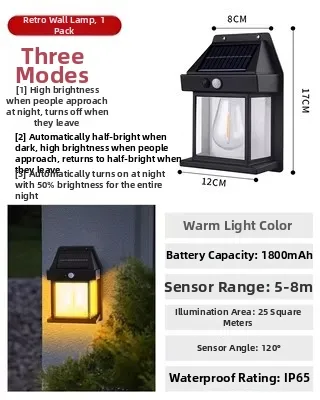
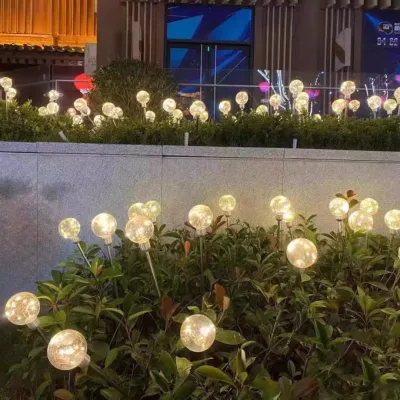
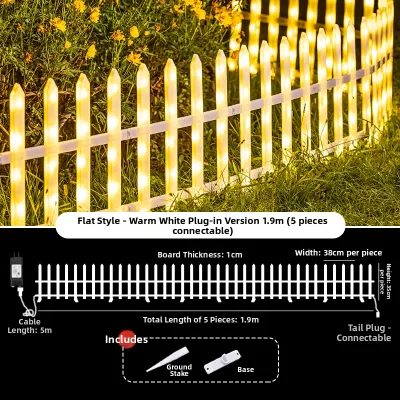
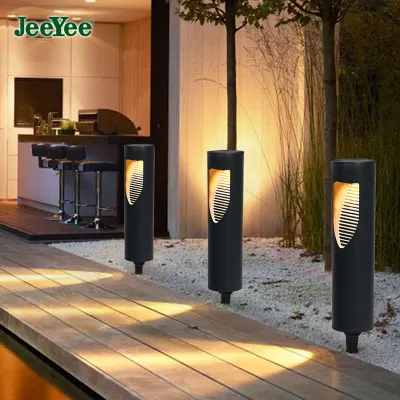
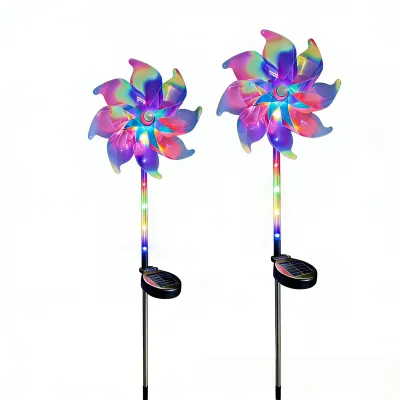
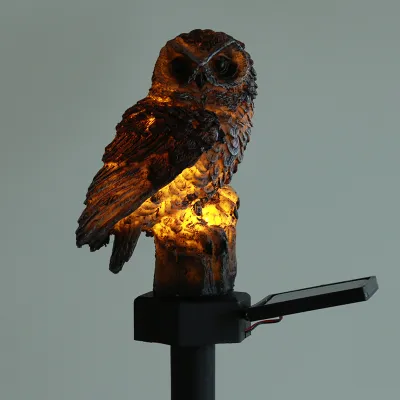
Prices are valid at publication and may change. Please refer to the product page for the latest price.
How to Calculate Your Current Wired Garden Light Costs
To understand how much you can save, you first need to establish an accurate baseline of what your current outdoor lighting system consumes. The math is straightforward and requires only a few pieces of information from your existing fixtures.

Use the standard energy consumption formula:
(Total Wattage / 1000) × Daily Usage Hours × Days in Month = Monthly kWh
To find the wattage of your existing wired garden lights, check the bulb packaging, the physical labels on the fixtures, or the transformer ratings if you are using a low-voltage outdoor lighting system. If you have multiple fixtures, sum their wattages together to get the total wattage.
Next, determine your local electricity rate. In Singapore, you should check the latest residential electricity tariff published by SP Services, the national grid operator. This rate is expressed in cents per kilowatt-hour (kWh).
Keep in mind that electricity tariffs in Singapore fluctuate quarterly based on fuel costs and grid assessments. Always use the current published rate for your calculations rather than relying on outdated figures or historical averages to ensure your baseline is accurate.
Step-by-Step Savings Estimation (With Hypothetical Scenarios)
To illustrate how these calculations work in practice, let us look at two common outdoor lighting setups. For these examples, we will assume a hypothetical residential electricity tariff of S$0.31 per kWh (inclusive of GST) to show the potential financial impact.
Scenario A (Ambient Path Lighting)
Imagine a modest garden setup consisting of 4 low-draw LED path lights, each rated at 5 watts, running for 5 hours every night.
- Total Wattage: 4 lights × 5W = 20W
- Daily Consumption: (20W / 1000) × 5 hours = 0.1 kWh
- Monthly Consumption (30 days): 0.1 kWh × 30 days = 3 kWh
- Annual Consumption: 3 kWh × 12 months = 36 kWh
- Monthly Cost/Savings: 3 kWh × S$0.31 = S$0.93
- Annual Cost/Savings: 36 kWh × S$0.31 = S$11.16
Scenario B (Landscape & Security Lighting)
Now consider a larger, brighter setup designed to illuminate trees and walls, featuring 8 landscape spotlights rated at 10 watts each, running for 8 hours per night.
- Total Wattage: 8 lights × 10W = 80W
- Daily Consumption: (80W / 1000) × 8 hours = 0.64 kWh
- Monthly Consumption (30 days): 0.64 kWh × 30 days = 19.2 kWh
- Annual Consumption: 19.2 kWh × 12 months = 230.4 kWh
- Monthly Cost/Savings: 19.2 kWh × S$0.31 = S$5.95
- Annual Cost/Savings: 230.4 kWh × S$0.31 = S$71.42
Because solar garden lights draw zero grid electricity, these calculated operating costs represent your gross electricity savings. If you transition these systems entirely to solar, these are the amounts you would avoid paying to your utility provider.
Please note that these scenarios are hypothetical estimates based on fixed assumptions and maximum runtimes. Your actual utility bill deductions will vary depending on your specific fixtures, seasonal usage habits, and any changes in the quarterly tariff rates.
Hidden Costs and Climate Limits for Solar Lights in Singapore
While saving on your monthly electricity bill is highly appealing, a realistic transition plan must account for ongoing maintenance costs and local environmental limitations that affect solar performance.
- Battery Degradation: Solar garden lights rely on internal rechargeable batteries, typically Nickel-Metal Hydride (NiMH) or Lithium-ion (Li-ion), to store solar energy. These batteries degrade over time due to continuous charge-discharge cycles and exposure to outdoor heat. You will generally need to replace them every 1 to 2 years to maintain acceptable runtimes, which introduces a recurring hardware cost.
- Initial Investment: Quality solar fixtures often carry a higher upfront purchase price than basic wired fixtures due to the integrated solar panels, internal batteries, and charge controllers. You must weigh this initial investment against your calculated monthly electricity savings to determine the true break-even period for your household.
- Local Climate Impact: Singapore's tropical climate poses unique challenges for solar technology. High annual rainfall, frequent cloud cover during the monsoon seasons, and shade from surrounding tropical foliage, high-rise HDB estates, or neighboring landed properties can significantly limit the amount of direct sunlight reaching the solar panels. This reduced solar exposure often leads to incomplete battery charging, resulting in dimmer light output or fixtures that turn off prematurely during the night.
How to Maximize Solar Efficiency and Protect Your Investment
To ensure you get the best possible return on your investment and avoid the frustration of underperforming lights, you can implement several simple, low-risk maintenance practices.
- Placement: Position your solar panels where they will receive the maximum amount of direct, unobstructed sunlight. Avoid placing them directly under tree canopies, deep building overhangs, or next to high walls that cast long shadows during peak daylight hours.
- Cleaning: Regularly wipe the glass or plastic covers of your solar panels with a clean, damp cloth. In outdoor environments, panels quickly accumulate dust, pollen, and bird droppings, which block ultraviolet rays and drastically reduce charging efficiency.
- Battery Care: Always follow the manufacturer's specific guidelines when replacing internal batteries. Ensure you use the exact replacement battery chemistry and capacity recommended for your fixture. For safety and environmental protection, never throw old rechargeable batteries into general household waste; instead, dispose of them at designated e-waste recycling points across Singapore.
Safety Note: If you are currently using a high-voltage (230V) wired system and plan to decommission it, always isolate the power supply at the main distribution board first. For any work involving fixed electrical wiring, damp outdoor environments, or complex structural installations, consult a licensed electrical worker to ensure safety and compliance with local electrical codes.
Frequently Asked Questions (FAQ)
Do solar garden lights use any grid electricity?
No, true solar garden lights operate entirely off-grid. They utilize their own integrated photovoltaic panels to absorb sunlight during the day, which is then converted into electrical energy and stored in internal rechargeable batteries to power the LED bulbs at night. They require no connection to your home’s electrical mains.
Can solar lights replace wired security floodlights?
Generally, solar lights are not a direct replacement for critical, high-output wired security floodlights. While solar-powered floodlights exist, they are highly dependent on daily weather conditions to charge fully. Wired security lights offer consistent, high-lumen brightness and reliable performance year-round, independent of cloud cover or monsoon rains. For critical security zones, wired fixtures remain the industry standard for reliability.
Community discussion
Share your experience or ask a question. Comments are reviewed before publication.