
Wall mirrors with thin frames, oversized profiles, grid patterns, or organic shapes expand compact HDB layouts by maximizing natural light, creating deep sightlines, and softening rigid structural lines. When space is at a premium in Singaporean apartments, these decorative elements serve as vital spatial tools rather than mere ornaments.
To understand how a wall mirror alters spatial perception, one must look at the mechanics of light reflection. When light rays strike the flat, highly reflective surface of a mirror, they bounce off at the same angle they arrived. This basic optical law allows a mirror to capture daylight from windows or illumination from light fixtures and distribute it deeper into a room. By dispersing this light, the mirror brightens dark corners, which visually pushes the walls outward and makes a compact layout feel significantly more open.
Beyond light distribution, mirrors create a psychological illusion of depth. The human brain interprets the reflected image as an extension of the actual room, effectively doubling the perceived distance to the wall. This sightline extension is particularly valuable in standard HDB flats, which often feature lower ceilings (typically around 2.6 meters), narrow entryways, and long, windowless corridors. Placing a mirror strategically along these tight pathways breaks up the solid surfaces that would otherwise make the home feel boxy and enclosed.
Products mentioned in this guide
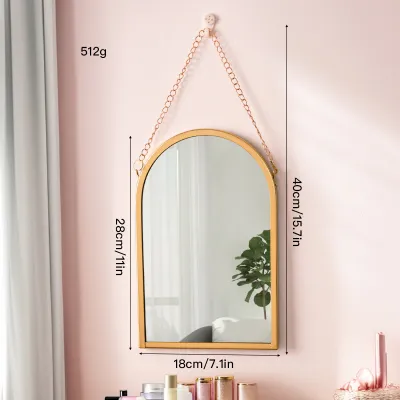
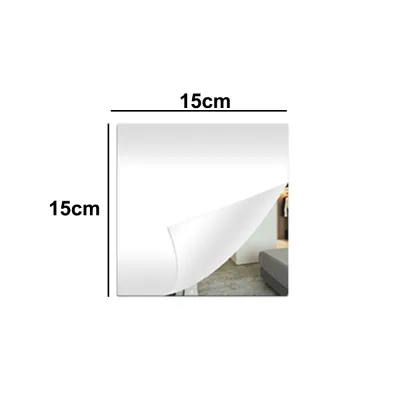
Prices are valid at publication and may change. Please refer to the product page for the latest price.
However, the success of this spatial illusion depends heavily on how the mirror’s physical dimensions interact with the room’s constraints. A mirror that is too small or framed in a thick, dark border can actually achieve the opposite effect, acting as a visual block that highlights the room’s limitations. In contrast, a carefully selected frame and shape can seamlessly blend the mirror into its surroundings, balancing decorative appeal with spatial utility. Homeowners must evaluate potential mirrors not just by their style, but by how their scale, frame weight, and glass quality will interact with the specific layout of their flat.
Best Decorative Mirror Styles to Maximize Visual Space
Selecting the right mirror style requires a balance between personal design preferences and spatial functionality. The frame material, shape, and overall design dictate whether a mirror acts as a heavy visual anchor or a light, space-expanding element. In compact Singapore apartments, specific styles excel at tricking the eye into perceiving more square footage while adding sophisticated character to the interior design.
Oversized Leaning Mirrors for Depth
Oversized leaning mirrors, typically standing 1.8 meters or taller, are exceptional tools for introducing dramatic depth into HDB living rooms or master bedrooms. Because they rest directly on the floor and lean slightly backward against the wall, they tilt the angle of reflection upward. This upward tilt captures more of the ceiling and high-wall areas, creating a vertical perspective that makes standard HDB ceilings feel loftier and more grand.
When choosing a leaning mirror, the frame design plays a critical role in managing visual weight. Thin metallic frames in brushed brass, matte black, or champagne gold provide a sleek, modern border that does not distract from the reflection. These minimal frames allow the eye to transition smoothly from the physical room into the reflected space. Conversely, thick, dark wooden borders can feel heavy and dominant, drawing too much attention to the mirror’s physical footprint and shrinking the room’s perceived boundaries.
Safety is a paramount consideration for any leaning mirror installation. Because these pieces are heavy and rest on the floor, they pose a significant tipping hazard if left unsecured, especially in households with active pets or young children. To prevent accidents, always secure the top or back of the mirror to the wall using heavy-duty anti-tip straps or hidden brackets. These safety measures ensure the mirror remains stable while maintaining its elegant, casual leaning aesthetic.
Window-Pane and Grid Mirrors for Architectural Interest
Window-pane and grid mirrors feature a metallic or wooden grid overlay that divides the glass surface into smaller, structured panes. This style is highly effective at adding architectural interest to blank walls, particularly in windowless HDB corridors, dark dining alcoves, or even mounted on the exterior of a household shelter door. By mimicking the look of a traditional multi-pane window, these mirrors trick the brain into believing there is an adjoining room or an outdoor view just beyond the wall.
One of the unique advantages of a grid structure is its ability to break up reflections. In tight spaces, a massive, uninterrupted sheet of mirror glass can sometimes create a disorienting, clinical “funhouse” effect. The grid lines solve this by segmenting the reflection, providing clear visual boundaries that make the spatial expansion feel natural and comfortable. This structural detail adds depth and character, transforming a flat, uninspiring wall into a focal point that suggests architectural openness.
For the cleanest and most expansive reflection, look for grid mirrors that feature flush or slightly beveled glass panes. Flush glass ensures that the reflection remains continuous and undistorted behind the grid lines. Beveled glass edges, on the other hand, catch and refract light at different angles, adding a subtle sparkle and a touch of luxury that enhances the overall brightness of the room.
Large Round Mirrors to Soften Angular Rooms
Standard HDB layouts are inherently angular, characterized by sharp 90-degree corners, rectangular structural beams, and boxy rooms. Large round mirrors are highly effective at breaking up these rigid lines and softening the overall feel of a space. By introducing curved edges, a round mirror creates visual flow, draws the eye in a gentle circular path, and makes tight entryways or compact living areas feel less restrictive.
These circular pieces work exceptionally well when placed above low-profile furniture, such as a narrow entryway console table, a small dining bench, or a compact sofa. The absence of sharp corners on the mirror helps to visually detach it from the surrounding wall, making the wall itself feel less solid and imposing. This softening effect is particularly useful in narrow entryways, where a rectangular mirror might feel too formal or rigid.
To achieve the perfect balance, pay close attention to sizing. A round mirror should generally measure approximately two-thirds the width of the furniture piece sitting below it. This proportion ensures that the mirror is large enough to make a significant spatial impact and bounce ample light, without being so oversized that it overwhelms the wall or makes the furniture look dwarfed. For most standard HDB entryways or small living rooms, a diameter of 80 to 100 centimeters strikes the ideal balance.
Asymmetrical and Organic Shapes for Visual Flow
Asymmetrical and organic-shaped mirrors, often resembling smooth river pebbles or fluid, wavy forms, have become popular choices for modern Singaporean homes. These mirrors lack traditional, defined borders, featuring irregular shapes that flow naturally across the wall. Because they do not conform to standard geometric shapes, they blur the lines between the physical wall and the reflected space, making the boundaries of a compact room feel far less defined.
These organic shapes are ideal for small powder rooms, cozy study nooks, or mounted directly above bedside tables. In these tight zones, a standard rectangular mirror can feel cramped and forced. An asymmetrical mirror, especially one with a frameless or ultra-thin edge, integrates seamlessly into the wall, acting more like a piece of fluid wall art that happens to reflect light and space.
It is important to note, however, that the space-enhancing effect of organic mirrors relies more on visual distraction and creative light scattering than on creating a deep linear perspective. Because their shapes are irregular, they draw the eye across the wall in unexpected directions, breaking up the monotony of small spaces. They are excellent for adding movement and a sense of lightness, even if they do not offer the same deep, straight-line reflection as a large rectangular or leaning mirror.
Strategic Placement to Bounce Light and Deepen Rooms
Where you place your wall mirror is just as important as the style you choose. Strategic positioning allows you to maximize the mirror’s optical benefits, turning it into a functional tool that actively brightens and deepens your HDB flat.

- Opposite Windows: Placing a large mirror directly across from your main living room window or balcony door is one of the most effective ways to amplify natural light. The mirror captures the incoming daylight and projects it deep into the apartment, effectively doubling the perceived light source. This placement also brings the outdoor view inside, making a small living room feel connected to the wider world outside.
- Adjacent to Light Sources: If your layout does not allow for a mirror opposite a window, position it adjacent to artificial light sources. Placing a mirror next to wall sconces, floor lamps, or pendant lights helps to amplify their brightness. The reflective surface catches the light and scatters it across the room, turning a single, localized light source into a broader, softer wash of ambient illumination that eliminates dark, space-shrinking corners.
- End of Corridors: Long, narrow HDB hallways often feel like dark, uninviting tunnels. Mounting a large, vertically oriented mirror at the very end of a corridor creates a vanishing point. This optical illusion makes the hallway appear to extend much further than its physical limit, instantly opening up the transition zones of your home.
- Eye-Level Hanging: To maintain natural human proportions in the reflection, always hang your wall mirrors at average eye level. A good rule of thumb is to position the mirror so that its center sits approximately 145 to 150 centimeters from the floor. Hanging a mirror too high or too low disrupts the spatial illusion, cutting off reflections awkwardly and reminding the viewer of the room's tight physical limits.
Common Mirror Mistakes That Make HDB Flats Feel Smaller
While mirrors are excellent tools for expanding space, poor styling and placement choices can backfire, making your HDB flat feel more cluttered and cramped than before.
- Visual Clutter: Avoid creating gallery walls made of numerous small, decorative mirrors. While a collection of small mirrors might look artistic on paper, the fragmented reflections break up the visual field into chaotic segments. This constant visual interruption makes a small room feel busy, restless, and ultimately smaller. Instead, opt for a single, large mirror that provides a clean, continuous reflection.
- Reflecting Clutter: A mirror duplicates whatever is in front of it. If you position a mirror opposite an open kitchen shelving unit, a laundry drying rack, or a cluttered study desk, you will effectively double the visual noise in the room. Always be mindful of what the mirror reflects; aim to position it so that it captures a clean wall, a minimalist decor setup, or a view of the outdoors.
- Heavy Frames: Overly thick, ornate, or dark frames add unnecessary visual weight to a small room. A heavy frame acts as a bold frame boundary, drawing the eye to the physical limits of the mirror rather than letting the gaze flow into the reflection. Keep frames minimal, thin, and light in color to maximize the space-enhancing effect.
- Incorrect Height: Hanging a mirror too high is a common mistake. If the mirror only reflects the ceiling, top-of-wall cornices, or air conditioning units, it fails to bounce functional light into your living space. It also cuts off the reflections of people walking by, which breaks the illusion of an extended room.
Safe Installation and Wall Checks for HDB Flats
Mounting heavy decorative mirrors in an HDB flat requires careful preparation to ensure safety, stability, and compliance with structural guidelines.
- Wall Identification: Before drilling, you must identify the type of wall you are working with. HDB flats typically feature solid concrete structural walls (precast panels or columns) and internal partition walls (drywall or hollow blocks). Drilling into solid concrete requires a high-torque rotary hammer drill, specialized masonry drill bits, and heavy-duty plastic expansion plugs or metal wall anchors. For drywall partition walls, you must use toggle bolts or spring anchors that expand behind the board to distribute the mirror's weight safely.
- Concealed Hazards: Always scan the wall with a digital stud and pipe detector before drilling any holes. This step is critical for identifying concealed electrical conduits and water pipes running behind the plaster. Be especially cautious when mounting mirrors near light switches, electrical sockets, or on walls shared with bathrooms and kitchens, where utility lines are highly concentrated.
- Professional Boundaries: If you are installing an exceptionally heavy, oversized, or complex mirror setup—such as a full-height paneled mirror wall or a heavy iron-framed window mirror—do not attempt to do it yourself. Handling large glass panels at height carries significant safety risks. Stop and consult a qualified handyman or professional installer who has the tools and experience to mount the piece securely without damaging your walls.
- Adhesive Limitations: Singapore's tropical climate features high humidity levels that can degrade adhesives over time. Never rely solely on heavy-duty double-sided mounting tape or adhesive strips to hang large, heavy decorative mirrors. Over time, the moisture in the air can weaken the adhesive bond, leading to the mirror falling, breaking, and causing potential injury. Always use mechanical fasteners, such as screws and heavy-duty brackets, to ensure your mirrors remain safely anchored for years to come.
Community discussion
Share your experience or ask a question. Comments are reviewed before publication.