
Quick Guide to Choosing a Compact Wall Mount Altar
Selecting a wall mount altar for a modern apartment requires balancing spiritual devotion with strict spatial limitations. In Singapore’s high-density housing, such as Housing & Development Board (HDB) flats and condominiums, floor space is at a premium. A well-designed wall-mounted solution frees up valuable floor area while maintaining a dedicated space for daily worship. The core decision criteria for compact environments include shallow depth profiles to prevent obstruction, robust weight capacity to support sacred items safely, and space-saving mechanisms like foldable ledges or pull-down trays. By evaluating these physical dimensions alongside your specific worship needs, you can establish a serene, respectful, and safe shrine that integrates seamlessly into a compact home.
Assessing Your Space and Wall Constraints
Before purchasing or mounting any shrine, a thorough assessment of your physical environment is essential. Wall-mounted installations are semi-permanent additions that interact directly with your home’s traffic flow, structural integrity, and safety. Failing to evaluate these factors beforehand can lead to physical obstructions, damaged walls, or even structural failure under the weight of heavy ritual objects.

Measuring Clearances and Depth
When planning the placement of your altar, do not look only at the flat surface area of the wall. You must measure the maximum allowable depth of the unit when its doors, drawers, or pull-out incense trays are fully extended. Ensure that the unit does not project into high-traffic walking paths, creating a physical hazard.
Products mentioned in this guide
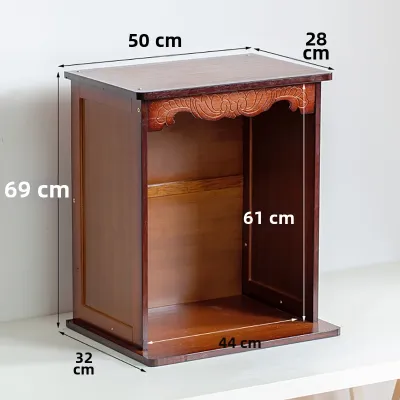
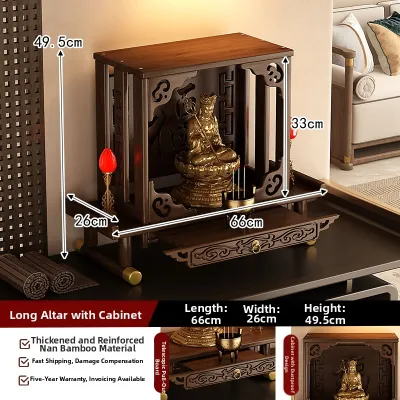
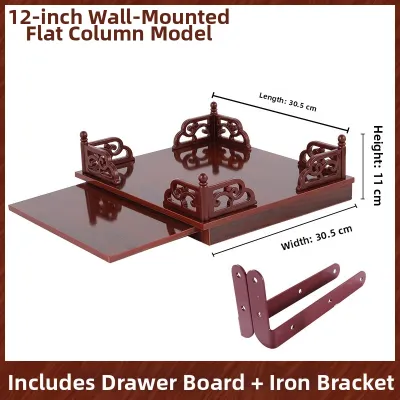
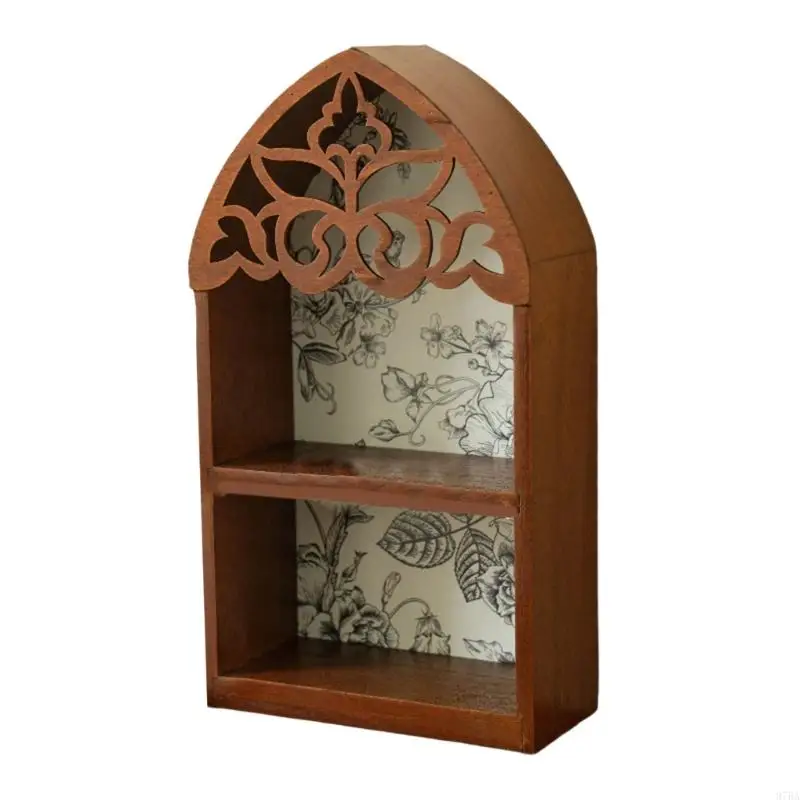
Prices are valid at publication and may change. Please refer to the product page for the latest price.
Check the swing arcs of nearby room doors, cabinet doors, and windows to prevent accidental collisions with the shrine. Additionally, verify nearby furniture movement and account for ceiling height. An altar mounted too close to the ceiling can feel visually oppressive and trap heat, while one mounted too low may be vulnerable to accidental bumps from passing family members or pets.
Identifying Wall Types and Load Limits
Singapore homes typically feature two main types of walls: solid concrete or brick walls, which are often structural or external walls, and lightweight drywall or partition walls, commonly used to separate bedrooms or study areas. Solid concrete walls offer excellent load-bearing capacity, making them suitable for heavier solid wood altars, provided you use high-quality masonry wall plugs and screws.
Conversely, lightweight partition walls have strict load limits and cannot support substantial weight without structural reinforcement. Always verify the manufacturer’s stated weight rating for the altar unit itself. Compare this rating against the load-bearing capacity of your specific wall type, and ensure you use the appropriate heavy-duty drywall anchors or toggle bolts if mounting on non-structural partitions. If the manufacturer’s weight limit is unavailable, treat the unit as a lightweight-only shelf and avoid placing heavy statues or brass incense burners on it.
Space-Optimized Wall Mount Altar Designs
Selecting the right design depends on how you use your living space and the specific rituals you practice. Modern designs offer creative ways to minimize the physical footprint of your shrine while preserving its sacred character.
Foldable and Pull-Down Altars
Foldable and pull-down designs are highly effective for multi-purpose living rooms where space must be adapted throughout the day. These units typically feature a drop-leaf ledge or a pull-down tray that serves as the offering table during prayers and folds flat against the wall when not in use. This mechanism significantly reduces the altar’s profile when inactive.
When choosing a foldable model, inspect the durability and smooth operation of the hinges and support brackets. Look for heavy-duty metal hinges with locking mechanisms that prevent accidental collapse. Always check the manufacturer’s maximum weight limit for the extended tray, as these hinges bear concentrated leverage when items are placed at the outer edge.
Floating Shelves and Minimalist Cabinets
Floating shelves and minimalist cabinets offer a sleek, low-profile aesthetic that blends naturally with modern interior design styles. A simple floating shelf provides a clean, open platform with minimal visual weight, making it ideal for highly constrained spaces. However, open shelves leave sacred items exposed to household dust and kitchen grease.
Enclosed minimalist cabinets solve this issue by featuring glass or wooden doors that protect the interior. When closed, these cabinets present a clean, unobtrusive facade that doubles as subtle wall decor. When selecting these designs, prioritize units with shallow depths—typically between 15 to 30 centimeters—to keep the profile as close to the wall as possible.
Vertical Multi-Tier Shrines
When horizontal wall width is strictly limited, vertical multi-tier shrines allow you to maximize your worship space by utilizing vertical height. These designs stack platforms vertically, allowing you to separate different deities, ancestral tablets, and offering vessels according to traditional practices without expanding the altar’s footprint.
When selecting a multi-tier unit, ensure there is adequate vertical spacing between tiers to accommodate your statues, ancestral tablets, and incense burners safely. Be mindful of the overall visual weight of tall units, which can dominate a small room. Additionally, consider the practical accessibility of the highest tier; it must remain at a height that allows for safe, comfortable daily cleaning, light replacement, and offering placement without requiring unstable step stools.
Essential Features for Safe and Practical Worship
Operating a shrine in a tight, enclosed space requires careful attention to daily safety and maintenance. Implementing the right features can prevent accidents and preserve the beauty of your home.
Heat Dissipation and Fire Safety
Operating an altar in a compact, enclosed space requires careful attention to fire safety and heat management. Burning incense, candles, or oil lamps generates heat and soot that can damage wall paint, ceilings, and the altar itself if not properly managed. Ensure the altar design incorporates adequate ventilation, particularly if it features an enclosed cabinet style.
Select units constructed from or lined with heat-resistant materials, such as tempered glass, stone, or fire-retardant laminates on the offering surfaces. Maintain safe clearances from flammable household items, including curtains, window blinds, and air conditioning vents that could blow drafts. Always follow the manufacturer’s safety guidelines regarding open flames, and consider transitioning to flameless LED candles and electronic incense burners to eliminate fire risks entirely in tight spaces.
Cable Management for Integrated Lighting
Modern wall-mounted altars often feature integrated LED lighting to illuminate deities or ancestral tablets. To maintain a clean, clutter-free appearance, plan your cable management strategy before mounting the unit. Look for altars with built-in cable routing channels or pre-drilled holes that allow power cords to pass discreetly behind the structure.
For units without built-in channels, use color-matched plastic cable trunking to secure and conceal wires along the wall surface. When planning integrated lighting, verify the exact voltage, base or interface type, wattage limits, and dimming method of the fixtures. Ensure the installation environment is dry and that all components carry recognized electrical certifications, such as the Enterprise Singapore Safety Mark; a generic category name does not guarantee safety or compatibility. Avoid overloading power strips or routing cables near heat sources or sharp metal brackets.
While aesthetic styles, perceived color temperatures (such as warm white versus cool daylight), and their spatial effects can enhance the atmosphere of your home, these are subjective conditional preferences rather than universal performance facts.
Common Sizing and Placement Mistakes to Avoid
Avoiding common installation and placement errors ensures your altar remains a safe, respectful, and functional space. Keep these frequent oversights in mind during your planning:
- Ignoring Door Swing Paths: Installing an altar too close to a doorway can lead to doors striking the unit, potentially knocking over delicate statues or burning incense.
- Overloading Shelf Capacity: Exceeding the manufacturer's rated weight limit can cause the mounting screws to pull out of the wall, leading to a catastrophic collapse.
- Improper Mounting Height: Placing the altar too high makes daily maintenance, such as changing water offerings or cleaning dust, difficult and hazardous. Conversely, placing it too low may lack the traditional height of respect and expose the shrine to accidental contact.
- Proximity to Air Currents: Installing the altar directly beneath ceiling fans, cooker hoods, or air conditioning louvers can disrupt incense smoke, blow ash onto surrounding furniture, or pose a fire hazard by carrying sparks toward flammable materials.
Installation Safety and Professional Boundaries
Installing a wall mount altar requires precision to ensure it remains level and securely anchored over time. Before drilling into any wall, you must conduct a thorough safety check. Use a reliable digital wall scanner to locate hidden electrical wiring, metal studs, or water pipes running behind the plaster. Accidentally drilling into a live electrical wire or utility pipe can cause severe injury, costly property damage, or localized flooding.
Before performing any mounting, wiring, or structural alterations, check the altar’s product label and your building’s manufacturer or developer instructions. If these instructions conflict, if the wall material is unidentified, or if your specific use case is not covered, stop immediately and consult the manufacturer or a qualified professional.
For any tasks involving fixed electrical wiring, working at height, handling heavy suspended loads, or managing heat dissipation, you must isolate the power supply at the main distribution board before starting work. Always follow the manufacturer’s step-by-step installation instructions, and recognize when the task exceeds DIY limits, requiring a qualified professional.
While mounting a lightweight shelf on a standard partition wall with basic tools is a manageable DIY task, heavier solid wood altars or complex units with integrated electrical wiring present significant structural and safety challenges. For heavy installations, or when routing fixed electrical wiring, you should engage a qualified handyman or a licensed electrician. Professional installers possess the specialized equipment and knowledge to select the correct anchors for your specific wall type, isolate power supplies safely during installation, and ensure the entire assembly complies with local building and electrical safety standards. Always prioritize structural integrity and personal safety over a DIY approach.
Frequently Asked Questions (FAQ)
Can I mount a heavy wooden altar on an HDB partition wall?
Lightweight partition walls, such as drywall or gypsum board partitions commonly found in modern HDB flats, are not designed to support heavy, solid wood altars directly. These walls lack the structural density of concrete. Attempting to mount a heavy unit without proper reinforcement can tear the anchors through the plasterboard, resulting in structural failure. If you must use a partition wall, you must locate the internal metal or wooden studs to anchor the mounting brackets, or consult a qualified contractor to install internal plywood reinforcement behind the drywall. Always check the altar’s exact weight specifications and seek a professional structural assessment before proceeding.
Are there specific HDB rules for drilling walls for altars?
Under HDB renovation guidelines, residents are generally permitted to drill holes in non-structural internal walls for standard fixtures like shelves, cabinets, and wall-mounted altars without a permit. However, drilling into structural walls, reinforced concrete columns, shear walls, or precast load-bearing panels is strictly regulated to preserve the building’s structural integrity. You must never cut, damage, or drill deeply into reinforced concrete beams or columns. If you are uncertain whether a target wall is structural, refer to your flat’s floor plan (where structural walls are indicated by thick black lines) or consult a registered HDB renovation contractor before commencing any drilling work.
Community discussion
Share your experience or ask a question. Comments are reviewed before publication.