
Selecting a standing lamp for study requires balancing specific technical parameters to prevent eye strain and physical fatigue during long reading sessions. To protect your eyes, the ideal floor lamp must deliver a minimum brightness of 400 to 500 lumens at the source (translating to roughly 300 to 500 lux on your desk surface), feature a color temperature between 4000K and 5000K, and maintain a Color Rendering Index (CRI) of 90 or higher. Additionally, physical adjustability and certified flicker-free drivers are critical to eliminating direct glare and subconscious visual fatigue.
In Singapore’s compact apartments and multi-functional HDB flats, study spaces are frequently integrated into living rooms or bedroom corners. A dedicated standing lamp offers a highly flexible, space-saving lighting solution, but choosing a model based solely on aesthetics can lead to poor focus, dry eyes, and headaches. By focusing on verifiable technical specifications rather than decorative style, you can establish a comfortable, glare-free environment optimized for productivity.
Quick Guide: Essential Specs for a Study Floor Lamp
To simplify your search on online marketplaces or specialized lighting stores, look for the following baseline specifications on the product packaging or manufacturer spec sheets:
Products mentioned in this guide

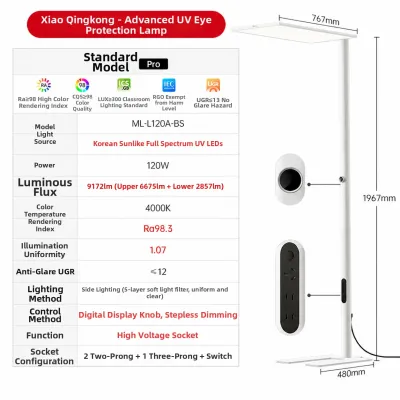
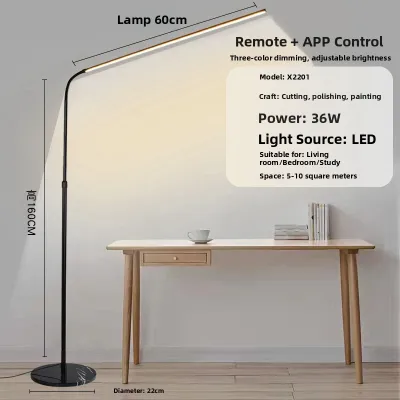
Prices are valid at publication and may change. Please refer to the product page for the latest price.
| Specification | Recommended Range for Studying | Primary Benefit |
|---|---|---|
| Brightness (Source) | 400–800 Lumens | Ensures adequate light output for clear visibility |
| Illuminance (Task Surface) | 300–500 Lux | Prevents eye muscles from overworking due to dimness |
| Color Temperature | 4000K (Neutral) to 5000K (Cool White) | Enhances alertness, focus, and text contrast |
| Color Rendering Index (CRI) | Ra 90 or higher (Ra 80 absolute minimum) | Renders text and diagrams with crisp, natural clarity |
| Adjustability | Tilting head, gooseneck, or articulated arm | Allows direct light positioning to avoid direct eye contact |
| Flicker Control | Certified "Flicker-Free" (IEEE 1789 compliant) | Eliminates invisible pulse fatigue and micro-strain |
While decorative style and spatial effects are matters of personal preference, these core technical metrics directly dictate your visual comfort. The following sections decode these specifications into practical, actionable buying criteria.
Brightness and Lux: Finding the Right Light Level
When evaluating a standing lamp for study, it is crucial to distinguish between lumens and lux. Lumens measure the total amount of light emitted by the lamp source in all directions. Lux, on the other hand, measures the actual intensity of light falling on a specific surface area, where one lux equals one lumen per square meter. Because a floor lamp is positioned further away from your desk or book than a standard clamp-on desk lamp, the light naturally spreads and weakens as it travels, making the distance and direction of the beam incredibly important.

Ergonomic standards recommend an illuminance level of 300 to 500 lux on your reading or writing surface. If the light falling on your page is too dim, your pupils must dilate, forcing your eye muscles to strain to capture enough detail. Conversely, an overly bright light source creates harsh contrast glare against the rest of the room, leading to rapid visual fatigue. To achieve the correct lux level, look for a standing lamp that outputs at least 400 to 800 lumens and allows you to position the light source close to your workspace.
Because ambient lighting conditions change throughout the day, adjustable brightness is a mandatory specification. In Singapore, natural daylight varies dramatically from intense tropical afternoon sun to dark monsoon downpours and late-night study sessions. A floor lamp equipped with stepless or multi-level dimming allows you to adjust the light output dynamically. This control ensures you can maintain a comfortable contrast ratio, which should ideally be no more than 3:1 between your immediate study materials and the surrounding room environment.
Color Temperature and CRI: Balancing Focus and Comfort
Color temperature, measured in Kelvin (K), describes the warmth or coolness of the light emitted by the lamp. Warm white light (2700K to 3000K) promotes relaxation and melatonin production, which is excellent for a cozy living room atmosphere but highly counterproductive for active studying. At the other extreme, harsh cool light exceeding 6000K contains high amounts of blue light, which can cause intense glare and visual exhaustion over extended periods. The optimal range for cognitive focus and alertness is 4000K (neutral white) to 5000K (cool daylight), which keeps your mind alert without over-stimulating your eyes.
Color Rendering Index (CRI) measures how accurately a light source reveals the true colors of objects compared to natural sunlight, which has a CRI of 100. Cheap or low-quality LED lamps often have a CRI below 80, which makes text look muddy and reduces the visual contrast between ink and paper. A high CRI of 90 or above (often designated as Ra > 90) provides crisp, sharp text rendering and natural color representation. This high fidelity dramatically reduces the cognitive load on your brain and eyes, allowing you to read small print for longer periods without squinting.
Tunable White vs. Fixed Temperature
If your study area is located in a multi-purpose space like a living room or a shared bedroom, a tunable white lamp is highly advantageous. These models allow you to shift the color temperature from a warm 2700K for evening relaxation to a crisp 4500K for intense daytime study sessions. This flexibility helps maintain your natural circadian rhythm, ensuring your study light does not interfere with your sleep cycle when used late at night.
Alternatively, if you have a dedicated study room or only study during specific daytime hours, a fixed-temperature lamp set at a stable 4000K or 5000K is a highly reliable choice. Fixed-temperature lamps are generally more budget-friendly, typically ranging from S$40 to S$100, compared to S$120 or more for advanced tunable models. They offer simple, distraction-free operation and often feature highly optimized optical drivers that prioritize consistent light quality over color versatility.
Adjustability, Glare, and Flicker: Physical and Visual Comfort
Physical adjustability is a critical feature that separates a basic ambient floor lamp from a true standing lamp for study. A rigid, fixed-pole lamp cannot be adjusted to suit different desk heights or seating positions, often resulting in the light shining directly into your eyes. Look for lamps featuring a flexible gooseneck, an articulated counterbalanced arm, or a rotating lamp head. These physical adjustments allow you to position the light source directly over your reading material and below your eye level, completely shielding your eyes from direct exposure to the light source.
Direct and reflected glare are primary culprits behind immediate eye strain and squinting. To prevent this, select a lamp equipped with a high-quality physical diffuser, such as a frosted or micro-prismatic lens, which scatters light evenly and softens harsh hotspots. If you study using glossy textbooks, tablets, or computer screens, position the lamp head at an angle—ideally from the side opposite your writing hand—to ensure the light reflects away from your line of sight rather than bouncing directly into your eyes.
Invisible LED flicker is a common, hidden cause of severe eye fatigue, dry eyes, and unexplained headaches. Many low-cost LED lamps dim their light using rapid, invisible on-and-off cycles (pulse-width modulation). Although your brain does not consciously register this flicker, your pupils are forced to rapidly contract and dilate to adjust to the shifting light levels. When purchasing a lamp, check the manufacturer’s specifications for certified “flicker-free” technology or compliance with the IEEE 1789 standard. You can also perform a quick diagnostic check by viewing the turned-on lamp through your smartphone camera; if dark, moving bands appear on your screen, the lamp has a high flicker rate and should be avoided.
For safe operation in Singapore homes, always verify that the lamp’s power adapter operates on the local 230V, 50Hz electrical supply and carries the Enterprise Singapore Safety Mark. If you are using a lamp with a replaceable bulb rather than an integrated LED panel, check the base interface (such as E27 or GU10) and ensure the bulb’s wattage does not exceed the fixture’s maximum rated limit. To prevent electrical hazards, always isolate the power supply before cleaning the lamp or replacing a bulb, and avoid running power cables across high-traffic walkways or near damp balcony doors.
Overrated Specs: What You Can Safely Ignore
When comparing different models, it is easy to get distracted by marketing terms and secondary features that add to the retail price without actually improving your visual comfort:
- High Wattage: In the era of modern LEDs, wattage measures energy consumption, not brightness. A highly efficient 10-watt LED can easily output more usable light than an old 60-watt incandescent bulb. Focus entirely on lumens and lux when evaluating brightness, rather than assuming a higher wattage equates to a better study lamp.
- Excessive Smart Features: Built-in voice control, RGB color-changing modes, and complex smartphone app integrations are convenient, but they do nothing to improve optical performance. Unless a smart feature directly facilitates precise, stepless dimming or automated circadian color tuning, it is a luxury you can safely skip in favor of a simpler lamp with superior optical lenses and a higher CRI.
Frequently Asked Questions (FAQ)
Understanding how a standing lamp interacts with your specific study environment can help you make a more informed purchase.
Is a floor lamp better than a desk lamp for studying?
A floor lamp is highly advantageous if you have a compact desk or a crowded study surface, as it stands independently on the floor and frees up valuable desk space. Because floor lamps typically position the light source higher than standard desk lamps, they provide a wider, more even wash of light across your entire workspace, which significantly reduces the harsh, high-contrast shadows that low-profile desk lamps can cast. However, desk lamps remain easier to adjust micro-directionally if you frequently change your posture.
Can the wrong standing lamp cause headaches?
Yes, poor lighting specifications are directly linked to physical discomfort and tension headaches. If a lamp suffers from high invisible flicker, your eye muscles are placed under continuous, subconscious stress to adapt to the fluctuating light levels. Similarly, high contrast glare caused by using a bright light in an otherwise dark room, or a harsh, blue-heavy color temperature exceeding 6000K, forces your eyes to work excessively hard to maintain focus, leading to dry eyes, blurred vision, and headaches.
Community discussion
Share your experience or ask a question. Comments are reviewed before publication.