
Quick Guide: Core Specs for a Study Standing Lamp
Selecting a standing lamp for study sessions requires moving past basic home decor aesthetics and focusing on optical performance. Unlike standard ambient floor lamps that scatter soft, diffuse light to create a relaxing mood, a dedicated study standing lamp must act as a precise task light. To sustain concentration and protect your eyes during hours of reading or writing, you must prioritize five core specifications: targeted desk illuminance, adjustable color temperature, a high Color Rendering Index (CRI), physical adjustability, and built-in glare control.
Understanding how these features interact allows you to configure an ergonomic workspace, whether you are setting up a study corner in a compact Singapore HDB flat or equipping a spacious home office. Standard decorative lamps often lack the directional control and specialized diffusion required for close-up work. By focusing on these technical baselines, you can select a fixture that actively supports cognitive focus and physical comfort over extended periods.
Brightness Decoded: Lumens vs. Lux for Desk Illuminance
When evaluating brightness, many buyers mistakenly look only at the lumen rating on the packaging. Lumens measure the total amount of light emitted by a bulb in all directions, but this number does not tell you how much of that light actually reaches your study materials. For studying, the critical metric is lux, which measures illuminance, or the intensity of light falling on a specific surface area. A lamp with a high lumen output can still leave your desk dimly lit if the light spreads too widely or if the light source is positioned too far from your desk.
Products mentioned in this guide

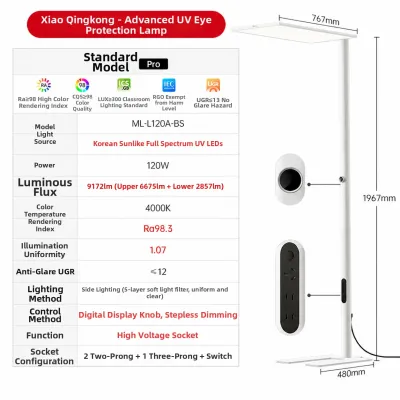
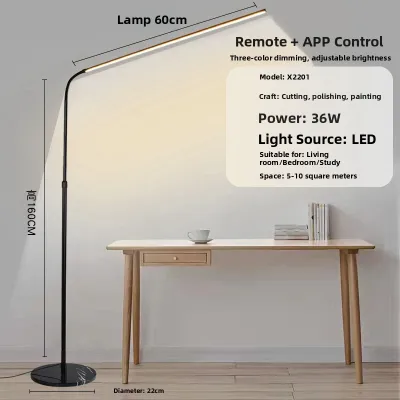
Prices are valid at publication and may change. Please refer to the product page for the latest price.

To ensure comfortable reading without eye strain, aim for a setup that delivers between 300 and 500 lux on your working surface. Achieving this target depends heavily on the lamp’s distance from your desk and its beam angle. When shopping, check the manufacturer’s specifications for recommended placement distances and the corresponding lux levels at those heights. A well-designed task standing lamp will concentrate its beam downward, ensuring that the light does not dissipate into the surrounding room before reaching your books or laptop.
This focused delivery also prevents harsh, high-contrast shadows that occur when a single, overly bright point of light clashes with a completely dark room. The ideal study environment features balanced ambient light paired with targeted task lighting. Relying on a lamp that projects an overly wide, unguided beam can cause distracting reflections and uneven lighting zones across your workspace, forcing your eyes to constantly adjust and tire more quickly.
Color Temperature and CRI: Balancing Focus and Eye Comfort
Color temperature, measured in Kelvin (K), directly influences your focus, alertness, and eye comfort. For active studying, reading, and analytical tasks, cooler light temperatures ranging from 4000K to 5000K are generally preferred. This cool white light mimics natural daylight, which helps suppress melatonin production, keeps you alert, and sharpens text contrast on paper and screens. However, using cool light late into the evening can disrupt your natural sleep cycle.
Opting for a standing lamp with adjustable color temperature allows you to transition seamlessly from a crisp 5000K setting during daytime study sessions to a warmer, relaxing 2700K to 3000K tone as you wind down at night. This adaptability ensures that your study lamp supports your productivity during the day without interfering with your rest patterns later on. It turns a single physical fixture into a multi-functional tool suitable for different times of day.
Alongside color temperature, the Color Rendering Index (CRI) determines how accurately colors appear under artificial light compared to natural sunlight. CRI is measured on a scale up to 100. If your studies involve detailed artwork, architectural diagrams, medical charts, or color-coded maps, investing in a lamp with a high CRI of 90 or above is highly beneficial. For reading standard black-and-white text or typing on a laptop, a standard CRI of 80 is perfectly sufficient, helping you avoid overpaying for specialized color accuracy specs that do not impact your specific tasks.
Adjustability and Glare Control: Directing Light Safely
Physical adjustability is the bridge between a lamp’s technical specs and its real-world usability. A static standing lamp often forces you into awkward postures or casts distracting shadows across your books. Look for a standing lamp featuring an articulating arm, a gooseneck, or a swivelling head that allows you to direct the light exactly where you need it. Ideally, you should be able to position the light source slightly above eye level and to the side of your dominant hand to prevent your hand or head from casting shadows over your work.
Directing the light properly is also your primary defense against glare. Glare occurs when light reflects directly off glossy textbook pages or computer screens into your eyes, causing rapid fatigue and headaches. To combat this, choose lamps equipped with built-in diffusers, frosted glass shades, or specialized optical lenses that soften the light beam. These components scatter the light slightly, reducing harsh hot spots and distributing illumination evenly across your entire workspace.
Before finalizing your purchase, always perform a physical safety and stability check. Because task lamps require frequent physical adjustments, ensure the lamp features a heavy, stable base and a compact footprint. This is particularly important in busy households with children or pets, where lightweight, top-heavy lamps pose a significant tipping hazard. A sturdy base ensures that when you pull the articulating arm close to your desk, the lamp remains securely anchored to the floor.
Secondary Specs: Features That Matter Less for Studying
While modern lighting markets are flooded with high-tech features, many of them offer little practical value for long study sessions. Smart home integration, voice control, and decorative base materials like marble or brass may enhance your room’s aesthetic, but they do not improve optical performance or protect your vision. Similarly, chasing exceptionally high maximum wattages is unnecessary with modern energy-efficient LED technology, which delivers high brightness at a fraction of the power consumption. Prioritize the quality of the light and the physical flexibility of the fixture over expensive smart capabilities.
Finally, never overlook essential electrical safety standards when purchasing a standing lamp in Singapore. Ensure the product carries the Enterprise Singapore Safety Mark, which verifies that the appliance has been tested and certified safe for local use. Verify that the lamp operates on Singapore’s standard voltage of 230V at 50Hz and comes with a compatible Type G three-pin plug. Avoid relying on cheap international adapters or uncertified power cords, as unstable electrical connections can lead to flickering light—which causes severe eye strain—or present serious electrical hazards in your home.
Frequently Asked Questions (FAQ)
Can a standard living room floor lamp be used for studying?
Standard living room floor lamps, such as torchieres that project light upward or lamps with thick fabric shades, are designed for ambient mood lighting rather than focused tasks. They scatter light broadly to soften room shadows, which fails to provide the concentrated illuminance (lux) required for reading fine print. If a lamp lacks an adjustable arm, has a fixed head pointing upward or outward, or uses a highly opaque decorative shade, it is meant for ambiance and will likely cause eye strain if used as a primary study light.
Do I need a dedicated desk lamp if I have a good standing lamp?
A high-quality standing lamp with an articulating arm and excellent task-lighting specifications can successfully replace a dedicated desk lamp. However, this setup requires specific spatial conditions. You must have enough physical clearance around your desk to position the heavy base safely, and the lamp’s arm must be long enough to extend the light head directly over your workspace. If your desk is tucked tightly into a corner or lacks surrounding floor space, a compact desk lamp remains the more practical choice for delivering direct, glare-free light.
Community discussion
Share your experience or ask a question. Comments are reviewed before publication.