
In compact Singapore apartments, where residential floor space is at a premium, maximizing every square meter is essential for maintaining a comfortable and organized home. A standing mirror with storage offers an elegant, dual-purpose solution to this challenge. By combining a generous reflective surface with hidden shelving, drawers, or hanging racks, these multi-functional pieces physically clear floor space while visually expanding tight areas.
Introducing a tall, full-length mirror immediately alters the perception of depth in narrow HDB corridors, compact bedrooms, or windowless walk-in wardrobes. Instead of installing separate bulky dressers, jewelry boxes, and coat stands, you can consolidate these functions into a single vertical footprint. This integration supports a minimalist, clutter-free lifestyle, which is key to making smaller homes feel airy, bright, and highly functional.
Key Features to Look for in Space-Amplifying Storage Mirrors
Selecting a standing mirror with storage requires balancing visual weight, physical dimensions, and structural stability. To ensure the piece enhances your room rather than crowding it, keep several critical design parameters in mind.
Products mentioned in this guide
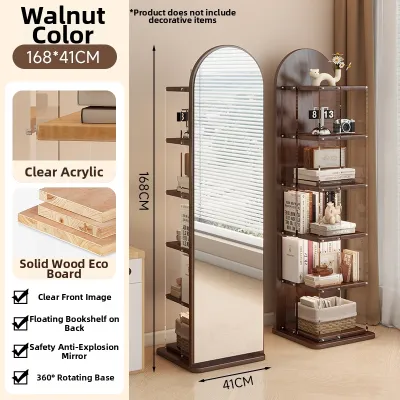
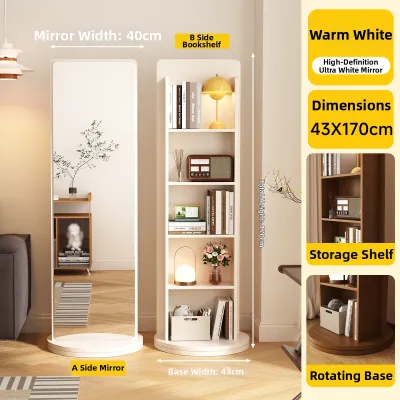
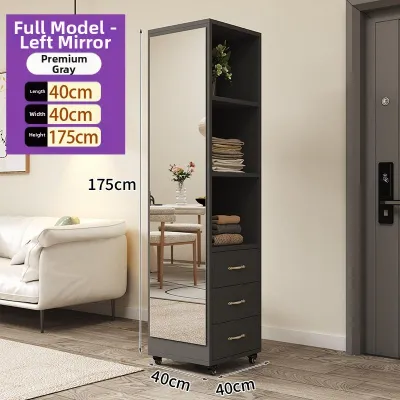
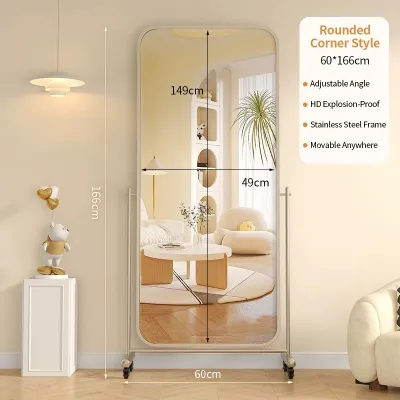
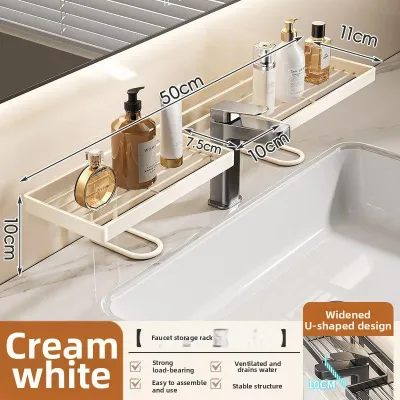

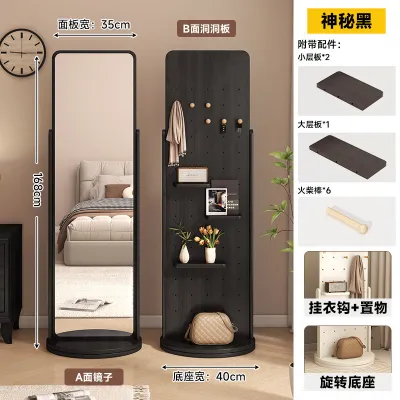

Prices are valid at publication and may change. Please refer to the product page for the latest price.
Mirror Dimensions and Proportions
To achieve a comfortable, full-body reflection without needing to step back significantly—a luxury that tight rooms do not allow—the mirror glass should stand at least 150cm to 160cm tall. The frame’s thickness plays a major role in how heavy the unit looks. Thin metal frames (such as powder-coated aluminum) or frameless, beveled-edge designs keep the visual boundary light and seamless. Conversely, thick, dark wooden frames draw the walls inward, making a small room feel more confined.
Storage Capacity vs. Footprint
In narrow walkways or compact bedrooms, the depth of the unit is just as important as its width. Look for shallow cabinet profiles with a depth of 10cm to 15cm. If you choose a model with a rotating base, verify the circular clearance radius. A 360-degree rotating base typically requires a footprint of around 38cm to 45cm in diameter; while it takes up slightly more floor space than a static flat-back mirror, the ability to spin the unit to access rear shelves provides outstanding utility in tight corners.
Frame Materials and Finishes
To keep your interior feeling bright and open, prioritize light-colored or neutral finishes. Light oak, ash, white, cream, or brushed champagne metal frames reflect ambient light and blend naturally into standard neutral HDB walls. Dark, heavy wood finishes like wenge or deep mahogany absorb light and can dominate a small room, so they should generally be avoided unless your space benefits from exceptionally high ceilings and abundant natural light.
Base and Stability
A sturdy, weighted base is essential for supporting the added weight of stored items and preventing wobbling. If you select a lean-to design, ensure it features non-slip rubber feet or floor-protection pads. These pads are crucial for protecting Singapore’s common flooring materials—such as luxury vinyl tiles (LVT), engineered timber, or polished porcelain tiles—from deep scratches and scuffs when the mirror is moved or adjusted.
Best Standing Mirror Storage Designs for Small Spaces
Different room layouts and storage needs require distinct design configurations. Understanding the primary categories of standing storage mirrors allows you to choose the most efficient option for your specific home layout.

Jewelry Armoire and Cabinet Mirrors
Jewelry armoires feature a deep, hinged door that opens to reveal a fully organized cabinet lined with velvet, hooks, ring slots, and small drawers. This design is highly recommended for bedrooms where keeping dust-sensitive accessories, watches, and cosmetics organized is a priority.
When evaluating these cabinets, look for models with integrated, battery-operated LED internal lighting. This feature makes it easy to find items without needing to turn on bright overhead bedroom lights. The primary trade-off with a cabinet design is its physical depth and the clearance required for the door swing. Because the cabinet door swings outward, you must allow at least 40cm to 50cm of clear space in front of the unit, making it less suitable for exceptionally narrow corridors or tight spaces between the bed and the wardrobe.
Lean-to Mirrors with Hidden Back Shelves
For an ultra-low profile, lean-to or sliding mirrors feature shelving tucked discreetly behind the glass panel. Some designs use a smooth lateral sliding track, while others feature a hidden side hinge that allows the mirror face to swing open like a secret door.
This style is ideal for storing daily skincare bottles, perfumes, and cosmetics, maintaining a clean, minimalist look when closed. Because the shelves are shallow, items remain organized in a single row, preventing clutter from piling up. When choosing a sliding mechanism, ensure the tracks are made of high-quality, rust-resistant metal to withstand Singapore’s ambient humidity. Additionally, because opening the unit shifts its center of gravity, secure wall-anchoring is highly recommended to maintain absolute stability during daily use.
Mirrors with Integrated Hooks and Racks
Open-storage designs combine a full-length mirror with exposed coat hooks, hanging rods, or a bottom shoe shelf. This style is exceptionally functional for HDB entryways, foyers, or the small transitional zones right outside a bathroom.
This configuration is perfect for hanging everyday essentials like bags, hats, umbrellas, lanyards, or next-day outfits, keeping them easily accessible while off the floor. To ensure the mirror remains fully functional, check that the hooks and hanging rods are positioned behind or slightly to the side of the glass frame. This prevents hanging coats or bags from draping over the front and obstructing your primary reflection area.
Placement Tips to Maximize the Space-Illusion Effect
Where you place your standing mirror is just as important as the design itself. Strategic positioning can visually double your room’s footprint and maximize natural light.
- Opposite Windows: Positioning your mirror directly opposite or adjacent to a window allows it to capture incoming natural light and bounce it deep into darker corners. This is particularly effective in long, narrow HDB living rooms or bedrooms that only have a single window source.
- Perpendicular to Focal Points: To make a narrow, rectangular bedroom feel wider, place the mirror along the longer wall, perpendicular to the bed or door. This draws the eye outward across the room's shortest axis, creating an illusion of lateral depth.
- Avoiding Clutter Reflection: A mirror duplicates whatever is in its line of sight. Avoid placing your mirror where it directly reflects busy areas, such as a cluttered study desk, open kitchen shelving, or a laundry basket. Instead, angle the mirror to reflect a clean accent wall, a simple piece of art, or a healthy houseplant to reinforce a calm, orderly atmosphere.
- Corner Placement: The corners of small rooms often become dead, unusable space. Placing a corner-specific or rotating standing mirror in these areas softens the sharp 90-degree architectural angles of the room, turning an awkward nook into a highly functional dressing station.
Safety and Installation Checks for Freestanding Mirrors
Because standing mirrors with storage carry the added weight of your personal belongings, they are significantly heavier than standard decorative mirrors. Ensuring proper safety and structural stability is paramount, especially in households with children or pets.
Anti-Tip Precautions
Even if a mirror is marketed as entirely “freestanding,” you should always secure it using wall-anchoring straps or anti-tip brackets. This is especially critical for tall, top-heavy cabinet designs or lean-to mirrors. If you are drilling into concrete walls—which are standard in HDB flats—always use a hammer drill with high-quality masonry wall plugs (such as nylon Fischer plugs) and matching screws. Before drilling, check your home’s electrical layout plans to avoid hidden utility conduits. If you are unsure about drilling into structural walls, hire a qualified local handyman to complete the installation safely.
Weight Distribution
To maintain a low center of gravity and prevent the mirror from tipping forward, always store your heaviest items on the lowest shelves or base drawers. Keep lightweight items, such as jewelry, cotton pads, or scarves, in the upper compartments. Regularly check that the weight is evenly distributed from left to right so the unit does not lean or strain its hinges.
Glass Safety
In high-traffic areas like narrow hallways or entryways, the risk of accidentally bumping into the mirror is elevated. Prioritize mirrors made with shatterproof glass or those that have a safety film backing. If the glass does break due to an impact, the safety film holds the shards together, preventing dangerous glass fragments from scattering across the floor.
Floor Protection
Freestanding mirrors can slide or shift slightly over time when doors are opened and closed. To prevent this, apply heavy-duty felt pads or non-slip rubber grips to the bottom of the stand or legs. This simple step keeps the mirror firmly in place and protects sensitive flooring materials like vinyl, laminate, or parquet from unsightly scratches and indentations.
Frequently Asked Questions (FAQ)
Can a standing mirror with storage be placed in a humid bathroom?
It is generally not recommended to place standing storage mirrors inside a humid bathroom. High humidity and steam can cause medium-density fibreboard (MDF) or solid wood frames to warp, swell, and split over time. Additionally, moisture can cause metal hinges, tracks, and screws to rust, and it may damage delicate items stored inside, such as jewelry or cosmetics. To protect both the mirror and your belongings, keep these units in dry, well-ventilated zones like bedrooms, walk-in closets, or entryways.
How do I clean the mirror glass without damaging the storage frame?
To clean the glass safely, always spray your glass cleaner directly onto a clean microfiber cloth rather than spraying it directly onto the mirror. Spraying the glass directly can cause liquid to run down into the bottom seams, joints, and hinges. Over time, this trapped moisture can degrade the mirror’s silver backing (causing black spots or desilvering) and damage the surrounding wood or metal storage frame. Wipe the glass in a consistent Z-shaped pattern, and use a second dry microfiber cloth to buff away any remaining streaks.
Community discussion
Share your experience or ask a question. Comments are reviewed before publication.