
Managing household utility bills in Singapore requires a strategic approach to energy consumption, especially with fluctuating electricity tariffs. Lighting is one of the most consistent energy draws in any home, operating for several hours every single day. When upgrading to light-emitting diode (LED) technology, local homeowners frequently evaluate Sunshine LED lights alongside other prominent brands on the market. Sunshine LED has established a strong presence in Singaporean supermarkets, neighborhood hardware stores, and lighting shops, positioning itself as a practical, budget-friendly option.
While Sunshine LED offers competitive efficiency for general household use, determining the absolute most efficient choice depends on comparing the specific National Environment Agency (NEA) Tick Ratings and luminous efficacy ratios of the exact models in question. No single brand holds a universal monopoly on energy efficiency across every product category. To secure the highest long-term electricity savings, you must look beyond brand names and verify the technical specifications on the packaging of individual bulbs, prioritizing those with 4-tick or 5-tick ratings for your specific installations.
Key Energy Efficiency Metrics You Must Compare
To make an informed decision that yields genuine savings on your SP Group utility bill, you must understand the standardized metrics used to measure energy performance. Brand marketing often highlights vague promises of efficiency, but the physical packaging and official technical datasheets contain the objective data needed for an accurate comparison.
Products mentioned in this guide
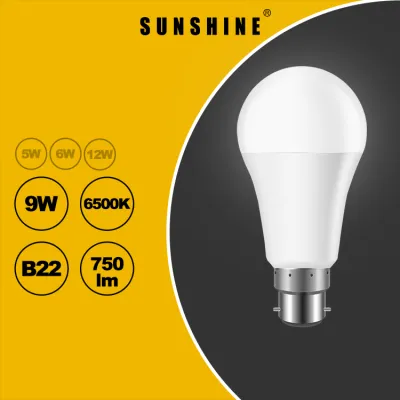
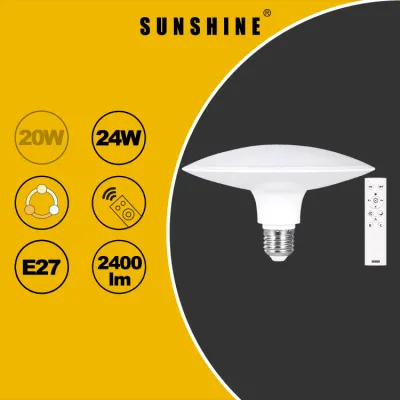
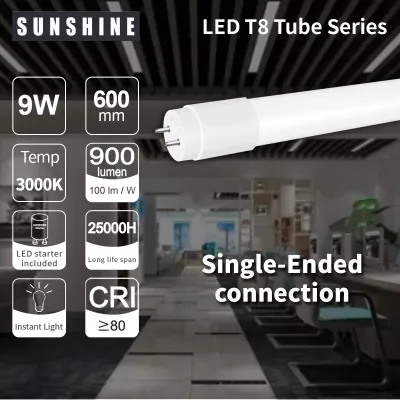
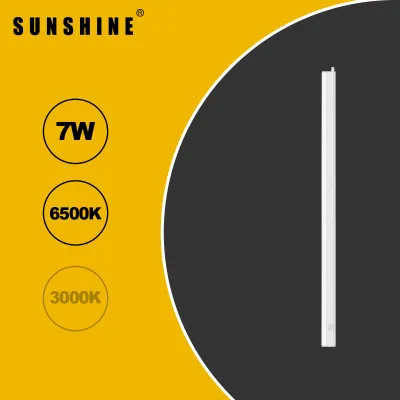
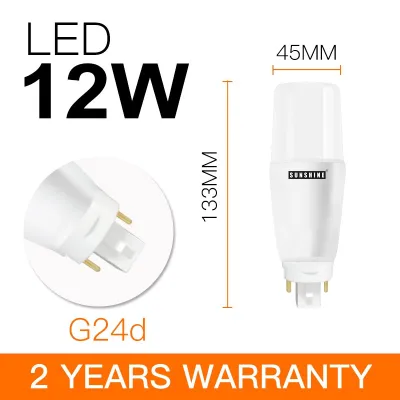
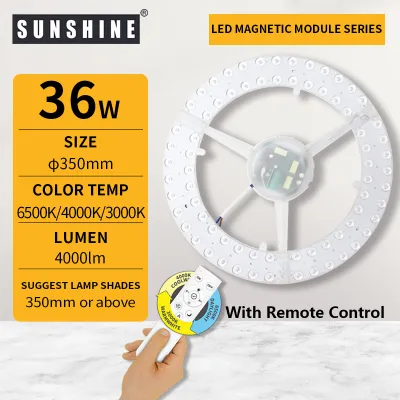
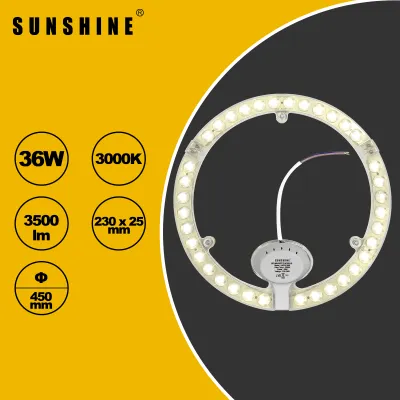
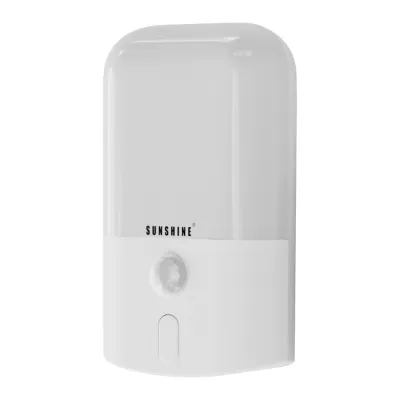
Prices are valid at publication and may change. Please refer to the product page for the latest price.
NEA Energy Label (Tick Rating)
In Singapore, the National Environment Agency (NEA) administers the Mandatory Energy Labelling Scheme (MELS) to help consumers identify energy-efficient electrical appliances and lamps. Under this scheme, registered LED lamps sold in retail outlets must display the NEA Energy Label, which features a distinctive tick rating system. The rating scale ranges from 1 to 5 ticks; the more ticks displayed on the label, the more energy-efficient the bulb is relative to standard test benchmarks.
This tick rating is the most reliable, standardized metric for comparing a Sunshine LED light against competitors on local shelves. Because the testing is regulated under Singapore standards, it eliminates brand bias and provides a direct, localized comparison of power consumption. When shopping, always locate this green label on the box and aim for 4-tick or 5-tick models to ensure you are purchasing a product that meets strict efficiency thresholds.
Luminous Efficacy (Lumens per Watt)
Luminous efficacy is the technical term for how efficiently a light source converts electrical energy into visible light. It is expressed in lumens per watt (lm/W), where lumens represent the total amount of visible light emitted, and watts represent the electrical power consumed. A higher lm/W ratio indicates a more efficient bulb because it delivers more brightness while drawing less power from your electrical grid.
To calculate this metric when it is not explicitly printed on the box, locate the total lumen output (often written as “lm”) and divide it by the rated wattage (W). For example, a bulb that emits 900 lumens while consuming 9 watts has an efficacy of 100 lm/W. If a competing bulb delivers the same 900 lumens but draws 10 watts, its efficacy is lower at 90 lm/W. Prioritizing a higher lm/W ratio over simply seeking the lowest wattage ensures you do not compromise on brightness while attempting to save energy.
Rated Lifespan and Lumen Maintenance
True energy efficiency is closely linked to the operational lifespan of the bulb. LED bulbs are highly durable compared to legacy incandescent or compact fluorescent lamps (CFLs), but their performance degrades over time. Manufacturers rate bulb lifespans in hours, typically ranging from 15,000 to 25,000 hours. This rating is often based on the L70 standard, which measures the point at which the bulb’s light output depreciates to 70% of its original brightness.
In Singapore’s tropical climate, high ambient temperatures and humidity can accelerate the degradation of internal electronic drivers and LED chips, particularly in enclosed ceiling fixtures. A cheaper, lower-quality bulb with a shorter rated lifespan may lose its brightness rapidly or fail prematurely, forcing you to purchase replacements far sooner than expected. This is especially problematic for hard-to-reach installations, such as high ceilings in HDB maisonettes or condominium units, where replacing a bulb involves safety risks or the added cost of professional assistance.
Sunshine LED vs. Competitors: Specification Breakdown
To understand how Sunshine LED compares to other popular brands available in Singapore, such as Philips, Panasonic, and OSRAM (Ledvance), it is helpful to look at typical specifications for standard household bulbs. The table below outlines typical performance baselines for standard non-dimmable E27 screw-base LED bulbs (approximately 9W to 10.5W, Warm White/Cool Daylight) commonly used in residential spaces.

| Brand & Model Series | Nominal Wattage (W) | Typical Lumen Output (lm) | Calculated Efficacy (lm/W) | Typical NEA Tick Rating | Rated Lifespan (Hours) |
|---|---|---|---|---|---|
| Sunshine LED Classic | 9.0W | 810 lm | 90.0 lm/W | 4 Ticks | 15,000 hrs |
| Sunshine LED Bright | 9.5W | 950 lm | 100.0 lm/W | 5 Ticks | 20,000 hrs |
| Philips MyCare LED | 9.0W | 900 lm | 100.0 lm/W | 5 Ticks | 15,000 hrs |
| Panasonic LED Bulb | 9.0W | 810 lm | 90.0 lm/W | 4 Ticks | 15,000 hrs |
| OSRAM Eco LED | 9.5W | 860 lm | 90.5 lm/W | 4 Ticks | 15,000 hrs |
| Generic/Store Brand | 10.5W | 800 lm | 76.2 lm/W | 3 Ticks | 10,000 hrs |
Note: The specifications in this table represent typical retail models available in Singapore as of 2026. Actual values can vary based on production batches, color temperature, and specific model revisions. Always verify the physical packaging before purchasing.
When inspecting the physical box of a Sunshine LED light or any competing brand in-store, look for the mandatory Enterprise Singapore Safety Mark. This certification ensures the bulb’s internal driver and electrical connections comply with local safety standards, protecting your home from electrical faults or short circuits. Additionally, verify that the rated voltage is compatible with Singapore’s standard 230V AC, 50Hz electrical supply to prevent premature component failure.
Calculating Long-Term Electricity Savings in Singapore
To determine whether upgrading to a highly efficient LED bulb justifies its retail price, you can calculate the exact operational costs using a straightforward mathematical formula. This allows you to compare the financial impact of different efficiency tiers over time.
To find the annual energy consumption of a single light bulb, use the following formula:
$$\text{Annual Energy Consumption (kWh)} = \frac{\text{Wattage (W)} \times \text{Daily Usage Hours} \times 365 \text{ days}}{1,000}$$
Once you have determined the annual kilowatt-hours (kWh) consumed, multiply this figure by the prevailing utility rate. For the following calculations, we use an illustrative SP Group electricity tariff of S$0.3247 per kWh (inclusive of prevailing taxes) as a representative baseline for residential households.
Let us compare a typical household scenario where 10 downlights or ceiling bulbs are switched on for an average of 6 hours per day. We will compare three different options: an older lighting setup (such as legacy 18W CFLs), a standard 4-tick Sunshine LED bulb (9W), and a premium 5-tick high-efficacy LED bulb (7.5W delivering equivalent light output).
Option 1: Legacy Compact Fluorescent Lamps (18W CFL)
- Total Wattage: 10 bulbs × 18W = 180W (0.18 kW)
- Daily Consumption: 0.18 kW × 6 hours = 1.08 kWh
- Annual Consumption: 1.08 kWh × 365 days = 394.2 kWh
- Annual Operating Cost: 394.2 kWh × S$0.3247 = S$128.00
Option 2: Sunshine LED Classic Bulb (9W – 4 Ticks)
- Total Wattage: 10 bulbs × 9W = 90W (0.09 kW)
- Daily Consumption: 0.09 kW × 6 hours = 0.54 kWh
- Annual Consumption: 0.54 kWh × 365 days = 197.1 kWh
- Annual Operating Cost: 197.1 kWh × S$0.3247 = S$64.00
Option 3: Premium High-Efficacy LED Bulb (7.5W – 5 Ticks)
- Total Wattage: 10 bulbs × 7.5W = 75W (0.075 kW)
- Daily Consumption: 0.075 kW × 6 hours = 0.45 kWh
- Annual Consumption: 0.45 kWh × 365 days = 164.25 kWh
- Annual Operating Cost: 164.25 kWh × S$0.3247 = S$53.33
By upgrading from older CFLs to standard 4-tick Sunshine LED bulbs, this household slashes its annual lighting cost from S$128.00 to S$64.00, representing a direct saving of S$64.00 per year. If you opt for the premium 5-tick bulbs (Option 3), the annual cost drops further to S$53.33, saving an additional S$10.67 annually.
When evaluating these figures, consider the payback period. If a 5-tick premium bulb costs S$3.00 more upfront than a 4-tick Sunshine LED bulb, the total additional initial investment for 10 bulbs is S$30.00. With an annual savings difference of S$10.67, it will take approximately 2.8 years of continuous use to break even on the premium bulbs. For high-use areas like living rooms, the premium upgrade makes financial sense, whereas for low-use areas like storerooms or guest bedrooms, the lower upfront cost of a 4-tick Sunshine LED bulb offers a faster return on investment.
Decision Framework: Which LED Brand Should You Buy?
Selecting the right LED bulb brand involves balancing upfront retail costs, energy efficiency ratings, and the specific requirements of your home’s installation environments. Use the following guidelines to determine the best path for your household.
Choose Sunshine LED if:
- You are purchasing in bulk: If you are retrofitting an entire HDB flat or condominium and need to purchase dozens of bulbs simultaneously, Sunshine LED's lower upfront retail price points can save you significant initial costs.
- You need standard residential lighting: For common areas, bedrooms, and corridors where standard non-dimmable E27, E14, or GU10 bulbs are sufficient, Sunshine's 4-tick and 5-tick offerings provide excellent, cost-effective performance.
- You prefer local retail availability: Sunshine products are widely stocked in local neighborhood heartland shops, making it simple to find immediate replacements without waiting for online shipping.
Choose Premium Competitors if:
- You require smart home integration: If you want to control your lighting via mobile apps, voice assistants, or automated smart home ecosystems, premium brands offer dedicated smart product lines with robust wireless protocols.
- You need high Color Rendering Index (CRI) lighting: For vanity mirrors, art displays, or study desks where color accuracy is critical, premium brands often provide specialized bulbs with a CRI of 90 or higher, ensuring colors appear natural and vibrant.
- You are installing in hard-to-reach fixtures: For high double-volume ceilings or external fixtures where replacing a bulb is difficult, paying a premium for a brand that offers a verified 25,000-hour lifespan and an extended manufacturer warranty reduces long-term maintenance hassle.
Verify first if:
- You are installing in damp environments: Bathrooms, kitchens, and open balconies expose lighting to moisture, steam, and dust. Before purchasing any bulb, check the packaging for a suitable Ingress Protection (IP) rating (such as IP44 or higher) to prevent moisture from shorting the internal electronics.
- You are using enclosed light fixtures: Heat is the primary enemy of LED components. If your light fixture is completely enclosed, the bulb must be specifically rated for enclosed use to ensure heat can dissipate properly, preventing premature driver failure.
- You are dealing with fixed wiring or work at height: For track lights, integrated LED ceiling panels, or driver replacements, always isolate the electrical power at your home's main distribution board (DB box) before commencing work. If the installation requires modifying fixed electrical wiring or working at heights that compromise safety, always engage a licensed electrical worker (LEW) in Singapore to perform the installation in compliance with local safety regulations.
Frequently Asked Questions (FAQ)
Do all Sunshine LED bulbs have a 5-Tick NEA rating?
No, energy efficiency ratings vary across Sunshine LED’s product lineup based on the specific model, wattage, and design. While their high-performance series achieve the maximum 5-tick rating, some of their standard, decorative, or lower-wattage bulbs may carry a 3-tick or 4-tick rating. Always inspect the green NEA Energy Label printed on the individual product packaging in-store to verify the exact rating of the model you intend to buy.
Can I mix Sunshine LED bulbs with other brands in the same room?
It is highly recommended to avoid mixing different LED brands within the same multi-bulb fixture or immediate line of sight. Even if two bulbs from different brands share identical printed specifications—such as a 3000K Warm White color temperature and 9W power draw—slight variations in manufacturing, phosphor coatings, and driver designs can lead to visible discrepancies in actual color tone, brightness, and startup times. Keeping bulbs uniform within a single space ensures visual comfort and consistent light distribution.
Community discussion
Share your experience or ask a question. Comments are reviewed before publication.