
In Singapore’s compact residential landscape of HDB flats and condominiums, maximizing the perception of space is a primary design objective. A strategically placed standing mirror does more than offer a quick outfit check; it acts as an architectural tool that doubles natural light, introduces depth, and breaks up rigid structural boundaries. Finding the right brand involves balancing aesthetic preferences with local environmental factors like high humidity and specific wall-mounting constraints. Whether you opt for a budget-friendly Scandinavian design, a premium local furniture piece, or a fully customized floor-to-ceiling glass installation, selecting the right standing mirror requires a clear understanding of dimensions, frame styles, and placement mechanics.
Design Criteria for Space-Expanding Standing Mirrors
To successfully expand a room’s visual boundaries, a mirror must work in harmony with the physics of light reflection. When light hits a flat glass surface, it reflects at the exact same angle it arrived, projecting the opposite side of the room into a virtual depth plane. This optical illusion tricks the brain into perceiving a room that is twice its actual size. However, this effect is highly dependent on the mirror’s physical scale. A mirror that is too small will feel like a misplaced picture frame, breaking the illusion of an extended room rather than enhancing it.
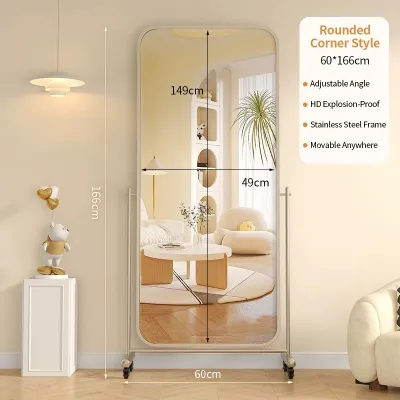
For a standing mirror to create a convincing sense of depth in a Singapore home, height is the most critical dimension. A minimum height of 160 to 180 centimeters is recommended. This height ensures that the glass captures a full-body reflection from a reasonable distance while drawing the eye upward toward the ceiling, making low HDB ceilings feel loftier. Width should be carefully balanced against the available wall space. A width of 50 to 80 centimeters is generally ideal; anything narrower loses its space-expanding impact, while anything wider can overwhelm a small room and make it feel cluttered rather than open.
Products mentioned in this guide
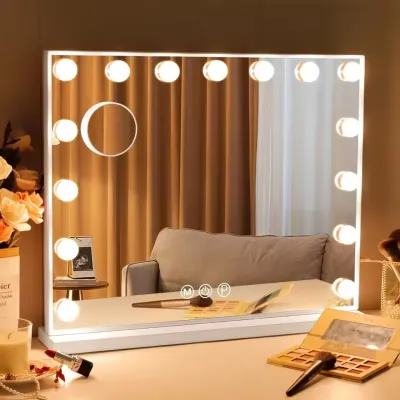
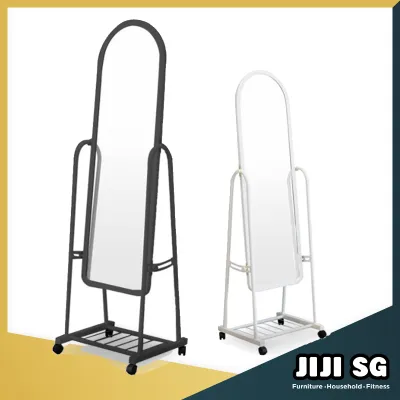
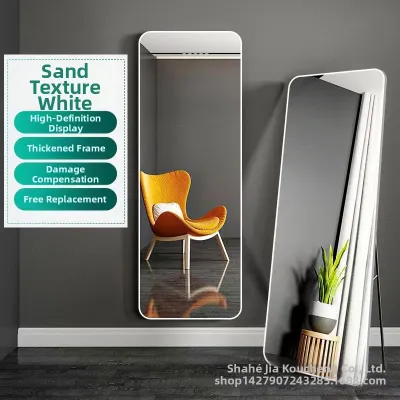
![[Delivered in 1 days] Standing mirror floor mirror full-body mirror aluminum frame Nordic minimalist style](https://img.lazcdn.com/g/p/06086362a256d9e72b728c565266cfef.jpg_400x400q80.jpg_.webp)
![[Delivered in 1 days]Standing Mirror Full length Mirror Floor Mirror Home Bedroom Large Mirror Hanging Wall Hanging Fitting](https://img.lazcdn.com/g/p/e18709c82d74ad5234f1ada3475c9a3d.jpg_400x400q80.jpg_.webp)
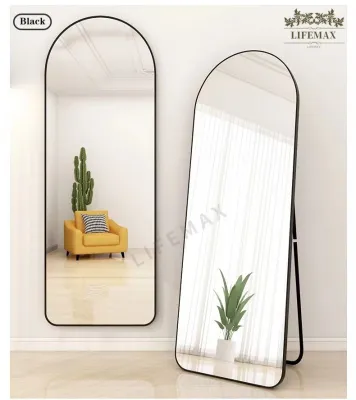
![[Delivered in 1 days]Standing mirror whole body floor mirror bedroom mirror wall hanging household solid wood makeup mirror](https://img.lazcdn.com/g/p/f6edcc5605a526ddbd63a88d307a342b.jpg_400x400q80.jpg_.webp)
Prices are valid at publication and may change. Please refer to the product page for the latest price.
The silhouette of the mirror also plays a major role in shaping the room’s character. Arched mirrors have become highly popular for their ability to soften the hard, boxy lines typical of modern concrete apartments. The curved top mimics classical architectural details like doorways and windows, creating the illusion of a passageway leading to another room. On the other hand, rectangular mirrors offer a structured, clean-lined aesthetic. They align perfectly with modern minimalist interiors and can be placed side-by-side to create a continuous, paneled wall effect that dramatically stretches horizontal space.
When choosing between frameless and framed designs, consider the visual continuity of your room. Frameless standing mirrors offer the most seamless transition between the glass and the surrounding wall, allowing the reflected image to blend directly into the physical space. This lack of boundaries is highly effective for maximizing the illusion of openness. Conversely, statement frames—such as those made of textured wood, brushed brass, or matte black steel—add decorative depth. While they do introduce a visual boundary, a well-chosen frame acts as a bold focal point, anchoring the room and giving the reflected space a defined, intentional structure.
Best Brand Categories for Singapore Interiors
Navigating the retail market in Singapore requires understanding what different brand categories offer in terms of design, durability, and value. Rather than looking for a single perfect model, homeowners should evaluate brands based on their material quality, structural stability, and suitability for the local climate.

Minimalist and Scandinavian Retailers
For homeowners seeking clean lines, functional designs, and accessible price points, major Scandinavian and minimalist retailers like IKEA and Muji are the standard starting points. These brands specialize in lightweight, mass-produced mirrors that fit effortlessly into Japandi, Nordic, or contemporary minimalist interiors. Their product catalogs frequently feature slim metal borders, light oak or birch wood frames, and completely frameless options that keep the visual footprint as small as possible.
One of the primary advantages of these minimalist options is their lightweight construction. Many models are designed specifically to be leaned against a wall or supported by a slender, integrated kickstand. This flexibility is highly beneficial for tenants renting apartments in Singapore, as it allows for easy relocation and avoids the need to drill permanent holes into concrete walls. The simple, unadorned frames ensure that the mirror blends into the background, focusing all attention on the reflected light and space.
However, these budget-friendly options come with distinct trade-offs regarding material longevity. In Singapore’s tropical climate, where relative humidity levels often exceed 80 percent, low-cost mirrors are highly susceptible to “desilvering.” This process occurs when moisture penetrates the protective backing of the mirror, causing the reflective silver layer to oxidize and form unsightly black spots or cloudy edges. Furthermore, the lightweight frames used by budget retailers may utilize medium-density fibreboard (MDF) or thin plastics, which can warp or degrade over time when exposed to ambient moisture or direct sunlight near balconies.
Local Contemporary and Premium Furniture Brands
If your budget allows for a higher investment, local premium furniture brands like Castlery and Commune offer curated designs tailored specifically to modern luxury and warm minimalist aesthetics. These brands focus on high-quality materials, such as solid oak, walnut, powder-coated aluminum, and brushed brass. Their designs often feature sculptural silhouettes, arched tops, and integrated storage or display shelves that elevate the mirror from a simple utility item to a piece of functional art.
A premium standing mirror from a local designer brand acts as a central design element in a living room or master bedroom. The weight and texture of solid wood or heavy metal frames add a tactile richness that cheap materials cannot replicate. By selecting a mirror with a distinct architectural shape—such as a wide arch or a soft oval—you create a sophisticated focal point that draws the eye, making the entire room feel more curated and spacious.
The trade-off for this premium aesthetic is the physical weight and logistical complexity of the pieces. High-end standing mirrors often feature thick, high-density glass and solid metal or hardwood backings, making them exceptionally heavy. Moving these mirrors requires careful planning and multiple people to prevent damage to both the mirror and your flooring. Additionally, if you plan to lean a heavy premium mirror against a wall, you must use heavy-duty anti-tip hardware anchored deep into the wall structure to prevent catastrophic tipping accidents, particularly in households with young children or active pets.
Custom Glass and Mirror Specialists
When standard retail dimensions fail to fit a specific alcove, narrow hallway, or awkward structural column, bypassing retail brands in favor of local custom glass and mirror specialists is the most effective route. Local contractors and glass merchants can cut mirrors to your exact specifications, allowing you to create floor-to-ceiling installations or wall-to-wall mirror panels that offer the absolute maximum space-expanding effect.
Custom-cut mirrors are particularly useful for transforming dark, narrow HDB entryways or long corridors. By covering an entire wall with a custom-fitted mirror, you effectively double the perceived width of the hallway and eliminate the claustrophobic feeling common in compact layouts. When ordering from a custom specialist, you have full control over the technical specifications of the glass. You can request premium features such as copper-free glass (which is highly resistant to humidity and tarnishing), beveled edges for a classic look, or safety-backed glass with an anti-shatter film that prevents the mirror from breaking into dangerous shards if impacted.
Working with custom glass specialists requires a strict focus on professional installation and structural safety. Because these mirrors are often oversized and lack independent frames, they must be securely glued or mechanically fastened directly to the wall. Before installation, a qualified professional must assess the flatness and structural integrity of the wall. Uneven walls can cause the glass to bend slightly, resulting in a distorted, funhouse-mirror reflection that ruins the spatial illusion. Furthermore, drilling into concrete or brick walls in Singapore homes requires specialized tools and expertise to avoid damaging hidden electrical conduits or water pipes.
Key Features to Compare Before You Buy
Before making a final purchase, it is essential to look beyond the external frame and evaluate the technical specifications of the mirror. A mirror that looks stunning in a well-ventilated showroom may deteriorate quickly in a humid home environment or pose a safety hazard if not properly anchored.
First, verify the backing material of the mirror. For Singapore’s climate, look for mirrors labeled as “copper-free” or those featuring a multi-layered protective backing. Copper-free mirrors utilize a specialized silvering process that eliminates copper, the primary element that oxidizes and turns black when exposed to moisture. Second, inspect the edge finishing. Beveled edges catch and refract light at different angles, adding a subtle sparkle and depth to the room, whereas flat, polished edges offer a clean, seamless look that is ideal for minimalist or frameless installations.
Safety features are non-negotiable for large standing mirrors. Ensure the product includes robust anti-tip hardware, such as wall straps, brackets, or a heavily weighted base. If the mirror is designed to lean, the base must have non-slip rubber pads to prevent the bottom from sliding outward on smooth tile or polished vinyl flooring.
If you select an LED-backlit standing mirror, verify the voltage compatibility with Singapore’s standard 230V supply, check the plug or interface type, and ensure the driver meets local electrical safety certifications. For any fixed wiring or installation in damp zones like bathrooms, always isolate the power supply beforehand and hire a qualified professional electrician to handle the connection.
| Design Feature | Frame Type | Shape | Base Style | Backing Material | Space-Expanding Impact | Maintenance & Safety Requirements |
|---|---|---|---|---|---|---|
| Frameless Minimalist | None / Invisible | Rectangular or Oval | Flat lean-to or wall-mounted | Standard silver with protective paint | Maximum seamless continuity; reflects light without visual boundaries | Requires careful edge cleaning; high risk of edge chipping if moved frequently |
| Slim Metal Frame | Aluminum or Steel | Arch or Rounded Rectangle | Kickstand or lean-to | Copper-free silver | Modern, structured depth; frames the reflection like a window | Easy to wipe down; check metal joints for rust if placed near bathrooms |
| Solid Wood Frame | Oak, Walnut, or Teak | Rectangular or Sculptural | Heavy weighted base | Plywood or MDF backing | Adds warmth and texture; creates a solid, high-end focal point | Wood requires occasional conditioning; backing must be sealed against humidity |
| Custom Full-Wall | Frameless / Beveled edge | Custom Geometric | Direct wall-adhesive / mechanical clips | Safety-backed copper-free glass | Absolute maximum space expansion; doubles the entire room | Requires professional installation; regular cleaning of a large surface area |
Always verify the total weight of the mirror against your flooring type and wall strength. Heavy mirrors placed on soft vinyl or laminate flooring can leave permanent indentations if the weight is concentrated on small, unpadded feet. If you plan to mount or anchor a heavy mirror to a partition wall (such as drywall or gypsum board common in some condo renovations), you must locate the internal wall studs or use specialized heavy-duty hollow-wall anchors. Never rely on standard plastic wall plugs in drywall for a heavy standing mirror.
Placement Strategies to Maximize Spatial Illusion
Owning a high-quality standing mirror is only half the battle; its placement determines whether it successfully expands your living space or simply becomes a source of visual clutter. The goal is to position the mirror so that it interacts dynamically with the room’s light and architectural flow.
To maximize natural light, angle your standing mirror so that it directly reflects a window, balcony door, or primary light source. This positioning catches the incoming daylight and bounces it deep into the darker corners of the room, instantly making the entire space feel brighter and more open. If your living room faces a lush outdoor view or a well-lit balcony garden, placing the mirror opposite this view effectively “brings the outdoors in,” creating a refreshing, expansive atmosphere.
Conversely, you must avoid reflecting areas of high activity or clutter. Positioning a mirror where it reflects a busy kitchen counter, an open shoe rack, or a cluttered workspace will double the visual noise, making the room feel smaller, more chaotic, and cramped. Additionally, avoid placing mirrors directly opposite each other; this creates an infinite reflection loop that can feel disorienting and structurally unstable to the human eye.
In narrow HDB hallways, employ the “visual corridor” technique. Place a tall, slim standing mirror at the far end of the hallway or along one side to break up the long, tunnel-like feel. This draws the eye forward and creates a sense of continuous passage. In the living room, a slightly tilted leaning mirror creates a relaxed, casual vibe. The upward tilt reflects more of the ceiling and upper walls, which visually heights the room and makes compact living areas feel airy and unconfined.
Frequently Asked Questions (FAQ)
How do I protect my standing mirror from humidity and tarnishing?
To protect your standing mirror from the high humidity of Singapore, always choose mirrors with copper-free backing or specialized anti-corrosion coatings. When cleaning, avoid spraying liquid glass cleaners directly onto the mirror surface, as the liquid can run down the glass and seep behind the frame, attacking the silver backing over time. Instead, spray a microfiber cloth with a mild, ammonia-free glass cleaner and gently wipe the surface. Ensure your home has adequate ventilation, particularly if the mirror is placed near a bathroom or kitchen. If you are mopping the floors, keep the base of a leaning mirror dry and avoid exposing it to standing water or damp mops.
Is it safe to lean a large standing mirror against the wall without anchoring?
Leaning a large, heavy standing mirror without anchoring is highly discouraged, especially in active households. Even a heavy mirror can slip on polished flooring or be knocked over by pets, children, or accidental bumps during cleaning. To ensure safety, always secure the mirror using anti-tip straps, wall brackets, or safety wires anchored directly into the wall. Before drilling, check the wall material; concrete walls require masonry drill bits and wall plugs, while drywall partition walls require finding the wooden or metal studs to secure the anchor safely. If you are renting and cannot drill, opt for a lightweight mirror with a sturdy, wide-legged kickstand base and place it in a low-traffic corner.
Community discussion
Share your experience or ask a question. Comments are reviewed before publication.