
Choosing the right torchlight keychain requires balancing raw power, physical size, and long-term reliability. Because these compact tools live on your keyring, they must endure constant friction from metal keys, occasional drops on concrete, and exposure to unpredictable weather. The ideal choice depends entirely on how you plan to use the light daily, as no single model excels in every category.
To find the right fit for your routine, consider these three primary usage profiles:
- The Frequent Night Walker: If you regularly walk through poorly lit paths, conduct security checks, or need to illuminate wide outdoor areas, prioritize high-lumen, rechargeable models with robust thermal management.
- The Emergency Preparedness Advocate: If you primarily need a reliable backup light for occasional power outages, finding keyholes in dark HDB corridors, or navigating unexpected dark spaces, focus on compact models with low standby battery drain and long runtimes on lower settings.
- The Heavy-Duty Utility User: If your daily carry involves demanding physical environments, construction sites, or exposure to the elements, prioritize rugged metal housings with high impact resistance and superior dust and water protection.
Comparing Brightness and Beam Performance
When evaluating a torchlight keychain, brightness is often the first specification buyers look at, but raw lumen numbers can be misleading. Lumens measure the total amount of light emitted by the source, but they do not tell you how that light is directed or how long the device can maintain that level of output. In micro-flashlights, extreme brightness levels are typically designed as temporary “turbo” modes rather than continuous operating states.
Products mentioned in this guide
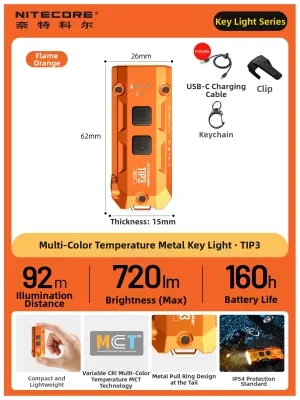
![[LOCAL SELLER & FAST DELIVERY] Keychain Rechargeable Portable LED Light Emergency Torchlight Flashlight Magnet Opener](https://img.lazcdn.com/g/p/66552f87636ba1cab500e88f781cd451.png_400x400q80.png_.webp)
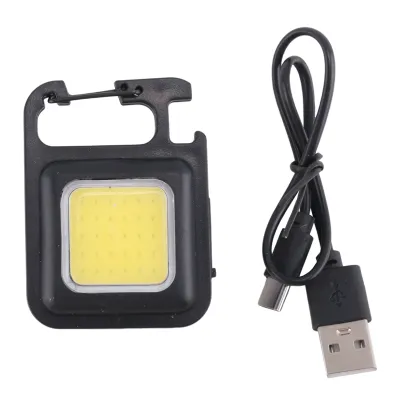
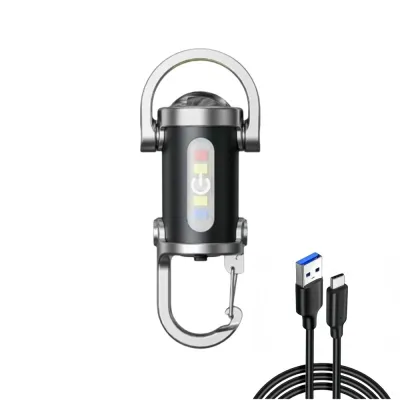
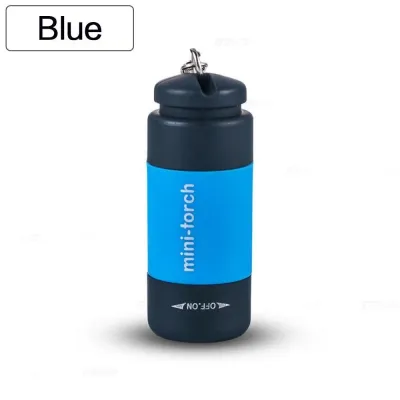
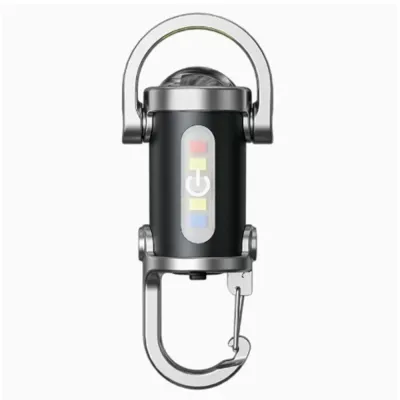
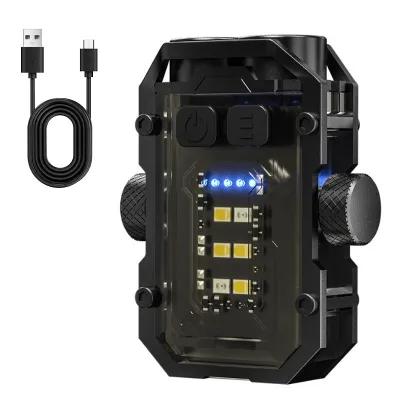
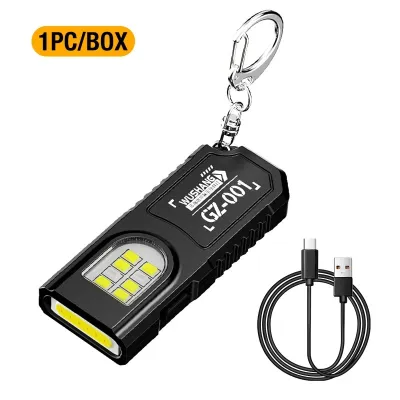
Prices are valid at publication and may change. Please refer to the product page for the latest price.
Due to their incredibly small surface area, keychain flashlights cannot dissipate heat as quickly as larger handheld torches. When a micro-light runs at high outputs, the internal temperature rises rapidly, prompting quality models to automatically step down the brightness to protect the LED and battery from heat damage. When comparing brands, look closely at the sustained output specifications rather than just the peak turbo rating to understand what the light can actually deliver during extended use.
Beam profile is another critical factor that dictates how useful the light will be for your specific tasks. Keychain lights generally utilize either a Total Internal Reflection (TIR) lens or a traditional reflector to shape the beam:
- Flood Beams: These distribute light widely over a short distance, making them highly suitable for close-up tasks like reading a map, searching a bag, or illuminating a walking path directly in front of you.
- Spot Beams: These focus the light into a tight, intense beam that throws further into the distance, which is helpful for identifying objects across a large courtyard or down a long hallway.
To compare the reach of different models, check the manufacturer’s candela rating or beam distance specifications. Candela measures peak beam intensity in a single direction; a higher candela rating relative to the lumen output indicates a more focused, longer-reaching beam, whereas a lower candela rating indicates a wider, more diffused floodlight.
Evaluating Battery Life and Charging Options
Power delivery determines whether your keychain light will function when you need it most. Modern keychain flashlights generally fall into two categories: those with built-in rechargeable lithium-polymer (Li-Po) batteries and those powered by replaceable cells, such as AAA batteries or small coin cells.

Built-in rechargeable models are highly popular because they offer significantly higher power output and eliminate the ongoing cost of replacement batteries. They allow manufacturers to design incredibly compact, contoured shapes that fit comfortably on a keyring. However, because the battery is sealed inside, the entire unit must be replaced once the lithium cell naturally degrades over several years of charge cycles.
Replaceable battery models, particularly those using standard AAA alkaline or NiMH rechargeable batteries, offer the advantage of instant power replenishment. If the light runs out of power during an emergency, you can simply swap in a fresh battery without waiting for a charge cycle. The trade-off is that AAA-powered lights are generally longer and heavier, and they typically cannot match the peak brightness levels achieved by dedicated lithium-polymer cells.
To accurately compare battery life across different brands, look for standardized testing metrics, specifically those adhering to the ANSI/PLATO FL 1 standard. This standard defines runtime as the time elapsed from the initial light output value until the output drops to 10% of that initial value. Be aware that a light advertised with a long runtime may spend the vast majority of that time operating at a very dim, low-lumen level.
When choosing a rechargeable model, verify the charging interface and safety features. USB-C ports are the modern standard, allowing you to use the same cable as your phone or laptop. Ensure the charging port is protected by a thick, well-fitting rubber gasket, or look for premium models that feature internally waterproofed charging ports that maintain water resistance even when the port cover is open.
Assessing Build Quality and Everyday Durability
A torchlight keychain must be tough enough to survive being dropped on asphalt, stepped on, or crushed in a pocket alongside heavy metal keys. The choice of housing material directly impacts the weight, scratch resistance, and thermal performance of the device:
- Anodized Aluminum: This is the most common material used in quality flashlights. Look for Type III hard-anodization, which provides excellent scratch and wear resistance, keeping the light looking clean even after months of rubbing against keys.
- Stainless Steel: Highly durable and extremely resistant to bending or crushing, stainless steel handles daily abuse exceptionally well, though it is noticeably heavier than aluminum.
- Titanium: Offering an exceptional strength-to-weight ratio, titanium is highly prized for premium daily carry setups, though it does not dissipate heat as quickly as aluminum.
- Polycarbonate: High-grade plastics and polycarbonates make for incredibly lightweight lights, and some models use translucent bodies that allow secondary side lights to illuminate the entire housing. However, they are more prone to surface scratching over time.
In Singapore’s humid tropical climate, environmental sealing is a vital consideration. Sudden downpours can easily ruin an unprotected electronic device. Check the Ingress Protection (IP) rating of any model you consider:
- IPX4: Protects against splashing water from any angle, making it suitable for light drizzle but not heavy rain.
- IPX7: Protects against temporary immersion in water up to one meter for 30 minutes, offering excellent protection against accidental drops into puddles or heavy downpours.
- IP68: Offers complete protection against dust ingress and continuous immersion in water, representing the highest level of environmental durability for daily carry.
Beyond the main housing, inspect the attachment point where the light connects to your keyring. A weak plastic loop or a thin metal ring can easily snap, leading to a lost light. Look for reinforced metal loops integrated directly into the body frame. Additionally, check the lens material; tempered mineral glass is highly resistant to scratches that can degrade beam quality, whereas basic plastic lenses can become cloudy over time due to friction.
Decision Framework: Matching Specs to Your Routine
To finalize your choice, align the technical specifications of potential models with your actual daily habits. If your keys live in a deep pocket or a crowded bag, a side-switch design without a lockout feature can easily turn on accidentally, draining the battery and generating intense heat. For pocket carry, look for models with a physical lockout mode or a recessed switch that requires a deliberate double-click or long-press to activate.
Consider this scenario matrix to guide your purchase decision:
- The HDB Corridor & Keyhole Finder: Priority is compact size and low-lumen efficiency. A simple twist-switch or dual-button model with a reliable low mode (1 to 5 lumens) is ideal, preventing glare while preserving night vision.
- The Nighttime Dog Walker: Priority is sustained floodlight and comfortable grip. Look for a rechargeable model with a dedicated medium mode (50 to 100 lumens) that can run continuously for at least an hour without overheating.
- The Outdoor Adventurer: Priority is maximum durability and weatherproofing. Choose an IP68-rated aluminum or stainless steel model with a strong pocket clip and a reliable lockout function.
Before purchasing, verify the warranty terms and after-sales support provided by the manufacturer or local authorized retailers. A reliable warranty is a strong indicator of build quality. Finally, avoid ultra-cheap, unbranded lights sold on online marketplaces; these often lack critical safety features like overcharge protection, over-discharge protection, and thermal regulation, which can lead to battery swelling or failure. Investing in a reputable brand ensures your daily carry companion remains safe, reliable, and ready for action.
Frequently Asked Questions (FAQ)
Can I bring a high-lumen torchlight keychain on a flight?
Yes, you can generally bring a torchlight keychain on a flight, but it must be kept in your carry-on baggage if it contains a built-in rechargeable lithium-ion battery. Most international aviation guidelines, including those enforced by the Civil Aviation Authority of Singapore (CAAS), prohibit spare lithium batteries and devices with integrated lithium batteries from being placed in checked luggage due to potential fire risks. Always ensure the light is locked out or the battery is physically isolated to prevent accidental activation during transit, and check with your specific airline before traveling.
How do I maintain the water resistance of my keychain flashlight?
To preserve the IP rating of your keychain light, regularly inspect the rubber seals and charging port covers for dirt, lint, or signs of wear. If your keys are exposed to heavy sweat, saltwater, or rain, rinse the flashlight with fresh water and dry it thoroughly with a soft cloth to prevent corrosion around the charging contacts. Avoid opening the main housing of sealed, rechargeable models, as doing so can permanently damage the internal gaskets and void the manufacturer’s warranty.
Why does my keychain flashlight get hot on the highest setting?
Keychain flashlights generate significant heat when operating at high lumen levels because their small metal bodies act as heat sinks to draw heat away from the internal LED and battery. Because there is very little surface area to dissipate this heat into the air, the body of the light will feel warm or hot to the touch. Quality models feature built-in thermal regulation that automatically reduces the brightness level once a certain temperature threshold is reached, ensuring the device remains safe to hold and preventing damage to the internal components. If the light becomes uncomfortably warm, simply switch it to a lower output mode.
Community discussion
Share your experience or ask a question. Comments are reviewed before publication.